Sustainability Commission
The Sustainability Commission’s next meeting is Monday September 14th starting at 5 pm. All are welcome! To view the agenda, watch the meeting live, or submit an electronic comment, please visit:
|
|
Summer Sustainability Series - Happening Now!
Our Summer Sustainability Series is almost over! Join the City of Chula Vista for the final three summer interactive web sessions to learn how you can incorporate sustainable living tips into your daily life. Our final three sessions will cover electric vehicles, tips for avoiding food waste and sustainability at our Chula Vista libraries. For more information or to register for the upcoming webinars, check this website. Recordings are updated there after each event - in case you missed any of our sessions earlier this summer, you can still check them out online! Upcoming sessions include the following:
- September 10: Going Electric in Chula Vista
-
September 17: Food Waste Solutions at Home and in Your Everyday Life
-
September 24: Check it out - Sustainability at the Library!
Webinars are free and open to everyone. Just click the link above for all the information and to complete your registration. We hope you can join us!
|
|
Climate Change Working Group Online Meeting
The Climate Change Working Group will be holding its second meeting of 2020 on September 16th from 3-5. Due to Covid-19 restrictions, this meeting will take place online. Anyone interested in attending can access the link to view the meeting or make comments at www.chulavistaca.gov/boards. The commenting period will be open shortly after the agenda is published and will remain open through the meeting. After regularly meeting through 2018 and 2019, the working group will be voting on climate action recommendations that will be presented to City Council. The draft recommendations include potential measures to support building and vehicle decarbonization, alternative transportation and reducing waste. Some actions may be delayed or modified due to Covid-19 but will reduce carbon emissions and continue to City’s sustainability leadership. For more information, including previous presentations, please visit: www.chulavistaca.gov/departments/clean/conservation/climate-action-plan.
|
|
August’s Free Compost Event
For each of the past five years, the City’s Office of Sustainability has held three Free Compost Events annually. Events normally take place on the last Saturday of March and August and the first Saturday in November.
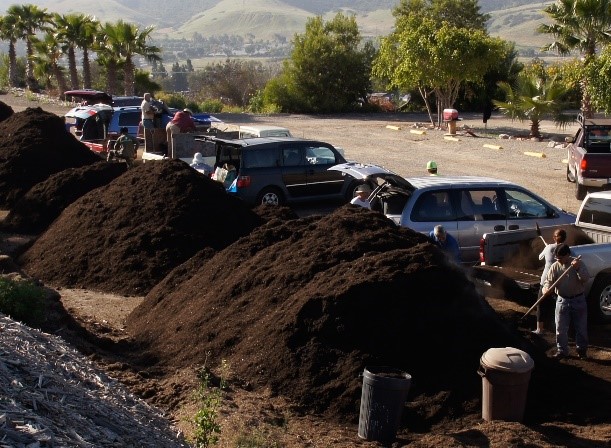
The events are regularly advertised through postcards, banners, social media and the City’s Event Calendar. This year has not been a “regular” year, though. The event in March was cancelled due to the pandemic and August’s event was advertised only on the City’s Event calendar. However, the morning of Saturday August 29th brought over 60 vehicles to the Otay Landfill, with residents masked-up and ready to load compost.
Chula Vista residents know that adding compost will provide the optimum growing conditions to maintain healthy vibrant plants with a greater resistance to pests and disease. So, it’s no surprise that, with the limited advertising, there was still a large number of residents who attended the latest event.
The next Free Compost Event is scheduled for Saturday, November 7th from 8:00 am - 12:00 pm at the Otay Landfill (1700 Maxwell Road). It is listed on the City’s Event Calendar with plans for additional advertising. And remember, if you want to begin composting in your backyard, see how easy it is by watching the videos on the Living Coast Discovery Center’s website at: www.thelivingcoast.org/conservation/composting/
|
|
Sustainable Communities Webinar Series
The City of Chula Vista Office of Sustainability is offering a series of webinars for the community. The first set of webinars was all about energy efficiency, waste management, composting, water conservation and alternative transportation, among others. The next set will be all about building codes related to CALGreen, insulation installation, ventilation and incentives. These webinars will be held from 12:00 to 1:00 pm – perfect for a lunch and learn session! You are invited to register at the link below, as well as to watch the past webinars if you have missed them as all webinars will be recorded and posted to the website:
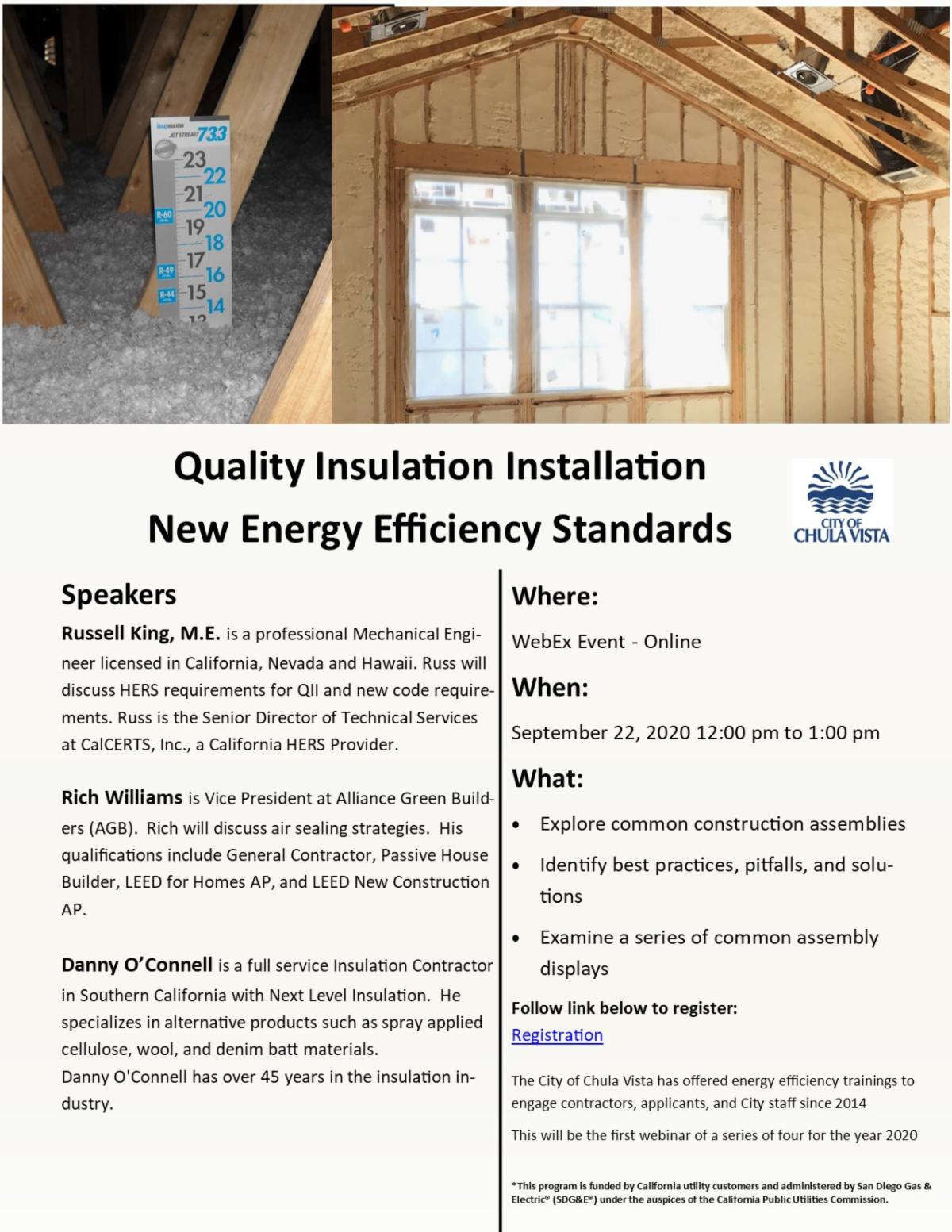
- September 22 QII (Quality Insulation Installation)
- October 13 CALGreen Residential Code
- November 3 CALGreen Non-Residential Code
- November 17 Indoor air quality and ventilation with a connection to COVID 19
- December 8 Energy efficient projects and tax incentives (federal and state)
|
|
More Options for Safe Medicine Disposal
Chula Vista residents now have more options to dispose of their expired and/or unused over-the-counter and prescription medications. Three new drop-off locations have been added at select locations throughout the City, thanks to a new program aimed at increasing the safe, proper disposal of unwanted medicines across the state. This program is funded by the California Department of Health Care Services' MAT Expansion Project and developed and administered in partnership with the California Product Stewardship Council. In addition to the two collection bins at the Chula Vista Police Department lobby that are currently available to Chula Vista residents, these collection bins are now available:
- Sav-On Pharmacy located inside Alberstons, 720 Third Avenue
- Vons Pharmacy, 2250 Otay Lakes Road
- Vons Pharmacy, 1745 Eastlake Parkway
To prepare your medications for disposal at these locations, follow these easy steps:
- At home, remove pills and other solid medications from their containers and consolidate in a clear plastic zipper bag. Keep liquid and cream medication tightly sealed in their original containers. (Note – keep medications in their child-proof container until just prior to drop off.)
- Remove, mark out or otherwise obscure personal information from solid and liquid/cream medication containers to protect your personal information. Recycle containers for solid medications in your household recycling.
- Bring zipper bag and any liquids/creams to one of the locations above and place in the bin!
Please note that these collection bins are only for expired and/or unused over-the-counter medications, prescription medications (including controlled substances), medicated lotions and ointments and pet medications. Medical sharps/needles and business medical waste are NOT accepted. For more information and a full list of acceptable and non-acceptable items, visit www.takebackdrugs.org.
|
|
Republic Services Announces Partnership to Develop and Purchase 2,500 Electric Collection Trucks
Republic Services, Inc. announces a partnership with Nikola Corp. to develop and purchase 2,500 electric waste and recycling collection trucks, representing the industry’s first large-scale commitment to fleet electrification. The zero-emissions vehicles, which will have a range of 150 miles and recharge overnight, are expected to be integrated into Republic Services’ fleet beginning in 2023. The deal is expandable to 5,000 vehicles over the life of the agreement.
"This partnership significantly accelerates Republic Services’ progress in fleet innovation to drive profitable growth, reduce emissions, enhance customer loyalty and create long-term shareholder value,” said Jon Vander Ark, president. “Our agreement with Nikola represents the industry’s first large-scale commitment to fleet electrification. We expect to realize significant operating cost savings and environmental benefits from these trucks, and we are confident that our customers, communities and employees will benefit from our bold commitment.”
The collaboration with Nikola represents a transformational step forward in Republic Services’ efforts to leverage technology and innovation to reduce emissions, increase operational efficiency and provide economical, environmentally sustainable solutions to its customers. Among the many anticipated benefits of fleet electrification are instant torque, no idling, regenerative braking, up to 90 percent lower emissions on a per-mile basis and quieter operation in neighborhoods, as well as significantly lower maintenance costs.
Last year, Republic Services set a long-term sustainability goal to reduce greenhouse gas emissions by 35% and was the first U.S. recycling and solid waste services provider to have its emissions reduction target approved by the Science Based Targets initiative (SBTi). The Company intends to continue investing in innovation to enhance the performance, economics and environmental impact of its fleet and drive value for its stakeholders.
|
|
Create a NatureScape - Extend Your Living Space
It’s now September and Chula Vista residents continue to spend a lot of time at home. Many are now back to helping their kids with distance learning. Numerous people continue working from home or, as some say, “living at work.”
Did you know? People spend 93% of their time indoors including in vehicles. More “joy” is reported when people spend their time in natural settings than urban settings. We all need to do what makes our brains happy – be outside, enjoy greenery.
So where does this leave us? The point being – you can extend your living space into your yard by creating a NatureScape that brings you outside to enjoy the solitude of nature in your own yard. So now you ask, “What is a NatureScape and how do I create one?”
A NatureScape is when you modify your yard by applying the five steps of natural yard care which creates an environment that provides a beneficial and sustainable habitat for birds, bees and other wildlife while conserving precious resources – especially water. Ideally, a NatureScape has four components: 1) food for insects, birds and animals, 2) a water source, 3) cover and protection for animals, and 4) a place to raise their young. This is created by selecting plants proper plants and creating conditions for them to thrive. Many residents already have some of these components in their existing yards and gardens.
The City of Chula Vista’s NatureScape Program is here to help you. You can learn a lot about the five steps of natural yard care by visiting www.chulavistaca.gov/naturescape. The five steps include: 1) building healthy soils by applying compost; 2) planting right for your site; 3) WaterSmart irrigation; 4) toxic-free alternatives for pest control; and 5) natural lawn care - grasscycling. Each of these steps is covered in detail in an easy to understand manner. You will learn what to do and why the natural way of yard care is more practical and beneficial. This knowledge will help you to extend your living space to and enjoy its newfound peacefulness. Taking this approach takes a bit more planning but over time offers significant savings in labor and water costs.
At the NatureScape website, there is a link to a case study featuring a long-time Chula Vista resident’s property. The case study provides several examples of NatureScapes including: the Meadow a native plant garden, a Butterfly Grove, a Rose Garden and a Honeysuckle Walk that attracts a lot of different birds.
|
|
EU approves tax on non-recycled plastic
The European Union has approved a plastic tax on nonrecycled plastic waste, which will be implemented Jan. 1, 2021. The plan includes a 0.8 euros per kilogram levy on nonrecycled plastic packaging waste to be paid by member states into the EU budget.
The tax is part of a 750 billion euro (or about $861 billion) package combining the future Multinational Financial Framework and a specific recovery effort under Next Generation EU, which the European Council discussed and agreed during its meeting July 17-21. The tax has been presented by the European Commission as contribution to the EU budget designed to incentivize member states to increase recycling from plastic scrap.
According to a news release from European Plastics Converters (EuPC), a trade association based in Brussels, some in the European plastics industry worry that the tax will have a negative effect. EuPC reports that fiscal measures are not the most efficient tool to drive innovation and investments that are needed to meet the policy objectives of EU’s Green Deal.
“As the revenues of the EU plastic tax are not earmarked to be invested into the waste and recycling infrastructure, it will not increase the recycling of plastic waste in Europe,” says Alexandre Dangis, EuPC managing director. “Instead, it will further increase the cost of plastic recycling and encourage the shift to other packaging materials with a bigger environmental impact. To truly increase recycling rates across Europe and protect the environment, taxation of the landfilling of plastic packaging waste would be more efficient.”
EuPC’s news release states that improving the recycling of plastics packaging requires “considerable investment by the entire plastics value chain in innovation, new machinery and the ecological design of plastic packaging.” With expected revenues around 6-8 billion euros per year flowing into the general budget of the EU through this tax, EuPC reports that this money would not be available to be invested in the transition toward a circular economy.
However, others in the plastics industry are optimistic about the new tax. ML Polyolefins, Poland, released a corporate statement on the EU's plastics tax.
"The decision of the European Council clearly indicates the direction of the EU's policy aimed at maximizing the recovery of plastics introduced into the economic circulation," says Tomasz Mikulski, president of ML Polyolefins. "In this way, processors will be forced to make more rational decisions regarding packaging designs, which will certainly contribute to the elimination of those that process nonrecyclable ones. This tax is to mobilize EU member states to take more decisive actions to implement the concept of the circular economy."
For some companies, ML Polyolefins states that the new tax could pose problems.
"Especially for large companies with a wide assortment, switching and minimizing the amount of unprocessed raw materials can be a big challenge," Mikulski says. "We conduct audits on an ongoing basis at the request of our contractors and verify for them the possibilities of rational resource management in the field of plastics."
Further details of the tax still need to be worked out in a specific law and approved by European Parliament and Council of the European Union.
|
|
Minimum recycled content bill passes while other important recycling legislation fails again
Assembly Bill 793, a recycled content mandate, made it out of California's legislature on the day's last session. The bill would be the toughest of its kind globally per reporting by Plastics News, requiring 50% recycled content in plastic beverage bottles by 2030.
California's legislative session grappled with stops and starts due to the pandemic, but some of the biggest bills with implications for the industry revived in time for a final push, including SB 54/AB 1080 and AB 793. Proponents of the bills were candid about the uphill battle each might face in the truncated session just prior to the end of the session on Monday night.
"[These] are among the more controversial bills the legislature is taking up," said Nick Lapis, director of advocacy for Californians Against Waste.
AB 793 succeeded after a setback last year and is awaiting Gov. Newsom’s signature. In addition to its 50% recycled content mandate, the bill requires glass container manufacturers to use a minimum percentage of 35% of post-filled glass in foodware. The legislation also preemptively bars local ordinances from regulating minimum recycled plastic content requirements for beverage containers.
The Plastics Industry Association (PLASTICS) and other packaging interests opposed the predecessor bill last year over concerns about state regulators having too much leeway and few details about new infrastructure funding. In response to a request for comment, PLASTICS did not react to the passage of AB 793 and shared a statement from President & CEO Tony Radoszewski thanking lawmakers who did not support the EPR bills.
"We now have a chance to hit the reset button and work with all interested stakeholders to craft legislation that will really address the issue of sustainability," Radoszewski said, noting the potential for a new bill next year.
If it had passed, SB 54/AB 1080 would have marked a major milestone for circular economy stakeholders. Those bills would require all single-use packaging in California to be compostable or recyclable beginning in 2032. Producers would additionally have to reduce the waste generated from their products by 75% as of the same date, part of a set of requirements that would likely be the strictest in the United States. Companies failing to comply could face up to $50,000 in fines per day. Glass and aluminum manufacturers both won exemptions for their products, with the legislation ultimately focusing more on plastics.
Two waste collection companies, Recology and Republic Services joined an extensive coalition of environmental organizations, municipalities and other groups in supporting the bill. According to an Aug. 26 state Senate floor analysis, several manufacturers, packaging companies and trade groups remained opposed, as did Waste Management and PLASTICS. CalMatters reported some opponents spent millions lobbying lawmakers on the bills.
Others changed their stances from last year, including the Glass Packaging Institute, the California Grocers Association and the Association of Home Appliance Manufacturers — all of which became supporters following bill revisions.
Doug Kobold, executive director of the California Product Stewardship Council, said the bills also underwent several changes to address concerns by haulers including franchise control and the potential for lost revenue. The revised versions require the use or expansion of pre-existing solid waste collection programs and facilities "to the extent feasible," in acknowledgement of industry pushback.
Other changes include the 2032 timeframe — the initial deadline given was 2030 — and exemptions for small producers, including farmers and small businesses.
Kobold expressed some concerns with the new version, including exemptions for hybrid plastic-aluminum beverage containers, but said the bill represented a major achievement for EPR proponents.
"This is significant legislation for California and for the United States," he said, adding it most closely resembled the federal-level Break Free From Plastic Pollution Act. That bill has stalled in Congress, but co-sponsors Rep. Alan Lowenthal, D-Calif., and Sen. Tom Udall, D-NM, have encouraged states to pass their own similar legislation in the meantime.
It is unclear whether proponents will make another push to pass an EPR package next year. A Recology-backed plastics tax ballot initiative on track for a vote in 2022 may also push the legislature to act.
|
|
|
|
|
|
|