|
Religion and Public Policy: Human Rights, Conflict, and Ethics, edited by Sumner B. Twiss, Marian Gh. Simion, Rodney L. Petersen (Cambridge University Press, 2015)
The Evolution of Multi-Track Diplomacy
#5 in series
Rev. Rodney Petersen, PhD
CMM Executive Director Emeritus
The need for fostering greater social capital around dealing with issues of violence has not only stimulated the development of Track II diplomacy, but also multi-track diplomacy. Since Montville coined the term “Track II Diplomacy” to describe the work done by non-elite actors representing non-governmental organizations, further distinction has been made to identify other avenues of diplomacy which, although always unofficial, endeavor to create a climate of receptivity for Track I activity.
Search for Common Ground, a non-governmental organization working to resolve conflict internationally, defines Track III diplomacy as essentially “people to people” diplomacy undertaken by individuals or private groups. This type of activity may involve organizing meetings and conferences, generating media exposure and political and legal advocacy. Over the last quarter century, John W. McDonald and Louise Diamond have developed an additional approach to defining the levels of diplomatic intervention, expanding out from Track I to multi-track diplomacy.
In 1992, McDonald and Diamond co-founded the Institute for Multi-Track Diplomacy (IMTD). They defined nine tracks for research and development: government, professional conflict resolution, business, private citizens, training and education, activism, religious, funding, and public opinion/communication (1). Beyond Tracks I and II lies many opportunities for ordinary citizens to play significant roles in peacebuilding. Nation-states and armies may be able to establish the truce, but only people can build an enduring peace.
Track II and Multi-Track diplomacy has been made increasingly possible through the evolution of additional factors that have played into the development of the field. These include (2):
- The development of methodologies around Interactive Conflict Resolution workshops (3);
- The expansion of Non-Governmental Organizations over the past half century (4);
- The development of insight in the field of Social Psychology and related disciplines (5);
- An expanded sphere of international law and the importance of the rule of law in a world characterized by migration and globalization (6); A growing recognition of the importance of restorative justice, particularly in formerly colonial regions (7);
- A growing recognition of the importance of spiritual perceptivity in the work of peace building, certainly beginning with the Fellowship of Reconciliation (1914) in the last century, but finding roots deepened in the contemporary efforts (8).
Footnotes
-
John W. MacDonald, “The Need for Multi-Track Diplomacy” in John Davies and Edward Kaufman (Eds.) Second Track/Citizen’s Diplomacy. Concepts and Techniques for Conflict Transformation (New York: Rowman & Littlefield, Inc., 2003).
-
Ronald J. Fisher, “Historical Mapping of the Field of Interactive Conflict Resolution” in John Davies and Edward Kaufman (Eds.) Second Track/Citizen’s Diplomacy. Concepts and Techniques for Conflict Transformation (New York: Rowman & Littlefield, Inc., 2003): 61-77.
-
Jay Rothman, Confrontation to Cooperation: Resolving Ethnic and Regional Conflict (Newbury Park, CA: Sage Publications, 1992).
-
Roland Hoksbergen and Lowell M. Ewert (Eds.) Local Ownership, Global Change. Will Civil Society Change the World (Monrovia, CA: MARC Publishing, 2002); and Richard Falk, Religion and Humane Global Governance (London: Palgrave, 2001).
-
Louis Kriesberg, Constructive Conflicts. From Escalation to Resolution (New York: Rowan & Littlefield, 1998).
-
Brian Z. Tamanaha, On the Rule of Law. History, Politics, Theory (Cambridge University Press, 2004); and Tarek Mitri, ed., Religion, Law and Society. A Christian-Muslim Discussion (Geneva: WCC Publications, 1995).
-
Howard Zehr, Changing Lenses (Scottdale: Herald Press, 1990); John de Gruchy, “From Political to Public Theologies: The Role of Theology in Public Life in South Africa,” in William F. Storrar and Andrew R. Morton, eds, Public Theology for the 21st Century (Edinburgh: T&T Clark, 2004); and Rupert Ross, Returning to the Teachings (Toronto: Penguin Group, 1996).
-
Emmanuel Clapsis, ed., Christian Spirituality and Violence (Geneva: WCC Publications: Geneva, 2007); Walter Wink, ed., Peace Is the Way: Writings on Nonviolence from the Fellowship of Reconciliation (Maryknoll: Orbis Books, 2000); Dorothy Friesen, Dorothy “Social Action and the Need for Prayer” pp.124-128 in Walter Wink (Ed.) Peace Is the Way: Writings on Nonviolence from the Fellowship of Reconciliation (Maryknoll: Orbis Books, 2000): 124-128; and Elise Boulding, “Envisioning the Peaceable Kingdom” in Walter Wink, ed., Peace Is the Way: Writings on Nonviolence from the Fellowship of Reconciliation (Maryknoll: Orbis Books, 2000): 129-134.
| |
|
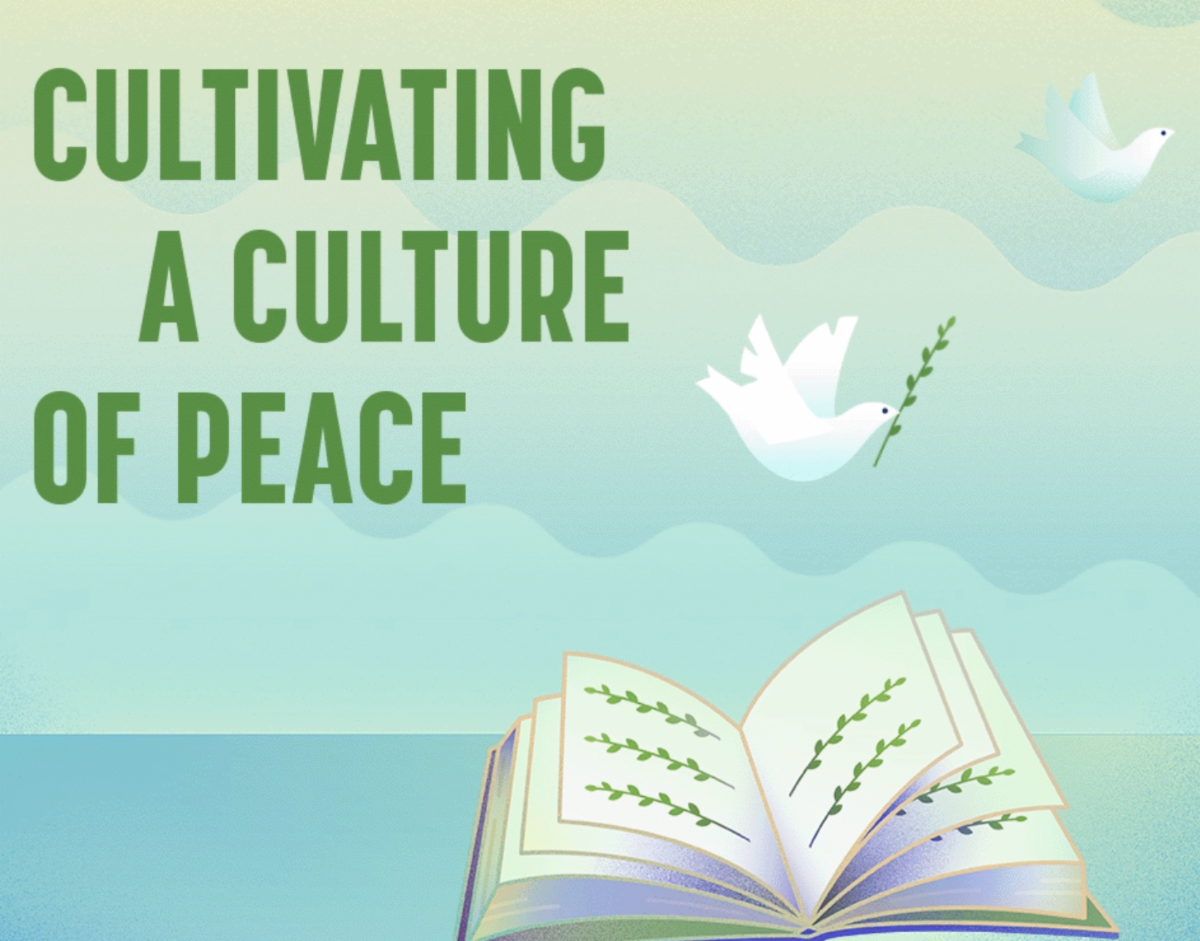
2024 UN International Day of Peace Boston: "Cultivating A Culture of Peace"
Sunday, September 22, 2024, 2 - 4pm ET
The Cathedral Church of St. Paul
(138 Tremont Street, Boston)
Park Street MBTA Station
FREE
Click here for more info
We have planned and organized the Boston area celebration of the United Nations International Day of Peace each year since 2010. This year's theme is "Cultivating a Culture of Peace." "In a world with rising geopolitical tensions and protracted conflicts, there has never been a better time to remember how the UN General Assembly came together in 1999 to lay out the values needed for a culture of peace. These include: respect for life, human rights and fundamental freedoms; the promotion of non-violence through education, dialogue and cooperation; commitment to peaceful settlement of conflicts; and adherence to freedom, justice, democracy, tolerance, solidarity, cooperation, pluralism, cultural diversity, dialogue and understanding at all levels of society and among nations."
Join us for a program of music, arts, and peace education led by emcee Dawn Duncan, including brief presentations by peacemakers such as Sara Ting, Joanna Don, Karilyn Crockett, Zakiya Alake, Ron Bell, Leigh Meunier and Rev. Vernon Walker regarding their work, with artistic performances by Cellist Miranda Henne, Singer Lina Marcela Sarmiento Tellez, and Spoken Word Poet Zenaida Peterson. It will conclude with a tribute to longtime organizer, Ian Harrington, from our friend, John Bach, and a reading of the list of recent local victims of violence. We will then walk to the nearby Garden of Peace to pray for peace among stones engraved with the names of local victims of violence. Co-sponsored alongside Friends Meeting at Cambridge and the Massachusetts Center for Native American Awareness, with a grant from the Mass Cultural Council.
Click here to download flyer
Click here to download program
| |
 | 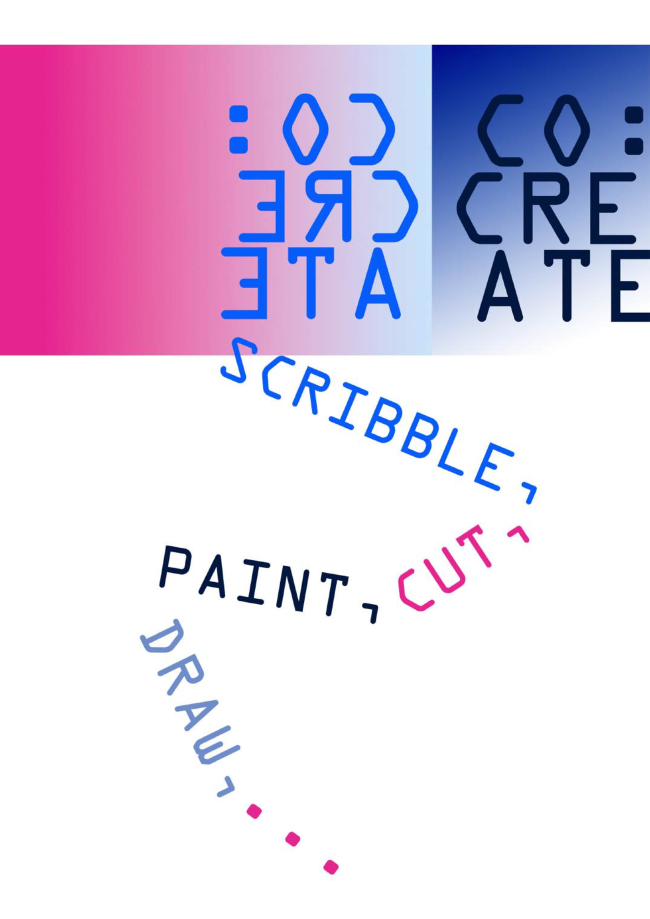 | One of our friends, Anja Schönau, is a change maker, fine artist and designer from Germany (also tenured and teaching art & design at university). She is part of the Art Collective Kaleidoscopic Visionaries, that develops interdisciplinary, collaborative, international projects with social impact for a more sustainable future. Anja has created a series of postcards, which initiate and foster to reflect on, to exchange and to co-create strategies for peace building for you. The postcards invite to scribble, to cut, to glue, to paint, to draw, to fold own unique approaches to peace building. To become a CO:CREATOR! You can print the postcards on thick paper with your printer at home, get creative and share your ideas by sending the postcards in the world. Please see below the pdf and feel free to share them with your communities (giving credit to the art collective)! The pdf is so designed, that there is a front and back of the postcards. If you print first pages 3, 5 and 7, then insert the paper a second time in the printer (the colored side up) and you print again the pages 4, 6 and 8, you have postcards with a front and back. You can cut along the edge, and the postcards are ready to be designed! You can furthermore CO:CREATE pages 2 and 9 with your ideas, e.g., with a unique poem, an encouraging hope, an utopian vision, a planned action, a critical demand, with folded paper flowers, with filigree drawn doves of peace, with colorful painted moments of happiness like community, music, literature, art, theatre, sport, animals, ... Help cultivate a culture of peace with us!
Click here to download the CO:CREATE project
| |
Comedians for Peace
Sunday, September 22, 2024, 7 - 8:30pm ET
The Comedy Studio
5 John F Kennedy St.
Cambridge, MA 02138
Click here for tickets
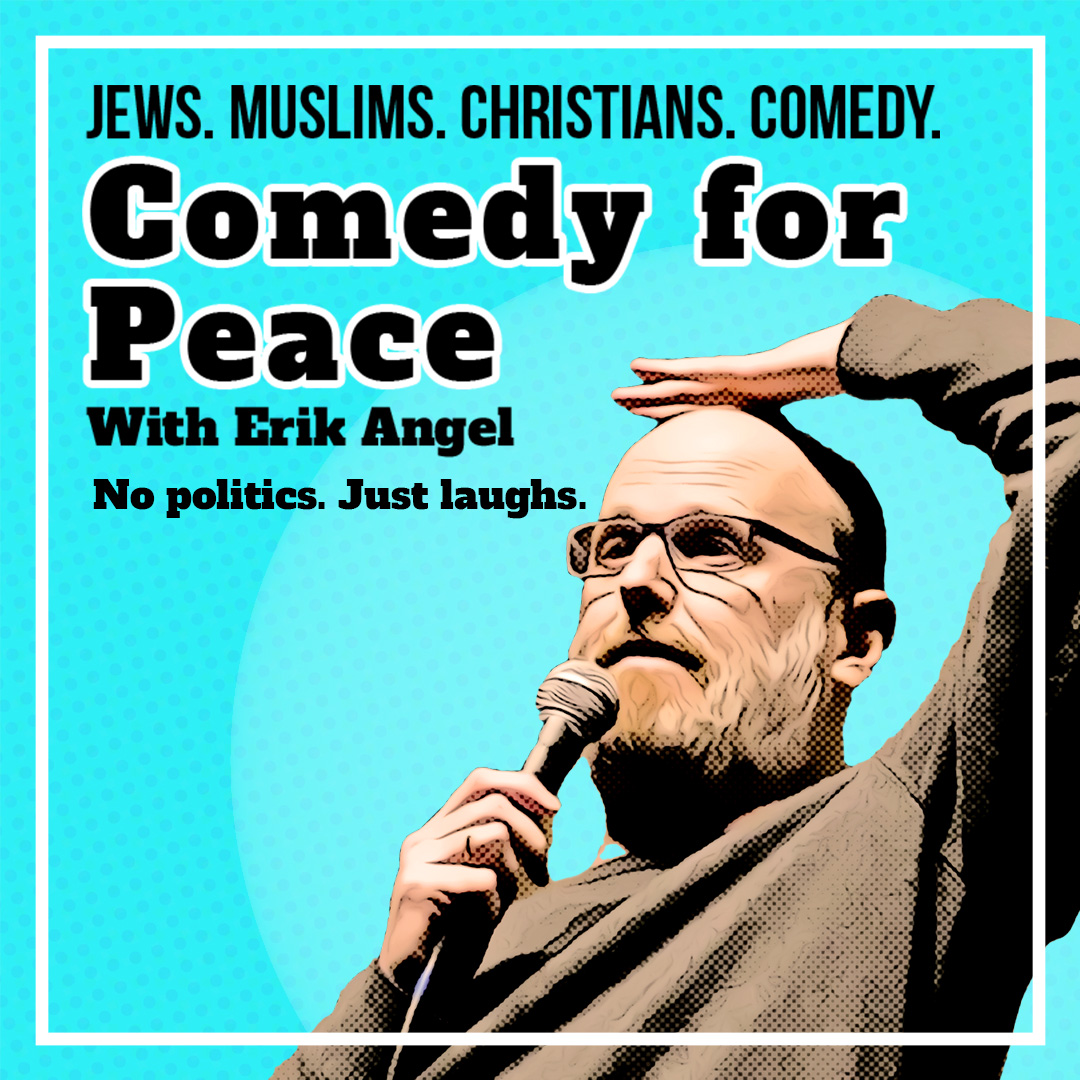
Jews. Muslims, Christians, All. Comedy. No politics. Just laughs. Originally part of 2023 New York Comedy Festival!!
Comedy for Peace (est. March 2019) is a project that aims to unite Jewish and Muslim communities through humor and mutual understanding. Our project brings together the best Muslim, Jewish and Christian stand-up comedians for an inspiring, funny and unforgettable evening.
Comedy for Peace was founded by comedian/producer Dotan Malach, who understood that although the political situation isn’t easily fixable – on a personal level, we’re all human beings who want to work and live together, peacefully. The first goal of Comedy for Peace is to show everyone that we can, very easily, collaborate, standing on one stage together, to have fun and to laugh on ourselves and on each other, without any politics involved.
Comedy For Peace combining the best Muslim, Jewish and Christian stand-up comedians for an inspiring, funny and unforgettable evening. It is an accessible, funny, fun, and meaningful show that brings interfaith diverse communities together, with the belief that we can make a difference through the art of comedy. Our show is a relief from the concerns of the day, with an important message that we, the people, just want to live together peacefully. Our show proves Muslims and Jews can work together, laugh at themselves and each other and be friends. We refuse to be enemies!
For one night only at The Comedy Studio, the evening will begin with the interfaith chorus group, What The World Needs Now.
https://www.facebook.com/interfaithcoalitionsingers
| |
|
MORE CMM EVENTS
Saturday & Sunday, November 2nd & 3rd, In Celebration of Rumi, with recitations of Rumi's poetry in Farsi and in English, along with a sema of whirling dervishes and the musical stylings of Orkestra Marhaba. Locations & times TBD. Click here for a recording from last fall.
| | | | |