|
Dear Reader,
In this issue, we take a deep dive into various topics, ranging from the importance of introducing tailored financing solutions for electric vehicles in India and the challenges associated with it to how it is now crucial to focus on rural areas to ratchet up EV penetration. Following the launch of our EV dashboard, we analyse the electric vehicle sales and conclude how just a handful of states are driving the market. We bust myths about Zero Emission Trucking and explore how improving metro access is crucial to make it the preferred mode of clean transportation for commuters.
We also try to understand the growing pushback against EVs and analyse the rationale behind the Auto Workers Union strike in the US amid a growing clamour that EV manufacturing will be disastrous for the American auto industry.
Happy reading!
Team Clean Mobility Shift
| |
To Grow Rapidly, Rural India Needs an EV Push | India has shown a strong commitment towards achieving its EV targets. While a significant effort is underway to ramp up the EV ecosystem in cities, there is a need to focus similarly on the countryside. Shifting to EVs for ferrying people as well as using e-tractors for farming and e-trucks for carrying goods can vastly improve profits of the rural household. In this analytical story, we try to understand why it is crucial for India to focus on rural areas to boost EV penetration. | | |
|
Electrifying India’s Roads: Financing EVs – Challenges, Progress and the Road Ahead.
India’s plans for a monumental shift towards e-mobility is not without its own share of challenges, one of which is the high upfront cost, primarily driven by the expense of batteries. To make EVs more accessible to the masses, addressing this affordability barrier is imperative.
In this article, Sameer Aggarwal, founder and CEO of EV financing firm Revfin Services, argues that traditional financing models may not be suitable for EVs due to their unique characteristics, making it crucial to introduce tailored financial solutions that address the specific needs of EV buyers.
| |  |
|
Understanding the growing pushback against EVs
There has been a growing clamour for pushback of electric vehicles. Political divisions and protecting the jobs in ICE vehicle manufacturing are among key factors shaping this narrative. The pushback has been particularly pronounced in the US, such as in California. The Republican party there is expected to try and force the state — and other Democrat-led states — away from setting its own EV mandates. In this analytical article, we explore the narratives shaping the resistance to EVs.
| | |
|
Just 6 states in India account for 60% of EV sales in 2023 so far
The EV dashboard, launched by Climate Trends recently, threw up some interesting sales figures and pointed towards a handful of states driving the e-mobility growth in the country. Through the dashboard, which allows for quick analysis across different vehicle categories, time periods, state and national level, we analyse EV sales trends and get various experts to speak about what is driving these trends and what further needs to be done.
| | |
|
Common myths about electric trucks busted
Despite the government’s push for electrification of its freight transport sector, which contributes enormously to PM emissions, myths and misconceptions still persist about the vehicle’s performance, range, load capacity among others. As this transition is important due to its environmental and cost benefits, we try to bust some of the common misconceptions associated with electric trucks.
| | |
|
Will The New Scheme For 10,000 Electric Buses Give Desired Results?
To push green mobility and a sustainable public transportation system, the government recently approved a scheme that aims to deploy 10,000 electric buses along with charging and associated infrastructure – in nearly 170 cities. We take a look at the ‘PM-eBus Sewa' scheme, which would cost over Rs 57,000 crore, and how it is likely to boost India’s electric mobility ambitions and scale up the transition toward electrification of clean public transportation.
| | |
|
Fact-checking the US auto strike: How EVs are creating jobs
The Union Auto Workers in the US have gone on strike for better wages amid opposition claims that EV manufacturing will be detrimental for the American auto industry. Spearheading the charge against the Biden government is Donald Trump. However, data shows that EVs have generated several times more new jobs and attracted massive investments. In this analytical story, we piece together the finer points of the data and explore the future of manufacturing electric vehicles in the US.
| | |
|
Improving Metro Access Crucial To Make It Preferred Mode Of Mass Transit
India has invested heavily in transitioning the urban transit infrastructure towards clean mobility, particularly by introducing metro rail services in several cities. Still, the metro system in many of these cities have remained surprisingly underutilised. Different cities have different commuter groups and the requirements for mobility and travel patterns may vary. In this piece, we explore how it is crucial to understand the diversity of each city to make the metro rail services more appealing and more sustainable
| | |
|
Challenges to Affordable Financing for EVs in India
India’s initial success with electric vehicles, mainly two-and-three wheelers, has shown that there’s a perceptible acceptance for EVs among buyers. However, while consumers get easy access to financing options for buying traditional vehicles, they face some challenges when buying EVs. We analyse how the absence of a holistic EV financing ecosystem acts as a significant hurdle to large-scale adoption of EVs, making it more crucial to address barriers in financing so that more buyers are attracted to this new segment.
| | |
|
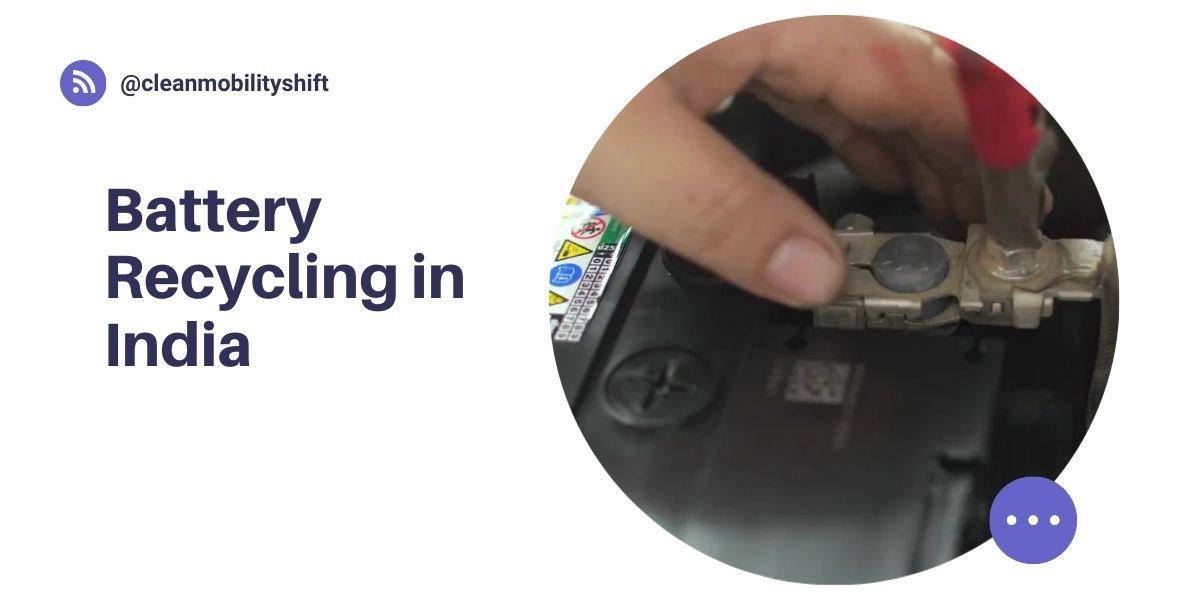
Why is it essential for India to scale up battery recycling?
India has embarked on an ambitious path of clean mobility with a focus on electrification of its transportation. But a major challenge is obtaining access to raw materials required for the manufacturing of lithium-ion batteries, one of the major components of Electric Vehicles. Dependence on other countries for critical minerals makes the country vulnerable to risks in the global supply chain. In this video, we explore how focussing on battery recycling can help India become self reliant.
| |
|
To speak to experts for quotes and comments on the above stories, or to tell us how we can improve our coverage, please write to us.
| |
Follow us on social media | | | | |