|
WOW!
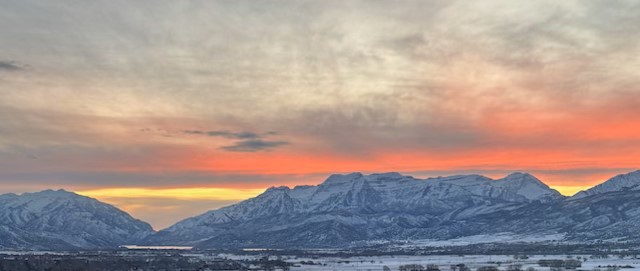
The ridge line of the majestic Mount Timpanogos, a nearly 12,000-foot mountain peak in northern Utah, is also known as the Sleeping Princess. On clear days, people admire her and say, "See? There is her profile." Pointer fingers tracing through the air, they outline her long silhouette and share the modern lore of the Sleeping Princess, often imagined to be an authentic Native American legend.
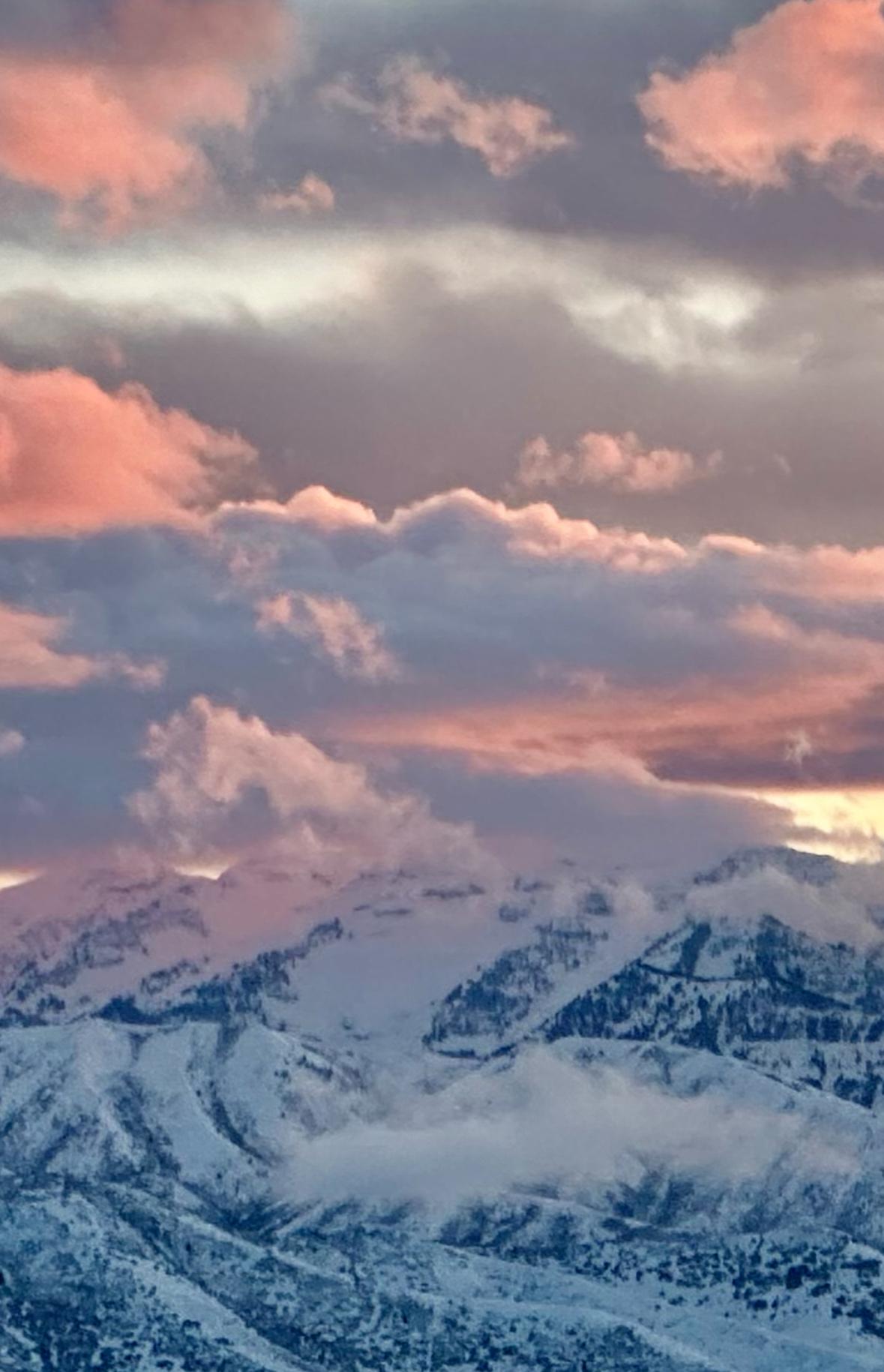
The mountain’s name honors Princess Ucanogos’s soul and that of her beloved, Timpanac. The story of the Indian maiden and brave took a dark turn, which allegorically plays out in winter when gray stratus clouds blanket the princess and, on the most overcast days, the entire mountain. Yet, when clouds that shroud Mount Timpanogos part in the late afternoon, the sun's rays - like the light of their souls - shine in a fantastical myriad of hues through the darkness.
Today, the phenomenon of winter sunsets, like those in our featured photographs of the east side of Mount Timpanogos, can be explained by science. However, like the light and dark of our lives and those who came before us, they are most deeply experienced by our cores. Enjoy learning about why winter sunsets are generally more colorful than other times of the year. Check out the beautiful journal illustrations and notes of sunsets by The Nature Conservancy's Erica Sloniker. Click HERE.
|