Greetings!


As the world looks towards COP31 in Antalya, the priority must shift from preparing countries to protect forests to accelerating finance for results already achieved.


Jurisdictional REDD+ is showing what is possible. Between July 2025 and June 2026, at least US$473 million was paid for results across 12 jurisdictions, covering approximately 86 million tonnes of verified emission reductions. REDD+ is moving beyond proof of concept towards proof of scale.


But verification is only part of the journey. High costs, complex contracts, limited upfront finance and evolving standards continue to slow the conversion of verified results into payments, investment and lasting benefits for Indigenous Peoples, local communities and forest stewards.


In our latest feature, we explore the progress, bottlenecks and practical solutions needed to close the gap between verified results and payments, while unlocking greater public and private investment.


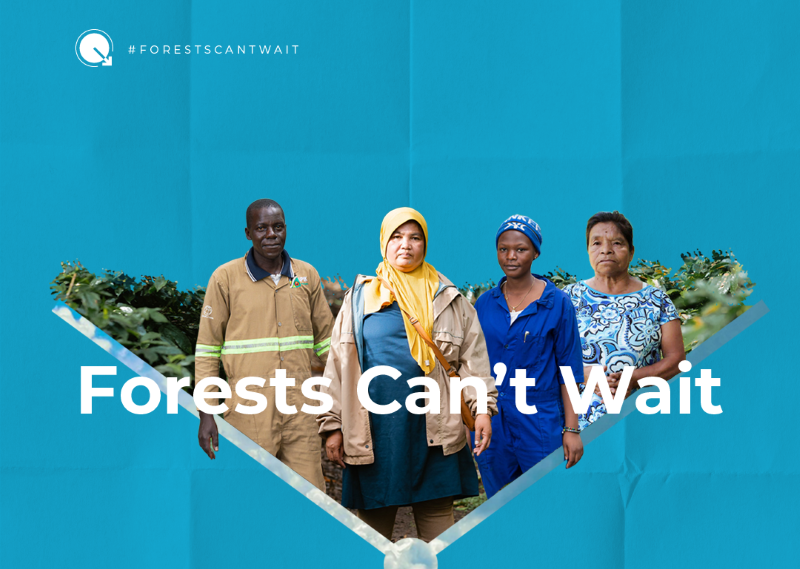
Through #ForestsCantWait, a collective campaign that builds urgency around forest action and showcases solutions already underway that need to be scaled, we are bringing partners together to accelerate results-based forest finance – from COP31 to COP32 and beyond.


The message is clear: the foundations are in place, results are being delivered, and now it is time to close the last mile.


Join the campaign here. Be part of the movement. Every voice counts. Every action matters.


For more REDD+ news, see the links below.


IN THIS ISSUE


FEATURE

MORE STORIES

VIDEOS

FOREST PARTNER

PUBLICATIONS

EVENTS

JOBS

A collective campaign to build urgency around forest action while showing that solutions are already happening and need to be scaled.

From COP30 to COP31 and beyond: jurisdictional REDD+ is delivering and continues to progress, laying the groundwork to scale up action

How far and how fast jurisdictional REDD+ scales up depends on sustaining the cycle from emission reductions, to verified results, to payments and further investment.


As countries complete their first REDD+ results-based finance rounds, they strengthen their own future climate mitigation efforts and pave the way for others to follow suit.


Jurisdictional REDD+ is delivering results and gaining momentum. Between July 2025 and June 2026, at least US$473 million was paid for results from at least 11 jurisdictions, covering some 86 million tonnes of verified emission reductions, according to the Forest & Climate Leaders’ Partnership (FCLP).


Designing fair and equitable benefit sharing for jurisdictional REDD+


Jurisdictional REDD+ is moving beyond readiness, with results now being verified and credited. In June 2026, Costa Rica became the first country to have REDD+ removals verified under ART’s REDD+ Environmental Excellence Standard (TREES). More national and subnational governments are also developing programmes under TREES 3.0 and Verra’s Jurisdictional and Nested REDD+ (JNR) framework.


As results-based finance becomes a tangible prospect, the focus is shifting to who receives the benefits, how they are allocated and on what basis—moving benefit-sharing from principle to practice.


Read more

Mexico: from REDD+ readiness to impact on the ground


On 28 October, the Green Climate Fund (GCF) approved US$85.3 million to reward Mexico for reducing emissions from deforestation and forest degradation. The funding recognises 12.9 million tonnes of CO₂ equivalent in verified REDD+ emission reductions achieved between 2018 and 2019.


The results reflect more than a decade of national policies, public investment, international financing and technical support, alongside the contributions of local communities, public institutions and development partners.


Read more

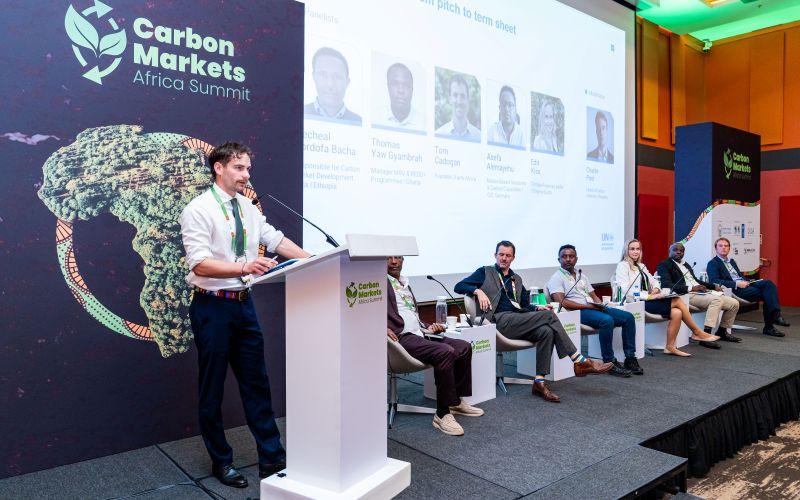
Less theory, more term sheets: what we learned in The Nature Deal Room at CMAS 2026


The summit brought together more than 600 participants from 47 countries, including 23 African countries, to advance discussions on Africa’s role in global carbon markets. Rwanda’s Environment Minister, Bernadette Arakwiye, underscored the importance of developing African-focused methodologies, strengthening readiness finance and securing sustained demand for carbon credits at fair and equitable prices. The summit also saw the launch of two new initiatives: the Africa Nature Impact Fund and the Africa Carbon Investment and Finance Alliance, aimed at mobilising investment and strengthening Africa’s carbon market ecosystem.


Read more about the summit’s key outcomes and announcements.


Read more

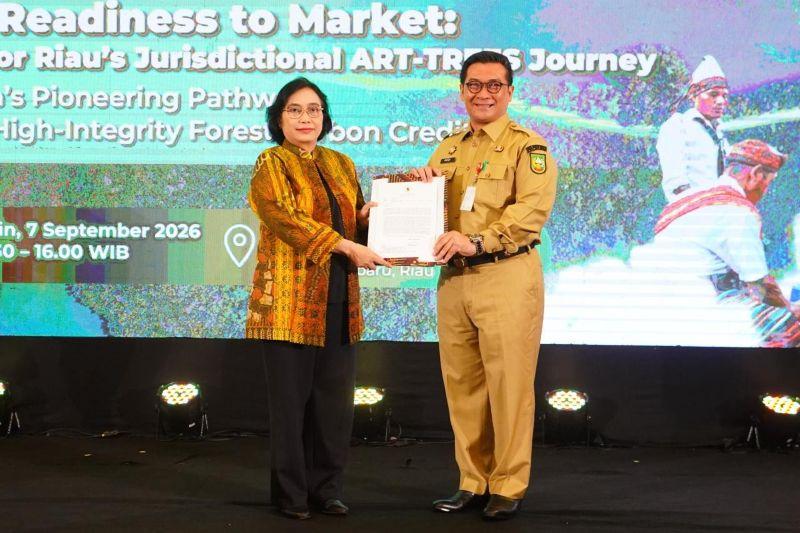
Counting carbon: One Province, one ledger


Indonesia’s Riau province is advancing preparations to register under ART’s REDD+ Environmental Excellence Standard (ART-TREES). A key step is resolving how emission reductions from two existing private-sector projects will be accounted for within the provincial framework. On 7 September, the Ministry of Forestry formally endorsed the process.


Known as nesting, this process integrates project-level emission reductions into jurisdictional accounting, requiring agreement on data, baselines, carbon rights, safeguards and existing claims.


Read more

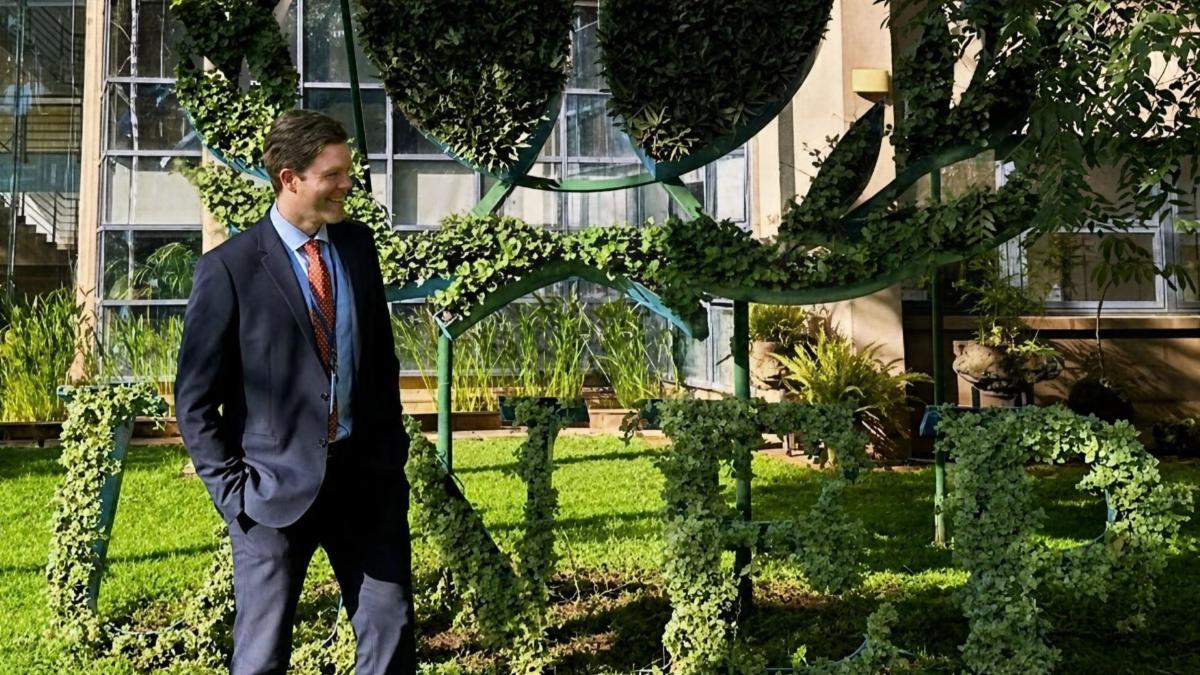
Turning an interest in climate finance into an award-winning dissertation and a UN career


A little over a year ago, I was immersed in the LSE library exploring climate finance, carbon markets and REDD+ in Africa. REDD+ seeks to incentivise keeping forests standing by attaching financial value to reductions in forest-related emissions, bringing together climate mitigation, conservation and development finance in what is often described as a “triple win”


What struck me was the polarised debate: while some viewed carbon markets as transformative sources of conservation finance, others warned of the risks of reinforcing historical inequalities, dispossession and external control—often described as “carbon colonialism”.


Read more

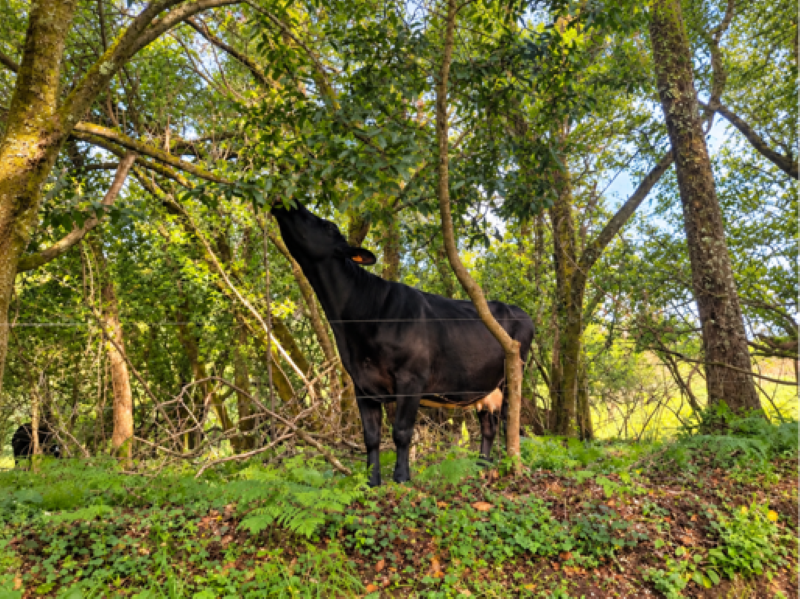
Asia-Pacific countries step up collaboration to decouple agricultural value chains from deforestation


Asia-Pacific produces more than half of global agricultural output, with agriculture providing livelihoods for over 40 per cent of its population. Forests, covering 21 per cent of the region’s land area—and more than a third in South and Southeast Asia—are critical to sustaining this productivity.


They regulate climate and water cycles, maintain soil fertility, control pests and diseases, and support pollination. Yet, despite progress in reducing deforestation, the region continues to lose 2.5 million hectares of forest annually, accounting for 23 per cent of global deforestation.


Read more

From diagnosis to action: strengthening stakeholder engagement and social inclusion in Africa’s jurisdictional REDD+


As African countries move from REDD+ readiness into implementation, with growing access to results-based finance and carbon markets, expectations for demonstrating meaningful and inclusive stakeholder engagement are also increasing.


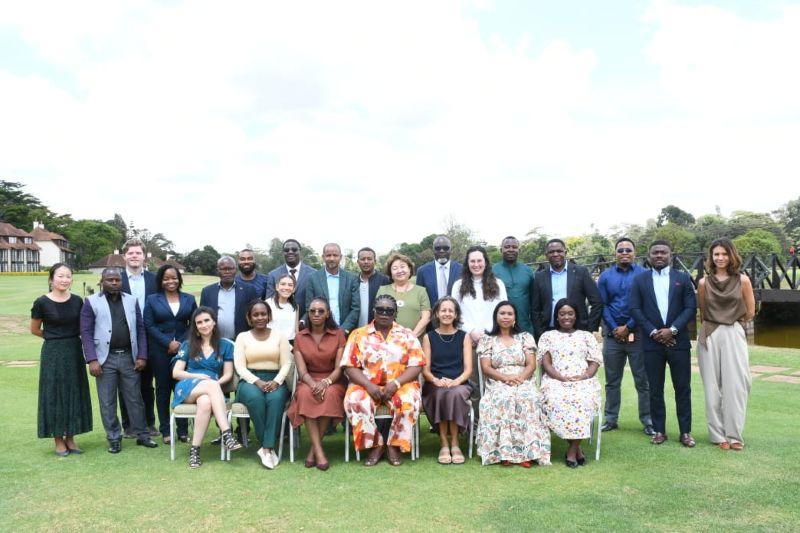
From 27 to 29 October 2026, the UN-REDD Programme’s Safeguards and Integrity Working Group (SIWG) for Africa convened 25 participants from nine countries in Nairobi, Kenya, for a three-day regional workshop focused on strengthening stakeholder engagement and social inclusion in jurisdictional REDD+.


Read more

Advancing community tenure rights and forest stewardship in the Democratic Republic of the Congo


The Democratic Republic of the Congo (DRC) is currently at a pivotal moment in its efforts to strengthen community tenure and forest governance.


A major milestone was reached on 6 October 2026, when the DRC officially launched the process to develop its National Implementation Plan for the Intergovernmental Land Tenure Commitment (ILTC). Through an inception workshop bringing together government institutions, development partners, civil society organizations, academia, and representatives of Indigenous Peoples and local communities, the country initiated a process aimed at translating international commitments into concrete national actions.


Read more


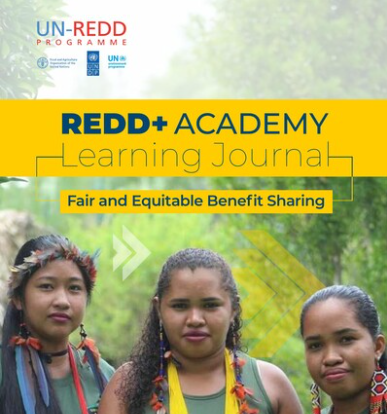
📘 New Learning Journal | Fair and Equitable Benefit Sharing in Jurisdictional REDD+


How can benefits from jurisdictional REDD+ initiatives be shared fairly and equitably?


Our newly launched Learning Journal explores the legal and policy foundations of benefit sharing, the principles underpinning fair and equitable arrangements, and the key elements that countries need to address when designing them.

Featuring country examples and practical insights, the journal supports policymakers, practitioners and other stakeholders in translating benefit-sharing principles into effective arrangements on the ground.


Explore the Learning Journal: here

Forests Can't Wait – Time to take action is now

International Day of Forests 2026: Forests and economies - forests mean business

1. Can aligning public spending and policies help reduce deforestation? Uganda is piloting a new policy coherence and public expenditure analytical framework

2.América Latina y el Caribe impulsa la gobernanza participativa de sus bosques y el acceso a financiamiento climático de cara a la COP31

3. Why nature-based solutions for cities are the future of urban resilience

4. FAO report: Restoring forests and landscapes is critical to meeting global food security and development goals

5.Tracking restoration progress of the world’s forests

6.Fortaleciendo la tenencia de los bosques y de la tierra para la acción climática en el Perú: del compromiso a la acción.

7. América Latina avanza hacia un camino común para los bosques y los sistemas agroalimentarios sostenibles

8. From Food Security to Restoration: 88 Families Reap the Benefits of the Forest Conservation Pathway in the Amazon Biome

9. New model forest act can help halt and reverse deforestation

Restoration progress report: Nature's comeback


The State of the World’s Forests 2026 (Arabic, English, Chinese, French, Russian, Spanish)


Forests for food Nourishing people, sustaining the planet


Guide to integrated fire management governance assessment


Supporting Indigenous Peoples and Local Communities Through REDD+ and Adaptation Finance


UN-REDD at COP 31

Forest Roadmap Launch


High-Level Southeast Asia Dialogue: Scaling Sustainable Forestry for Biodiversity and Nature


REDD+ as a Catalyst: How Results-Based Finance Transforms the Forests and Land Use Sector


The Last Mile to Issuance: Unlocking Jurisdictional REDD+ (JREDD+) Finance at Scale


 Protecting Asia’s Forests at Scale: Lessons from Viet Nam


Who Benefits from NbS and Forest Carbon? Women and Communities in ASEAN’s Climate Finance


Placing Nature at the Heart of Climate Action


Korea’s Forest Policies and Enhancing Global REDD+ Capacity


From REDD+ Readiness to Article 6 Implementation (by invitation only)


Forestry Officer


Landscape Coordination and Forest Restoration Specialist


LEARN


Access and share valuable

REDD+ knowledge


Facebook  Twitter  Instagram  Linkedin  Youtube  

CONNECT


Stay connected with the UN-REDD Programme


ABOUT


Learn more about the UN-REDD Programme

This resource is made possible through support from Denmark, Japan, Luxembourg, Norway, Spain, Switzerland and the European Union.

Content provided by UN-REDD Programme staff, partner countries and guests. 

All images used courtesy of license holder or through Creative Commons license.