To opt out of these daily Black History emails from the Voting Rights Alliance,
please reply back to this email.
|
|
The Transformative Justice Coalition's (2015-present) 2022 Voting Rights Agenda
&
What YOU can do to advance voting rights
2022 edition- corrected
|
|
I apologize for any inconvenience in receiving two emails. The correction to this email was a fragment sentence indicating an article had been given an important update. I have bolded this update below in a noticeable color. Thank you. |
|
JOIN THE TRANSFORMATIVE JUSTICE COALITION:
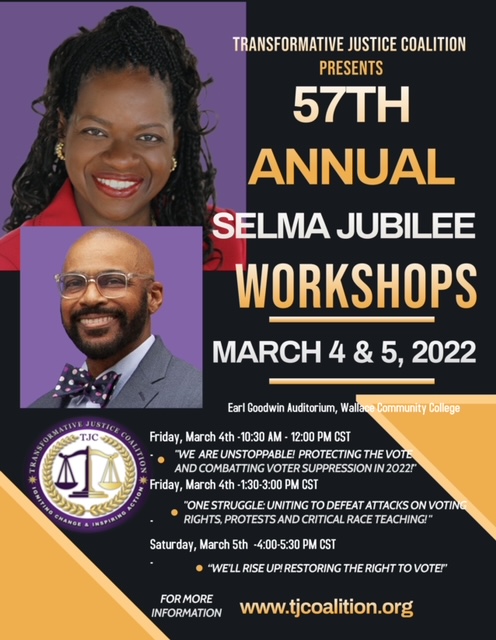
57th ANNUAL SELMA JUBILIEE WORKSHOPS
MARCH 4 & 5, 2022
Earl Goodwin Auditorium, Wallace Community College
-
Friday, March 4th -10:30 AM -12:00 PM CST: "WE ARE UNSTOPPABLE! PROTECTING THE VOT AND COMBATTING VOTER SUPPRESSION IN 2022!"
-
Friday, March 4th -1:30-3:00 PM CST: "ONE STRUGGLE: UNITING TO DEFEAT ATTACKS ON VOTING RIGHTS, PROTESTS AND CRITICAL RACE TEACHING!"
-
·Saturday, March 5th -4:00-5:30 PM CST: "WE'LL RISE UP! RESTORING THE RIGHT TO VOTE!"
|
|
Click the buttons below to share this article to your social networks: |
|
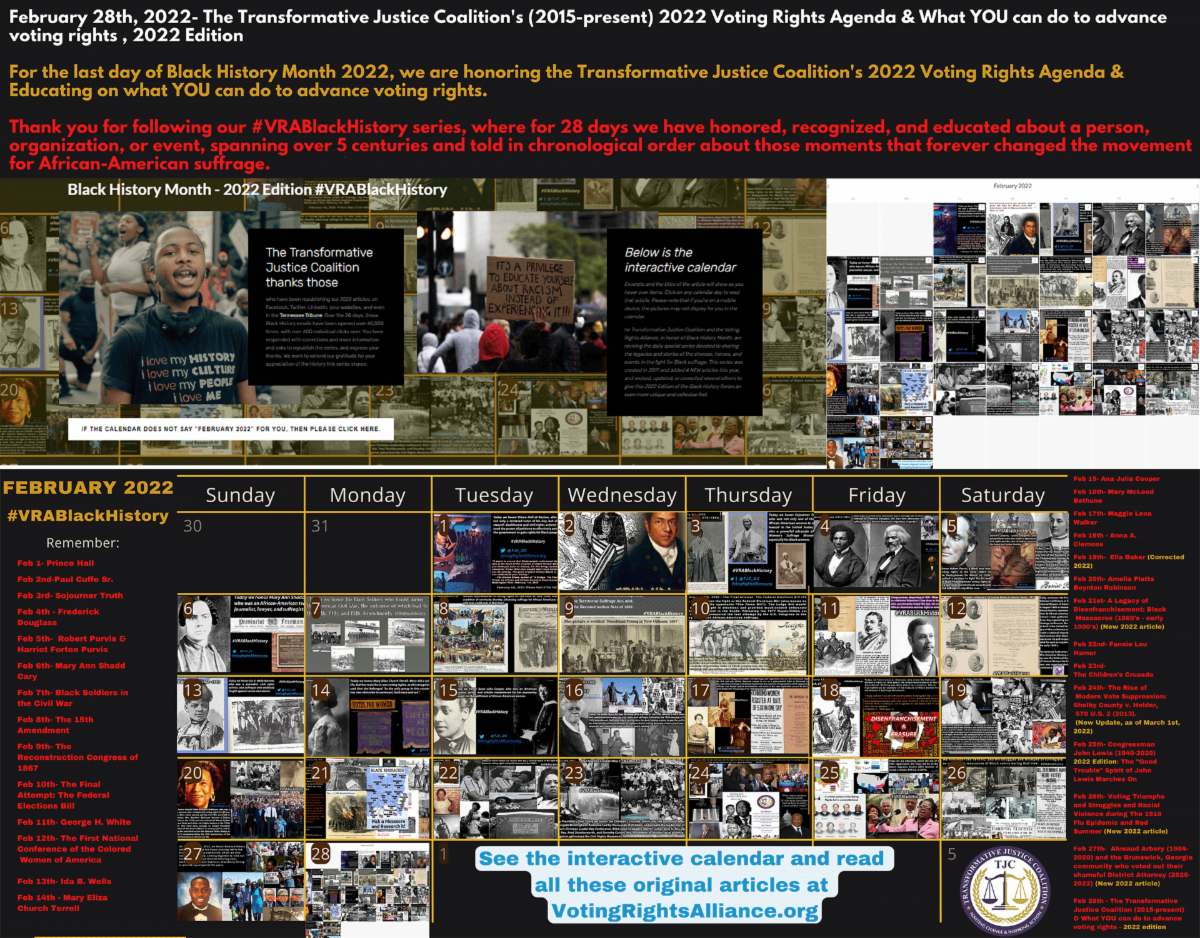
The Transformative Justice Coalition and the Voting Rights Alliance, in honor of Black History Month, are reviving the daily special series devoted to sharing the legacies and stories of the sheroes, heroes, and events in the fight for Black suffrage. This series was created in 2017 and added 4 NEW articles, and several articles were revised, updated, and, corrected this year as well. In addition to these daily newsletters all February long, this series also incorporates daily social media posts; an interactive calendar; and, website blog posts to spread the word broadly.
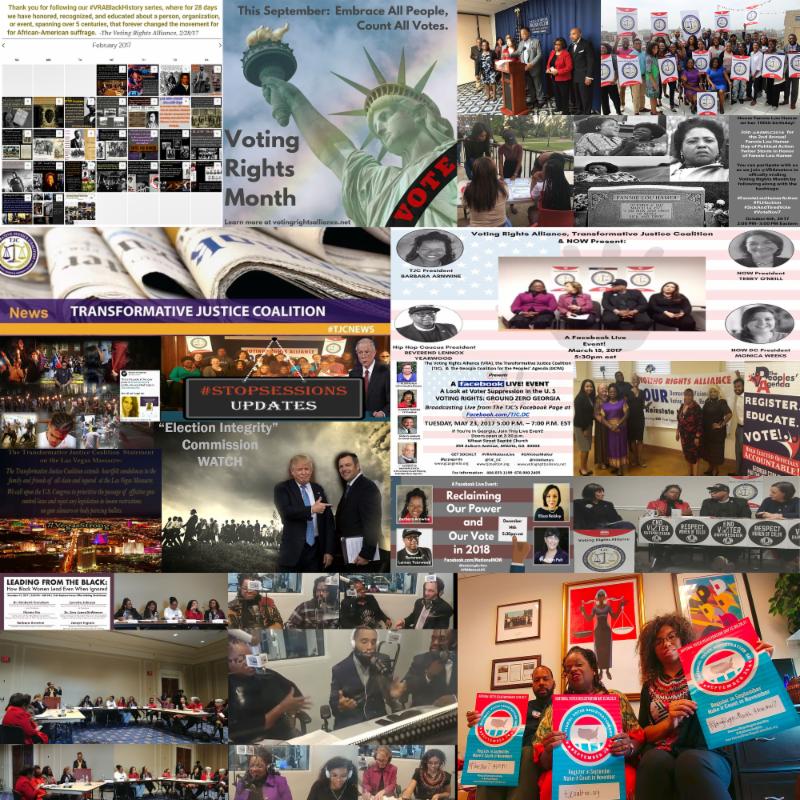
Thank you for following our #VRABlackHistory series, where for 28 days we have honored, recognized, and educated about a person, organization, or event, spanning over 5 centuries and told in chronological order about those moments that forever changed the movement for African-American suffrage. Below is the list of all 28 articles that were published this year.
|
|
The 2022 interactive calendar and series has now been fully updated with all corrected versions of articles on VotingRightsAlliance.org. You can view this by clicking below. |
|
Black History Month- 2022 Edition #VRABlackHistory - The ...
The Transformative Justice Coalition and the Voting Rights Alliance, in honor of Black History Month, are reviving the daily special series devoted to sharing the legacies and stories of the sheroes, heroes, and events in the fight for Black...
Read more
www.votingrightsalliance.org
|
|
|
|
|
|
We encourage everyone to share this series to your networks and on social media under the hashtag #VRABlackHistory. You can also tweet us @TJC_DC to share your own facts.
Barbara Arnwine insisted that we could not have another year without publishing our Black History series! The Transformative Justice Coalition thanks those who have been republishing our articles, on Facebook, Twitter, LinkedIn, your websites, and even in the Tennessee Tribune. Over these past 28 days, these Black History emails have been opened over 65,000 times, with over 600 individual clicks. You have responded with corrections and more information and asks to republish the series, and express your thanks. We want to extend our gratitude for your appreciation of the history this series shares.
***The correction to this article is to the following sentence I didn't complete:
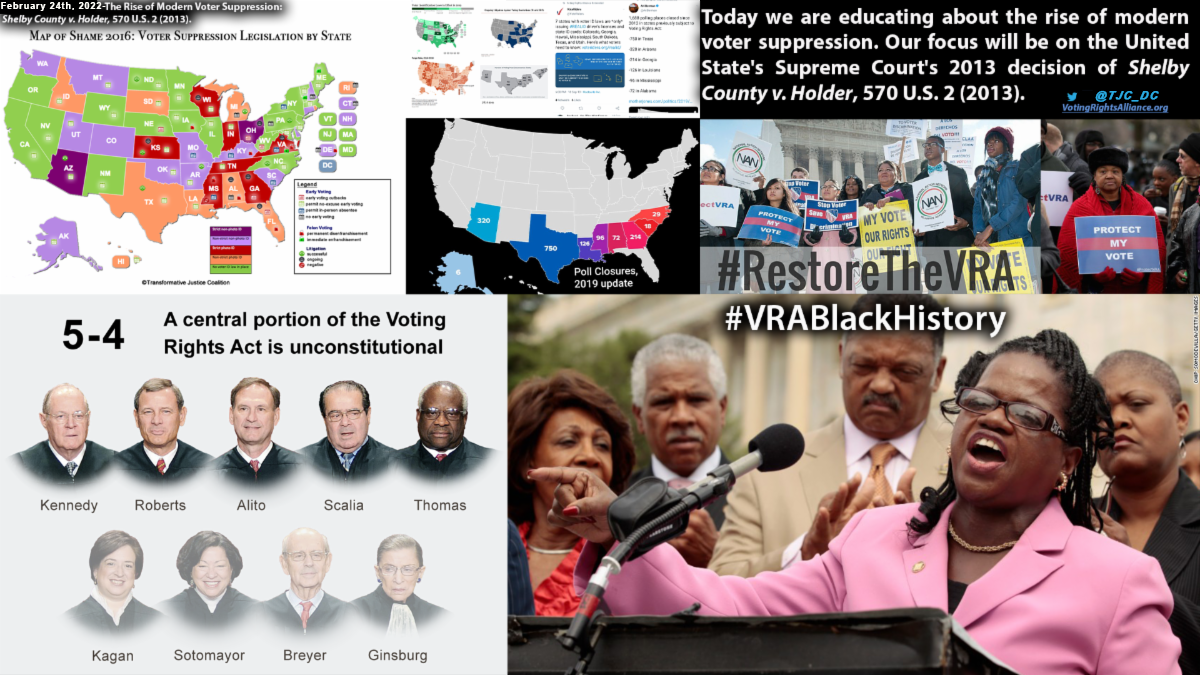
Please note that I have made an important update to the article about the Rise of Modern Suppression. You can see that update which includes the historic case Patino v. City of Pasadena, 230 F. Supp. 3d 667 (S.D. Tex. 2017) below:
|
|
CORRECTED- Today, we are educating about the Rise of...
This updated section is at the end of this article in the "Commentary and a Post-Shelby County Era" section after the "Concerning the oral arguments in Shelby County v. Holder". Thank you.
Read more
myemail.constantcontact.com
|
|
|
|
|
|
You can also watch Caitlyn read the 2018 version of this article, which includes the history of the Transformative Justice Coalition up through 2018, on video via Facebook Live and Periscope, as a part of the 2018 #VRABlackHistoryLIVE series. View past article-readings by searching the #VRABlackHistoryLIVE.
|
|
Yesterday, for the last day of Black History Month 2022, we are honoring the Transformative Justice Coalition's 2022 Voting Rights Agenda & Educating on what YOU can do to advance voting rights. |
|
The Transformative Justice Coalition's 2022 Voting Rights Agenda
The Transformative Justice Coalition (TJC) is a national non-partisan, non-profit, racial justice organization. The Transformative Justice Coalition is a nonpartisan, 501(c)(3) nonprofit organization, formed in 2015 by Renowned Civil Rights Leader Barbara R. Arnwine. To learn more about TJC's founder, see the video below. The Living Legends Awards for Service to Humanity celebrated living legends on the front lines of the pandemic, diversity / equity / inclusion, and voting rights at its black-tie formal event on February 26th. The honorees for 2022 are Jaquenette Prillman, RN; Erin O'Shea, PhD, President of the Howard Hughes Medical Institute; Barbara Arnwine, Esq. ,president & founder of the Transformative Justice Coalition.
Watch the livestream of this event below. The entire program is a must-watch, from the music to the honorees. Barbara Arnwine speaks at the end of the event at about 1 hour and 54 minutes into the video, which begins with a video about her work, an amazing musical performance of "Stand Up", and a heartwarming introduction.
|
|
TJC's critical work furthers a vision of a world in which every individual has an equal opportunity to fully participate in their governance. A world where there is informed civic engagement and equal voting rights for all, regardless of race, gender, disability, youth, ethnicity, culture, religion, language, past felony convictions, and income. A world where there is no senseless incarceration for people of color in federal and state prisons; and no felon disenfranchisement. A world where nobody would be held back because of their gender, race, religion, or culture and where you wouldn’t hear stories that only describe the negative aspects of communities of color.
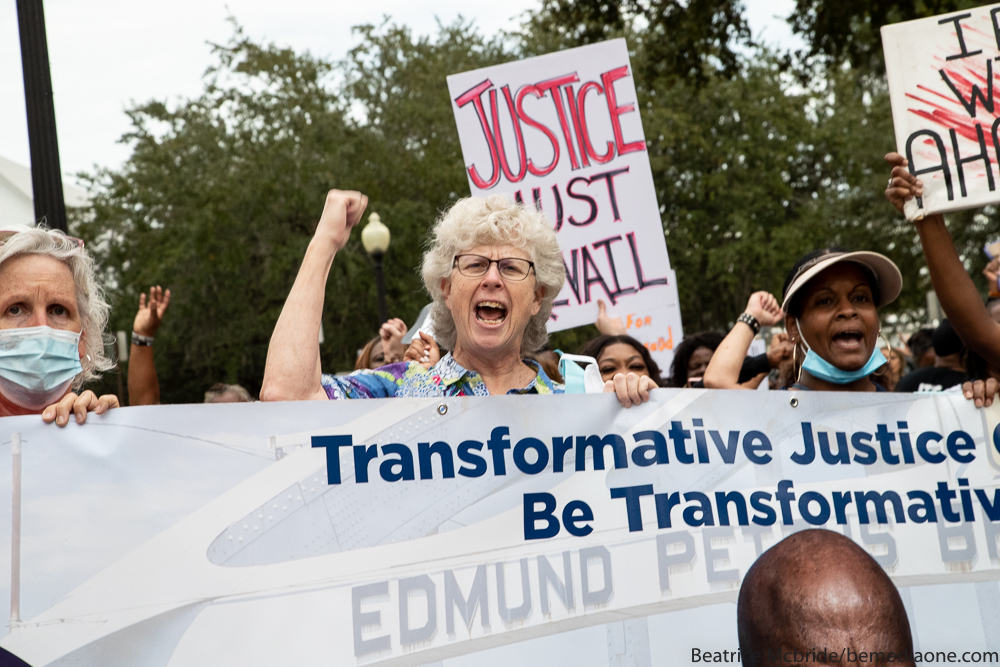
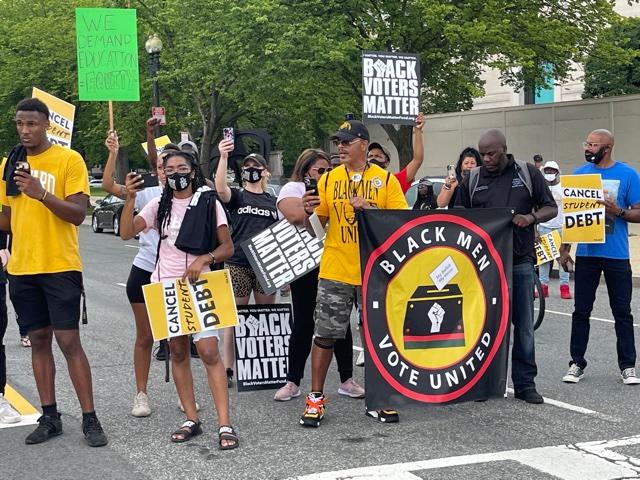
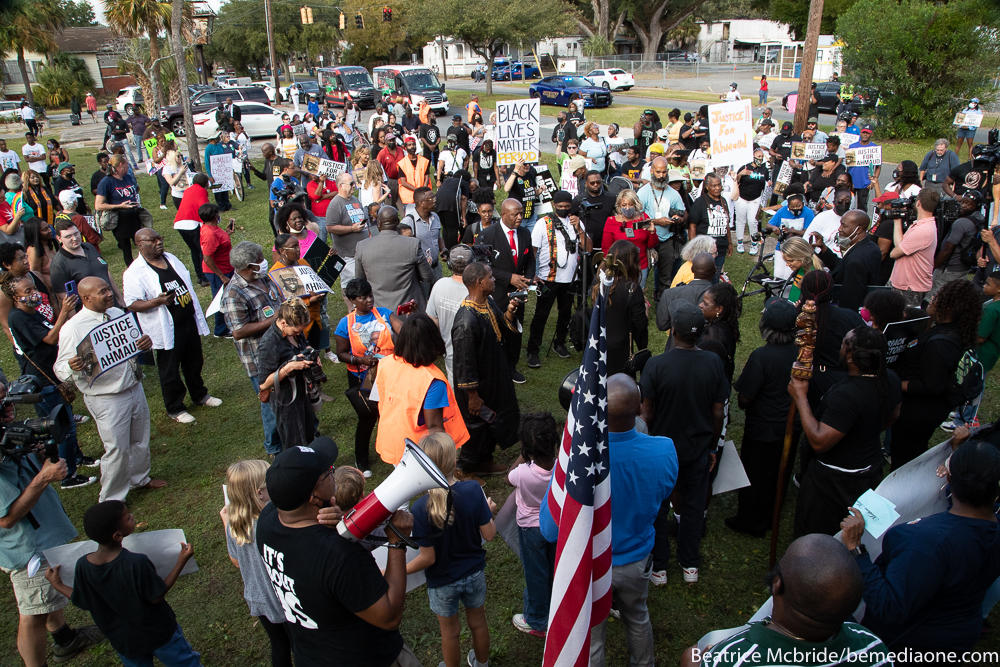
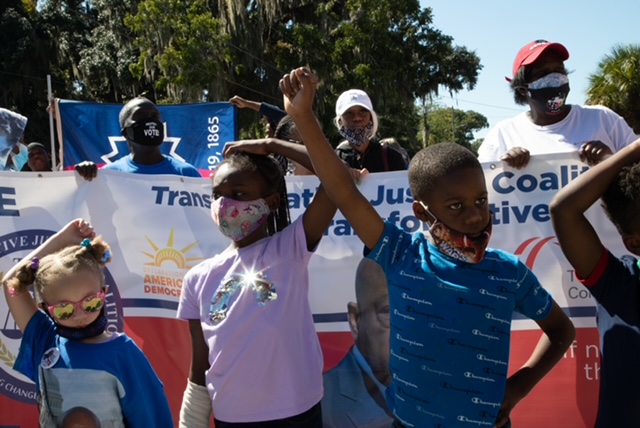
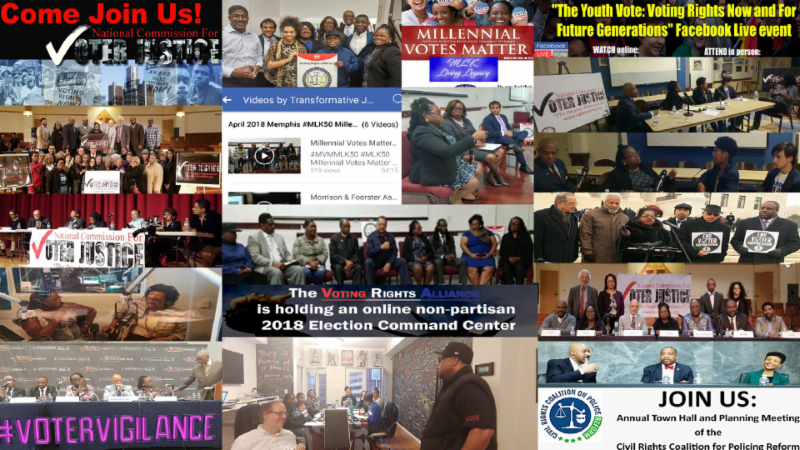
TJC has fostered new coalitions and organizations to aid in its fight to educate, unite, organize, and demand equality. It has done so in the past with the National Coalition for Voter Justice; the 2016 African American Women and the Law Conference; the Civil Rights Coalition on Policing Reform; the Gen Z and Millennial Votes Matter Trainings; TeleTown Halls and Social Media Events, such as Twitter Storms. TJC has been on the ground around the country, from writing reports to standing in front of government buildings protesting and marching.
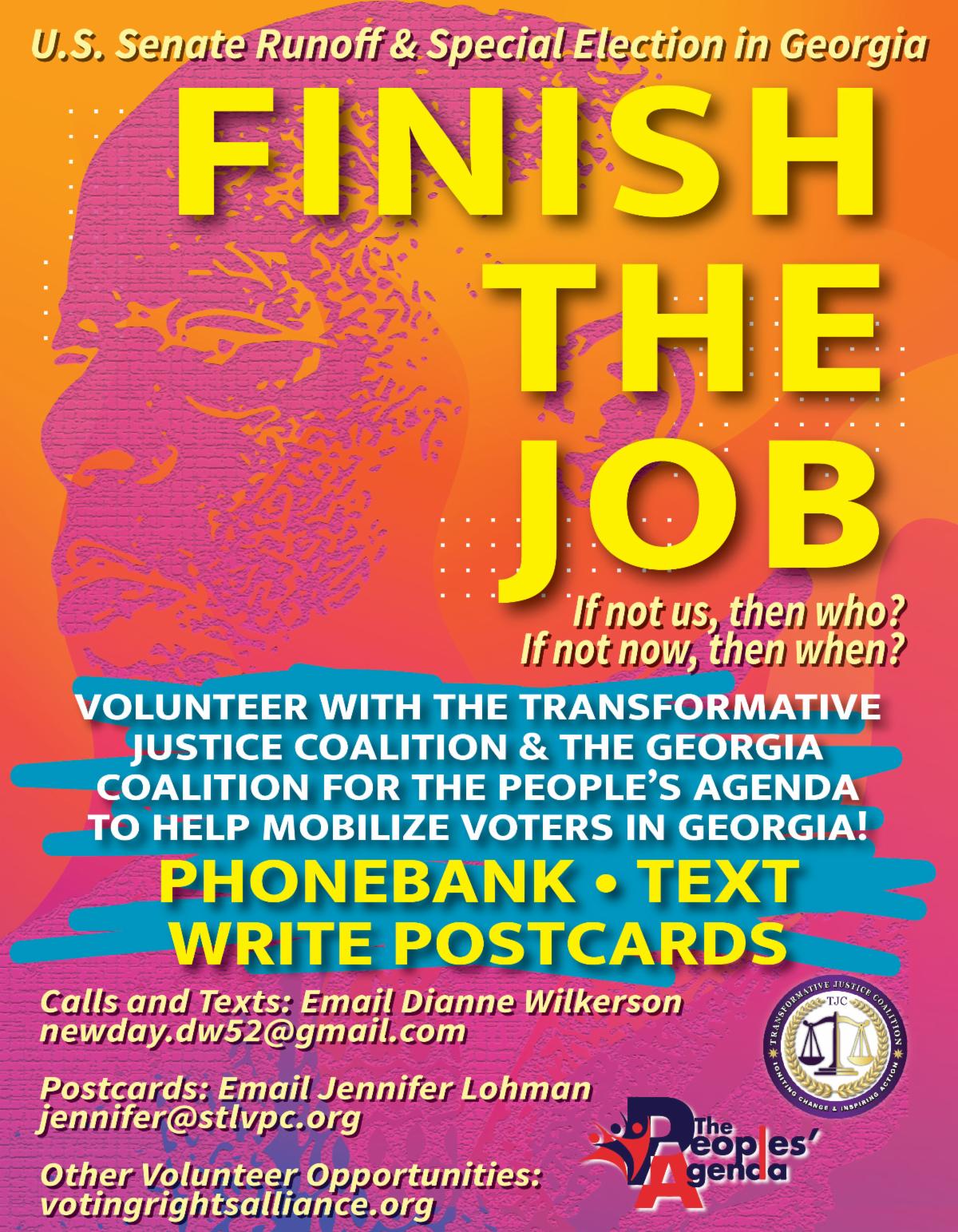
TJC has been instrumental in galvanizing communities over the years, from North Carolina to California to Texas, and even in November 2020 - January 2021 #FinishTheJob Voter Education and Outreach Programs in Georgia.
|
|
|
|
Alex Belser on Twitter: "Arnwine:"When we first came...
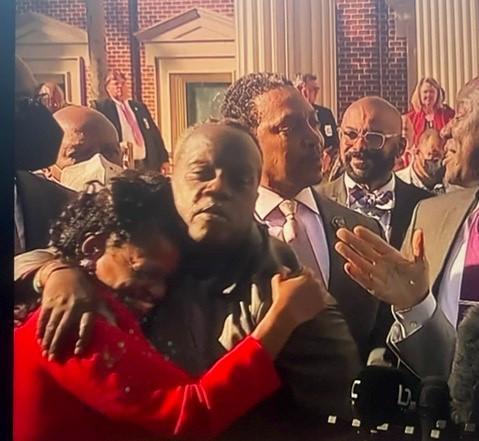
Video: Arnwine: "When we first came here in 2021..there weren't any cameras [or] massive protests..5-6 of us. But our commitment wasn't abt. that!/was family/Ahmaud/justice./Daryl losing $100s not being in court.(More came/knew) In the course of...
Read more
twitter.com
|
|
|
|
|
|
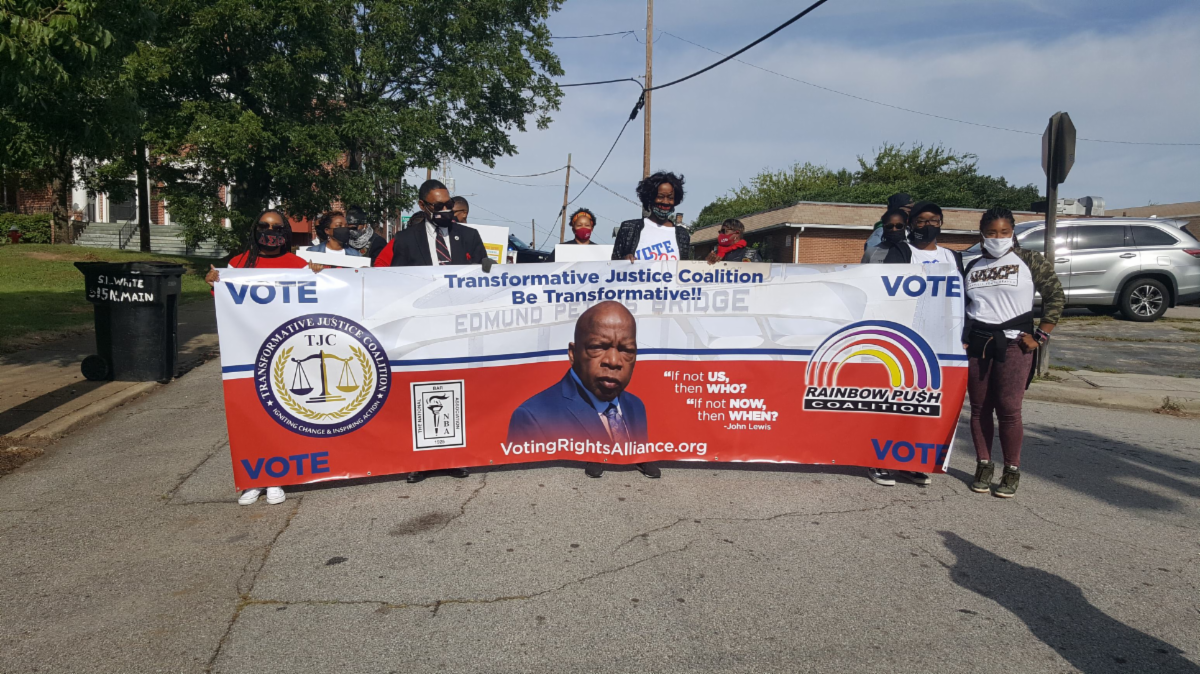
After the news of Congressman John Lewis' passing in 2020 and amid the pandemic, TJC, under the vision of Daryl Jones, called on the nation to get into “Good Trouble!” TJC reminded the country that voter suppression was not on lockdown, but instead was (and is) running rampant throughout America along with federal policing troops. TJC led a a Voter Justice Week of action and kicked off their "Good Trouble" March series.
Since his passing, TJC has held over 65 John Lewis "Good Trouble" Voting Rights Marches and Votorcades; held vigils; and did 150 marches in conjunction with organizations around the country as part of a day of action on May 8th 2021.
|
|
As mentioned in the article honoring the late Congressman John Lewis, in an email sent out to national activists in 2020, Transformative Justice Coalition (TJC) Co-Leader Daryl Jones, Esq. wrote: Congressman John Lewis, who would be recognized decades later as the Moral Compass of Congress, galvanized the nation's conscience in 1965 in support of passage of legislation which became the Voting Rights Act that same year. Congressman John Lewis once said that had it not been for the television cameras which captured this “Bloody Sunday” that the Civil Rights Movement would have been like a "bird without wings."
|
|
On March 3-6, 2022, the annual Selma Bridge Crossing Jubilee will be held. This year’s events will highlight our strategic response to the vicious and brutal assault on the right to vote throughout the United States. Given the significance of the 2022 MidTerm Elections, there will be a reenactment of the full 5 day Selma to Montgomery March from March 7-11th. The Transformative Justice Coalition will sponsor 2 workshops on March 4 and 1 workshop on March 5th. In addition, TJC will join the Poor People’s Campaign and the Rainbow PUSH Coalition on March 7th for the first full day of the March to Montgomery and Black Voters Matter on March 9th for its segment of the March. |
|
TJC will continue to examine the 2021-2022 onslaught of voter suppression by state legislatures resulting in 34 disenfranchising laws passed in 19 states and a slew of gerrymandering in several key states, many states are poised to pass more voter suppression laws in these first 2 months of 2022. It is more urgent than ever that the federal government protect voters of color and vulnerable voters against these wrongful measures by state legislatures. The US DOJ is suing Texas and Georgia for violating voting rights but this national wave of voter suppression is too large to be addressed by litigation or organizing alone. Indeed, in the last months of 2021, disturbing articles recounted the purging of Black election officials from boards of election in Georgia. In Michigan, there is a concentrated assault to restrict voting rights. In North Carolina and other states there are major controversies over the extreme partisan gerrymandering. These and other negative voter suppression developments underscore the urgent need for the US Senate to pass the Freedom to Vote Act and the John Lewis Voting Rights Advancement Act to mandate federal standards to protect the rights to vote and impose review of voting and electoral legislation, practices and procedures proposed by states and jurisdictions with histories of voter discrimination. And the DC Statehood Admissions bill passed by the U.S. House has also been pending in the Senate for months.
The Transformative Justice Coalition continues to fulfill its pledge to the Ahmaud Arbery Family for 100% #JusticeForAhmaud by providing support during the Hate Crimes Trial. As you might recall, on January 31st, TJC Co-Leaders and Attorneys Barbara Arnwine and Daryl Jones worked with Wanda Cooper Jones, Marcus Arbery and Family to successfully have the Judge reject a proposed plea deal between the US DOJ and the defendant McMichaels for which they had not been consulted and the terms of which they adamantly opposed. That following Friday, Travis and Gregg McMichael withdrew their guilty pleas, as the settlement was no longer in effect, placing their fate in the decision of the jury to be selected for this case.
On Monday, February 13th, the final selection of the jury was completed with 9 white jurors and 3 Black jurors from the 40+ surrounding counties constituting the Southern District of Georgia. That afternoon, the Hate Crimes Trial started with Opening Statements from the US Department of Justice and the Defendants’ counsel representing Travis McMichael, Greg McMichael and William Bryan. The US DOJ presented a powerful argument highlighting the shocking and brutally ugly record of racially hate filled anti-Black texts, emails and social media postings and other exchanges in which the defendants repeatedly used vicious and derogatory racial slurs including calling Blacks repeatedly by the N-word, monkeys, animals and local racial terms. These texts also lauded vigilantism and threatened the use of gun violence against Blacks.
As we know, justice did prevail in the Hate Crimes Trial.
This does not cover the full extent of the Transformative Justice Coalition's work for 2022. To stay up to date on the latest, Be sure to listen live to "Igniting Change with Barbara Arnwine and Daryl Jones" in the Greater Washington DC Metro Region every Tuesday from 12:00-1:00 PM Eastern Time on WOL 1450 AM and on the Internet at BarbaraArnwine.com.
On March 1st, 2022, Igniting Change Co-Hosts Barbara Arnwine, Esq. and Daryl Jones, Esq. will be joined by expert guests Bishop T. Tavis Grant; Yohance C. Maqubela; and, Kim Tignor, Esq. to discuss the upcoming 57th Anniversary Selma Jubilee Bridge Crossing, March 3rd- 6th, 2022, and the Selma-to-Montgomery March, March 7th - 11th, 2022. For the second half of the show, Igniting Change will highlight the successful struggle of African American women and allies to have a Black woman nominated to the Supreme Court. The last segment of the show will feature a discussion among the Co-hosts about voting rights, the Black History series, and other current events.
The name of this show is "We Will Rise Up: Selma and a Black Woman Justice”. Be sure to invite your friends to listen live at WOL 1450 AM in the Greater DC Metro Region, and nationwide and globally on the Internet at WOLDCNEWS.com and BarbaraArnwine.com on March 1st, 2022 from 12:00 PM - 1:00 PM Eastern Time. Listeners can call in with questions or short comments at 1-800-450-7876.
|
|
What will you do to advance voting rights?
TJC and the Voting Rights Alliance have sounded the alarm this Black History Month. These organizations have rung the bell to alert you- the reader- about your ancestors’ struggles for African-American suffrage and about the present struggles in the fight for African-American suffrage. Education of Black History is essential in the fight. In fact, Black history and their fight for the vote provides a modern-day playbook for how you can be involved.
In recognition of Black History Month, and the 28 articles shared throughout the month in honor of our ancestors’ fight for Black suffrage, here are 12 ways you can be involved in advancing voting rights:
1. Write, Call, Email, Fax, and Meet With your elected officials and demand answers to disenfranchising laws. From 1724-1735, in Colonial Virginia, there was an early fight for Black suffrage, initiated by Richard West, who was Legal Counsel for the Board of Trade. In 1724, West wrote a letter to Virginia’s General Assembly opposing and questioning a 1723 law that disenfranchised freed Black men, mulattoes, and Indians, who could vote prior to this law. West’s argument in favor of Black enfranchisement was that no one should be denied the right to vote because of the color of their skin. In the end, the 1723 law wasn’t overturned; however, ancient laws aren’t usually overturned by the courts right away. Don’t sit idly by: demanding answers from your elected officials holds them accountable. You are the constituent- your elected officials answer to you- if not directly, then by your vote.
2. Sign or Create petitions to oppose discriminatory laws. Prince Hall (1735-1807) was a Black man from Boston. There are no three sources that seem to agree on his birth date, or his origins, with sources citing three different birth years; three different birth places; and, three different theories speculating his upbringing. Historians don’t have to agree on Prince Hall’s adult life, however, because Prince Hall was a registered voter and extremely involved in political affairs. Hall used the power of the petition to gain rights for Blacks. Prince Hall provided vital framework for the next wave of civil rights’ activists by working the legal system and being politically engaged. While his origins may be a mystery; his legacy will forever be imprinted in his petitions. Prince Hall proves the effectiveness of petitioning the government to obtain justice. Go online to sign petitions or start your own petitions and record your own history of opposition to discriminatory laws.
3. Be politically engaged and knowledgeable about current affairs and know your state laws. Paul Cuffe, Sr. was a Black man born in Cuttyhunk Island, Massachusetts in 1759 to a former slave and a Wampanoag Indian. In 1780, Paul Cuffe’s family farm and land owned by Black people were subject to harsh taxation laws. In response, Paul Cuffe, with his brothers and neighbors, petitioned the Honorable Council and House of Representatives of Massachusetts to either give Massachusetts’ Black people and Native Americans the right to vote or cease to tax them. Cuffe’s argument was that if England didn’t have a right to tax to the newly-formed America without representation; then, what right did America have to tax Black people and Native Americans who did not have the right to vote? Unfortunately, Cuffe’s petition was denied; however, his petition "laid the groundwork for the Massachusetts Legislature to grant voting rights to all free male citizens in 1783." Paul Cuffe called Massachusetts’ hypocrisy for what it was and used the legislature’s own logic against it. Paul Cuffe, who did this at just 21 years old, proves that you don’t have to be in a legal profession or of a certain age to make a powerful argument: sometimes, you just have to be politically engaged. Knowing the arguments those in opposition to you are using can be important for forming your own petition, and can provide a strong legal argument that will be very difficult for the other side to deny. There are so many ways to be politically engaged- and, at times, it’s just enough to BE politically engaged! There’s a sense of liberation that comes from being politically engaged: you can feel empowered to take on disenfranchising laws that are rooted in hypocrisy or falsehoods.
4. You are your own best advocate; so, share your personal story and don’t be afraid to testify before a Congressional hearing/briefing or to an organization or conference to create the change for which you are advocating. Sojourner Truth lived from 1797-1883. She was born a slave and was freed from slavery in 1827. Once freed, Sojourner Truth took the name “Sojourner Truth” to separate herself from her former-slave identity. Sojourner Truth was a renowned speaker who was a powerful advocate of the suffrage movement for Black men and all women. Although she didn’t dress up and she wasn’t the most literate, Sojourner Truth could cause a room of White and Black peoples’ eyes to tear up. Sojourner Truth spoke out against slavery, prejudice, and capital punishment. She spoke for women’s rights, often recounting her own personal story of slavery to shed light on the injustices she specifically faced as a freed and enslaved Black woman. She proves that you are not defined by your past and that you can make your own story- even if all you have IS a story. Testimony can be a powerful advocate in the fight for equality and voting rights. Sharing your story can strengthen a legal case or report; have a big impact on the law; and, change people’s perspectives.
5. No matter your race, organize or join an organization if there is an injustice around you that needs to change. Lucretia Mott was a White woman born in 1793. She advocated her entire 40 years of life for African-American women and all people to have equal rights in politics and many other areas of life. Mott was a staunch abolitionist and, with her husband and community, boycotted products made from slave labor. She founded the Philadelphia Female Anti-Slavery Society in 1833. In 1848, she helped organize the Women’s Right’s Convention at Seneca Falls, New York, which launched the woman’s suffrage movement. After the passage of the Fugitive Slave Law of 1850, Mott helped in the Underground Railroad. Mott also helped establish the co-educational Swarthmore College in 1864. Lucretia Mott’s story teaches that, at the end of the day, no matter what era you live in, what’s popular, or what your race is, there is no excuse for not standing up for what’s right. If you believe there is an injustice around you, like a specific group of people being disenfranchised due to discriminatory laws, get involved. When one group suffers; we all suffer.
6. Directly talk with others about your cause, because it is still the most effective way to galvanize your movement and educate your community about the issues affecting it. Robert Purvis was a Black man and a registered voter from Philadelphia, Pennsylvania born in 1810. In 1837, an ambiguous Pennsylvania Constitution caused racial tensions when it didn’t specify if it was all or just White freemen who could vote. Thousands of White Pennsylvanians petitioned the Pennsylvania Constitutional Convention (which was to be held in 1838) to amend the state constitution to specifically say that only “White freemen” could vote. On January 17, 1838, the convention voted to amend the state constitution. Since the amendment still had to be ratified, Robert Purvis and other disenfranchised Black people took to the streets to gain signatures from White and Black people opposing the amendment. Amassing 40,000 signatures, Purvis submitted an eloquent petition on March 14, 1838, addressed to “the People of Pennsylvania”. The petition was titled “Appeal of Forty-Thousand Citizens Threatened with Disenfranchisement”. Purvis laid out all the reasons, dating back to slavery and coming to a head in 1838 Pennsylvania’s political affairs (such as taxes, property ownership, children, and education), as to why Black freemen should still retain and be given back their right to vote. In the end, “…the citizens of Pennsylvania ratified the new state constitution on October 9, 1838. African Americans would not regain the right to vote in Pennsylvania until the 15th Amendment was passed in 1869. Although the Appeal of Forty Thousand did not successfully move white Pennsylvanians, it represented the beginning of a massive civil rights movement targeting the institutions of slavery and discrimination.” Robert Purvis’ petition didn’t make the change he wanted to make. However, Purvis’ petition not only provided a path to eventual political freedom for Black men; but, it galvanized 40,000 Black Pennsylvanian citizens to take action. When you stand up for an issue you believe in and put your heart and soul into it, sometimes, the benefits aren’t just for you- but for the people that you introduce to your cause.
7. Uplift your community: talking negatively of any part of the African American community (or other communities) denigrates your message and reinforces the stereotypes that lead voter suppression and discrimination to be accepted. Frederick Douglass was a Black man born into slavery in Talbot County, Maryland. Frederick successfully escaped from slavery on his third attempt thanks to his soon-to-be wife. The couple settled in Massachusetts, most likely because the state allowed some free Black men to vote and the state didn’t require an ID to vote, and under his alias “Douglass”, Frederick cast his first vote around 1840. Eventually, some abolitionist friends of Douglass’ bought his freedom in 1846 for what would have been $711 today. By the time his freedom was legally recognized, Douglass had already been a renowned international speaker. He advocated for all Black people, regardless of gender. Douglass’ main messages were that everyone should be able to vote, regardless of gender, and that Black people were HUMANS, and, as such, deserved to be treated as so, including with the right to vote. Frederick Douglass spoke before abolitionist groups and before the International Council of Women, being always supportive of not only Black men, but also Black women, speaking about his ENTIRE race with the utmost respect. This philosophy teaches that it is not enough to uplift EITHER race or gender; but, instead, you should lift up and encourage everyone, REGARDLESS of race or gender.
8. Be sure to play your role to win the war against voter suppression. 180,000 strong and courageous Black men and women served and fought during the American Civil War. "Forty thousand black soldiers died in the war: 10,000 in battle and 30,000 from illness or infection." Black soldiers who fought in the American Civil War decided the direction of the war. Even though Black people had fought in every American war, dating back to colonial times, during the American Civil War, between 1861-1865, Black soldiers had to fight for the right to be able to fight; fight for equal pay; fight for respect and to be recognized as human beings within both the Union and Confederate armies; and, fight for suffrage. Because of the desperation of the Union and the eventual meaning of the Civil War as a means to free the slaves, the Black soldiers were able to successfully defeat a 1792 law that banned Black people from bearing arms or serving in the army and become a part of the Union Army as soldiers fighting for their freedom; obtain equal pay; enlighten the Northern citizens of the horrors of Southern Slavery; and, help win the Civil War, the outcome of which lead to the passage of the 13th, 14th, and 15th Amendments. Black soldiers worked as nurses, cooks, blacksmiths, teamsters, launderers, and spies (for the Union Army). They built fortifications and performed camp duties and served as scouts for the Union Army. People like Harriet Tubman, Henry Highland Garnet, and Mary Ann Shadd Cary recruited soldiers for the Union Army and helped free Southern Blacks. Advocates such as Frederick Douglass held meetings with President Abraham Lincoln and other officials to secure rights such as equal pay. Black soldiers were fighting a war within a war, and utilized an inside-outside strategy. Like the strategy of the Black soldiers, everyone today has a role to play in the fight for suffrage. Perhaps your role is to meet with your elected officials, canvass neighborhoods, aid in boycotts, demonstrations, and protests, or report the news that’s affecting the nation and your community.
9. Teach your children to be activists, learn from older generations, continue their legacies, and never give up. Mary Ann Shadd Cary was born in Wilmington, Delaware on October 8, 1823 to wealthy free Black activists who instilled in her the value of hard work, civil rights, political participation, and education. “Her shoemaker father, an abolitionist, often hid runaway slaves in the family’s home. In 1832, [her father] was a state representative to the National Convention for the Improvement of Free People of Color in Philadelphia.” “In 1869, representing Detroit, [Mary Ann Shadd Cary] chaired the Committee on Female Suffrage of the Colored National Labor Convention…In 1874 she joined other women in an unsuccessful attempt to vote and in 1880 helped create the Colored Women’s Progressive Franchise Association. She also looked to the courts for assistance in securing equal rights." (citations omitted) "Mary Ann Shadd Cary would eventually become the first Black woman to vote in a national election due to her efforts." (emphasis in original) "Throughout the 1880s, Cary continued her fight for voting rights and black freedom." Learning from her parents’ activism and understanding the opportunities she was afforded that others were not, she lived her life serving her community. Not only did she live her life serving her community, but she continued her parent’s spirit of determination and never gave up. Another pioneering woman who continued her parents’ legacies (and her predecessor Mary Ann Shadd Cary’s legacy) was Amelia Platts Boynton Robinson, who was born in 1911 in Savannah, Georgia. Boynton was only nine years old in 1920 when the 19th Amendment was passed and her mother would take her door-to-door to ask voters if they were registered to vote and tell them about the power of civil engagement. Boynton grew up to be “a civil rights pioneer who championed voting rights for African Americans." “Born when slavery and the Civil War were still in living memory, Mrs. Boynton Robinson became a voting rights activist in the 1930s and was a friend of Martin Luther King Jr., Rosa Parks and other civil rights leaders in the 1950s and 1960s. She lived long enough to attend President Obama’s State of the Union address in January [2015] and to accompany the president across the Edmund Pettus Bridge in March, [2015] commemorating the 50th anniversary of the Selma march that almost claimed her life.” Anyone who is a parent should teach their children not only their roots, but also what activism looks like; and those, whose parents taught them, should continue their legacies and keep fighting for justice. If you're a veteran in the fight for civil rights, teach the younger generations and help mentor them; and, if you're just getting started in your activist career, learn from the older generations. To succeed, we must all work together and in unison. Working as one won't just make our efforts more effective, but will also allow us to lean on each other and remind ourselves to never give up for something we believe in.
10. When things get difficult, and you want to give up, and voting rights seems too big to take on- think of Anna Julia Cooper. Anna Julia Cooper was born in Raleigh, North Carolina on August 10, 1858 to an enslaved woman. Her father is believed to be her mother’s slave master. Cooper was about six or seven when the American Civil War and slavery ended. At seven years old, Cooper won entrance to St. Augustine’s Normal School. At St. Augustine’s, Cooper fought and won to be able to study the “male subjects” of math and science. In 1881, she won a tuition scholarship to be able to take undergrad studies at Ohio’s Oberlin College, and again took up the mantle of gender-neutral subjects and fought, and won, to be able to study Greek. Cooper became one of the first African-American women to complete her B.A. in 1884 at Oberlin College. “Then she attended the Oberlin College and earned a Master of Science degree in mathematics in 1887.” While she was teaching post-graduation, she founded the Colored Women’s League of Washington in 1892. “Her first book, [originally published in 1892] ‘A Voice from the South: By a Woman from the South’, received wide critical acclaim and raised awareness against slavery and racism targeted at black women.” Cooper also helped open the first YWCA chapter for Black women in 1899. Cooper also delivered speeches on racial and gender equality at several conferences from 1893-1900. “She became the first and only woman to be elected to the American Negro Academy.” “…Cooper decided to return to school, and in 1924 became only the fourth black woman in the United States to receive a doctorate degree, attaining her Ph.D at the University of Paris." "While teaching and working on her doctorate, Cooper was also raising five children whom she had adopted in 1915 after her brother passed away.” She retired from teaching at 72 years old in 1930, retiring from one job for another, and becoming president of Frelinghuysen University. She didn’t retire from Frelinghuysen University until 8 years shy of her 100th birthday in 1950, at which point she was still writing and publishing. On February 27, 1964, at 105 years old, Anna Julia Cooper died of a heart attack. "Anna Julia Cooper lived through slavery, the Civil War, Reconstruction, women’s suffrage, the lynchings and legal segregation of Jim Crow, the era of Betty Friedan’s 'Feminine Mystique,' and the renewal of the Civil Rights movement.” Anna Julia Cooper's determination, drive, struggle, and passion should inspire you to never give up.
11. Run for office: be like Fannie Lou Hamer, Shirley Chisholm, and the Reverend Jesse Jackson, Sr. Fannie Lou Hamer was born on October 6, 1917 in Montgomery County, Mississippi. Hamer was the daughter of sharecroppers and came from a poor household. "In 1964, working with the Student Non-Violent Coordinating Committee (SNCC), Hamer helped organize the 1964 Freedom Summer African-American voter registration drive in her native [home,] Mississippi... . The next year, Hamer ran for Congress in Mississippi, but she was unsuccessful in her bid. "During the course of her activist career, Hamer was threatened, arrested, beaten, and shot at. But none of these things ever deterred her from her work." Although Fannie Lou Hamer came from a poor background and wasn't highly educated, she was a fierce advocate who was able to galvanize, mobilize, and inspire a movement. Shirley Anita St. Hill Chisholm was born on November 30, 1942 in Brooklyn, New York and was the first African-American woman in Congress in 1968; and, was the first African-American and African-American woman to make a serious presidential bid for a major party in 1972. Chisholm was a Black woman who lived in the twentieth century who was a catalyst for change in America. Jesse Jackson was born on October 8, 1941 in Greenville, South Carolina. He was conceived from his mother and her married next door neighbor, and as a child was teased for his stigmatized illegitimacy, despite being legally adopted by his stepfather from whom he takes his last name. He, like Fannie Lou Hamer, was born to a poor family. The Reverend Jesse Jackson, Sr. marched in Selma with Martin Luther King, Jr.; was a major-party presidential candidate twice; and, still advocates for many of the original causes on which he campaigned. If you don't like what your elected officials are doing, then run for office yourself- even if you don't think you can win. Even if you don't win, you can garner support and move a party's platform to support your issues. We can all be catalysts for change.
12. Use the power of the law. Congressman John Lewis was born on February 21, 1940, outside of Troy, Alabama and fought for equality and voting rights his entire life until his death in 2020. Congressman John Lewis put his heart, soul, skin, blood, and tears into the fight for African-American suffrage. Congressman John Lewis was “a leading participant in nearly all of the pivotal events of the civil rights movement”. Congressman Lewis participated in the 1960 Nashville sit-ins; helped form in 1960 and was chairman of from 1963-1966 the Student Nonviolent Coordinating Committee; participated in the 1961 Freedom Rides (“[freedom] Riders challenged the segregated facilities they encountered at interstate bus terminals in the South, which had been deemed illegal by the Supreme Court in ‘a 1960 Supreme Court ruling that declared segregation in interstate travel facilities unconstitutional’"); helped organize registration drives through the SNCC starting in 1962; was an architect of and youngest speaker at the 1963 March on Washington for Jobs and Freedom; helped lead the 1965 Selma-to-Montgomery Marches and was one of the seventeen people hospitalized on Bloody Sunday; was head of the Voter Education Project from 1970-1977; was elected to his first official government office as an Atlanta City Council member in 1981; and, has served thirteen consecutive terms as Congressman of Georgia’s 5th Congressional District since 1987, where he still advocates regularly for voting rights for all. Use the power of the law to make change. If you're not a lawyer or elected official yourself, you can support organizations who are using the power of the law to fight for civil rights, such as the American Civil Liberties Union, or the ACLU. If 2017 showed us anything, it is the strength the court has to balance proposed discriminatory laws.
Not mentioned in the original 2017 article, but also of notable mention, is the need to protest and demand accountability and action- no matter your age- as demonstrated by the Children's Crusade and the Mississippi Freedom Summer project. Also, voter registration is very important, as is educating others about not only their history, but what's happening in the current political climate, just as our ancestors did.
|
|
History of The Transformative Justice Coalition 2016-2019 in pictures |
|
Conclusion
You are your ancestors’ wildest dreams- and their legacy demands that you fight with all you have in you to ensure that the rights they gave their life for are not in vain. Their lives are rushing through your veins and their struggles are etched in your DNA. RESISTANCE IS IN YOUR BLOOD. It is who you are. Your ancestors and their advocates have left you a road map. You can make a difference.
“Get off of my shoulders. The foundation has been laid, now its time for you to build on it. Now, it's your time. Get to work.”
- Dr. Amelia Boynton Robinson
50th Anniversary of the Selma-to-Montgomery march, 2015
|
|
Click the buttons below to share this article to your social networks: |
|
Did you miss any of the #VRABlackHistory series articles?
Don't forget to tell your friends!
|
|
~Sources~
https://twitter.com/AlexBelser/status/1498332329655345154
|
|
|
|
|
|
|