Mission statement:The CORaL Network empowers our region by collaborating, learning from one another, and sharing scientific, cultural, and traditional knowledge. We foster community co-creation and responsiveness to meet the needs of our partners and their service communities.
We respectfully acknowledge that the land on which we gather and work is the ancestral territory of the Alutiiq/Sugpiaq, Eyak, and Dena’ina peoples. We want to take a moment to also acknowledge our elders/mentors, folks from research, your hard work, and your willingness to work together!
In this Issue
Mariculture Summit I Kelp Values I Upcoming Programs & Events I CRRC Gathering I
Word of the Month I Jobs & Internships I Featured Resources
Spotlight Stories
Anchoring the Future of Mariculture in Alaska
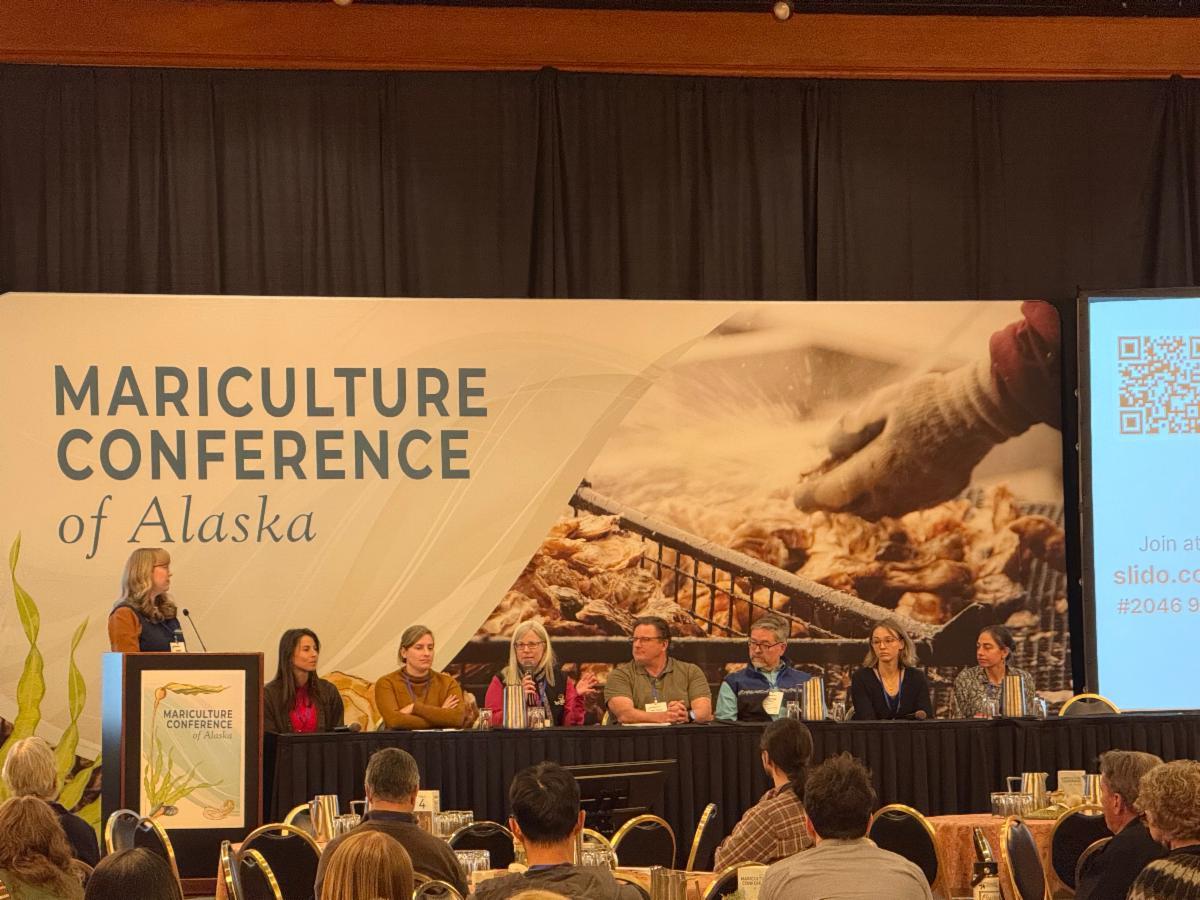
Panel discussion during the Mariculture Conference of Alaska. From left to right there is the facilitator Emma Luck (AMA), Sierra Greene (UAF // Mar ReCon), Natascia Tamburello (ESSA Technologies LTD), Ginny Eckert (ASG // Mar ReCon), Michael Rehberg (ADFG // Mar ReCon), Aaron Poe (ACF // Kelp Values), Rebecca Cates (NOAA // Mar ReCon), Esther Kennedy (UAS).
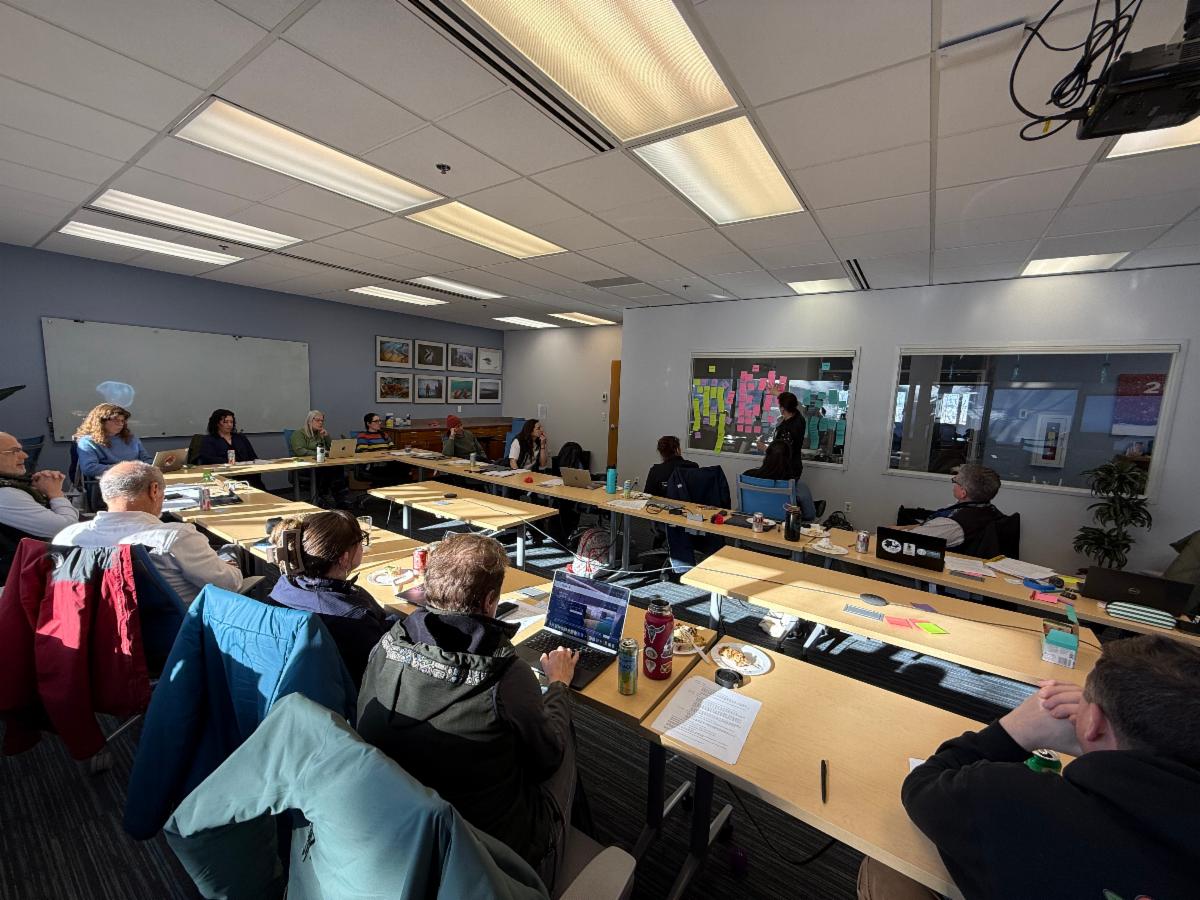
In March, the CORaL Network hosted a Mariculture Summit, where CORaL Network educators gathered with three Exxon Valdez Oil Spill Trustee Council (EVOSTC)-funded mariculture projects to discuss shared audiences, engagement approaches, and challenges; identify cross-team patterns and emerging opportunities; and explore future collaboration. This Summit was the first-time members of these four parties, including the CORaL Network, came together in the same room. The day started with the cohort learning more about each project through mini presentations, followed by question-and-answer sessions that allowed for discussion, and ended with the group brainstorming ways to support each other as they move forward to accomplish similar goals.
By the time the Mariculture Summit concluded, a list of next steps and a timeline for collaborations were created. This group will continue to meet regularly over the next year to share data, information, outreach opportunities, and more. Thank you to the Mariculture Research and Restoration Consortium (Mar ReCon), the Kelp Values Project, and the Prince William Sound Kelp Mariculture Development Project (CRRC Farm Test Sites) for gathering at the Mariculture Summit in Anchorage.
Following the Mariculture Summit, members of each EVOSTC-funded project attended the Mariculture Conference of Alaska in Anchorage, hosted by Alaska Sea Grant. The Mariculture Conference of Alaska is hosted annually and is an opportunity to engage with mariculture industry members, hear from experts, and more. The goal of the conference is to support the continued development of mariculture in the state. Thank you to Alaska Sea Grant and all of the supporters of the Mariculture Conference of Alaska for providing an opportunity for members of the mariculture industry to gather and learn from one another.
Members of four EVOSTC-funded projects gathering at the Mariculture Summit in Anchorage, Alaska.
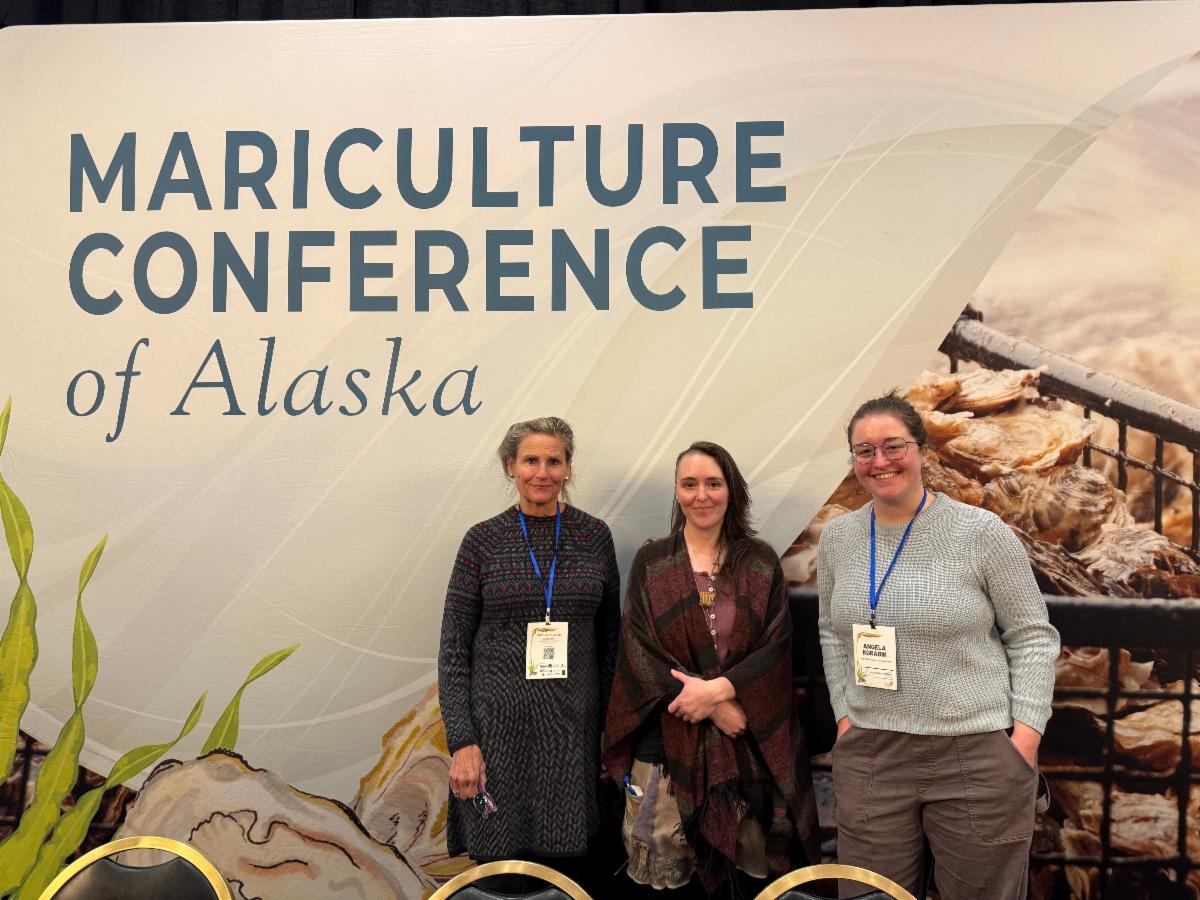
Farmer Thea Thomas (Royal Ocean Kelp Co. // Mar ReCon) and researchers Alysha Cypher (PWSSC // Mar ReCon) and Angie Korabik (PWSSC // Mar ReCon) at the Mariculture Conference of Alaska.
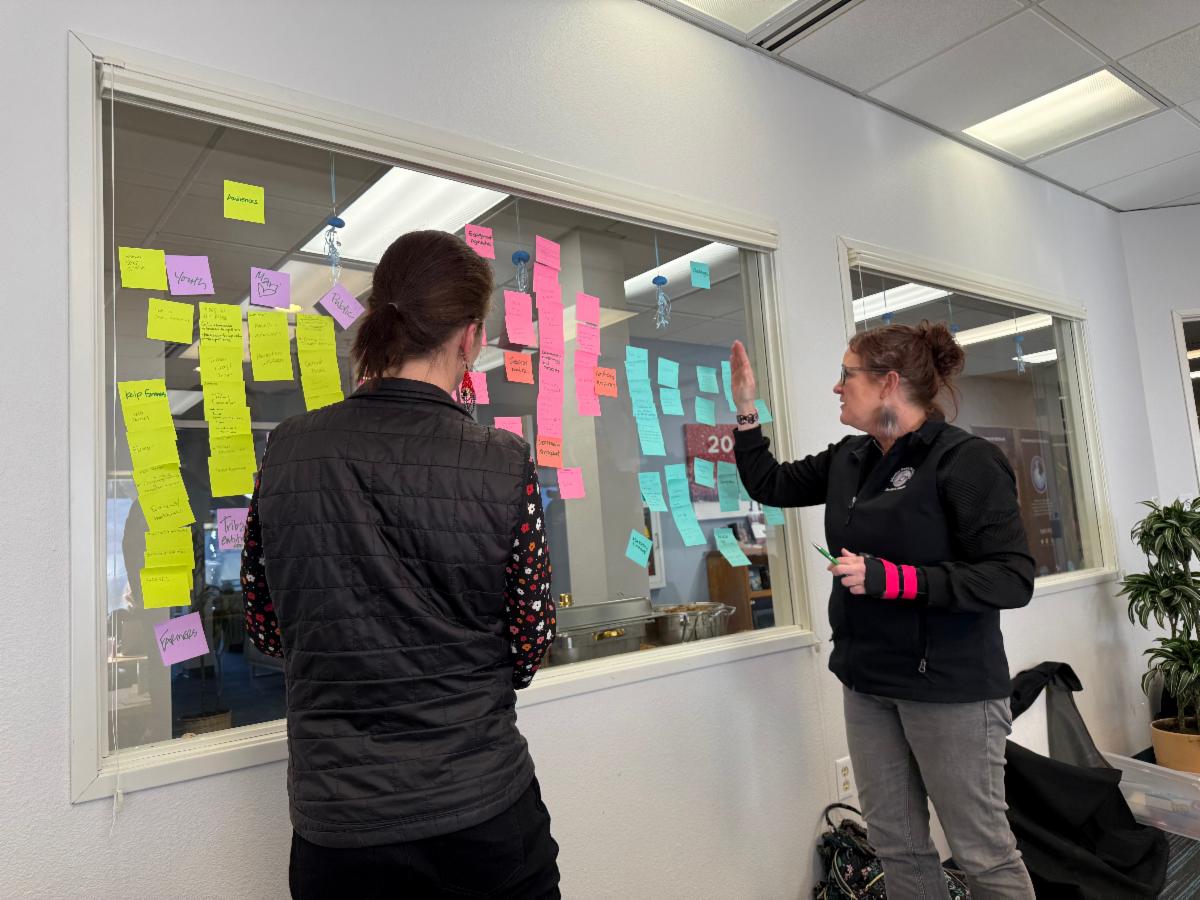
Shana Kent (ASLC) working with the facilitator at the Mariculture Summit to identify areas for future collaboration.
Researcher Spotlight
Kelp Values: Seeding our Future
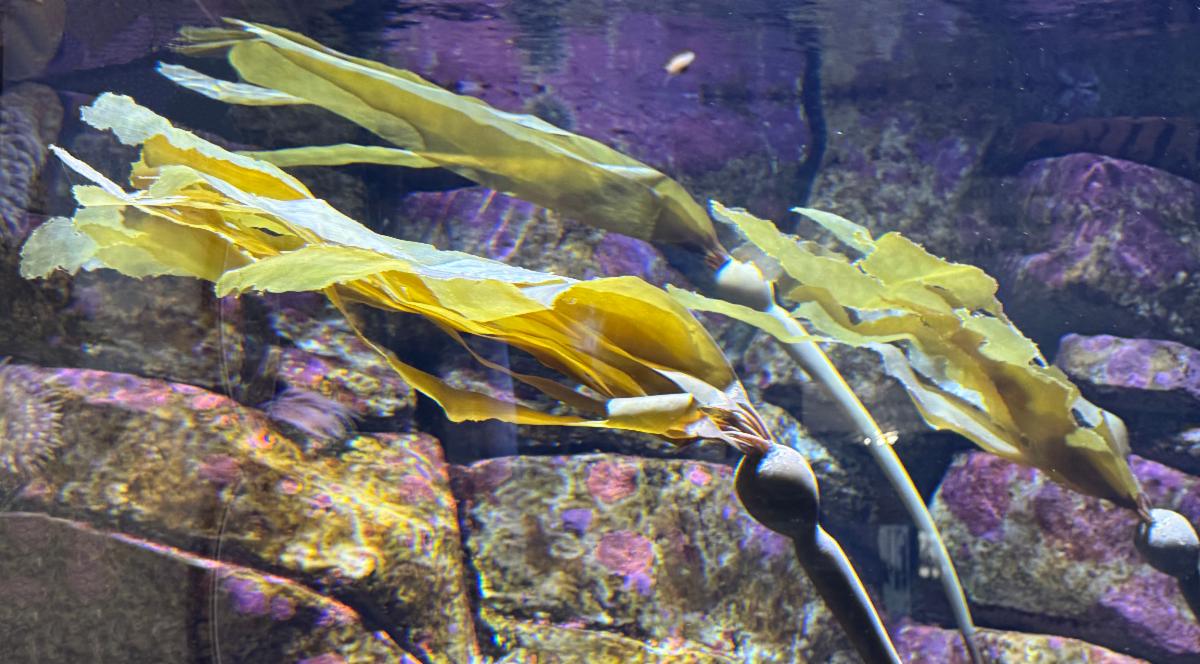
Bull kelp in an aquarium at the Alaska SeaLife Center
The Kelp Values Project, funded by the Exxon Valdez Oil Spill Trustee Council, brings together complementary research efforts to examine kelp from cultural, social, and economic perspectives. The Kelp Values Project has five subprojects focused on documenting Traditional knowledge and subsistence practices, mapping kelp habitats, exploring community-based planning approaches, and evaluating the economic realities of a developing mariculture industry. These subprojects will help inform how Indigenous-led mariculture could develop in a way to support community priorities, healthy marine ecosystems, and long-term regional resilience. Click on the link to visit the Kelp Values Project Story Map to learn more about their work: here.
The CORaL Network creates opportunities for communities in the EVOS-impacted region to engage with and contribute to knowledge that is place-based, culturally-responsive, and relevant to stewardship of the maritime environments on which we all depend.
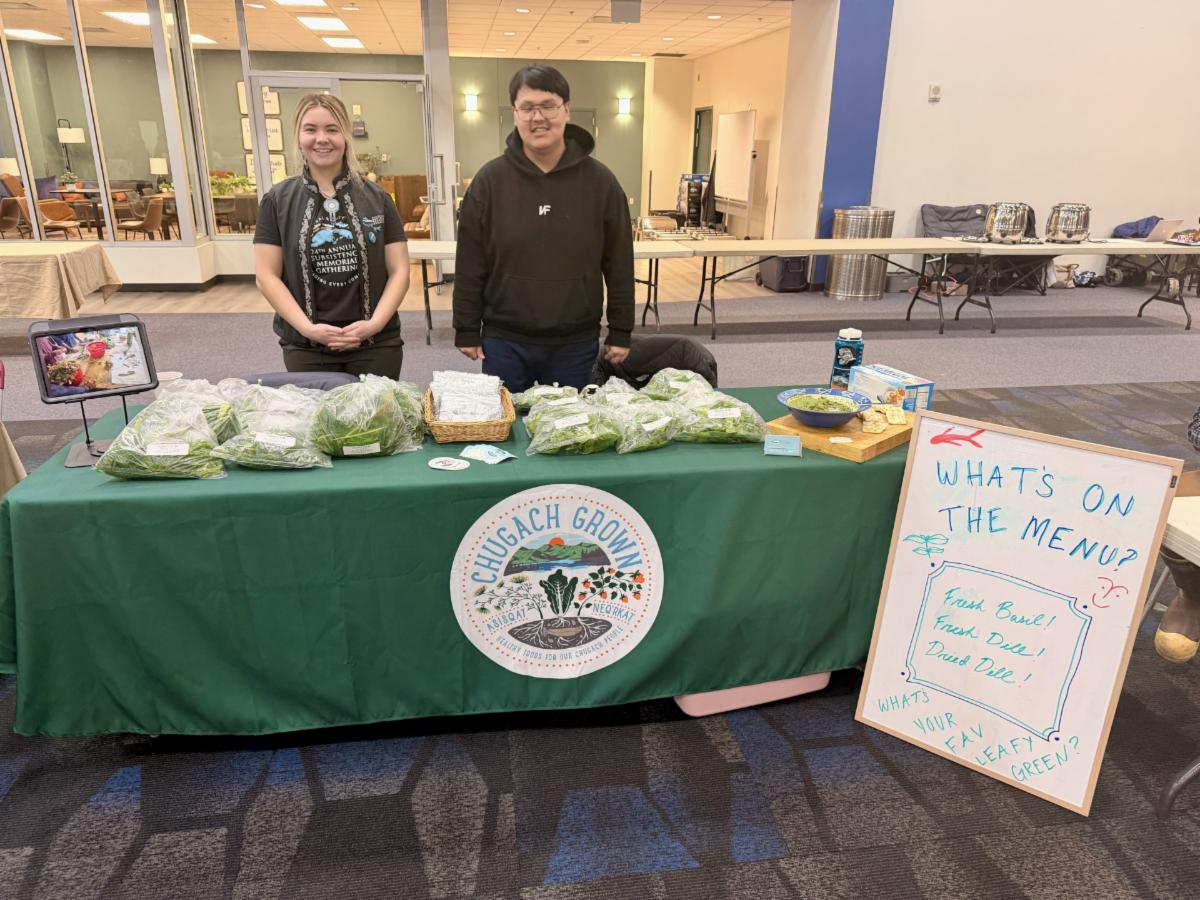
This past week, CORaL member Chugach Regional Resources Commission (CRRC) hosted the 24th Annual Subsistence Memorial Gathering in Anchorage. This daylong event honors the resilience and adaptability of the Chugach people in the years following the Exxon Valdez Oil Spill. In partnership with Regional Citizens' Advisory Council (RCAC), Natural Resources Conservation Service (NRCS-USDA), and the University of Alaska Anchorage (UAA), the gathering continues to serve as a space for locally led collaboration among the many partners and communities connected to the Chugach region.
Through storytelling, panel discussions, and shared dialogue, Elders and cultural bearers, researchers, educators, and community members came together to reflect on changing seasons, climate impacts, and the health of subsistence resources while also identifying priorities for future research and stewardship. The event also celebrated culture and community through local art, food, music, and dance. Offerings included Alaska Native jewelry, as well as handmade quilts, clothing, wooden utensils, and traditional practices such as stick poke tattooing each reflecting the living traditions and enduring strength of the region.
Four Tribal Conservation Districts (TCDs) were present, sharing the goals and priorities guiding conservation efforts in their communities. Established under Tribal law, TCDs work to sustain natural resources for subsistence, economic vitality, and cultural continuity, and can partner with NRCS and the U.S. Department of Agriculture to advance locally driven conservation initiatives.
Thirty-seven years after the Exxon Valdez Oil Spill, the impacts are still felt, but they do not define the Chugach people. Instead, the legacy of the disaster continues to serve as a call to action: to steward lands and waters with care, and to ensure that future generations can experience the richness and resilience of the Chugach region.
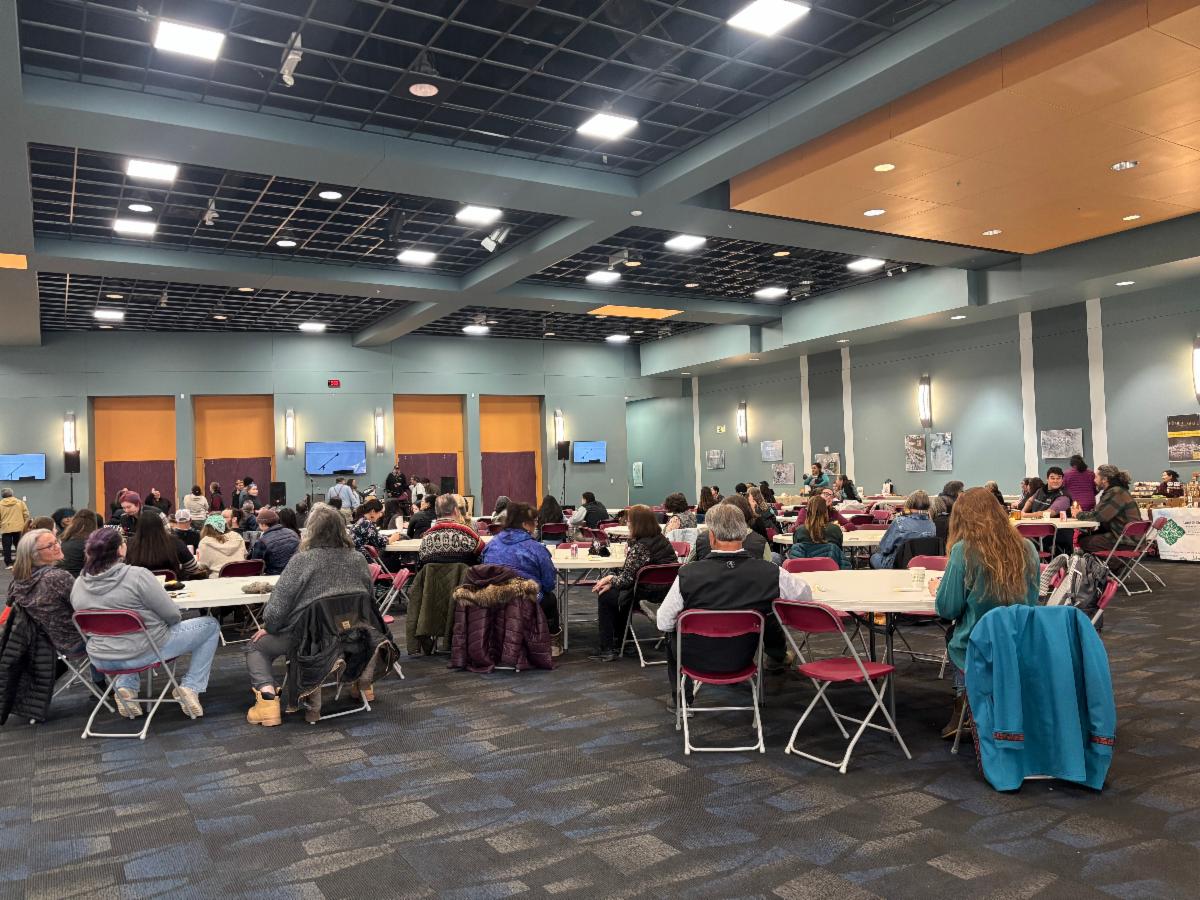
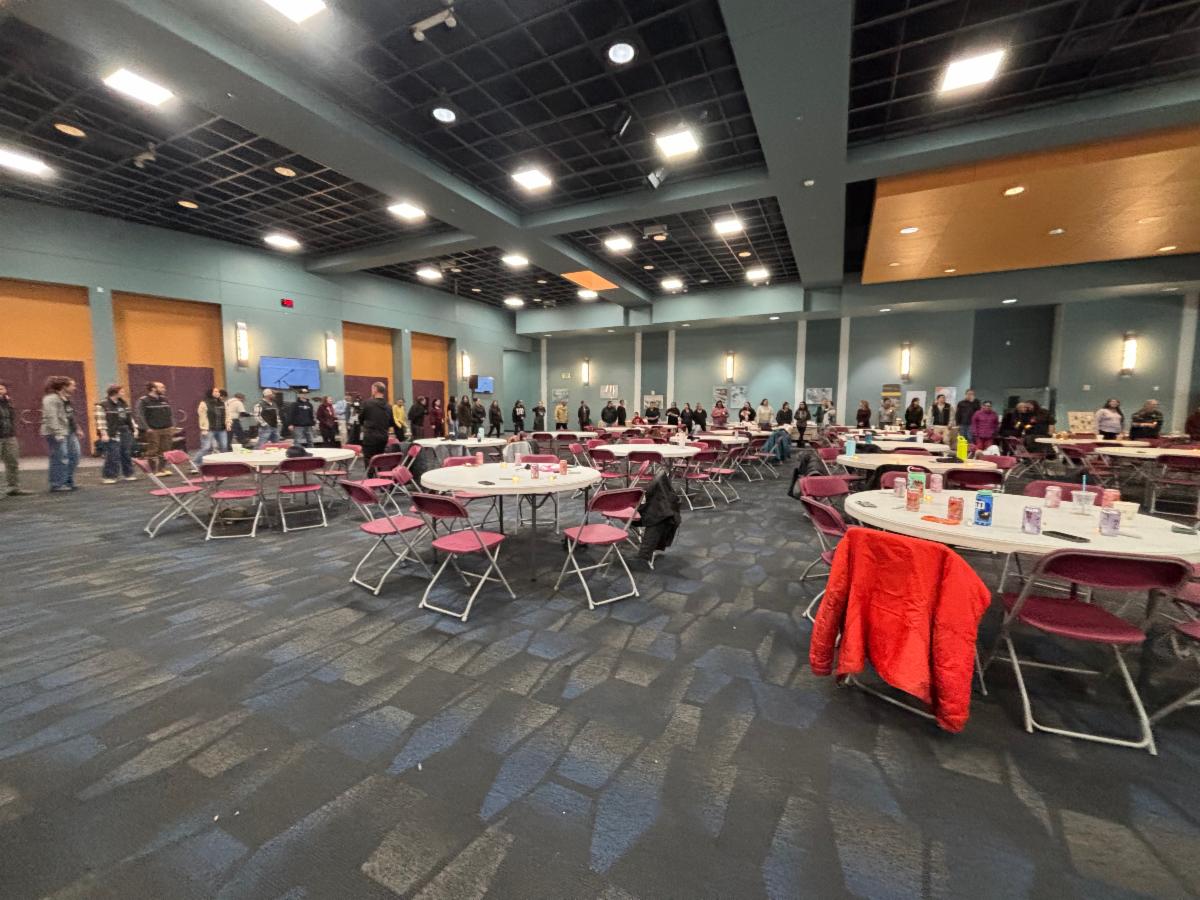
Evening Dinner at Memorial Gathering in Anchorage
Drum dance at the Memorial Gathering
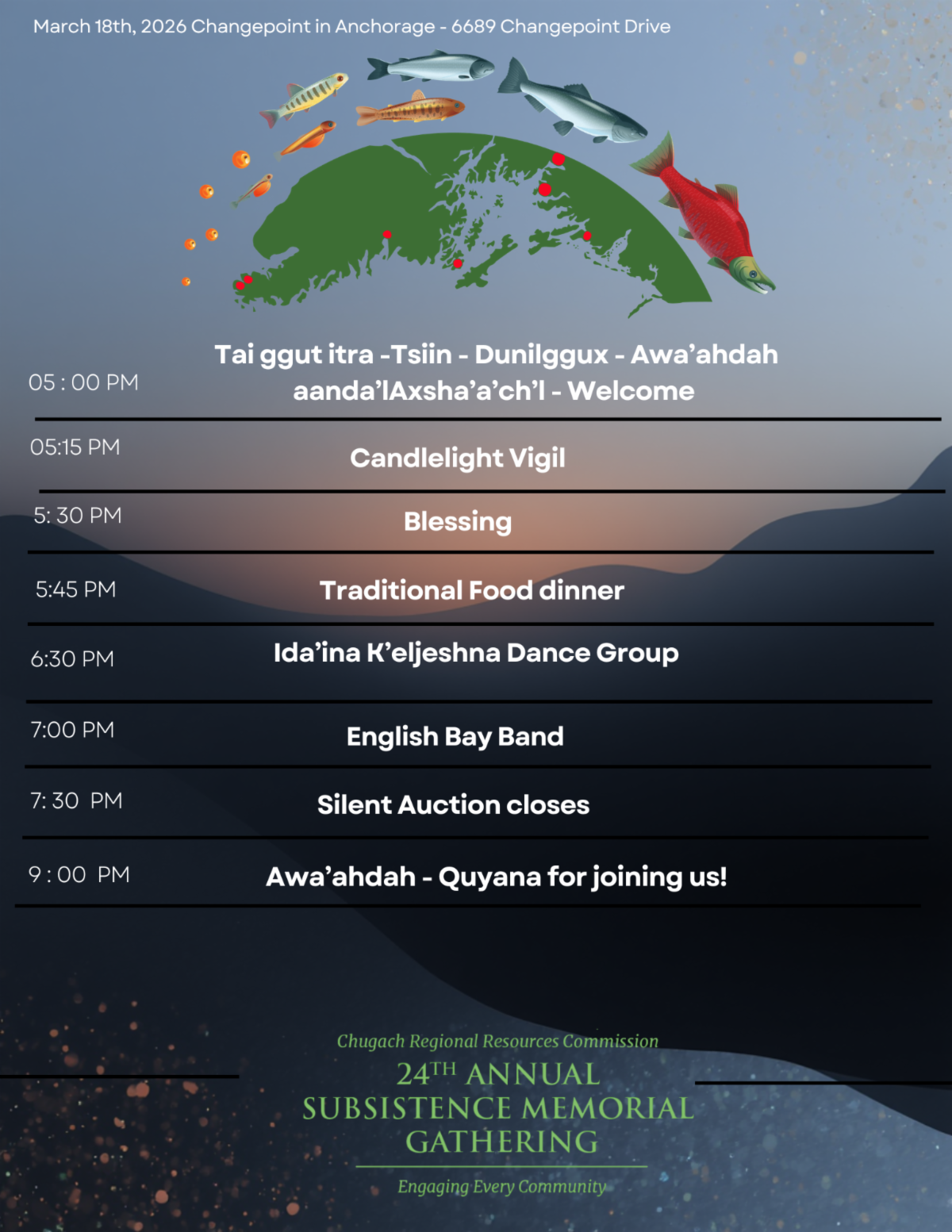
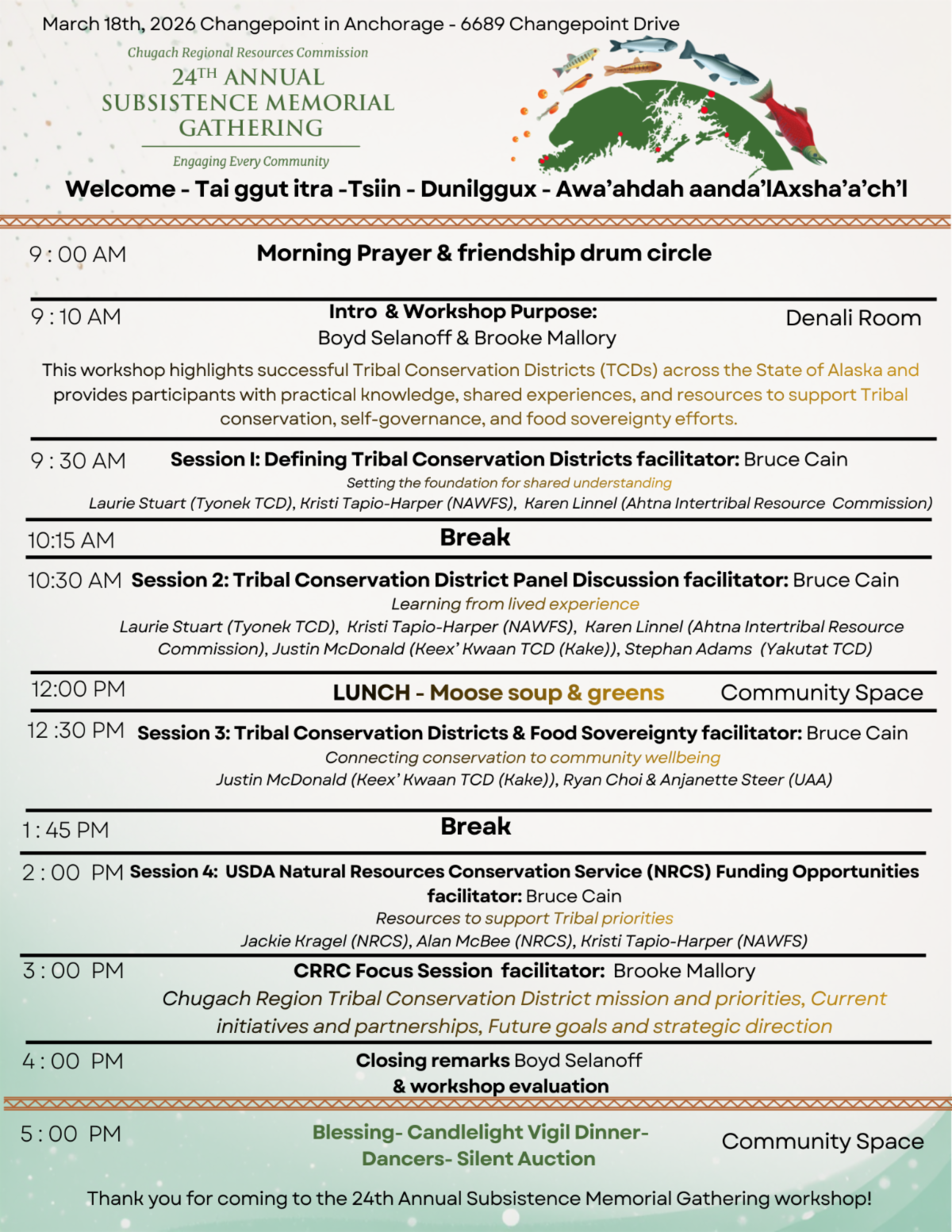
Schedules of events.
Word of the Month
Each month this new section of our newsletter will focus on two-eyed seeing at the intersection of science and culture. This month’s section is provided by Chugachmiut Heritage Preservation’s Liicungcarsuutnguq project for the CORaL Network, this month was inspired by Kalunka Angelina Roehl of Port Graham with support of Dehrich Isuwiq Chya at the Alutiiq Museum and Archeological Repository. "Sugt'sturaarlartuten-qaa?" "Do you speak Sugt'stun?” (Chugach)
""Sugt'sturuartaartuten-qaa?" "Do you speak Alutiiq?” (Kodiak) The Knowledge of Notches
"Seg'lleten ukut teqllirturyarau'ut!” – "These [fish filets] that you have cut need to be notched!" Teqllirluku (notching) is an important knowledge system for food preservation, toolwork, and navigation. Segluni (cutting fish for drying) involves notching both the tamuuq (dry fish) filet and the wooden boards in the ciqlluaq (literally: "house"; modernly: "smoking/drying house"). Sterluni (marking) is done on trees to keep track of important locations. Anthropologists who have studied the Cuungaciq (Chugach Lower Cook Inlet region) have noted hundreds of these Culturally Modified Trees that still remain today. Chugachmiut elders from the region have been working with anthropologists to document the oral history of these teqllit (notches).
Editor’s Commentary: Cultural knowledge like the practice of notching fish before smoking, tends to avoid over-explanation. Cultural knowledge systems are understood as wholes, and practices are understood within systems as opposed to "from systems." An Elder might say something like, “What do you mean, why? Notching is done because notching is the way to do it right." While Eurocentric science might talk about components like surface area, rapid removal of moisture, and smoke as tactics that limit bacterial growth, to describe the traditional practice of notching through that lens is a violation of the axiology. The cultural tradition may achieve reduced harmful microbial growth, but the overall way of knowing accepts biological systems without trying to control or deconstruct each part of that system.
The Education Specialist is responsible for developing and delivering engaging interpretive learning experiences that emphasize conservation, empathy, scientific inquiry, and inclusivity, highlighting Alaska’s unique ecosystems, wildlife, and cultural heritage. This is a Full-Time position with benefits. Please submit a resume, cover letter, and letter of recommendation with your application. Apply!
Bring Alaska’s marine wildlife to life for guests at ASLC! In this dynamic role, you’ll engage visitors on the exhibit floor, lead interactive marine science programs, and create meaningful connections between people, animals, and conservation. If you’re energetic, this is the job for you!Positions open as early as April 1 - Sept. 30. Apply!
This position is responsible for providing administrative and analytical support to the Finance departments of the Alaska SeaLife Center and in a fiscal agent capacity for other organizations.Apply!
is seeking highly motivated and energetic students interested in participating in a semester-long (12-week) internship in one of our departments. Internship hours may be used to fulfill high school or college course credit requirements.Apply!
We are a growing network of community leaders responding to the challenges and opportunities of the Alutiiq and Eyak homeland. Informed by indigenous values, we’re inviting passionate, community-rooted individuals to step into the role of Community Catalyst. Apply!
This position is responsible for assisting with the operation, maintenance, and repair of the life support, building, and mechanical systems at the Alaska SeaLife Center. Apply!
(Seward, AK -- seasonal) Aquarist 1 - Alaska SeaLife Center (ASLC).
provides basic support to the Aquarium division for daily husbandry and related duties for aquatic fishes, invertebrates, and plants; and their exhibit and holding aquariums under the direct supervision of the Aquarium Curator. May 1, 2026 - August 30, 2026. Apply!
Is hiring a B&EC to help assist with board communications, meeting planning, and tracking of Board-established goals and plans. They will work directly with the executive director and other director-level staff across departments to strategize program approaches. Apply!
Gain valuable hands-on experience in retail, tourism, and cultural education. Support local artists, connect with visitors, and share Alutiiq heritage. 25 – 30 hours a week, starting fall 2026 at $18 an hour. Apply!
(Fairbanks, AK) Student Assistant - Alaska Sea Grant (ASG)
Is recruiting candidates for a position located on the University of Alaska campus in Fairbanks. This will be a part-time, student assistant position. Once hired, the successful candidates will be placed on the UA student salary schedule, based on education and experience. Contact Ashley Lindsoe.
Educator will work with staff to implement school- and community-based education programs, camps, and outreach events. Housing provided, living and travel stipens available. Position will work alongside PWSSC staff. Term: April 6, 2026 - April 3, 2027.Apply!
Serve as a technician on research cruises involving sampling fishes, plankton, and oceanographic conditions in PWS and be responsible for processing samples in the lab. Experience performing scientific work at sea (required), the willingness and ability to work under challenging weather conditions. Beginning May - Sept 2026.Apply!
Featured Resources
CRRC Tribal Fish and Wildlife Monthly Report - March 2026