|
Benchmarks' Friday Membership Webinar Recording and Update
|
| |
Benchmarks' Friday Membership Webinar
October 2, 2020
|
NC Cases: 212,909
Cases Hospitalized: 920
NC Deaths: 3,379
Positive Tests: 7 day average was 5.5%
Phase 3
DAWN BAUMGARTNER VAUGHAN, LYNN BONNER AND DANIELLE BATTAGLIA, THE NEWS & OBSERVER, 9/30/20
Bars and other entertainment venues will be able to reopen at limited outdoor capacity as the state moves to Phase 3 of eased pandemic restrictions, Gov. Roy Cooper said Wednesday. It will go into effect Friday at 5 p.m. and will remain in effect through Oct. 23 at 5 p.m. Phase 2.5, which began Sept. 4, was set to expire Friday.
The change offers some relief to businesses that have said they have been treated unfairly. Movies, entertainment spaces and amusement parks can also reopen under the order. Cooper said they are cautiously encouraged by COVID-19 metrics, but there are warning signs for both North Carolina and the rest of the country.
"Our stability is fragile," he said at a news conference Wednesday. "I believe that North Carolina can do this safely. But so I am clear, every gathering carries the risk of spreading this disease. Being safe means being smart and making sure others around you are doing the same."
Here is a look at some of the new guidelines under Phase 3:
Outdoor amusement parks may open at 30% capacity. Indoor amusement park rides must remain closed.
Large outdoor venues with more than 10,000 can open at 7% capacity.
Smaller outdoor entertainment venues may operate outdoors at 30% of outdoor capacity or 100 guests, whichever is less.
Movie theater and conference occupancy is set at 30% capacity, or 100 people, whichever is less. In movie theaters, the capacity limit applies to each screen.
Bars can open outdoors only at 30% of outdoor capacity, or 100 guests, whichever is less. Bars that don't have outdoor seating can open indoor spaces to no more than seven people for every 1,000 square feet of outdoor area.
Cooper cautioned people who are at high risk of severe COVID-19 symptoms, such as people 65 and older and those with underlying health conditions. "Our at-risk population is still safer at home," he said. The requirement for masks in public places where social distancing is difficult remains. "The mask mandate is going to continue to be important until we have a vaccine or a cure to this virus," he said.
Trends for new daily COVID-19 cases have been largely stable for most of September, though COVID-19 hospitalizations and the percentage of positive coronavirus tests have moved higher in the last two days. Fewer people are going to hospital emergency departments with symptoms of COVID-19 now than the peak in late July and early August, but people going to hospitals with fevers and breathing problems remains much higher now than in previous years. Cooper has been gradually easing restrictions on business and leisure activity since his Stay At Home order in late March. Restaurant dining rooms, barbershops, salons, museums, gyms and other businesses have been allowed to open at limited capacity.
Pandemic Hardships
TAYLOR KNOPF, NC HEALTH NEWS, 9/30/20
Child advocates are worried that increased hardships due to the coronavirus pandemic could have long-term negative physical and mental health impacts for kids. In July, 30 percent of North Carolina adults with children reported that they were behind on their rent or mortgage payments and/or they could not afford enough food for their families, according to data collected by the U.S. Census Bureau.
The economic side effects of the pandemic caused increases in food and housing insecurity across the country, according to the National Institute for Health Care Management Foundation analysts. Elevated stress in the home is often a predictor of abuse. Because child care centers and schools have been closed, there are fewer people to detect and report signs of abuse, according to the foundation report. Additionally, child advocacy centers across the U.S. have reported seeing 40,000 fewer children during the pandemic, those are multidisciplinary organizations that investigate child abuse allegations and provide mental health treatment, training and case management to families where abuse has occurred. There are 35 accredited and 12 provisional child advocacy centers in North Carolina.
Visiting Rules
LYNN BONNER, THE NEWS & OBSERVER, 9/28/20
Visitors can go into nursing homes to visit residents effective Monday, as long as the homes have not had recent coronavirus outbreaks. Dr. Mandy Cohen, Secretary of the N.C. Department of Health and Human Services, signed an order Monday allowing indoor visitation at long-term care facilities, which includes nursing homes, skilled nursing facilities, adult care homes and other congregate facilities. But the order only applies to facilities that have not had COVID-19 cases in the previous 14 days and those in counties where the percentage of positive coronavirus tests is less than 10%. The state's guidelines follow those set by the Centers for Medicare and Medicaid Services.
On Saturday, only seven of the state's 100 counties had positive test rates that were higher than 10%, and all Triangle counties were far below that mark. Under the order, visitors must be screened for COVID-19 symptoms before entering a nursing home, and must wear a face covering. Among other requirements, visitors, residents and staff must use alcohol-based hand sanitizer before and after a visit. Cohen, in a press release, said the state's coronavirus key metrics have remained stable. The order comes as the state's Phase 2.5 executive order is set to expire Friday, and Gov. Roy Cooper said he will announce possible changes to restrictions before then.
Census Deadline
BRIAN GORDON, USA TODAY NETWORK, 9/28/20
On Thursday, a federal judge halted the Trump administration's efforts to conclude the census count a month early, a ruling cheered by North Carolinians who believed cutting the process short risked undercounting traditionally difficult to count minority and rural communities. The next day, the administration appealed the judge's order. "While we support the court decision, we still want to convey the message that folks complete the census as soon as possible to get a complete count," said Daniel Valdez, the North Carolina director of the Hispanic Federation, who has coordinated census outreach efforts statewide.
As of now, Americans have until Oct. 31 to complete the census, the constitutionally mandated, decennial tally of every United States resident that determines the local allocation of federal funding and congressional seats. These dollars support a litany of programs like Medicare, school lunch programs, hurricane relief, and highway planning for the next decade. This year, the U.S. Treasury Department used 2010 census data to parcel out $150 billion in CARES Act coronavirus relief.
The battle over the census deadline, like the census count itself, isn't over yet, and advocates say North Carolina has a lot to gain, or lose, by its final outcome. At the onset of the coronavirus pandemic, the Trump administration asked Congress to extend the census deadline by four months, from the end of April to the end of October. Yet over the summer, U.S. Commerce Secretary Wilbur Ross directed the Census Bureau to end its enumerator efforts - via phone, mail and door-knocking - by Sept. 30. The administration claimed this move was necessary to meet a Dec. 31 statutory deadline, though critics argued the decision was intended to ensure President Trump would still control census data even if he lost the upcoming Presidential election.
North Carolina census advocates urged politicians to reconsider the census deadline. "We need more time," said Stacey Carless, executive director of NC Counts Coalition, during her Sept. 10 testimony to the federal House Committee on Oversight and Reform. "The Constitution gives Congress responsibility for getting the census right. If there is any hope of salvaging a complete and accurate 2020 census count for this country, the census deadline must be extended to at least Oct. 31, 2020." Carless was concerned a truncated census process would overlook North Carolina's traditionally hard-to-count populations, including Latinos, Black people, young children and those living in the state's vast rural regions. She told Congress that North Carolina stood to lose out on $7 billion in federal funding if these populations went undercounted.
North Carolina ranks 42nd in response rates with around 94% of households counted compared with the national average of 97%.
The federal government uses statistical modeling to fill in some census gaps, but advocates say these mathematical methods don't serve as a complete substitute. "Statistical models are always going to be less comprehensive and less accurate than actually getting the responses from the housing units," said Rebecca Tippett, director of Carolina Demography, part of UNC's Carolina Population Center. She identified one specific factor behind North Carolina's lagging responses: the internet. This was the first census people could complete online, and counties with higher internet responses also had higher responses overall.
Evictions
BEN SESSOMS, THE NEWS & OBSERVER, 9/28/20
COVID-19 decimated America's economy, leaving millions of tenants without the income they needed to make rent. Government officials tried to keep them sheltered. The state halted evictions at the start of the pandemic, through June 23. Then, at the start of September, the Centers for Disease Control and Prevention blocked evictions nationwide for renters affected by the virus. But, in that roughly two-month gap many people fell through the cracks.
Across the state, landlords filed evictions against more than 18,000 tenants in between moratoriums. It's unclear how many people were displaced, but eviction filings doubled from June to July and continued that pace into August, according to an analysis of data provided by the state Administrative Office of the Courts. Renters had no safety net for much of the summer. The N.C. General Assembly failed to direct any COVID-19 relief funds to help tenants settle overdue rent. In late August, Gov. Roy Cooper directed $175 million in housing relief. But for renters already displaced, it was too late.
Housing advocates predict another deluge of evictions in January after the federal moratorium expires. "You're just essentially postponing those evictions from now until January," said Jesse McCoy, supervising attorney at Duke University's Civil Justice Clinic, which helps tenants facing eviction in Durham. Under the CDC moratorium, renters must provide sworn statements that they can't pay rent due to the virus and failed to find help elsewhere. Landlords could face criminal prosecution if they try to displace those tenants.
|
COVID-19 Updates: October 2, 2020
Phase 3 Updates:
PRESS RELEASES since the last update include:
NEW resources since the last update include:
UPDATED guidance since the last update include:
UPDATED reports since the last update include:
LME-MCO Joint Communication Bulletin # J377
State-Designed Templates for Notification of Adverse Benefit Determinations (NABDs)
(Hat Tip to Eastpointe for Sharing-Not yet posted online)
Slide Deck from Governor's Press Conference:
September 30, 2020
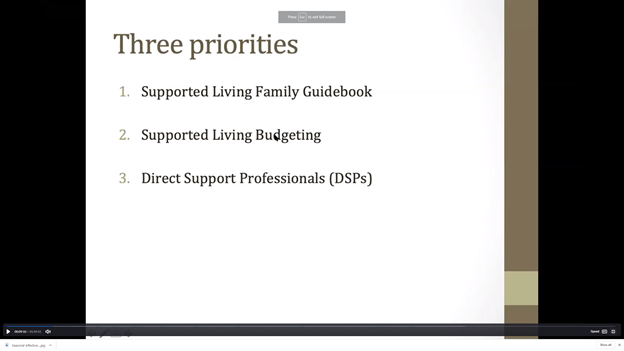
Supported Living 2&3 Stakeholder Meeting Webinar Recording
Award of Contract for Electronic Visit Verification (EVV)
NC DHHS awarded a contract to Sandata Technologies, LLC on Sept. 24, 2020, and will implement services for Electronic Visit Verification (EVV) statewide on Jan. 1, 2021. EVV is a method used to verify visit activity for services delivered as part of home- and community-based service programs. EVV offers a measure of accountability to help ensure that individuals who are authorized to receive services, in fact, receive them. Information about EVV is available on the Medicaid EVV webpage.
Programs subject to the EVV requirement are State Plan Personal Care (PCS) [In-Home], CAP/DA, CAP/C, self-directed personal attendant care services, Innovations Waiver, TBI Waiver and the 1115 Managed Care Demonstration Waiver. NC Medicaid will provide additional information in the coming weeks regarding the onboarding of Sandata, including dates and times of provider and beneficiary training. Medicaid will host stakeholder engagement discussions during the month of October to provide the details of the implementation plan for each of the affected program groups. Our process will ensure that Medicaid LTSS continues without disruption to our providers and beneficiaries.
|
|
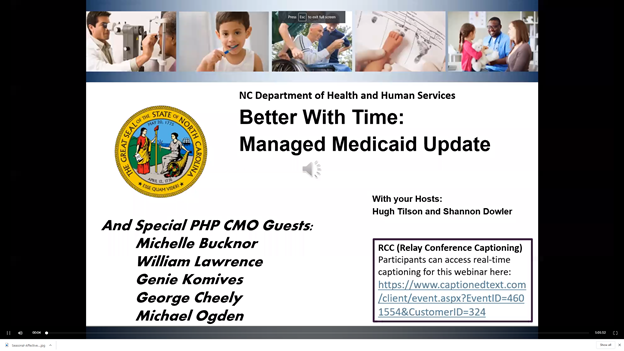
Medicaid Managed Care Fireside Chat Webinar Series
|
|
Trump Administration Announces $20 Billion in New Phase 3 Provider Relief Funding
Today, under the leadership of President Trump, the U.S. Department of Health and Human Services (HHS), through the Health Resources and Services Administration (HRSA), is announcing $20 billion in new funding for providers on the frontlines of the coronavirus pandemic. Under this Phase 3 General Distribution allocation, providers that have already received Provider Relief Fund payments will be invited to apply for additional funding that considers financial losses and changes in operating expenses caused by the coronavirus. Previously ineligible providers, such as those who began practicing in 2020 will also be invited to apply, and an expanded group of behavioral health providers confronting the emergence of increased mental health and substance use issues exacerbated by the pandemic will also be eligible for relief payments.
Providers can begin applying for funds on Monday, October 5, 2020. "HHS has worked to ensure that all American healthcare providers receive support from the Provider Relief Fund in a fast and fair way, and this new round helps ensure that we are reaching America's essential behavioral health providers and takes into account losses and expenses relating to coronavirus," said HHS Secretary Alex Azar. "We've worked with all of the resources we have across HHS to ensure that America's heroic healthcare providers know they can apply for support." HHS has already issued over $100 billion in relief funding to providers through prior distributions. Still, HHS recognizes that many providers continue to struggle financially from COVID-19's impact. For eligible providers, the new Phase 3 General Distribution is designed to balance an equitable payment of 2 percent of annual revenue from patient care for all applicants plus an add-on payment to account for revenue losses and expenses attributable to COVID-19. Further, HHS recognizes constraints such as the stay-at-home orders and social isolation have been particularly difficult for many Americans. A recent Centers for Disease Control and Prevention (CDC) report found the prevalence of symptoms of anxiety disorder in the second quarter of 2020 was approximately three times those that reported in the second quarter of 2019 (25.5% versus 8.1%); and the prevalence of depressive disorder was approximately four times that reported in the second quarter of 2019 (24.3% versus 6.5%). Our behavioral health providers have shouldered the burden of responding and confronting this expanded challenge triggered by the pandemic. When traditional face-to-face counseling was restricted and new telehealth flexibilities were put in place in response to the pandemic, many behavioral health providers invested in and adopted - PDF telehealth technologies to continue providing patient care. While some Medicare or Medicaid behavioral health providers have already received prior General Distribution payments, others have not. Working with the Substance Abuse and Mental Health Services Administration (SAMHSA), HRSA developed a list of the nation's behavioral health providers now eligible for funding, which includes, for example, addiction counseling centers, mental health counselors, and psychiatrists. Eligibility HHS is making a large number of providers eligible for Phase 3 General Distribution funding, including: - Providers who previously received, rejected or accepted a General Distribution Provider Relief Fund payment. Providers that have already received payments of approximately 2% of annual revenue from patient care may submit more information to become eligible for an additional payment.
- Behavioral Health providers, including those that previously received funding and new providers.
- Healthcare providers that began practicing January 1, 2020 through March 31, 2020. This includes Medicare, Medicaid, CHIP, dentists, assisted living facilities and behavioral health providers.
Payment Methodology - Apply Early All eligible providers will be considered for payment against the below criteria. - All provider submissions will be reviewed to confirm they have received a Provider Relief Fund payment equal to approximately 2 percent of patient care revenue from prior general distributions. Applicants that have not yet received Relief Fund payments of 2 percent of patient revenue will receive a payment that, when combined with prior payments (if any), equals 2 percent of patient care revenue.
- With the remaining balance of the $20 billion budget, HRSA will then calculate an equitable add-on payment that considers the following:
- A provider's change in operating revenues from patient care
- A provider's change in operating expenses from patient care, including expenses incurred related to coronavirus
- Payments already received through prior Provider Relief Fund distributions.
We know providers want to receive payments shortly after submitting their information. However, this distribution requires cooperation on the part of all applicants. Again, HHS is urging all eligible providers to apply early; do not wait until the last day or week of the application period. Applying early will help to expedite HHS's review process and payment calculations, and ultimately accelerate the distribution of all payments. All payment recipients will be required to attest to receiving the Phase 3 General Distribution payment and accept the associated Terms and Conditions. Application Deadline Providers will have from October 5, 2020 through November 6, 2020 to apply for Phase 3 General Distribution funding. HHS's top priority is ensuring as many providers possible have an opportunity to apply. HHS will continue to host webinars to assist providers through the application process and the call center is also available to address questions. HHS recognizes the multifaceted challenges of this pandemic cannot be won without frontline healthcare providers focused on containing the virus and delivering holistic care. Funding for this Phase 3 General Distribution was made possible through the bipartisan CARES Act and the Paycheck Protection Program and Health Care Enhancement Act, which allocated $175 billion in relief funds to hospitals and other healthcare providers.
|
|
Identifying the Enabling Services Workforce for SDOH Screening and Documentation
Webinar Resources
|
|
The Nonprofit Insurance Crisis: What You Need To Know and What You Can Do
|
New Research on Child Health
A new report from the Federal Interagency Forum on Child and Family Statistics compares 41 indicators of well-being in children by the type of community they live in. (These are metropolitan, nonmetropolitan, micropolitan, or rural, according to the Office of Management and Budget.)
The brief finds that infant mortality rates were highest in rural counties (6.8 per 1,000). During the same time, the mortality rate for Hispanic and American Indian or Alaska Native, non-Hispanic infants was also higher for those living in rural counties than those living in micropolitan and metropolitan counties. Separately, the Centers for Disease Control and Prevention released Mental Health Treatment Among Children Aged 5-17 years, 2019, finding that as the level of urbanization decreased, the percentage of children who had taken medication for their mental health increased.
HRSA Plans October 5 Release of 2019 National Survey of Children's Health Data
HRSA will release 2019 data from the National Survey of Children's Health (NSCH) on October 5, which is also National Child Health Day. The NSCH provides the latest national and state-level data on the health and health care needs of children as well as information about their families and communities.
Survey topics include:
- Children's physical and mental health;
- Health insurance status;
- Access to and use of health care services, including:
- Receipt of preventive and specialty care;
- Patient-centered medical home; and
- Services to support transition to adult health care for adolescents;
- Lifetime exposure to adverse childhood experiences, and more.
The NSCH is funded and directed by HRSA's Maternal and Child Health Bureau and conducted by the U.S. Census Bureau, which oversees sampling, survey administration and the production of a final data set for public use.
Look for the release on our social media channels (@HRSAgov), and like and share to show your support of Child Health Day.
State Roles in Preventing and Improving Foster Care Placements for Children with Medical Complexity
The National Academy for State Health Policy (NASHP) published a new issue brief that explores how states can leverage federal and state policy tools to improve options for children with medical complexity in or at risk of foster care placement.
The issue brief was supported by HRSA's cooperative agreement with the National Organizations of State and Local Officials (NOSLO),
|
CMS Model Helps Address the Health-Related Social Needs for over 750,000 Medicare and Medicaid Beneficiaries
In June, CMS Administrator Seema Verma issued a call to action, noting that "the transition to a value-based system has never been so urgent. When implemented effectively, it encourages clinicians to care for the whole person and address the social risk factors that are so critical for our beneficiaries' quality of life." As part of CMS's focus on delivering better health care value, for the first time, CMS is sharing a fact sheet with a snapshot of the data from the Accountable Health Communities (AHC) Model, reflecting the agency's most comprehensive collection of social needs data to date. One in three beneficiaries (33 percent) reported at least one core health-related social need. Food needs were the most commonly reported (67 percent of those reporting at least one need), followed by housing (47 percent), transportation (41 percent), and utility assistance (28 percent). Of those screened, 18 percent were eligible for community navigation services, and 76 percent of eligible beneficiaries accepted the navigation assistance. The AHC Model addresses a critical gap between clinical care and community services in the current health care delivery system by testing whether systematically identifying and addressing the health-related social needs of Medicare and Medicaid beneficiaries' through screening, referral, and community navigation services will impact health care costs and reduce health care utilization. The participants in the AHC Model include urban and rural communities and a variety of care settings, ranging from hospitals to primary care to behavioral health providers, with a shared commitment to addressing health-related social needs and connecting beneficiaries to community resources.
|
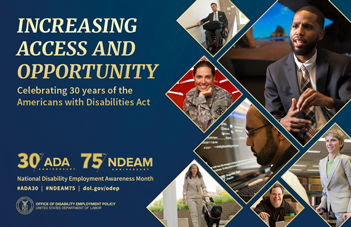
Kicking Off National Disability Employment Awareness Month 2020
This is a year of milestone anniversaries for the disability community as we celebrate 30 years of the Americans with Disabilities Act and 75 years of NDEAM. This year's NDEAM theme, "increasing access and opportunity," reflects the impact of these two milestones.
We hope you will take advantage of these resources and join us in celebrating the importance of competitive, integrated employment in the lives of people with disabilities.
|
Proclamation on National Disability Employment Awareness Month, 2020
The White House
Office of the Press Secretary
FOR IMMEDIATE RELEASE
September 30, 2020
National Disability Employment Awareness Month, 2020
-------
By the President of the United States of America
A Proclamation
During National Disability Employment Awareness Month, we recognize the immeasurable contributions that Americans with disabilities make to our workforce. Their achievements not only strengthen our economy and communities but also exemplify the power of every American to help shape the future of our country. This month, we recommit to advancing an American workforce where everyone can fully pursue their God-given potential.
Three decades ago, our Nation took a substantial step toward enabling Americans with disabilities to realize their full economic potential. With passage of the landmark Americans with Disabilities Act, these citizens obtained expanded access to employment opportunities, including government and community services. Since then, our Nation has made great strides to create a more inclusive workforce and secure a future of purpose for every American. My Administration has built on these successes by delivering unprecedented opportunities for more than 61 million Americans who have a disability. Due to these efforts, Americans with disabilities had the lowest annual unemployment rate on record last year. As we continue to restore our economy following the coronavirus pandemic, we will once again ensure historic employment opportunities for this incredible group of people. Now, more than ever, technology is at the forefront of our evolving national workforce. Accordingly, my Administration is harnessing emerging technologies that enable Americans with disabilities to work in new ways and in new environments. The Department of Labor's Partnership on Employment and Accessible Technology developed the Emerging Technology Playbook, which provides step-by-step guidance to ensure accessibility is being built into new technology from the start. Additionally, the Department of Health and Human Services has convened the Interagency Accessibility Forum to foster best practices in accessibility across the Federal Government. My Administration is also working with State and local policymakers through the State Exchange on Employment and Disability initiative to build a more disability-inclusive employment landscape. While there is still progress to be made, I am committed to expanding rewarding, family-sustaining careers to Americans with disabilities in each and every State. This month, we recognize the talent and skill of Americans with disabilities. Their resolve and determination strengthen our country and inspire us all. Together, we will continue to advance and promote an inclusive workforce in which everyone can provide for themselves and their families, achieve the American Dream, and enjoy the prosperity of our great Nation. The Congress, by Joint Resolution approved August 11, 1945, as amended (36 U.S.C. 121), has designated October of each year as "National Disability Employment Awareness Month." Most appropriately, this year's theme is "Increasing Access and Opportunity." NOW, THEREFORE, I, DONALD J. TRUMP, President of the United States of America, do hereby proclaim October 2020 as National Disability Employment Awareness Month. I call upon government, employers, labor organizations, and the great people of the United States to recognize the month with appropriate programs, ceremonies, and activities across our land. IN WITNESS WHEREOF, I have hereunto set my hand this
thirtieth day of September, in the year of our Lord two thousand twenty, and of the Independence of the United States of America the two hundred and forty-fifth. DONALD J. TRUMP
|
As the days grow shorter in the fall, some people start to have trouble with seasonal affective disorder (SAD), a type of depression with a recurring seasonal pattern.
Antidepressant medication, cognitive behavioral therapy (a type of psychotherapy), and light therapy can all have beneficial effects on SAD symptoms.
Although low levels of vitamin D have been found in some people with SAD, it's unclear whether vitamin D supplements are helpful.
Besides vitamin D, a few other dietary supplements have also been considered as SAD treatments, including melatonin, St. John's wort, vitamin B12, and ginkgo biloba. Very little research has been done on these supplements, and none of them have been shown to be beneficial.
|
New SAMHSA app will help people who have serious mental illness to develop a crisis plan
Today, the Substance Abuse and Mental Health Services Administration (SAMHSA) released a new mobile app, My Mental Health Crisis Plan, which allows individuals who have serious mental illness (SMI) to create a plan to guide their treatment during a mental health crisis. The app was developed through SMI Adviser, a project funded by SAMHSA and administered by the American Psychiatric Association. The app provides an easy, step-by-step process for individuals to create and share a psychiatric advance directive (PAD). A PAD is a legal document that includes a list of instructions and preferences that the individual wishes to be followed in case of a mental health crisis, should they not be able to make their own decisions.
My Mental Health Crisis Plan allows individuals with serious mental illness to:
- Clearly state treatment preferences, including treatments to use and those not to use; medications to use and those not to use; preferences for hospitals; and preferences for doctors and other mental health professionals.
- Decide who can act on their behalf, by designating a trusted person (sometimes referred to as "healthcare agent," "proxy," or "health care power of attorney") as a decision-maker on their behalf. Some states require appointment of a decision-maker to carry out the PAD instructions.
- Identify whom to notify in the event of a mental health crisis.
- Share the plan with others, including doctors, other members of the care team, and family and friends.
The app includes state-specific requirements for completing the PAD (such as signatures, witnesses, notary public), and allows it to be shared via PDF or QR code with whomever an individual chooses.
"Individuals living with serious mental illness have been a priority focus of SAMHSA and the Trump Administration," said Assistant Secretary for Mental Health and Substance Use Elinore F. McCance-Katz, MD, Ph.D. "This app is a great step toward empowering individuals with serious mental illness to make decisions about their care."
"The My Mental Health Crisis Plan app provides a simple, convenient and effective way to create and share a psychiatric advance directive," said APA CEO and Medical Director Saul Levin, MD, MPA. "We are pleased to partner with SAMHSA in creating this important technological tool for people with serious mental illness."
|
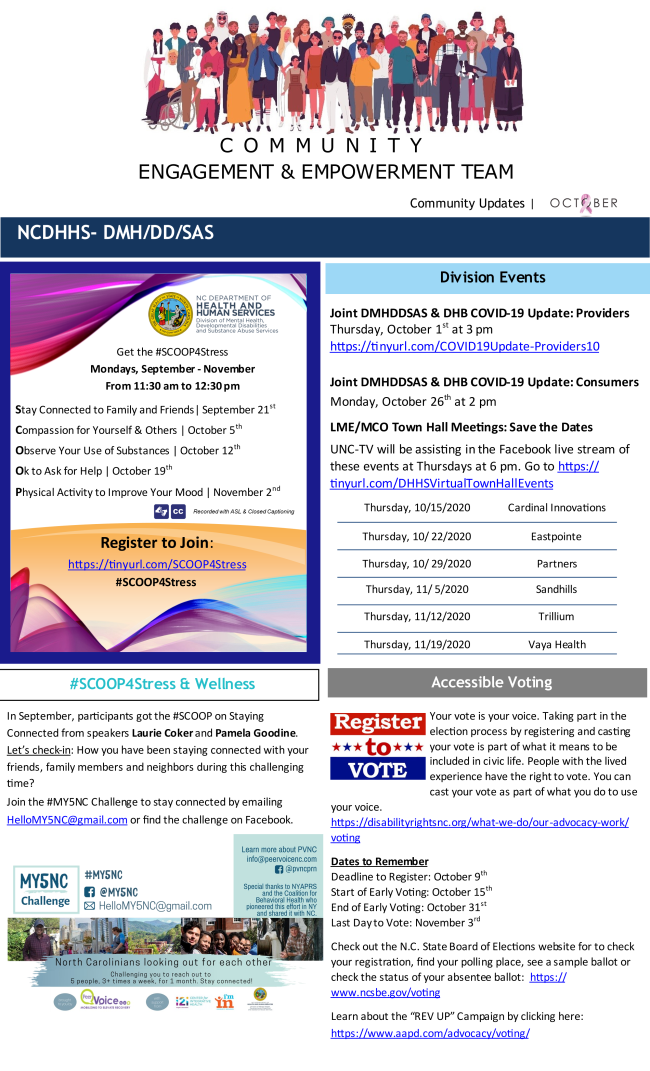
Monday: October 5, 2020
Get the SCOOP on Compassion
Time: 11:30 am thru 12:30 pm
|
Tuesday: October 6, 2020
Eastern NC: Regional Policy Institutes
Time: 9:00 am thru 11:30 am
Keynotes: Deputy Secretary, Behavioral Health & Intellectual and Developmental Disabilities - Kody Kinsley
Associate Director, NC Families United - Stacy Justiss
Advocacy 101: i2i Center for Integrative Health
Legislative Panelists:
Senator Don Davis - Greene/Pitt
Representative Donna White - Johnston
Counties Include: Vance, Warren, Halifax, Northampton, Nash, Edgecombe, Wilson, Harnett, Cumberland, Hoke, Scotland, Robeson, Bladen, Harnett, Sampson, Duplin, Wayne, Pender, New Hanover, Brunswick, Columbus, Onslow, Jones, Lenoir, Greene, Pitt, Carteret, Beaufort, Craven, Pamlico, Hyde, Dare, Washington, Martin, Bertie, Currituck, Perquimans, Pasquotank, Gates, Hertford, Camden, Chowan, Tyrell
|
Wednesday, October 7, 2020
Town Hall discussion specifically for self-advocates, family members, caregivers, and service providers.
Time: 2:00 pm
|
Thursday, October 8, 2020
Lisa Cauley Joins Benchmarks' Thursday Child Welfare Webinar (No Friday Webinar on Oct. 9, 2020)
Time: 8:00 am thru 9:00 am
|
Friday: October 9, 2020
Friday Open House for Providers
Time: 12:30 pm thru 1:30 pm
|
Saturday: October 10, 2020
Save The Date: NAMI's 2020 Annual Conference
Virtual and Free
|
Monday: October 12, 2020
Time: 11:30 am thru 12:30 pm
|
Tuesday: October 13, 2020
A Primer on ABLE Accounts
Time: 2:00 pm EST
|
Tuesday: October 13, 2020
The Ripple Effect: The Impact of Stimulant and Opioid Use - new date - Oct. 14
Time: 2:00 pm EST
|
Thursday: October 15, 2020
Immunizations and Keeping Kids Well: Trends and COVID-19
Time: 5:30 pm thru 6:30 pm
Continues on the third Thursday of each month
|
Monday: October 19, 2020
Get the SCOOP on Ok to ASK for Help
Time: 11:30 am thru 12:30 pm
|
Thursday: October 22, 2020
Benchmarks FAR Meeting-Legislative Agenda Planning
Time: 8:00 am thru 10:00 am
|
Thursday: October 22, 2020
COVID-19 Q&A Webinar for Behavioral Health Care
Time: 1:30 pm thru 3:00 pm
|
New: Tuesday: October 27, 2020
Incorporating Youth Leadership into Treatment
|
New: Thursday: October 29, 2020
Benchmarks' Medicaid Forum-Legislative Agenda Development
Time: 8:00 am thru 9:30 am
|
Monday: November 2, 2020
Time: 11:30 am thru 12:30 pm
|
Monday: October 26, 2020
Triangle: Regional Policy Institutes
Time: 9:00 am thru 11:30 am
Keynotes: Youth Transition Program Director, NC Families United - Lacy Flintall
MomsRising - Sheila Arias
Advocacy 101: Beth Messersmith, MomsRising
Legislative Panelists:
Senator Valerie Foushee - Chatham/Orange
Senator Natalie Murdock - Durham
Representative Verla Insko - Orange
Counties Include: Wake, Johnston, Chatham, Orange, Durham, Franklin, Granville
|
Please click on each of the following links to view details sent out from each LME/MCO.
Benchmarks' wants to be sure to make the following list handy for our members to visit and suggests a peek at least once per week to find information that may be pertinent to your agency and contracts.
|
|
|
|
|
|