|
Don't Forget to Register for Benchmarks'
Friday Membership Webinar
Date: Friday, September 25, 2020
Time: 8:30 am thru 9:30 am
|
Special Bulletin COVID-19 #132
CMS and the American Medical Association have released a CPT code for an antigen test designed to detect proteins from the virus that causes COVID-19 in respiratory specimens.
NC Medicaid Extends Temporary Clinical Coverage Policy Provisions and Temporary Rate Enhancements
NC Medicaid is committed to ensuring beneficiaries continue to receive Medicaid and NC Health Choice services with no interruptions or delays due to COVID-19.
Expectation to Comply with Infection Control and Prevention Measures
Strong infection prevention and control practices are critical to reducing the transmission of COVID-19 within long-term care facilities. New SlowCOVIDNC App!
Today, the North Carolina Department of Health and Human Services announced the launch of a COVID-19 Exposure Notification app called SlowCOVIDNC. The app will help North Carolinians slow the spread of the virus by alerting them when they may have been exposed to someone who has tested positive for COVID-19. It is completely anonymous and does not collect, store or share personal information or location data. We hope you will share this announcement with your networks and encourage people to download the app. The more people that use the app, the better it works.
SlowCOVIDNC leverages Google and Apple's Exposure Notification System (ENS) to alert users who have the app if they have been in close contact with an individual who later tests positive for COVID-19. It is voluntary to download and use and designed to enhance the state's existing contact tracing efforts. The app completed Beta testing earlier this month and can now be downloaded for free through the Apple App Store and the Google Play Store. The app is available in English and Spanish.
Here's how SlowCOVIDNC will work:
- Download the free SlowCOVIDNC Exposure Notification app from the Apple App Store or Google Play Store and enable Bluetooth and Exposure Notifications. Bluetooth must be on for the app to work.
- After opting-in to receive notifications, the app will generate an anonymous token for the device. A token is a string of random letters and numbers which changes every 10-20 minutes and is never linked to identity or location. This protects app user privacy and security.
- Through Bluetooth, phones with the SlowCOVIDNC app work in the background (minimizing battery) to exchange these anonymous tokens every few minutes. Phones record how long they are near each other and the Bluetooth signal strength of their exchanges in order to estimate distance.
- If an app user tests positive for COVID-19, the individual may obtain a unique PIN to submit in the app. This voluntary and anonymous reporting notifies others who have downloaded the app that they may have been in close contact with someone in the last 14 days who has tested positive.
- PINs will be provided to app users who receive a positive COVID-19 test result through a web-based PIN Portal, by contacting the Community Care of North Carolina call center, or by contacting their Local Health Department.
- SlowCOVIDNC periodically downloads tokens from the server from the devices of users who have anonymously reported a positive test. Phones then use records of the signal strength and duration of exposures with those tokens to calculate risk and determine if an app user has met a threshold to receive an exposure notification.
DSS: Dear Director Letter Re: DCDL_CARES-COVID-FC_ADVANCE funds_CWS_28-20
NC DHHS recognizes that the on-going COVID-19 public health crisis has impacted families and children across our state in many ways.
The daily needs of children, youth, young adults, and families have increased, and financial resources have been overburdened.
As part of the on-going effort to address these needs, the General Assembly passed Session Law 2020-4, the 2020 COVID-19 Recovery Act, which appropriated federal CARES Act funding for children receiving foster care services.
County DSS access to these funds for children in their custody, has been made available through a process described in a Directors Letter (BG-08-2020) dated June 15, 2020, and updated in Directors
Letter (BG-11-2020) dated September 16, 2020.
Initially, these additional funds, consisting of a supplemental stipend payment of $100 per month, were available for each child or youth receiving foster care services during the months of April, May, and June 2020.
The funding has been increased and will now include the months of July, August, and September 2020.
Download Associated Documents Here:
Executive Order No. 165:
EXTENDING CERTAIN HEALTH AND HUMAN SERVICES PROVISIONS IN PREVIOUS EXECUTIVE ORDERS AND DELEGATION OF AUTHORITY
Executive Order No. 152 is modified to be in effect until November 20, 2020. Except as specified in Section 2 herein, all references to "September 22, 2020" in Executive Order No. 152 shall be replaced with "November 20, 2020."
LME-MCO Joint Communication Bulletin # JCB 375: NC Innovations - Respite during Remote Learning
NC Medicaid has received federal approval of additional flexibilities during the COVID-19 pandemic for the NC Innovations Waiver, for individuals with intellectual and developmental disabilities (IDD).
During federally declared emergencies, states can submit requests to ease certain waiver requirements through an Appendix K. NC Medicaid received approval of Appendix Ks for all four of our waivers from our federal partners at the Centers for Medicare and Medicaid Services (CMS), effective March 13, 2020, to March 12, 2021.
NC Medicaid submitted a third Appendix K for the NC Innovations to CMS. The following modification in scope and coverage during the COVID-19 pandemic was approved effective August 17, 2020, to March 13, 2021:
* The following language is additive to the state's current approved waiver definition for this service: Respite may be utilized during school hours for sickness, injury, when a student is suspended or expelled, or School hours during the public health emergency that necessitates remote learning.
|
|
Special COVID-19 Bulletin #132 and Five New Medicaid Bulletins Available
SPECIAL BULLETIN COVID-19 #132: Laboratory Codes for Coronavirus (COVID-19) Testing
Centers for Medicare & Medicaid Services (CMS) and the American Medical Association have released a CPT code for an antigen test designed to detect proteins from the virus that causes COVID-19 in respiratory specimens. NC Medicaid is adding this CPT code to NCTracks for medically necessary laboratory testing effective Sept. 1, 2020. More Information
Five New Medicaid Bulletins Available as of Sept. 22, 2020
The NC Division of Health Benefits (DHB) has recently published five new Medicaid Bulletin articles dated Sept. 22, 2020:
- Billing Code Update for Nurse Practitioners and Physician Assistants
- Community Alternatives Program Internal Independent Assessment
- Inebilizumab-cdon Injection, for Intravenous Use (Uplizna™) HCPCS Code J3590: Billing Guidelines
- Public Comment Period for Community Alternatives Program for Children Waiver Renewal
- Tafasitamab-cxix for Injection, for Intravenous Use (Monjuvi®) HCPCS Code J9999: Billing Guidelines
All bulletin articles, including those related to COVID-19, are available on the DHB's Medicaid Bulletin webpage.
Prescribing Provider Designation and DEA Requirements Coming Soon
A change is being made to the Provider Permission Matrix (PPM) to designate certain providers as prescribers. These providers will be required to provide their Drug Enforcement Administration (DEA) certification number on the next application they complete (Initial Application, Re-verification Application or Manage Change Request, or Re-enrollment Application if terminated). More information will be available on this update soon; providers are encouraged to check their email for provider updates and review the provider announcements regularly.
|
|
How to Screen for Substance Use Among Youth - Access New Training
There is an urgent need to advance youth substance use screening within primary care settings across the health care field. Whether you are well-versed in the Youth Screening, Brief Intervention and Referral to Treatment (YSBIRT) process, or just looking for an effective way to address substance use concerns with your patients, the National Council offers both on-demand and customized live training and technical assistance options to fit your needs.
Access our free on-demand training series developed by a national team of multidisciplinary experts to understand how to:
- Define key components of YSBIRT.
- Initiate more effective conversations about substance use with youth by applying motivational interviewing principles.
- Understand the appropriate level of intervention based on the screening result.
- Identify barriers to treatment access and methods to facilitate and follow up with patients referred to care.
|
|
Suicidal Behavior: Links Between Alcohol Use Disorder and Acute Use of Alcohol
In recognition of National Suicide Prevention Month, ARCR encourages readers to learn more about the connection between alcohol use and suicidal behavior. A 2019 review found clear evidence that AUD is prevalent among individuals who die by suicide, and also demonstrated a link between blood alcohol concentration and risk for suicide attempts.
|
|
New Child Trends research finds that 75 percent of young people with foster care experience who received educational aid were in school or the workforce at ages 17, 19, and 21, compared to 41 percent of young people who did not receive educational aid. Young people in and transitioning out of foster care need consistent, ongoing support to successfully transition to adulthood. Increasing their access to educational and employment training and resources may help them thrive during this process.
|
|
AG Barr announces $100M more to combat human trafficking
Associated Press
U.S. Attorney General Bill Barr says the federal government is awarding more than $100 million in grants to target human trafficking. The money will go to task forces combatting human trafficking, to victim services and victim housing.
Optional Exceptions to the Prohibition Against Treating Incarceration as Voluntary Unemployment Under Child Support Guidelines
Federal Register
The Office of Child Support Enforcement proposes to provide States the flexibility to incorporate in their State child support guidelines two optional exceptions to the prohibition against treating incarceration as voluntary unemployment. Under the proposal, States have the option to exclude cases where the individual is incarcerated due to intentional nonpayment of child support resulting from a criminal case or civil contempt action in accordance with guidelines established by the state and/or incarceration for any offense of which the individual's dependent child or the child support recipient was a victim. The State may apply the second exception to the individual's other child support cases.
Income, Poverty and Health Insurance Coverage in the United States: 2019
U.S Census Bureau
The U.S. Census Bureau announced today that median household income in 2019 increased 6.8% from 2018, and the official poverty rate decreased 1.3 percentage points. Meanwhile the percentage of people with health insurance coverage for all or part of 2019 was 92.0% and 8.0% of people, or 26.1 million, did not have health insurance at any point during 2019, according to the 2020 Current Population Survey Annual Social and Economic Supplement (CPS ASEC).
High turnover rate continues to plague DSS
Carteret County Times
Carteret County Department of Social Services Director Clint Lewis said this month his agency continues to struggle with a high turnover rate, with much of that in the child welfare division. "In child protective services, at one point this past year we had a 69 percent turnover. That hurts tremendously," Mr. Lewis said during the County Consolidated Human Services meeting Monday, held via Zoom.
|
|
Today, the Centers for Medicare & Medicaid Services (CMS) released a request for information (RFI) to solicit public feedback on its efforts to track the performance of Medicaid-funded home and community-based services (HCBS).
HCBS provide opportunities for Medicaid beneficiaries to receive services in their own home or community rather than institutions or other isolated settings. These programs serve a variety of targeted populations groups, such as people with intellectual or developmental disabilities, physical disabilities, and/or mental illnesses. This is part of the Agency's efforts to strengthen HCBS quality measurement, reporting, and improvement activities and to ensure that vulnerable Medicaid beneficiaries receive high quality and cost-effective services.
These efforts to identify a meaningful and standardized set of HCBS measures of quality are a part of CMS' "Meaningful Measures" strategic initiative created to improve outcomes for beneficiaries, their families, and providers while also reducing burden on clinicians and providers.
It is no secret that millions of Americans need long-term services and supports (LTSS). In fiscal year (FY) 1986, HCBS expenditures accounted for less than 10 percent of the approximately $13 billion in federal and state expenditures for all Medicaid LTSS, including nursing home expenditures. By FY 2016, HCBS expenditures accounted for 57 percent of HCBS expenditures of the $167 billion spent nationally on Medicaid LTSS.
As the number of older adults and people with disabilities grows, Medicaid will need to play an even larger role in ensuring the availability of these services over the next several decades. Identifying the best quality measures enables CMS to use this information for other Medicaid initiatives achieving greater transparency and accountability in the Medicaid program.
|
What's the plan?
That's the question we ask ourselves every September as we observe National Preparedness Month. Having an emergency plan is important at any time, but especially during a pandemic. The challenges of COVID-19 make thinking about preparedness and planning more complex-and more critical.
Two key parts of preparation are:
- Make a plan of actions to take before, during, and after an emergency
- Build a kit of supplies you may need at home or away during an emergency
|
|
The DSP Crisis: Workforce Issues
These research and policy briefs help draw attention to DSP workforce issues.
Excellence in Direct Support
Receive insight into the important work of DSPs and learn about issues impacting them. Empowering the DSP Workforce
Find out about new approaches to confronting the DSP workforce crisis.
|
|
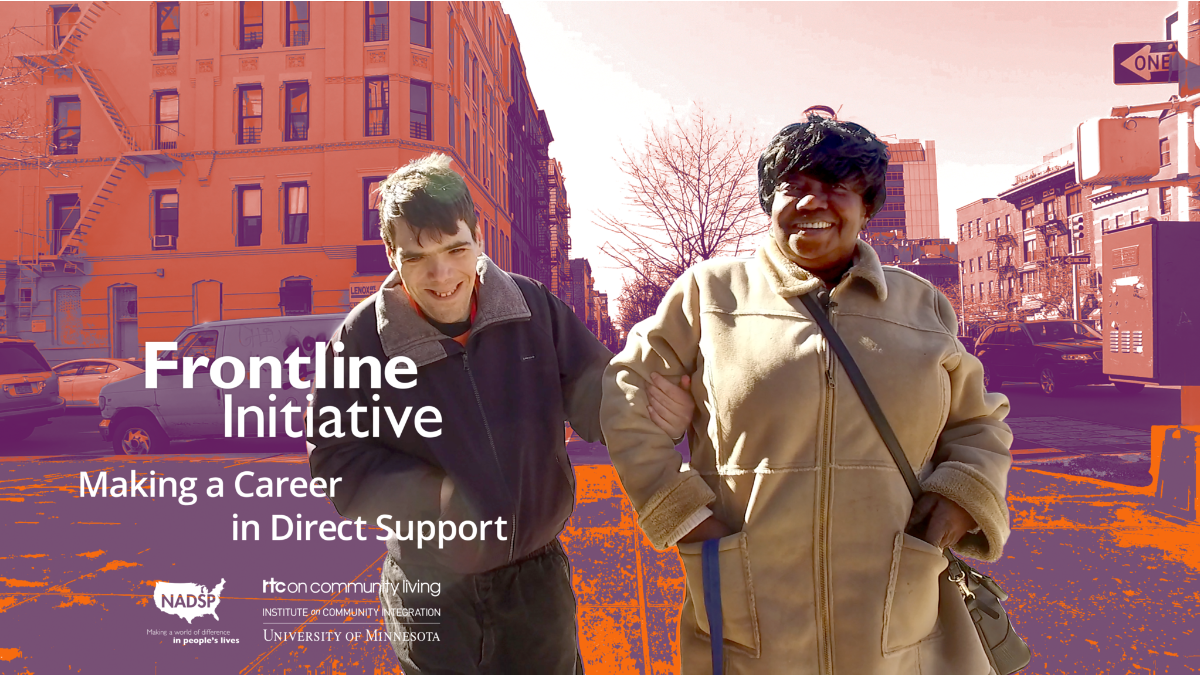
Making a Career in Direct Support
Many direct support professionals (DSPs) enter this field and fall in love with the work. You build relationships with people that become very important. Being a DSP is difficult, skilled work. We don't need to convince you of this! Sometimes DSPs start in this field with lots of support and training. Other times, these are minimal and you figure things out for yourself.
The fact remains that this is essential work. People with disabilities rely on you for supports. What keeps you working in direct support? This issue is about Making Direct Support a Career. Do you think of yourself as a professional?
In this issue, DSPs reflect on their shift to thinking of themselves as professionals and having a career in direct support, rather than simply a job. Direct support is often considered entry-level work. In some organizations, there is little access to a career ladder. But the opportunities to grow as a professional are out there. The E-badge Academy though NADSP is a program that authors in this issue will reflect on as they share with you their journey on their career path.
Frontline Initiative is a publication for and about Direct Support Professionals. It is produced through the partnership between NADSP and the University of Minnesota's Institute on Community Integration / Research and Training Center on Community Living.
Read More
|
|
Teaching Children About Money Now, Pays Dividends Later Set them on a path toward a solid financial future
Managing money isn't easy. Waiting to learn about handling money until you are on your own as an adult makes it even more challenging. Teaching kids about money early on will help them to become more financially independent as they get older. Financial education has been linked to lower debt levels, higher savings, and higher credit scores as children mature into adulthood. Later on in life, that financial education is also positively connected to net worth and investing.
Parents are the primary influence on a child's future financial well-being because they have many occasions to communicate information, set powerful examples, and involve children in activities that teach them financial skills. Parental involvement in their children's financial education has long lasting effects.
Click the link below to read on and discover fun, engaging ways to teach children about money. You can also access a host of financial education resources in our latest issue of Consumer News.
Read More
|
Thursday: September 24, 2020
Time: 12:00 pm thru 1:00 pm
|
Thursday: September 24, 2020
Practice Makes Progress: Making a Plan for Self-Care and Keeping It
Time: 12:00 pm thru 1:00 pm
|
New: Thursday: September 24, 2020
|
Thursday: September 24, 2020
Digital Health Tools & Health Equity - Lessons Learned & the Path Forward
Time: 2:00 pm thru 3:30 pm
|
Thursday: September 24, 2020
Advocacy for Children and Families: Food for Thought - and Action
Time: 2:00 pm thru 3:30 pm
Note: Use code PPCWEBINAR2020 for complimentary access
|
Thursday: September 24, 2020
Time: 3:00 pm thru 4:00 pm
|
New: Friday: September 25, 2020
Benchmarks' Friday Membership Webinar
Time: 8:30 am thru 9:30 am
|
Friday: September 25, 2020
Western NC: Regional Policy Institutes
Time: 9:30 am
|
Friday: September 25, 2020
NCDHHS Supported Living Level 2 & 3
STAKEHOLDERS MEETING
Time: 1:00 pm thru 3:00 pm
PARTICIPATE ONE OF TWO WAYS:
- Meeting ID: 973 1973 1182
- Passcode: 329118 (No registration necessary but you must enter this passcode to be admitted to the meeting.)
2) Attend by Phone:
855-880-1246 (US Toll-free)
Meeting ID: 973 1973 1182
|
Monday: September 28, 2020
Central NC: Regional Policy Institutes
Time: 9:00 am thru 11:30 am
Keynotes: Deputy Director, Child Welfare Services Lisa Cauley
NC Child Welfare Family Advisory Council - Gina Brown
Advocacy 101: Melea Rose-Waters, Prevent Child Abuse NC
Counties Include: Gaston, Mecklenburg, Union, Rowan, Rockingham, Caswell, Person, Guilford, Davidson, Randolph, Montgomery, Cabarrus, Stanly, Alamance, Lee, Moore, Anson, Richmond
|
Monday: September 28, 2020
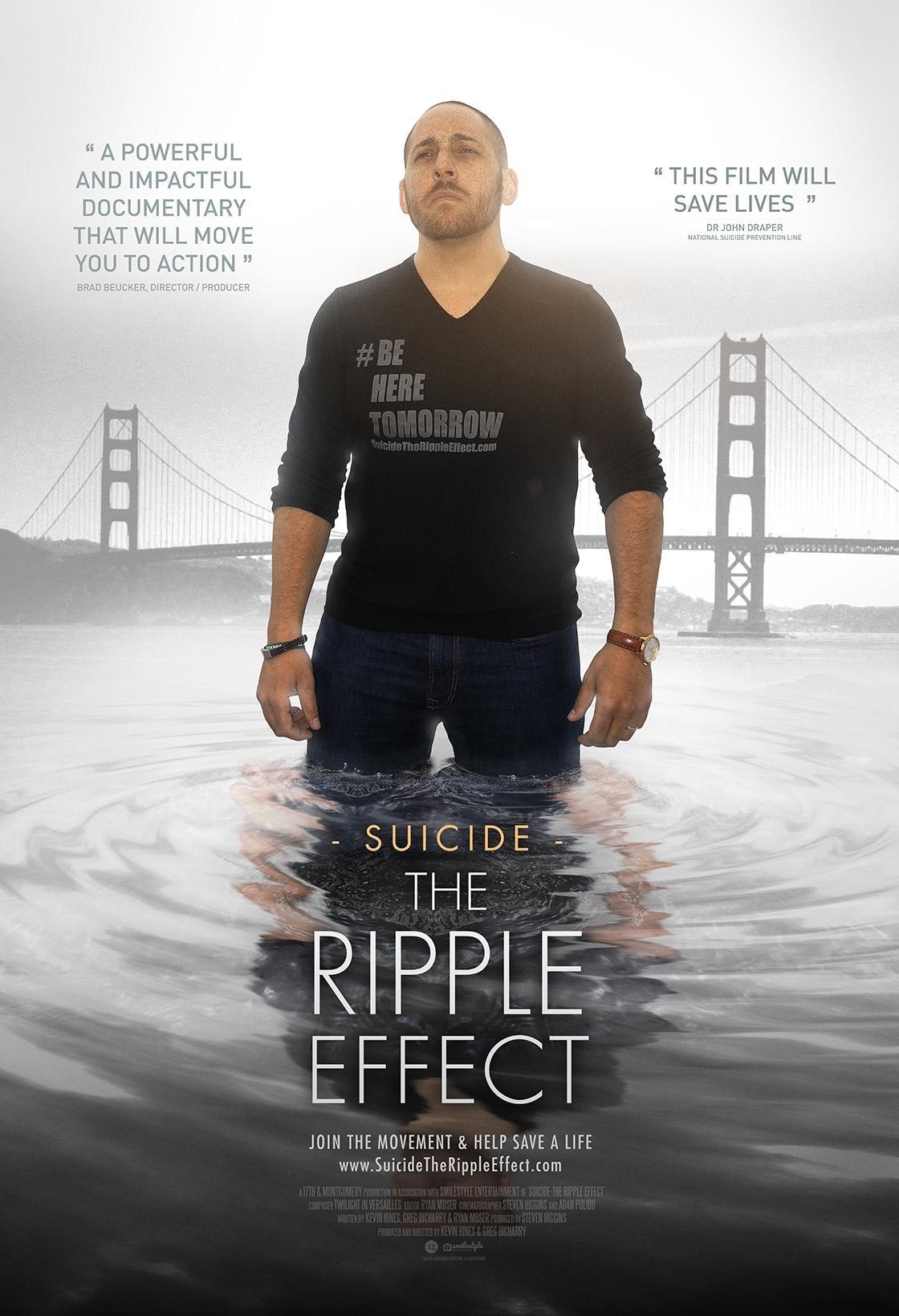
"Suicide: The Ripple Effect" Documentary Film Viewing
Time: 1:00 pm thru 2:30 pm
|
Tuesday: September 29, 2020
"The Anonymous People" Documentary Film Viewing
Time: 1:00 pm thru 2:30 pm
|
Tuesday: September 29, 2020
The Value of Youth Peers Serving on Community Boards
Time: 2:00 pm
|
Tuesday: September 29, 2020
Building the Plane While Flying It, Part 2: Health Care for the Homeless, Telehealth, and COVID-19
Time: 2:00 pm thru 3:00 pm
|
New: Tuesday: September 29, 2020
Exercise as a Human Right: Providing Inclusive Physical Fitness Opportunities to People with IDD During the Pandemic and Beyond
Time: 2:00 pm thru 3:00 pm EST
|
Tuesday: September 29, 2020
NC AHEC and CCNC Navigating COVID-19 Webinar Series
Time: 6:00 pm thru 7:00 pm
|
Wednesday: September 30, 2020
The Children's Budget Summit
Time: 2:00 pm
|
Wednesday: September 30, 2020
Identifying the Enabling Services Workforce for Social Determinants of Health Screening and Documentation
Time: 2:00 pm thru 3:00 pm
|
Wednesday: September 30, 2020
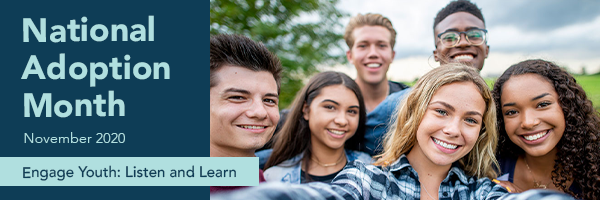
Save the Date! National Adoption Month Webinar "Engage Youth: Listen and Learn"
Time: 2:00 pm thru 3:30 pm
|
Thursday: October 1, 2020
Time: 1:00 pm thru 2:00 pm
|
New: Thursday: October 1, 2020
Better with Time: Medicaid Transformation State of Things
Time: 5:30 pm thru 6:30 pm
(Continues on the first Thursday of each month)
|
Friday, October 2, 2020
18th Annual Peer Support Workshop
Time: 10:00 am thru 3:00 pm
|
New: Monday: October 5, 2020
Get the SCOOP on Compassion
Time: 11:30 am thru 12:30 pm
|
Tuesday: October 6, 2020
Eastern NC: Regional Policy Institutes
Time: 9:00 am thru 11:30 am
Keynotes: Deputy Secretary, Behavioral Health & Intellectual and Developmental Disabilities - Kody Kinsley
Associate Director, NC Families United - Stacy Justiss
Advocacy 101: i2i Center for Integrative Health
Legislative Panelists:
Senator Don Davis - Greene/Pitt
Representative Donna White - Johnston
Counties Include: Vance, Warren, Halifax, Northampton, Nash, Edgecombe, Wilson, Harnett, Cumberland, Hoke, Scotland, Robeson, Bladen, Harnett, Sampson, Duplin, Wayne, Pender, New Hanover, Brunswick, Columbus, Onslow, Jones, Lenoir, Greene, Pitt, Carteret, Beaufort, Craven, Pamlico, Hyde, Dare, Washington, Martin, Bertie, Currituck, Perquimans, Pasquotank, Gates, Hertford, Camden, Chowan, Tyrell
|
Wednesday, October 7, 2020
Town Hall discussion specifically for self-advocates, family members, caregivers, and service providers.
Time: 2:00 pm
|
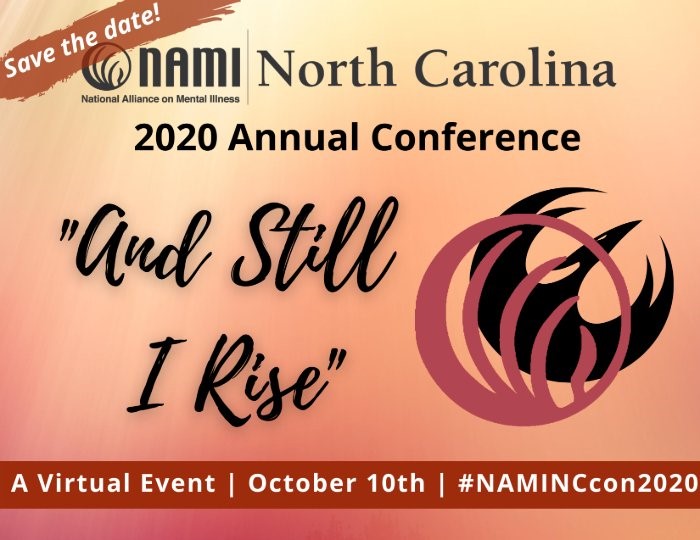
Saturday: October 10, 2020
Save The Date: NAMI's 2020 Annual Conference
Virtual and Free
|
New: Monday: October 12, 2020
Time: 11:30 am thru 12:30 pm
|
New: Thursday: October 15, 2020
Immunizations and Keeping Kids Well: Trends and COVID-19
Time: 5:30 pm thru 6:30 pm
Continues on the third Thursday of each month
|
New: Monday: October 19, 2020
Get the SCOOP on Ok to ASK for Help
Time: 11:30 am thru 12:30 pm
|
New: Monday: November 2, 2020
Time: 11:30 am thru 12:30 pm
|
Monday: October 26, 2020
Triangle: Regional Policy Institutes
Time: 9:00 am thru 11:30 am
Keynotes: Youth Transition Program Director, NC Families United - Lacy Flintall
MomsRising - Sheila Arias
Advocacy 101: Beth Messersmith, MomsRising
Legislative Panelists:
Senator Valerie Foushee - Chatham/Orange
Senator Natalie Murdock - Durham
Representative Verla Insko - Orange
Counties Include: Wake, Johnston, Chatham, Orange, Durham, Franklin, Granville
|
Please click on each of the following links to view details sent out from each LME/MCO.
Benchmarks' wants to be sure to make the following list handy for our members to visit and suggests a peek at least once per week to find information that may be pertinent to your agency and contracts.
|
|
|
|
|
|