|
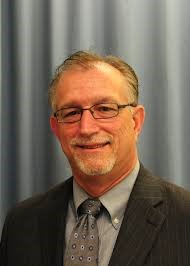
Reminder: Dave Richard, NC Medicaid, will be joining our very own Karen McLeod for Benchmarks' Friday Membership Webinar this week
Date: Friday, October 2, 2020
Time: 8:30 am thru 9:30 am
|
Tomorrow: Joint NC DMHDDSAS and DHB COVID 19 Update for NC Providers October 1st
During this call, panelists will present policy updates from DMHDDSAS and DHB representatives followed by an open Q&A session. In addition to DMHDDSAS and DHB subject matter experts we will also have a representative from DHSR on the call to answer questions you might have.
In consideration of the limited time we have on the call, we ask that you review the guidance links (below) on the DHHS website and FAQs on the NC Medicaid site to see if an answer to your question has already been provided. These calls will be held monthly on the first Thursday of each month.
Date: Thursday, October 1, 2020
Time: 3:00 pm thru 4:00 pm
Updated Breast and Cervical Cancer Control Program Criteria
North Carolina's Breast and Cervical Cancer Control Program (BCCCP) has changed the criteria to allow additional providers who screen and diagnose women for breast and cervical cancer to refer to Breast and Cervical Cancer Medicaid (BCCM).
Effective Oct. 1, 2020, women who are diagnosed by a non-BCCCP participating provider, and who meet all other NC BCCCP eligibility criteria, may be eligible to apply for BCCM.
|
|
Details on Prescribing Provider DEA Requirements Coming Soon and All Board Certifications Now Required
Details on Prescribing Provider DEA Requirements
Effective Oct. 1, 2020, a change is being made to the Provider Permission Matrix (PPM) to designate certain providers as prescribers. These prescribing providers will be required to provide their Drug Enforcement Administration (DEA) certification number on their initial enrollment, re-enrollment or MCR applications. Once the DEA number is submitted, NCTracks will automatically verify this number. If the name and DEA number on the application matches the information on file with DEA, the application will continue to be processed. If this information does not match, the provider will be sent an Application Incomplete letter explaining the issue and the actions required to resolve it.
If a provider designated as a prescriber on the PPM* does not have a DEA number, they must:
1. Enter 123456789 as the DEA certification number.
- The prescribing provider is currently working on obtaining their DEA license (it is in process or is still pending). They must elect a temporary alternate prescriber to write prescriptions for controlled substances on their behalf until they have a valid certification. The form must be completed providing the alternate prescriber's information.
- The prescribing provider elects not to prescribe controlled substances themselves but prescribing controlled substances is in their scope of practice. They must identify another doctor to write these prescriptions on their behalf. The form must be completed providing the alternate prescriber's information.
- The prescribing provider does not prescribe or refer prescriptions for controlled substances because they believe their patients do not require controlled substances. In this circumstance, the provider must sign the statement on the form indicating this and describe their process for handling instances when a patient requires a controlled substance.
3. Upload this form to the Upload Documents page under Status Management when submitting an application.
All Board Certifications Now Required on Applications
NCTracks now requires all board certifications (including optional/non-required certifications) to be listed on provider applications. Although providers may add this at any time through the Manage Change Request (MCR) process, providers must submit this information on their next application. It is important for providers to submit this information because some board certifications will provide sufficient documentation to eliminate the need for NCTracks to request a school transcript from the provider, which shortens the processing time of the application.
|
|
How anesthetics and benzodiazepine affect the brain differently
- Researchers identified how anesthetic and benzodiazepine drugs change a brain receptor's shape, providing a new level of detail in understanding anesthesia.
- The results suggest ways to design more tailored anesthetic drugs in the future.
General anesthetics are used to put patients to sleep before surgical procedures. Many general anesthetics work primarily through a brain protein called the GABAA receptor. Benzodiazepines, another widely prescribed type of sedative, also act through this same receptor. However, benzodiazepines have a wide range of calming effects. Low doses can make you feel sedated and high doses can act as an anesthetic. They're often used to treat anxiety, epilepsy, and insomnia.
The GABAA receptor forms a channel through cell membranes. The molecule in the brain that activates the receptor is called GABA. It causes the channel to open, letting in ions to quiet the brain cells' activity. But how anesthetics and benzodiazepines can have different sedating effects hasn't been clearly understood. To better understand how these drugs interact with the GABAA receptor, a research team led by Drs. Jeong Joo Kim and Ryan Hibbs from the University of Texas Southwestern Medical Center mapped the receptor's atomic structure while it interacted with three different anesthetic drugs (phenobarbital, etomidate, and propofol) and a commonly used benzodiazepine drug called diazepam. The team also mapped the receptor's interactions with a drug used to treat benzodiazepine overdoses, called flumazenil.
|
Wednesday: September 30, 2020
Time: 1:00 pm thru 2:00 pm
|
Wednesday: September 30, 2020
The Children's Budget Summit
Time: 2:00 pm
|
Wednesday: September 30, 2020
Identifying the Enabling Services Workforce for Social Determinants of Health Screening and Documentation
Time: 2:00 pm thru 3:00 pm
|
Wednesday: September 30, 2020
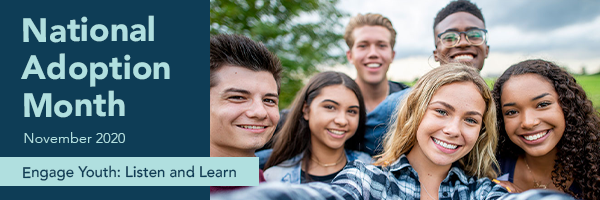
Save the Date! National Adoption Month Webinar "Engage Youth: Listen and Learn"
Time: 2:00 pm thru 3:30 pm
|
Thursday: October 1, 2020
Time: 1:00 pm thru 2:00 pm
|
New: Thursday: October 1, 2020
Joint NC DMHDDSAS and DHB (NC Medicaid) COVID-19 Update for NC Providers
Time: 3:00 pm thru 4:00 pm
|
Thursday: October 1, 2020
Better with Time: Medicaid Transformation State of Things
Time: 5:30 pm thru 6:30 pm
(Continues on the first Thursday of each month)
|
Friday, October 2, 2020
Dave Richard Joins Benchmarks' Friday Membership Webinar
Time: 8:30 am thru 9:30 am
|
Friday, October 2, 2020
18th Annual Peer Support Workshop
Time: 10:00 am thru 3:00 pm
|
Monday: October 5, 2020
Get the SCOOP on Compassion
Time: 11:30 am thru 12:30 pm
|
Tuesday: October 6, 2020
Eastern NC: Regional Policy Institutes
Time: 9:00 am thru 11:30 am
Keynotes: Deputy Secretary, Behavioral Health & Intellectual and Developmental Disabilities - Kody Kinsley
Associate Director, NC Families United - Stacy Justiss
Advocacy 101: i2i Center for Integrative Health
Legislative Panelists:
Senator Don Davis - Greene/Pitt
Representative Donna White - Johnston
Counties Include: Vance, Warren, Halifax, Northampton, Nash, Edgecombe, Wilson, Harnett, Cumberland, Hoke, Scotland, Robeson, Bladen, Harnett, Sampson, Duplin, Wayne, Pender, New Hanover, Brunswick, Columbus, Onslow, Jones, Lenoir, Greene, Pitt, Carteret, Beaufort, Craven, Pamlico, Hyde, Dare, Washington, Martin, Bertie, Currituck, Perquimans, Pasquotank, Gates, Hertford, Camden, Chowan, Tyrell
|
Wednesday, October 7, 2020
Town Hall discussion specifically for self-advocates, family members, caregivers, and service providers.
Time: 2:00 pm
|
Thursday, October 8, 2020
Lisa Cauley Joins Benchmarks' Thursday Child Welfare Webinar (No Friday Webinar on Oct. 9, 2020)
Time: 8:00 am thru 9:00 am
|
New: Friday: October 9, 2020
Friday Open House for Providers
Time: 12:30 pm thru 1:30 pm
|
Saturday: October 10, 2020
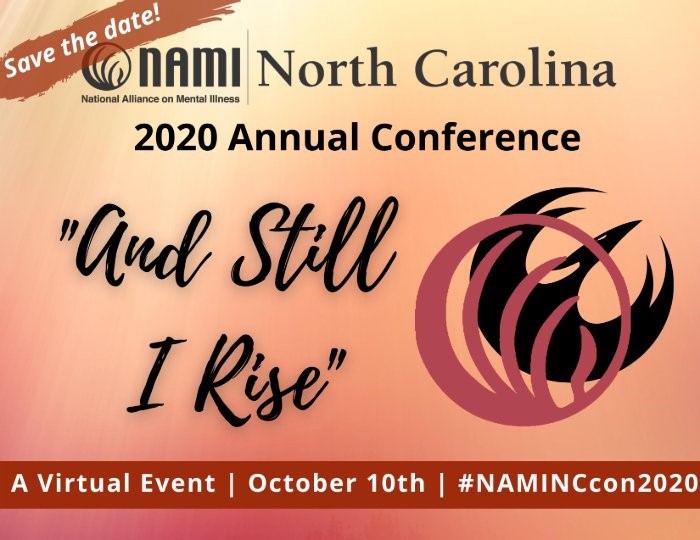
Save The Date: NAMI's 2020 Annual Conference
Virtual and Free
|
Monday: October 12, 2020
Time: 11:30 am thru 12:30 pm
|
Tuesday: October 13, 2020
A Primer on ABLE Accounts
Time: 2:00 pm EST
|
New: Tuesday: October 13, 2020
The Ripple Effect: The Impact of Stimulant and Opioid Use - new date - Oct. 14
Time: 2:00 pm EST
|
Thursday: October 15, 2020
Immunizations and Keeping Kids Well: Trends and COVID-19
Time: 5:30 pm thru 6:30 pm
Continues on the third Thursday of each month
|
Monday: October 19, 2020
Get the SCOOP on Ok to ASK for Help
Time: 11:30 am thru 12:30 pm
|
Thursday: October 22, 2020
Benchmarks FAR Meeting-Legislative Agenda Planning
Time: 8:00 am thru 10:00 am
|
New: Thursday: October 22, 2020
COVID-19 Q&A Webinar for Behavioral Health Care
Time: 1:30 pm thru 3:00 pm
|
Monday: November 2, 2020
Time: 11:30 am thru 12:30 pm
|
Monday: October 26, 2020
Triangle: Regional Policy Institutes
Time: 9:00 am thru 11:30 am
Keynotes: Youth Transition Program Director, NC Families United - Lacy Flintall
MomsRising - Sheila Arias
Advocacy 101: Beth Messersmith, MomsRising
Legislative Panelists:
Senator Valerie Foushee - Chatham/Orange
Senator Natalie Murdock - Durham
Representative Verla Insko - Orange
Counties Include: Wake, Johnston, Chatham, Orange, Durham, Franklin, Granville
|
Please click on each of the following links to view details sent out from each LME/MCO.
Benchmarks' wants to be sure to make the following list handy for our members to visit and suggests a peek at least once per week to find information that may be pertinent to your agency and contracts.
|
|
|
|
|
|