Monday, March 30, 2020
The Impact of COVID-19 on Civil Litigation in Arkansas

The Impact of COVID-19 on Civil Litigation in Arkansas 
COVID-19 is impacting all sectors of the world, including that of civil litigation. In Arkansas, the federal and state court systems have issued blanket orders that continued civil trial settings, cancelled in-person hearings, and mandated that depositions be conducted in a way to minimize exposure to the virus. What does this mean for litigation in Arkansas now and what might it mean for future litigation?

The Current State of Litigation
State Appellate Court - The Arkansas Supreme Court per curium order dated March 20, 2020 now gives the Clerk of the Court for the appellate courts authority to grant “reasonable” requests for an extension. Oral arguments before the Court of Appeals and the Supreme Court were cancelled by the March 17, 2020 per curium order. 

Trials - There will be no jury trials until at least April 17, 2020 according to the most recent orders. Trials continued during this time will ostensibly be rescheduled after trials already on the books. 

Hearings - The Arkansas Supreme Court cancelled all in-person hearings, unless there is an emergent situation, until April 17. Criminal and domestic hearings are continuing in certain cases. Where there is an exigent circumstance or good faith reason for a hearing, it is possible that a telephone hearing could be arranged. Contact your attorney to discuss the specific issue and see if a remote hearing is a possibility.

Orders - The courts continue to issue routine orders, and it is anticipated to continue. 

Pleadings/filings - Filing deadlines have not been extended by the orders. All of the Federal Courts, and the majority of the Arkansas Circuit Courts, conduct filings via electronic systems. Thus, filings should continue as usual so long as the staff at the various court clerk offices are available to approve and post filings through the system. To date, we have not seen an impact in the ability to file pleadings. However, certain aspects of serving pleadings, such as a complaint, may be impacted where the to-be-served party is not in the normal location. 

Depositions - The Federal and the Arkansas Supreme Court Orders mandate that any in-person proceedings, including depositions, be conducted in a way to minimize exposure. Corporate clients and some law firms have also issued policies prohibiting the taking of in-person depositions. Court reporting firms have also added distancing requirements. A complicating factor is that multiple deposition locations, in particular for depositions occurring outside the state, have closed due to sequester-in-place orders. However, if the parties can be creative and agreeable, technology allows for remote depositions whereby no person has to be in the same room as another. Strategic considerations will go into the decision as to hold a remote deposition, rather than allow the attorney to sit across from the witness for questioning. In some cases, it might make best strategic sense to wait until the impact of COVID-19 has lessened and in-person depositions resume. Speak with your lawyer about what makes the best sense for your case.
How might COVID-19 spawn future litigation?

While Arkansas has not yet seen any COVID-19 specific litigation, there are indications that COVID-19 will create its own category of litigation. 

Securities litigation and director liability - On March 12, 2020, a class action complaint alleging violation of federal securities laws was filed in the Southern District of Florida against Norwegian Cruise Lines. Essentially, the allegation is that Plaintiff purchased Norwegian Cruise Lines securities at an inflated price as a result of Defendants’ alleged false and misleading statements about the state of the cruise line and industry during the early days of COVID-19.  You can read the complaint here. 

Event cancellation - World-wide events like the Olympics, and national events like March Madness, baseball, and basketball are cancelling. Local events are also cancelling, prompting many to lose revenue and out-of-pocket expenses. Often a specialized policy is required and fear of the virus in the community may not be enough to trigger coverage. In such cases, clients should review, or send to its attorneys, the policies to determine if event cancellation is covered as the specific policy language will govern.

General liability -  On March 9, 2020, a South Florida couple sued Princes Cruise Lines after being quarantined off the coast of San Francisco on the cruise ship as a result of the COVID-19 outbreak alleging negligence and gross negligence for an alleged failure to warn of the risk of exposure and alleged failure to take reasonable precautions against the virus. You can read the complaint here . While it is anticipated that similar lawsuits will follow, it will be particularly complicated to prove proximate causation (that is, is that the defendants’ conduct, in a natural and continuous sequence, produced damage and without which the damage would not have occurred) and foreseeability regarding such damage.   

Business interruption and civil authority - When an event shuts down the business, businesses generally look to see if its insurance policies cover the business interruption loss (which may result from having to shut down suddenly) or a contingent business interruption (which may result from the closure of the supply chain). A business interruption clause is intended to provide coverage where a direct physical loss results in a loss of business income to the insured. Somewhat similar is the civil authority clause, which is intended to provide coverage where a civil authority has rendered a business inaccessible due to a physical damage nearby (sometimes, neighboring is required). Generally, both require direct physical damage to be triggered. Again, in such cases, clients should review, or send to its attorneys, the policies to determine if event cancellation is covered as the specific policy language will govern and the individual facts surrounding the interruption.

For a discussion of how businesses should plan and prepare for COVID-19 related legal issues, read our article  “Businesses Should Plan and Prepare.”

For a discussion of how COVID-19 product shortages impact manufacturers of products, read  “Product Shortages and Legal Pitfalls.”

Regardless of the impact of COVID19, Friday Eldredge and Clark, LLP remains committed to serving its clients. Our lawyers are available to you. We encourage you to contact your Friday Firm attorney to discuss any questions of concerns that you have regarding the impact of COVID19 on your particular litigation.

Civil Authority, Business Interruption,
and COVID-19 in Ark

As we enter April, most states are under some order requiring certain businesses to shutter or extensively change how they operate to stop the community spread of COVID-19. CNN reports that, as of March 30, 2020, 27 state have some shelter-in-place order, sheltering more than two-thirds of the nation’s population. [1] While Arkansas is not currently under any shelter-in-place orders, Governor Asa Hutchinson has issued multiple executive orders requiring certain businesses to close and restaurants to be take-out only. [2] The City of Little Rock is under a curfew.[3] The impact on the business community will be historical. Insureds will turn to the language of their insurance policies to determine if there is any relief to be gained. Particular clauses will come under scrutiny, in particular business interruption and civil authority clauses. 

Courts have previously held that civil authority orders that closed business for fear of something occurring was not enough to trigger coverage. For example, United Airlines sought coverage under the civil authority provision of its policy after the FAA grounded airline traffic after the September 11, 2001 terrorist attacks.[4] The Second Circuit Court of Appeals affirmed the district court’s denial of coverage, both holding that the FAA’s decision to stop air traffic was due to its fear of a future attack, not as direct damage to any property. Another example is hurricane evacuations, which have been deemed insufficient to trigger civil authority clauses because of the lack of physical damage.[5] Thus, it is not enough that there be a fear of property damage. Rather, there must be a causal connection between the order from the civil authority and actual, prior physical damage. 

While the Arkansas Supreme Court has not addressed a case like what might be brought in response to COVID-19, its Federal counterpart, the Eighth Circuit Court of Appeals, has rejected claims under the business interruption and civil authority clauses where no direct physical damage was shown. In 2003, the U.S. Government banned any beef products from Canada after a Canadian cow tested positive for bovine spongiform encephalopathy, or “mad cow disease.” A Minnesota Company called Source Food sold a product that contained beef, and relied upon Canadian sources to produce. The ban resulted in Source Food’s inability to deliver its product. It sought coverage under its policy for business interruption and civil authority, was denied coverage, and brought a lawsuit that made its way to the Eighth Circuit Court of Appeals in 2006.[6] The Court of Appeals upheld the denial of coverage, concluding that there was no direct physical loss because it was undisputed that the Source Food product in Canada itself was not physically damages or contaminated. According to the Eighth Circuit Court of Appeals, 
To likely be successful in Arkansas, any suit seeking coverage for COVID-19 losses must be able to show a physical injury. Nationally, lawsuits are already being brought alleging that COVID-19 isa physical injury. In hard-hit Louisiana, the owners of the French Quarter’s restaurant Oceana Grill has brought a declaratory judgment (a lawsuit that asks the court to declare a party’s rights under a document) against its insurer Lloyd’s of London and the Governor of the State of Louisiana asking that a business income loss provision (or business interruption) or the civil authority provision of its policy be deemed to cover the pandemic. [8] Oceana Grill’s argument is novel — that the COVID-19 “physically infects and stays on the surface of objects or materials, ‘fomites,’ for up to twenty-eight days. . . .” [9] Thus, according to Oceana Grill, “[i]t is clear that contamination of the insured premises by the Coronavirus would be a direct physical loss needed remediation to clean the surfaces of the establishment.”[10] Oceana Grill points to the business income loss provision of the policy, which it contends should cover its loss. Moreover, Oceana Grill points to the executive order by the Governor to close, arguing that the civil authority provision of the policy should thus apply to cover the loss from being required to close.  

In California, San Francisco restaurants The French Laundry and Bouchon Bistro have brought a similar lawsuit, raising similar arguments, against its insurer Hartford.[11]  The Complaint alleges the restaurants are covered by a civil authority clause, stating that “[u]nder the policy, insurance is intended to apply to the actual loss of business income sustained and the actual, necessary, and reasonable extra expenses incurred when access to the scheduled premises is specifically prohibited by order of civil authority as the direct result of a covered cause of loss to property in the immediate areas of the plaintiffs’ scheduled premises.”[12] The lawsuit points to a March 18, 2020 shelter-in-place order that also required all non-essential businesses to cease operations. [13]Plaintiffs argue that (1) the “Order triggers coverage because the policy does not include an exclusion for a viral pandemic and actually extends coverage for loss or damage due to virus,”[14] (2) that “the Order constitutes a prohibition of access to plaintiff’s Insured Premises by a Civil Authority as defined in the Policy,”[15] and (3) that the policy provides coverage to plaintiffs for any current and future civil authority closures of restaurants in Napa County due to physical loss or damage from the Coronavirus and the policy provides business income coverage in the event that the Coronavirus has caused a loss or damage to the insured premises.”[16]


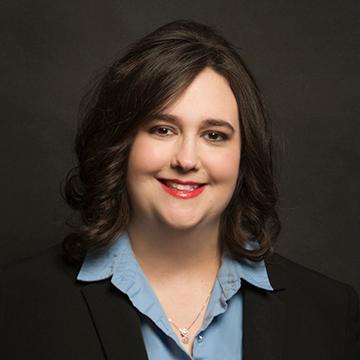
Jamie Huffman Jones is a partner in the Litigation Practice Group and advocates for clients in jury and bench trials involving a variety of claims, including mass tort, catastrophic injury, wrongful death, business and commercial disputes, class actions, and automotive commercial disputes.

Disclaimer:  The information included here is provided for general informational purposes only and should not be a substitute for legal advice nor is it intended to be a substitute for legal counsel. For more information or if you have further questions, please contact one of our  Attorneys.
About the Firm

Friday, Eldredge & Clark, LLP serves business, non-profit, governmental and individual clients in Arkansas and across the United States. It is one of the oldest law firms in the state and has been the largest Arkansas-based law firm for more than 50 years. The firm has practice areas focusing on General Litigation; Class Action and Business Litigation; Railroad; Labor and Employment; Medical Malpractice; Public Finance; Healthcare; Estate Planning and Probate; Employee Benefits; Real Estate and Commercial Transactions; and Merger and Acquisitions. Friday, Eldredge & Clark has offices in Little Rock, Fayetteville and Rogers, Arkansas.

For more information, visit  www.fridayfirm.com.