CHOP Faculty who mentor research trainees, including physician fellows,
please take this short survey on research trainee needs. It will be open through November 22. Thank you!
Spotlight on:
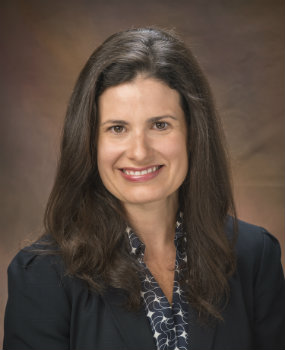
Dr. Lisa Schwartz

Lisa Schwartz, PhD is among the National Palliative Care Research Center’s 2017 grantees . Her two-year Pilot & Exploratory Project Support Grant will study acupuncture for pain management for adolescents and young adults (AYA) with cancer.

Complex biopsychosocial characteristics predispose AYA to higher risk cancers, requiring more intense and longer treatments, and their pain is often undertreated. Acupuncture has a growing evidence base to treat pain and other symptoms in adult oncology, but is rarely used for pediatric patients.

Dr. Schwartz’s study aims to: 1) develop and test a tailored acupuncture intervention for 13 to 24 year olds that will target cancer-related pain; 2) assess acceptability, feasibility, and safety in AYA who opt in to acupuncture for pain management relative to those who choose treatment-as-usual, and 3) measure the preliminary effects of acupuncture for pain management. The study will add to the current body of knowledge on acupuncture and provide important pilot data for a future randomized controlled trial, and potentially provide effective pain management and improved quality of life for AYA with cancer.
Upcoming Events
Qualitative Methods Research Affinity Group Meeting
Date: November 16, 2017
Time: 11:30 am - 1:00 pm
Qualitative Methods RAG leader, Cynthia Mollen, will introduce and describe the RAG’s goals and structure. Featured speaker, Zachary Meisel, will give a talk entitled “Storytelling, Stakeholders and Research.”
Click here for more information.

Community-Driven Research Day
Date: December 5, 2017
Time: 9:00 am - 12:00 pm
Location: Temple University Howard Gittis Student Center Room 200 A&B, 1755 N. 13th St.
Community-Driven Research Day (CDRD) encourages collaboration between researchers and community-based organizations (CBOs)/community groups who have research questions that they are interested in answering, specifically in ways that address local solutions to health challenges. Register by November 21st.

Save the Date: CPCE/PolicyLab Visiting Speaker
Date: December 15, 2017
Time: 12:00 - 1:00 pm
Lilliam Ambroggio, PhD, Assistant Professor of Pediatrics, University of Cincinnati.

1st CHOP Education Symposium
Date: January 24, 2018
The event will feature Grand Round Speaker Barbara Brandt, PhD, Director of the National Center for Interprofessional Practice and Education. The CHOP Interprofessional Education (IPE) Committee invites staff from all departments to share their work and engage in shaping the future of learning. Submit an abstract that highlights your work in health professions education. Electronic submission forms are due by November 17, 2017.
CPCE in
the News!
Recent Publications
Symptom monitoring using patient-reported outcomes (PROs) is not common in pediatric oncology, despite interest from stakeholders-including patients, families, clinicians, and regulatory organizations-and proven clinical benefit in adult oncology. This article examines the foundational data for patient-reported symptom reporting in this population and posits the next investigative steps toward the implementation of patient-reported symptom monitoring in the care and research of pediatric oncology patients.

Transcatheter device closure of ASD (TC-ASD) has well established efficacy and safety. For most individual patients with suitable anatomy, TC-ASD is the preferred method for treating ASD. This research studies practice patterns at a range of hospitals across the United States and identifies differences in practice that were not previously appreciated.

Children with acute myeloid leukemia (AML) whose disease is refractory to standard induction chemotherapy therapy or who experience relapse after initial response have dismal outcomes. Dr. Aplenc and colleagues sought to comprehensively profile pediatric AML microRNA (miRNA) samples to identify dysregulated genes and assess the utility of miRNAs for improved outcome prediction.

Little is known about the information shared during family discussions about sexuality. From a public health perspective, abstinence is one of the most important sexuality topics parents can talk with adolescents about. CPCE & PolicyLab researchers sought to characterize the messages mothers communicate to young adolescents regarding abstinence.

Pneumonia, most often caused by a respiratory virus, is common in childhood. Despite recommendations for β-lactam antibiotics, macrolide antibiotics, including erythromycin, clarithromycin, and azithromycin, are frequently prescribed to children with acute lower respiratory infection. Some observational data have revealed improved outcomes in adults and children with pneumonia who are prescribed macrolides, although its widespread use has led to increases in macrolide resistance in Streptococcus pneumoniae and M pneumoniae. Clinical trials to define the role of macrolides in pediatric acute respiratory infection must be prioritized.

Parents and caregivers play an important role in sexual socialization of youth, often serving as the primary source of information about sex. For African American rural youth who experience disparate rates of HIV/sexually transmitted infection, improving caregiver-youth communication about sexual topics may help to reduce risky behaviors. This study assessed the impact of an intervention to improve sexual topic communication.

The proportion of infants ≤60 days old receiving long IV treatment decreased substantially from 2005 to 2015 without an increase in hospital readmissions. These findings support the safety of short-course IV antibiotic therapy for appropriately selected neonates.

The ethics of maternal-fetal surgery involves weighing the importance of potential benefits, risks, and other consequences involving the pregnant woman, fetus, and other family members. Dr. Feudtner and colleagues assessed clinicians' ratings of the importance of 9 considerations relevant to maternal-fetal surgery.

Alarm fatigue is a widely recognized safety and quality problem where exposure to high rates of clinical alarms results in desensitization leading to dismissal of or slowed response to alarms. Nonactionable alarms are thought to be especially problematic. Despite these concerns, the number of clinical alarm signals has been increasing as an everincreasing number of medical technologies are added to the clinical care environment.

Thyroid nodules are less common in pediatric patients (≤18 years) than in adults. The Bethesda System for Reporting Thyroid Cytopathology allows for individual risk stratification, but a significant number of nodules are indeterminate. Incorporating gene mutation panels and gene expression classifiers may aid in pre-operative diagnosis. The overall aim of this study was to assess the prevalence of oncogene alterations in a representative pediatric population and across a broad-spectrum of thyroid tumor diagnoses.

Funding Opportunities
The American Kidney Fund Clinical Scientist in Nephrology (CSN) fellowship program enhances the training of nephrologists who wish to pursue an academic career and whose primary professional commitment is to scholarship in the provision of patient care. CSN fellows conduct prevention and outcomes research while receiving advanced training in essential skills such as medical ethics, biostatistics and epidemiology.

The Doris Duke Charitable Foundation Clinical Scientist Development Award (CSDA) program provides grants to junior physician-scientists in any disease area to facilitate their transition to independent clinical research careers.To be eligible, applicants must have received an MD, DO, or foreign equivalent degree from an accredited institution; have a valid, active U.S. medical license at the time of application; work at a U.S. academic institution that grants doctoral degrees and is able to receive an award; and be in a full-time assistant professor faculty position (appointed between December 1, 2012, and December 1, 2016).

The one-year awards include $25,000 for predoctoral and medical students and $35,000 for postdoctoral students. The proposed training must be scientifically linked to autism and may be broadened to include training in a closely related area of scientific research, including but not limited to human behavior across the lifespan, neurobiology, pharmacology, neuropathology, genetics, epigenetics, genomics, epigenomics, immunology, molecular and cellular mechanisms, studies employing model organisms and systems, and studies of treatment and service delivery.

The American Society of Nephrology fights to prevent, treat, and cure kidney diseases by educating health professionals and scientists, advancing research and innovation, communicating new knowledge, and advocating for the highest quality care for patients. As part of this mission, the ASN Foundation is accepting applications for its William and Sandra Bennett Clinical Scholars Program. The goal is to produce the next generation of clinician educators by enabling applicants to improve their teaching skills through the acquisition of education tools and by supporting aspiring nephrology educators interested in conducting a project that advances all facets of nephrology education and teaching. To that end, grants of $100,000 over two years will be awarded in support of projects that explore any aspect of nephrology education.

Innovation grants are designed as seed funding for researchers with a novel approach to pediatric oncology scientific investigation. This may represent a change in research direction and/or an innovative new idea that moves away from an investigator’s prior research but for which a strong case is made for the potential impact on childhood cancers. Innovation Grants will support research proposals to be carried out by investigators who are already established, have a track record of peer-reviewed publications and evidence of successfully competing for extramural funding. The grant is for two years up to $125,000 per year for direct costs only. A no-cost extension is permitted if progress is demonstrated and budget properly justified.

Young Investigator Grants are 3 year awards designed to support scientists in the early stages of their research careers, such as postdoctoral or clinical fellows. Outstanding mentorship and demonstration of a career plan that shows commitment to pediatric cancer investigation are critical components of a successful application.

Alex’s Lemonade Stand Epidemiology Grants are $100,000 per year for two years. Funding allows investigators to pursue research studies in human populations, using epidemiological approaches, in order to significantly contribute to the understanding of childhood cancers. Hypothesis-driven research may focus on risk factors, early detection, prevention, effectiveness and treatment outcomes.

This award provides $25,000 for one year to a recipient at any career stage performing research in gastroenterology- or hepatology-related areas. The objective of this pilot research award is to provide funds to early career investigators to help establish their research careers, or to support projects that represent new research directions for established investigators. 

The American Gastroenterological Association is accepting applications for its AGA-Elsevier Gut Microbiome Pilot Research Award. The objectives of the program are to help early-career investigators establish their research careers and support research projects that represent new directions for established investigators. Projects must focus on the relationship of gut microbiota to digestive health and disease. 

The Caplan Foundation for Early Childhood is intended to be an incubator of promising research and development projects that may ultimately enhance the development, health, safety, education or quality of life of children from infancy through seven years of age across the country. Each of its grants is made with the expectation that a successful project outcome will be of significant interest to other investigators or developers, within the grantee’s field of endeavor, and will be amenable to beneficial application or adaptation elsewhere. In essence, the foundation’s goal is to provide seed money for those imaginative endeavors, addressed to the needs of young children, which appear most likely to bear fruit on a national scale.

The Damon Runyon Cancer Research Foundation has joined together with the Sohn Conference Foundation, dedicated to curing pediatric cancers, to establish the Damon Runyon-Sohn Pediatric Cancer Fellowship Award. This award provides funding to basic scientists and clinicians who conduct research with the potential to significantly impact the prevention, diagnosis or treatment of one or more pediatric cancers.

Last year, the NIH received approximately $30 billion in federal support. In spite of this amount, about 42,500 grants were not funded. To address these unfunded proposals, the NIH has a new Pilot Program that is designed to match researchers with nonprofit disease Foundations or with investments from private companies. Through a new collaboration between the NIH and the private contractor Leidos, researchers can now upload their unfunded NIH Proposals into an online portal at the Online Partnership to Accelerate Research (OnPAR). Foundations and other potential funders can review the NIH scores, and decide whether they might be interested in funding the Projects. Currently, this Pilot Program allows researchers with priority scores better than the 30th percentile to submit their abstracts. Interested Foundations might ask that a researcher send their full NIH Application along with its scores. The consensus opinion is that there are a lot of worthy grants being submitted to the NIH, but there is only so much funding available. OnPAR is one way of trying to match researchers with private Foundations. 
About CPCE
We are a pediatric research center dedicated to discovering and sharing knowledge about best practices in pediatric care by facilitating, organizing and centralizing the performance of clinical effectiveness research -- research aimed at understanding the best ways to prevent, diagnose and treat diseases in children. CPCE’s multidisciplinary team conducts research on a diverse range of clinical effectiveness topics grouped within four areas of research: