| |
|
The Center for Pediatric Clinical Effectiveness e-newsletter is designed to inform stakeholders of the accomplishments of our team members and share opportunities to engage with CPCE and CHOP. We welcome you to forward it to your colleagues, and
submit requests for announcements or additions to the e-newsletter by replying to this email.
W
e appreciate your support!
|
|
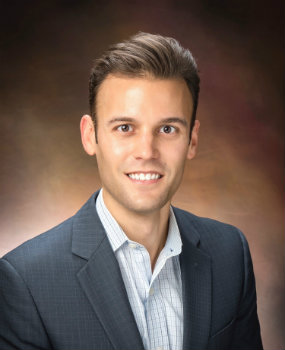
Spotlight on: Dr. Brian Jenssen
A recent Bench to Bedside blog post from the CHOP Research Institute highlighted work by Brian Jenssen, MD, MSHP.
Read the post here. Dr. Jenssen’s research involves the use of clinical decision support systems and population health management techniques to protect children from secondhand smoke exposure and tobacco use.
|
|
|
|
|
Grand Rounds: The I-PASS Study: Standardizing the Handoff Process to Improve Patient Care and Safety
Date: Wednesday, October 19, 2016
Time: 8:00 – 9:00 am
Location: Stokes Auditorium, CHOP Main Hospital
Presented by Christopher Landrigan, MD, MPH, Glenn Rosenbluth, MD; and Nancy Spector, MD. Upon completion of this live activity, participants will be able to: 1. Describe the role of communication failures in medical errors and preventable adverse events; 2. Explain the need for high quality patient handoffs to reduce the likelihood of communication failures; and 3. Describe the implementation of I-PASS evidence-based handoff bundle and its impact on medical errors and patient safety.
Grand Rounds: Tobacco, Retail Stores, and the Marketing of Disease
Date: Wednesday, October 19, 2016
Time: 5:30 PM – 8:00 PM
Location: The College of Physicians of Philadelphia, 19 South 22nd St., Philadelphia, PA 19103
Tobacco is heavily marketed in retail spaces, particularly in urban communities. Combined with ready availability, advertising can increase consumption of unhealthy products and contribute to poor health. In this Grand Rounds, panelists will discuss retail tobacco advertising in Philadelphia, its role in Philadelphia smoking rates and disease, and solutions for addressing the problem.
Grand Rounds: What Health Information Technology Can (and Can’t) Do For Pediatric Care
Date: Wednesday, October 26, 2016
Time: 8:00 – 9:00 am
Location: Stokes Auditorium, CHOP Main Hospital
CPCE Associate Director for Outpatient Research Activities Alex Fiks, MD, MSCE, will present. Upon completion of this session, participants will be able to understand the evidence base regarding how best (and how not) to use health information technology to improve pediatric care. Furthermore, participants will receive information on how to overcome potential challenges to implementing health information technology to support pediatric care.
2016 MidAtlantic Bioinformatics Conference
Date: Wednesday October 26, 2016
Location: Colket Translational Research Building, 1100, 1200 & Atrium
Leaders in the fields of computational biology, genomics, and bioinformatics will be sharing their perspectives on the generation, management and analysis, computational methods, and infrastructure of complex bioinformatics data including a special panel - Challenges in High Performance Computing. Click here for more information and to register.
3rd Annual Penn/CHOP Microbiome Symposium
Date: Thursday October 27, 2016
Time: 8 am - 7 pm
Location: Biomedical Research Building II/III Auditorium
Speakers Include: Jillian Banfield, Sarah Cherry, Michael Fischbach, Ivaylo Ivanov, Christopher Mason, Susan Lynch, Forest Rohwer, Boris Striepen. Symposium registrants may submit 40” x 60” posters. Four abstracts will be chosen for presentation during the symposium as well as a $250 cash prize. Poster abstracts (500 words max.) must be submitted to
April Weakley by October 7, 2016.
Register for the symposium by October 14, 2016.
Precision Medicine: Methods and Measures for Realizing the Potential of mHealth
Date: Thursday, November 3, 2016
Time: 12:00 – 1:00 PM
Location: 3535 Market Street, 16th Floor, Conference Room D
Speaker Christopher Cushing, Ph.D., of University of Kansas will present on n-of-1 and adaptive interventions in pediatric health. Lunch will be provided. To RSVP or with any questions, please contact mHealth@email.chop.edu.
|
|
|
|
CHOP Pilot Grant (Letter of Intent due Oct 15)
The Children’s Hospital of Philadelphia is soliciting pilot grants to stimulate new research initiatives between basic and clinical researchers, with at least one of the collaborative PIs based at CHOP. The other faculty may be based at any Penn school. Priority will be given to co-investigators who are forging a new research initiative or to co-investigators who have not yet worked together. Funding will be for one year at $50,000, with an additional year of funding contingent on success towards the research objectives. Please submit your letter of intent (one page maximum, minimum 11 pt Arial or similar font) to Bob DeNight by October 15, 2016. Selected applicants will be asked to submit a full proposal by December 1, 2016.
American Cancer Society: The Role of Health Policy and Health Insurance in Improving Access to and Performance of Cancer Prevention, Early Detection, and Treatment Services (due Oct 15)
Supports research that evaluates the impact of the many changes now occurring in the healthcare system with a particular focus on cancer prevention, control, and treatment. New health public policy initiatives such as the new federal and state marketplaces that have expanded insurance coverage, as well as Medicaid expansion in some states, create natural experiments ripe for evaluation. Research to be funded by this RFA should focus on the changes in national, state, and/or local policy and the response to these changes by healthcare systems, insurers, payers, communities, practices, and patients.
Innovation grants are designed as seed funding for researchers with a novel approach to pediatric oncology scientific investigation. This may represent a change in research direction and/or an innovative new idea that moves away from an investigator’s prior research but for which a strong case is made for the potential impact on childhood cancers. Innovation Grants will support research proposals to be carried out by investigators who are already established, have a track record of peer-reviewed publications and evidence of successfully competing for extramural funding. The grant is for two years up to $125,000 per year for direct costs only. A no-cost extension is permitted if progress is demonstrated and budget properly justified.
Alex's Lemonade Stand Foundation 2017 Young Investigator Grant (Dec 15, 2016)
Young Investigator Grants are 3 year awards designed to support scientists in the early stages of their research careers, such as postdoctoral or clinical fellows. Outstanding mentorship and demonstration of a career plan that shows commitment to pediatric cancer investigation are critical components of a successful application.
Alex’s Lemonade Stand Epidemiology Grants are $100,000 per year for two years. Funding allows investigators to pursue research studies in human populations, using epidemiological approaches, in order to significantly contribute to the understanding of childhood cancers. Hypothesis-driven research may focus on risk factors, early detection, prevention, effectiveness and treatment outcomes.
OnPAR Program for Unfunded NIH Proposals
Last year, the NIH received approximately $30 billion in federal support. In spite of this amount, about 42,500 grants were not funded. To address these unfunded proposals, the NIH has a new Pilot Program that is designed to match researchers with nonprofit disease Foundations or with investments from private companies. Through a new collaboration between the NIH and the private contractor Leidos, researchers can now upload their unfunded NIH Proposals into an online portal at the Online Partnership to Accelerate Research (OnPAR). Foundations and other potential funders can review the NIH scores, and decide whether they might be interested in funding the Projects. Currently, this Pilot Program allows researchers with priority scores better than the 30th percentile to submit their abstracts. Interested Foundations might ask that a researcher send their full NIH Application along with its scores. The consensus opinion is that there are a lot of worthy grants being submitted to the NIH, but there is only so much funding available. OnPAR is one way of trying to match researchers with private Foundations.
|
|
About CPCE
We are a pediatric research center dedicated to discovering and sharing knowledge about best practices in pediatric care by facilitating, organizing and centralizing the performance of clinical effectiveness research -- research aimed at understanding the best ways to prevent, diagnose and treat diseases in children. CPCE’s multidisciplinary team conducts research on a diverse range of clinical effectiveness topics grouped within four areas of research:
|
|
|
|
|
|
|
|