| |
|
The Center for Pediatric Clinical Effectiveness e-newsletter is designed to inform stakeholders of the accomplishments of our team members and share opportunities to engage with CPCE and CHOP. We welcome you to forward it to your colleagues, and
submit requests for announcements or additions to the e-newsletter by replying to this email.
W
e appreciate your support!
|
|
Spotlight on: Global Health
Dr. Lowenthal Leads New Research Affinity Group
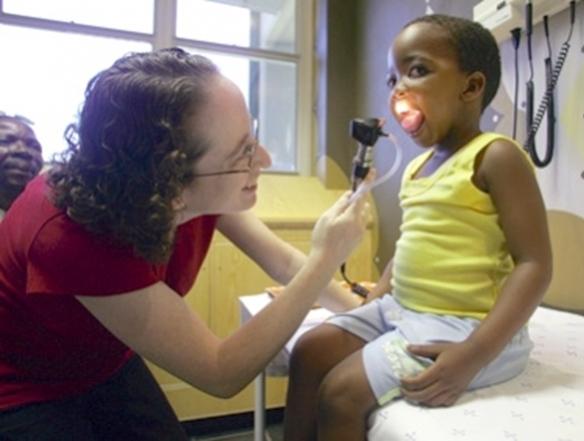
CPCE Core Faculty Member Elizabeth Lowenthal, MD, MSCE will lead a new Global Health Research Affinity Group at the CHOP Research Institute. Dr. Lowenthal, who is also research director for CHOP’s Global Health Center, conducts research on best practices for care of adolescents with HIV in Botswana.
“The Global Health Research Affinity Group will help pool the body of knowledge and share how those of us who have done this sort of work have dealt with the practical and ethical considerations that often come up,” Dr. Lowenthal said in a CHOP Research Institute Bench to Bedside blog post.
|
|
|
|
|
CHOP’s Global Health Conference - LAST DAY TO REGISTER
Dates: September 30 - October 1, 2016
The 2016 CHOP Global Health Conference will explore the ingredients of successful pediatric global health partnerships through a diverse range of perspectives. Participants will be challenged to collaborate to build stronger networks in pediatric global health. Register online by September 16, 2016.
mHealth Research Fall Project Showcase
Date: Monday September 19, 2016
Time: 9 - 10:30 am
Location: Colket Translational Research Building, 1200 A
Exhibitors will include TreatYourself, IKnowUShould2, THRIVE, HidrateSpark, MyCHOP, SafeSeat, PIWI, PediCrisis, Probant, and others. No RSVP is required.
Pediatric Grand Rounds
Date: Wednesday, September 21, 2016
Time: 8-9 am
Location: Stokes Auditorium
Brian Jenssen, MD, MSHP will present at CHOP Grand Rounds. Upon completion of this session, participants will be able to understand the intergenerational impact of parental tobacco use on children and have knowledge of evidence-based strategies to help address parental tobacco usage. Furthermore, Dr. Jenssen will provide background on ongoing policy discussions regarding tobacco and e-cigarettes. In addition to the in-person session at CHOP, the session will be video conferenced live to the CHOP Pediatric and Adolescent Care Centers at Cobbs Creek, South Philadelphia, Karabots, and other select practices.
Philadelphia Research Community Conference
Date: Wednesday September 21, 2016
Time: 2-6 pm
Location: Colket Translational Research Building, 1200 AB
The conference is an opportunity to engage and network with the research community around the topic of engaging with the public. It is a free event that is hosted by the Recruitment Enhancement Core in partnership with the Prosper Planning committee and PENN. The theme is Using Social Media to Know Your Community. Click here to learn more or to register.
Fall Cores Fair
Date: Wednesday September 28, 2016
Time: 10 am - 2 pm
Location: Abramson Research Center Lobby
Learn how to take advantage of the services, technology, and expertise provided by the highly skilled staff who operate the numerous Research Core Facilities. Refreshments will be available.
|
|
|
August 30, 2016
August 25, 2016
|
|
|
Fine particulate matter (PM2.5) is a measurable component of ambient pollution, and positive associations of short-term PM2.5 exposure with the clinical presentation of systemic onset juvenile idiopathic arthritis (SJIA) in young children have been described in a regional cohort. The objective of this study was to further establish associations between short-term pollution exposures and the reported clinical event of SJIA onset in cases residing from multiple metropolitan regions.
Low rates of pregnancy screening in adolescents before teratogenic exposures in a national sample of children's hospitals
Adolescents with cancer engage in sexual behaviors and are exposed to teratogenic chemotherapy. There are no data regarding pregnancy screening patterns for adolescents before chemotherapy exposure.
|
|
|
CHOP Bridge Funding Program (due Sept 30)
The Children's Hospital of Philadelphia Research Institute is seeking applications for its Bridge Funding Program, a semi-annual competitive process. The program provides up to 12 months of funding for laboratory, translational and clinical research projects to enable the continuation of an essential level of activity that can lead to additional external funding. Applications should be sent to Robert DeNight by September 30, 2016.
CPCE Pilot Grant Program (due Oct 1)
CPCE offers Pilot Grants twice per year to support CHOP investigators in clinical effectiveness studies that will attract external support for larger-scale projects. Investigators from all CHOP departments and divisions, including fellows in their final year of fellowship transitioning to a faculty position at CHOP, are encouraged to apply. Selected proposals will be supported for up to a maximum of $10,000 for one year. Proposals are typically due April 1 and October 1.
Burroughs Wellcome Fund: Career Awards for Medical Scientists (due Oct 3)
The Career Awards for Medical Scientists (CAMS) is a highly competitive program that provides $700,000 awards over five years for physician-scientists, who are committed to an academic career, to bridge advanced postdoctoral/fellowship training and the early years of faculty service. Proposals must be in the area of basic biomedical, disease-oriented, or translational research. Candidates must have received their most recent earned clinical doctorate degree within the last 11 calendar years; Candidates holding K awards are eligible.
Center for Perinatal and Pediatric Health Disparities Research (CPHD) Pilot Grants (due Oct 5)
CPHD offers a Pilot Project Funding Opportunity once a year through its Pilot Grant Program. The purpose of this program is to promote and support health disparities (HD) investigators in research specific to perinatal and pediatric health disparities and health equity. The CPHD Pilot Grant Program aims to engage fellows and junior faculty in HD research and to assist established faculty in developing new lines of research in this area. Investigators from all institutions and disciplines including fellows are encouraged to apply; however, at least one investigator and/or consultant on the project must be from CHOP. The award range is between $2,500 and $10,000 for one year. Projects must be completed within one year. Applications are due October 5. Successful applicants will be notified in November. Awards will have a start date on or around December 1.
Rally Foundation (Letter of Intent due Oct 13)
Rally funds research in the following areas: Under-studied cancer types; Innovative approaches to childhood cancer research which could lead to advanced studies or clinical trials; Studies that are likely to lead to a clinical trial, personalized, alternative, or integrated research proposals; Quality of life and survivorship research proposals. The Foundation awards grants in three categories: Fellowship Grants, Young Investigator and Independent Investigator Research Grants, and Consortium Grants.
CHOP Pilot Grant (Letter of Intent due Oct 15)
The Children’s Hospital of Philadelphia is soliciting pilot grants to stimulate new research initiatives between basic and clinical researchers, with at least one of the collaborative PIs based at CHOP. The other faculty may be based at any Penn school. Priority will be given to co-investigators who are forging a new research initiative or to co-investigators who have not yet worked together. Funding will be for one year at $50,000, with an additional year of funding contingent on success towards the research objectives. Please submit your letter of intent (one page maximum, minimum 11 pt Arial or similar font) to Bob DeNight by October 15, 2016. Selected applicants will be asked to submit a full proposal by December 1, 2016.
American Cancer Society: The Role of Health Policy and Health Insurance in Improving Access to and Performance of Cancer Prevention, Early Detection, and Treatment Services (due Oct 15)
Supports research that evaluates the impact of the many changes now occurring in the healthcare system with a particular focus on cancer prevention, control, and treatment. New health public policy initiatives such as the new federal and state marketplaces that have expanded insurance coverage, as well as Medicaid expansion in some states, create natural experiments ripe for evaluation. Research to be funded by this RFA should focus on the changes in national, state, and/or local policy and the response to these changes by healthcare systems, insurers, payers, communities, practices, and patients.
OnPAR Program for Unfunded NIH Proposals
Last year, the NIH received approximately $30 billion in federal support. In spite of this amount, about 42,500 grants were not funded. To address these unfunded proposals, the NIH has a new Pilot Program that is designed to match researchers with nonprofit disease Foundations or with investments from private companies. Through a new collaboration between the NIH and the private contractor Leidos, researchers can now upload their unfunded NIH Proposals into an online portal at the Online Partnership to Accelerate Research (OnPAR). Foundations and other potential funders can review the NIH scores, and decide whether they might be interested in funding the Projects. Currently, this Pilot Program allows researchers with priority scores better than the 30th percentile to submit their abstracts. Interested Foundations might ask that a researcher send their full NIH Application along with its scores. The consensus opinion is that there are a lot of worthy grants being submitted to the NIH, but there is only so much funding available. OnPAR is one way of trying to match researchers with private Foundations.
|
|
About CPCE
We are a pediatric research center dedicated to discovering and sharing knowledge about best practices in pediatric care by facilitating, organizing and centralizing the performance of clinical effectiveness research -- research aimed at understanding the best ways to prevent, diagnose and treat diseases in children. CPCE’s multidisciplinary team conducts research on a diverse range of clinical effectiveness topics grouped within four areas of research:
|
|
|
|
|
|
|
|