Application deadline for the PHEOT and AGP fellowships is approaching! For more information about the programs, including how to apply,
click here
or contact
Natalie Schroeder.
|
|
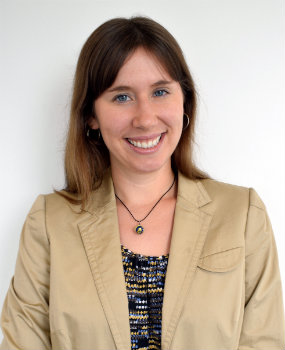
Spotlight on: Stephanie Mayne
|
CPCE is pleased to welcome
Stephanie Mayne, PhD, MHS
back to CHOP, after she completed a postdoctoral training program in cardiovascular disease epidemiology at Northwestern University from 2017 to 2018.
Dr. Mayne will discuss her current research interests, which involve the social and environmental determinants of cardiometabolic disease, at a Work in Progress session next Friday, October 19, at 12:00 pm in the Roberts Center 11th floor, room 11-110.
|
|
|
Philadelphia Symposium on Research Credibility & Excellence
Date: October 15, 2018
Time: 8:00 am - 5:00 pm
Location: The Union League of Philadelphia
The Philadelphia Symposium on Research Credibility & Excellence intends to convene leaders from academia, industry, federal agencies, and publishers to create a robust discussion of reproducibility and research integrity to reveal the “inside story” of how these issues are handled by institutions, journals, and federal agencies. Registration is now open. You can register at
PhillyResearchSymposia.org.
Charting New Frontiers in Children's Health Policy & Practice
Date: October 22, 2018
Time: 8:00 am - 6:00 pm
Location: National Museum of American Jewish History
Join our PolicyLab colleagues as they convene regional and national leaders in children’s health policy to outline the emerging innovative solutions that will move the dial on child, adolescent and family health and well-being over the course of the next decade. The forum will feature morning and lunch-time plenaries about evidence-based policymaking at the national level, and breakout sessions with panel discussions highlighting innovative practice and policy on the most pressing issues facing child and adolescent health. Learn more
here.
mHealth RAG Seminar: Digital Health/mHealth Leadership Resource Panel
Date: Monday, October 29, 2018
Time: 11:30 am – 1:00 pm
Location: Stokes Auditorium (CHOP Main hospital)
Are you interested in using enhanced capabilities of REDCap? Are you hoping to develop or modify an app or use text messaging in your research? Are you having trouble locating the resources you need or finding the right person to answer your questions? Anyone using REDCap or involved with mHealth/digital health research will benefit from hearing about the resources available here at CHOP and learning how to better navigate them. Representatives from the Office of Digital Health, Research IS, Operations IS, and REDCap will discuss the resources and support they provide, share examples from their work, and answer audience questions. Lunch will be served. Please register
here.
|
|
October 9, 2018
September 25, 2018
September 13, 2018
August 31, 2018
August 24, 2018
August 21, 2018
|
|
The shift from volume-based to value-based reimbursement has created a need for quantifying clinical performance of ID physicians. Nationally recognized ID specialty-specific quality measures will allow stakeholders, such as patients and payers, to determine the value of care provided by ID physicians and will promote clinical quality improvement.
Echinocandins are used for treatment of invasive candidiasis, but data on their use in children are limited. CPCE researchers performed a retrospective cohort study of hospitalized children exposed to ≥1 day of a systemic antifungal agent to assess the rate of antifungal agent prescribing over time. While the crude rate of systemic antifungal prescribing decreased during the study period, echinocandin prescribing increased from 2.2 to 7.2 per 1000 admissions. This research shows that echinocandin use has increased significantly over time, accounting for an increasing proportion of systemic antifungal prescribing in children.
Routine human immunodeficiency virus (HIV) screening reduces HIV progression and transmission. This study from CPCE & PolicyLab faculty member Nadia Dowshen and colleagues examined prevalence and factors associated with prior HIV screening among a cohort of youth living with HIV. Researchers identified high rates of missed opportunities for HIV testing and sexual history documentation in the year prior to diagnosis, underscoring the need for routine HIV screening in adolescents.
Pediatric cancer-related fatigue is prevalent and significantly impairs health-related quality of life, yet its patterns and correlates are poorly understood. The objectives of this study were to describe fatigue as prospectively reported by children with advanced cancer and to identify the factors associated with fatigue and associated distress.
Data related to the epidemiology and resource utilization of congenital heart disease (CHD)-related emergency department (ED) visits in the pediatric population is limited. The purpose of this analysis was to describe national estimates of pediatric CHD-related ED visits and evaluate medical complexity, admissions, resource utilization, and mortality.
|
|
Designated Frontier Programs must have three essential components: Distinctive clinical program that provides extraordinary care; associated translational research that advances the clinical program and has potential to generate the next breakthrough; and return on investment that can support our ongoing innovation in the years to come.
The Robert Wood Johnson Foundation has issued a Call for Applications for its 2018 Culture of Health Prize, an annual program that honors outstanding community efforts and partnerships that are helping people live healthier lives. Through the program, up to ten communities will be awarded a $25,000 cash prize and have their accomplishments celebrated and shared broadly, with the goal of raising awareness and inspiring locally driven change across the country. Community partners can decide together how to use the funds to benefit their community.
Grants of up to $20,000 are available to help support the research of faculty members or post-doctoral researchers affiliated with non-profit human service organizations in the United States and Canada. Areas of interest to the Fund are: studies to develop, refine, evaluate, or disseminate innovative interventions designed to prevent or ameliorate major social, psychological, behavioral or public health problems affecting children, adults, couples, families, or communities.
The Gerber Foundation is accepting concept papers for research projects focused on improving the health, nutrition, and/or development of infants and young children. In particular, the foundation is looking for practical solutions that can be rapidly implemented on a broad scale and within a predictable time frame to clinical application. Major target areas include new diagnostic tools, new treatment regimens, symptom relief, preventative measures, assessment of deficiencies or excesses (vitamins, minerals, drugs, etc.), and risk assessment tools or measures for environmental hazards, trauma, etc. Grant amounts will range up to $350,000.
The goal of the American Kidney Fund Clinical Scientist in Nephrology (CSN) fellowship program is to improve the quality of care provided to kidney patients and to promote clinical research in nephrology. The CSN program enhances the training of nephrologists who wish to pursue an academic career and whose primary professional commitment is to scholarship in the provision of patient care. The fellowship may be granted yearly, with a maximum duration of two years for each fellowship. The maximum level of funding of $80,000 per year shall be used principally to support the candidate and his or her career development, including salary.
The annual program provides physicians who wish to pursue a career in cancer research with the opportunity for a protected research training experience under the mentorship of a highly qualified mentor after they have completed their clinical training. The award program will provide up to $460,000 over four years in financial support. In addition, the foundation will retire up to $100,000 of any outstanding medical school debt owed by a grant recipient.
The American Congress of Obstetricians and Gynecologists is accepting applications for the 2015 Warren H. Pearse Women's Health Policy Research Award. The annual program includes a single grant of $10,000 for research that explores an aspect of healthcare policy that assists, defines, or restricts the ability of a physician to deliver health care to women in either the general population or a specific area. Applicants must be a junior fellow or fellow of the college at the time of application.
Last year, the NIH received approximately $30 billion in federal support. In spite of this amount, about 42,500 grants were not funded. To address these unfunded proposals, the NIH has a new Pilot Program that is designed to match researchers with nonprofit disease Foundations or with investments from private companies. Through a new collaboration between the NIH and the private contractor Leidos, researchers can now upload their unfunded NIH Proposals into an online portal at the Online Partnership to Accelerate Research (OnPAR). Foundations and other potential funders can review the NIH scores, and decide whether they might be interested in funding the Projects. Currently, this Pilot Program allows researchers with priority scores better than the 30th percentile to submit their abstracts. Interested Foundations might ask that a researcher send their full NIH Application along with its scores. The consensus opinion is that there are a lot of worthy grants being submitted to the NIH, but there is only so much funding available. OnPAR is one way of trying to match researchers with private Foundations.
|
|
About CPCE
We are a pediatric research center dedicated to discovering and sharing knowledge about best practices in pediatric care by facilitating, organizing and centralizing the performance of clinical effectiveness research -- research aimed at understanding the best ways to prevent, diagnose and treat diseases in children. CPCE’s multidisciplinary team conducts research on a diverse range of clinical effectiveness topics grouped within four areas of research:
|
|
|
|
|
|
|