Two New R01 Grants to Improve HIV Care, Medication Adherence
|
CPCE Core Faculty member
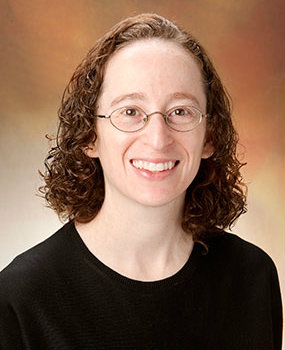
Elizabeth Lowenthal, MD, MSCE
recently received an R01 research grant from the Eunice Kennedy Shriver National Institute of Child Health & Human Development (NICHD) to improve the assessment of cognitive and neurodevelopmental disorders among children impacted by HIV who are living in resource-limited settings (RLS).
The work will be done in collaboration with researchers at the University of Pennsylvania, and aims to culturally adapt the Penn Computerized Neurocognitive Battery (CNB) of tests for use in RLS and to validate the adapted version in Botswana.
Because administration of an hour-long battery of neurocognitive tests is not always practical in busy clinics in RLS, a second aim of the project will be to adapt a rapid psychosocial screening tool, the Pediatric Symptom Checklist, in order to identify patients for more extensive evaluation via the CNB.
The work will extend Dr. Lowenthal’s body of work to
improve care of youth impacted by HIV in RLS
. If successful, the proposed tools would provide practical screening and streamlined, comprehensive assessments to identify children with cognitive deficits. The utility of such assessments could extend well beyond children affected by HIV and increase general access to pediatric cognitive assessments in RLS.
A second recent R01 award, from the National Institute on Deafness and Other Communication Disorders, is in collaboration with the
Monell Chemical Senses Center
and will evaluate the impacts of taste and genetics on medication adherence. For Aim 1, the team will measure taste responses to a variety of liquid-formula pediatric medicines among trained and genotyped adult sensory panelists.
Aim 2 will measure initial taste reactions to an antibiotic by genotyped pediatric patients in the emergency room, and track those patients for side effects and completion of the medication regimen. This will determine if initial taste reaction, genotype, or both predict side effects and adherence.
Finally Aim 3 will combine the results of Aims 1 and 2, to determine whether the adult panel predicts taste reaction by pediatric patients based on genotype. Results of this work may establish the feasibility of using adult sensory panels and rapid genotyping to determine suitability of pediatric medications.
|
|
|
Climate Change & Health: The Hidden Threat
Date: Thursday, November 15, 2018
Time: 12:00 pm - 1:30 pm
Location: Amado Recital Hall at Irvine Auditorium, 3401 Spruce Street
How is climate changing affecting us today and how will it impact our future? This talk will focus on the wide-range of public health threats posed by climate change, including the rapid spread of vector-borne diseases, the threat to human life from 'wet bulb temperatures', increased exposure to water-borne diseases and toxins, and added stress to mental health. Co-sponsored by Penn Center for Public Health Initiatives & Jefferson College of Population Health. Learn more
here.
Tobacco Control Science Evidence Academy
Date: Friday, November 16, 2018
Time: 8:00 am - 5:00 pm
Location: The Study at University City, 20 South 33rd St., Philadelphia
This event will feature the latest research on various aspects of tobacco control, including new tobacco products, disparities, regulation, and tobacco cessation efforts. More information and registration can be found at
this website. This event is sponsored by the University of Pennsylvania Prevention Research Center and the Cancer Prevention and Control Research Network.
Community-Driven Research Day
Date: Tuesday, December 4, 2018
Time: 9:00 am - 12:00 pm
Location: Houston Hall, 3417 Spruce Street
Community-Driven Research Day (CDRD) is a program that encourages collaboration between researchers and community-based organizations (CBOs) / community groups who have research questions that they are interested in answering. For more information and to register, visit the program's
website.
|
|
November 1, 2018
October 18, 2018
October 13, 2018
October 12, 2018
October 9, 2018
September 25, 2018
|
|
Cancer therapy during childhood including chemotherapy and/or radiation can result in long-term late effects and chronic health conditions, such as bone deficits. Annual gains in bone mineral content and bone mineral density in children vary with age, pubertal status, height-velocity, and lean body mass accrual, so evaluating bone health in pediatric cancer survivors requires consideration of these determinants. The objective of this study from
Dr. Sogol Mostoufi-Moab and colleagues was to develop sex- and pubertal-status-specific reference equations for calculating bone accrual in children with bone health-threatening conditions.
User Testing an Information Foraging Tool for Ambulatory Surgical Site Infection Surveillance. Surveillance for surgical site infections (SSIs) after ambulatory surgery in children requires a detailed manual chart review to assess criteria defined by the National Health and Safety Network (NHSN). Electronic health records (EHRs) impose an inefficient search process where infection preventionists must manually review every postsurgical encounter. Using text mining and business intelligence software, CPCE faculty members
Dr. Jeffrey Gerber,
Dr. Susan Coffin, and
Dr. Robert Grundmeier developed an information foraging application, the SSI Workbench, to visually present which postsurgical encounters included SSI-related terms and synonyms, antibiotic, and culture orders.
Social media is a common way for mothers to seek advice about their infants. However, little is known about how low-income urban mothers use social media to obtain infant health information and whether this information is consistent with expert pediatric recommendations.
Dr. Alexander Fiks’ Grow2Gether study enrolled forty-three low-income mothers in a private Facebook group intervention focused on infant care and moderated by a psychologist. The Facebook group interactions showed that when mothers posed direct questions regarding infant health, their peers generally gave answers that did not contradict American Academy of Pediatrics guidelines. However, mothers' posts simply describing sleep and screen time practices commonly contradicted guidelines.
Worse outcomes among adults presenting for/receiving care on weekends (ie, "the weekend effect") have been observed for many diseases. However, little is known about the overall impact of the weekend effect in hospitalized children. Here,
Dr. Christopher Bonafide and colleagues in the
Pediatric Research in Inpatient Settings (PRIS) Network explore the association between weekend admission and length of stay (LOS) and between weekend discharge and 30-day all-cause readmission.
Chemotherapy is a widely used cancer treatment that has many severe side effects including cardiotoxicity, or damage to the heart muscle. While it is know that late cardiotoxicity after pediatric acute myeloid leukemia therapy causes substantial morbidity and mortality, the impact of early-onset cardiotoxicity on treatment outcomes is less well understood. CPCE’s
Dr. Richard Aplenc, working with the
Children’s Oncology Group (COG), evaluated the risk factors for incident early cardiotoxicity and the impacts of cardiotoxicity on event-free survival and overall survival. This research found that early treatment-related cardiotoxicity may be associated with decreased event-free survival and overall survival. Cardioprotective strategies are urgently needed to improve relapse risk and both short- and long-term mortality outcomes.
Pediatric sepsis is a major cause of mortality of children worldwide. It can be challenging to recognize because the signs and symptoms of pediatric sepsis are similar to those of common febrile illnesses of childhood. Pediatric sepsis research at CPCE aims to improve our ability to quickly identify children with sepsis using quality improvement strategies involving clinical data contained within electronic health records. Our
Dr. Fran Balamuth contributed to this new research comparing the performance of three methods of identifying children with severe sepsis and septic shock from the Virtual Pediatric Systems database to prospective screening using consensus criteria.
Shared decision-making is a process that brings together clinical expertise and families' values to arrive at a treatment choice. The process is especially useful for situations with more than one reasonable option. However, for pediatricians who want to adhere to shared decision-making best practices, there is limited practical guidance regarding how to communicate with parents and patients. Here, CPCE faculty members
Dr. Alexander Fiks and
Dr. Jennifer Walter describe pragmatic strategies to support shared decision-making around both high-stakes decisions in the acute setting as well as in the ongoing management of chronic conditions in settings such as primary care.
|
|
The Gerber Foundation is accepting concept papers for research projects focused on improving the health, nutrition, and/or development of infants and young children. In particular, the foundation is looking for practical solutions that can be rapidly implemented on a broad scale and within a predictable time frame to clinical application. Major target areas include new diagnostic tools, new treatment regimens, symptom relief, preventative measures, assessment of deficiencies or excesses (vitamins, minerals, drugs, etc.), and risk assessment tools or measures for environmental hazards, trauma, etc. Grant amounts will range up to $350,000.
The goal of the American Kidney Fund Clinical Scientist in Nephrology (CSN) fellowship program is to improve the quality of care provided to kidney patients and to promote clinical research in nephrology. The CSN program enhances the training of nephrologists who wish to pursue an academic career and whose primary professional commitment is to scholarship in the provision of patient care. The fellowship may be granted yearly, with a maximum duration of two years for each fellowship. The maximum level of funding of $80,000 per year shall be used principally to support the candidate and his or her career development, including salary.
The annual program provides physicians who wish to pursue a career in cancer research with the opportunity for a protected research training experience under the mentorship of a highly qualified mentor after they have completed their clinical training. The award program will provide up to $460,000 over four years in financial support. In addition, the foundation will retire up to $100,000 of any outstanding medical school debt owed by a grant recipient.
The American Congress of Obstetricians and Gynecologists is accepting applications for the 2015 Warren H. Pearse Women's Health Policy Research Award. The annual program includes a single grant of $10,000 for research that explores an aspect of healthcare policy that assists, defines, or restricts the ability of a physician to deliver health care to women in either the general population or a specific area. Applicants must be a junior fellow or fellow of the college at the time of application.
Last year, the NIH received approximately $30 billion in federal support. In spite of this amount, about 42,500 grants were not funded. To address these unfunded proposals, the NIH has a new Pilot Program that is designed to match researchers with nonprofit disease Foundations or with investments from private companies. Through a new collaboration between the NIH and the private contractor Leidos, researchers can now upload their unfunded NIH Proposals into an online portal at the Online Partnership to Accelerate Research (OnPAR). Foundations and other potential funders can review the NIH scores, and decide whether they might be interested in funding the Projects. Currently, this Pilot Program allows researchers with priority scores better than the 30th percentile to submit their abstracts. Interested Foundations might ask that a researcher send their full NIH Application along with its scores. The consensus opinion is that there are a lot of worthy grants being submitted to the NIH, but there is only so much funding available. OnPAR is one way of trying to match researchers with private Foundations.
|
|
About CPCE
We are a pediatric research center dedicated to discovering and sharing knowledge about best practices in pediatric care by facilitating, organizing and centralizing the performance of clinical effectiveness research -- research aimed at understanding the best ways to prevent, diagnose and treat diseases in children. CPCE’s multidisciplinary team conducts research on a diverse range of clinical effectiveness topics.
CPCE E-News is edited by
Holly Burnside. Please feel free to contact us with questions or feedback.
|
|
|
|
|
|
|