|
Council of Producers & Distributors of Agrotechnology
Terry Kippley, CPDA
| | |
Welcome New Members!
CPDA is pleased to welcome new members AgXplore and Coastal Agrobusiness.
Membership dues fund our advocacy efforts which include working with EPA on the PRIA and non-PRIA backlog and on the possibility of giving growers credit for the use of Drift Reduction Adjuvants as an ESA mitigation tool alternative to No-Spray buffers which would be difficult for growers and our members.
| | AgXplore is a U.S-based and family-owned company developing innovative, field-proven crop input technologies that support modern sustainable agricultural practices. They proudly partner with ag retailers and growers to improve plant health, nutrient efficiency, and long-term sustainability by prioritizing research, education, and in the field engagement. | | Coastal AgroBusiness is a diversified agriculture business proudly serving farm operations in the Carolinas, Virginia, northern Georgia and eastern Tennessee. As a family-owned business, they are deeply rooted in the communities where they serve and live, bringing farmers the tools and support they need to grow successfully and sustainably. | | |
Western Plant Health Regulatory Conference
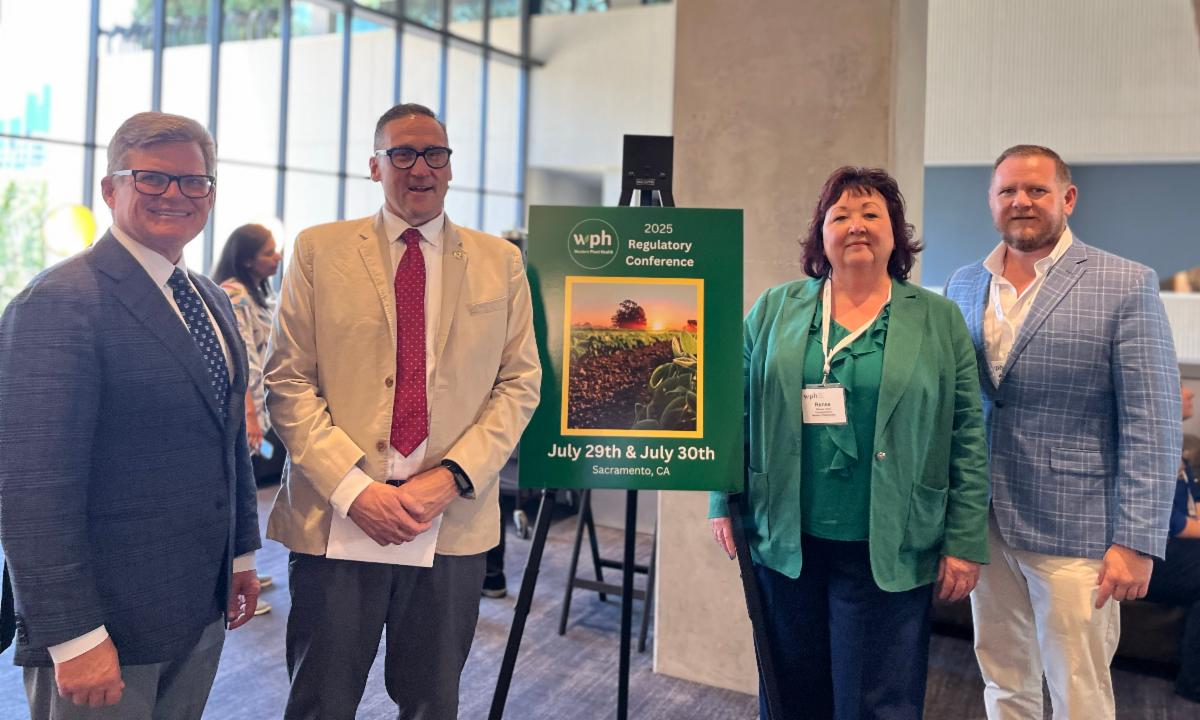
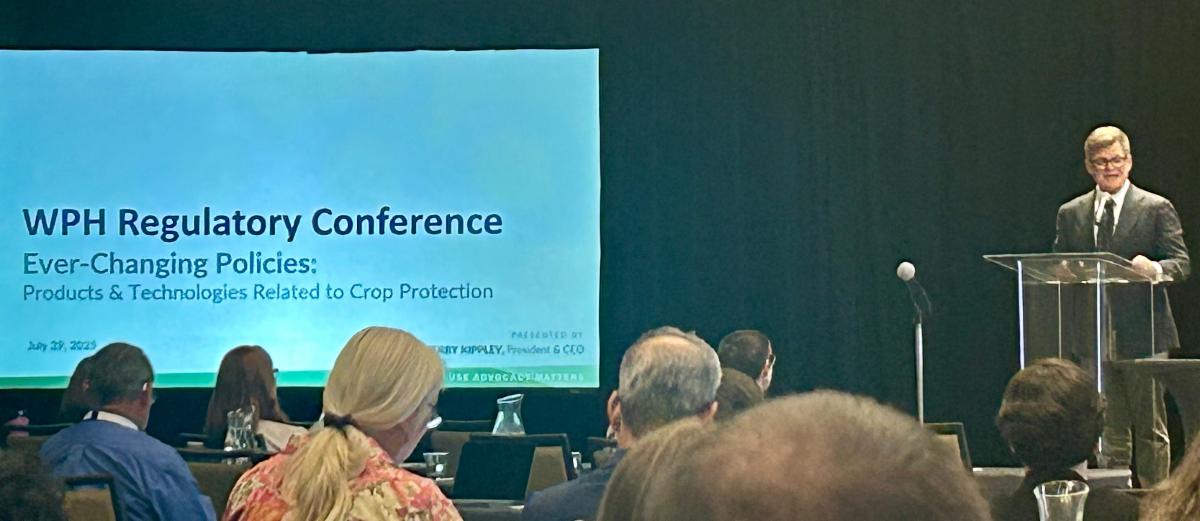
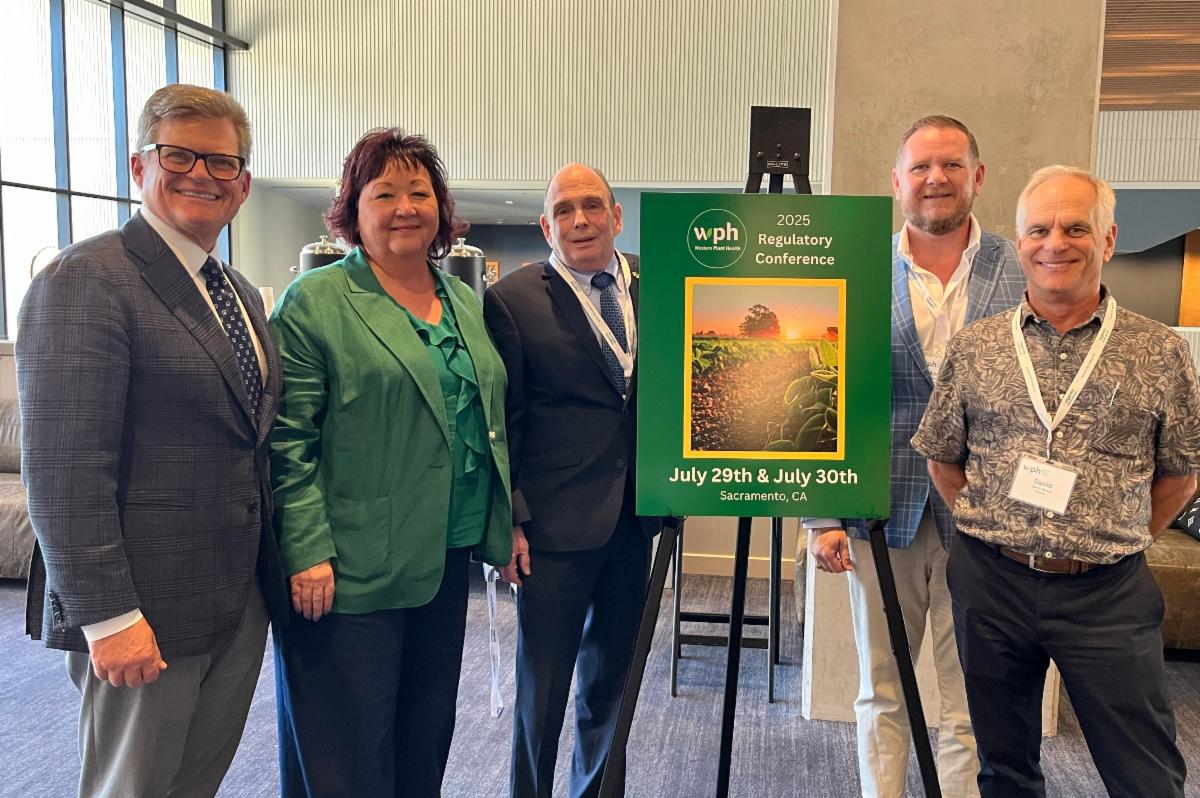
Last week, Andrew Walmsley, CPDA’s Vice President of Governmental Relations, and I traveled to Sacramento for the 2025 Western Plant Health Regulatory Conference. The event brought together state and federal regulators, industry leaders, researchers and CPDA member company staff to discuss the challenging regulatory landscape for crop protection in California.
As usual, there was no shortage of issues to discuss. This includes the Department of Pesticide Regulation’s (DPR) efforts to change how pesticides are evaluated, the rollout of the new CalPEST data system, updates on the Spray Days statewide notification pilot, DPR’s Sustainable Pest Management Program, and groundwater monitoring.
The Department of Food and Agriculture was also on hand for a briefing on their climate-smart agriculture initiatives, high-risk pest pathways, and the work of the Office of Agricultural Resilience and Sustainability.
Renee Pinel, WPH’s President and CEO, invited me to participate in a panel on innovation and the future of crop protection, emphasizing the need for a balanced regulatory approach that allows both continued access to existing tools and space for new technologies. I was also able to highlight CPDA’s broader work to support a more predictable and science-based regulatory system, while updating the attendees with our leadership on drift mitigation, adjuvant stewardship, and support for practical implementation strategies at both the state and federal levels.
As an added benefit, Andrew and I met with EPA Region 9 Administrator Josh Cook to discuss shared priorities and express our appreciation for EPA Administrator Lee Zeldin’s focus on reducing the regulatory submission backlog.
Special thanks to Renée Pinel and the Western Plant Health team for hosting a timely and productive conference!
| Terry Kippley, CPDA; Josh Cook; EPA; Renee Pinel, Western Plant Health; Andrew Walmsley, CPDA. | Terry Kippley, CPDA, took the stage at the conference to discuss the dynamic landscape of crop protection policies. | Terry Kippley, CPDA; Renee Pinel and Eric Stein, Western Plant Health; Andrew Walmsley, CPDA; David Bower, Brandt. | Great to see so many CPDA member companies. | Marcia Trostle, Nutrien; David Bower, Brandt; Lynn Georges, Wilbur-Ellis; Melissa McQueen, WPH Chair, Nutrien; Mary Swain, Nutrien; Anne Downs, Wilbur-Ellis; Andrew Walmsley and Terry Kippley, CPDA; Melinda McCann, Drexel Chemical; Nathan Ehresman, Albaugh. | | |
EPA Proposal to Approve Registration for New Uses of Dicamba
On July 23, EPA released for public comment its proposed registration for three end-use dicamba products for broadleaf weed control in dicamba-tolerant cotton and dicamba-tolerant soybean.
The proposed dicamba uses would allow postemergence “over-the-top” (OTT) applications to dicamba-tolerant cotton and soybean. This is an important step as OTT dicamba applications aim to remove emerged broadleaf weed species, particularly those resistant to other herbicides.
To mitigate potential dicamba risks, EPA has developed additional application restrictions to minimize impact to certain species. With these mitigation measures in place, “EPA’s draft biological evaluation predicts that the use of dicamba will not result in a likelihood of future jeopardy for the survival of any listed species, or a likelihood of adverse modification for any designated critical habitat.”
Specifically, EPA is proposing the following mitigation measures for the three products:
- A single-use maximum application rate of 0.5 lb of acid equivalent dicamba per acre.
- No more than two applications allowed with a maximum annual application of 1 lb./acre.
- Aerial applications are prohibited.
- Growers must maintain a 240-ft downwind buffer from sensitive plants.
- Applications must include an approved drift reduction agent and pH buffering volatility reduction agent.
- The new label will include temperature-dependent application restrictions to manage volatility.
- Applications at temperatures above 95 degrees Fahrenheit are prohibited.
- Three points of mitigation are required based on EPA’s runoff/erosion mitigation menu.
-
Users must access and follow any applicable endangered species bulletin from the “Bulletins Live! Two” web-based system. Six points of runoff/erosion mitigation will be required in some pesticide use limitation areas where pesticide exposures are likely to impact the continued existence of a listed species.
- Use is restricted to a limited number of approved states by certified applicators only. Applicators are required to complete additional dicamba-specific annual training and maintain records of all applications.
In its proposal, EPA acknowledges that the proposed mitigations are “not standard and could present operational challenges for farmers.” CPDA will carefully review this proposal and coordinate its comments with the Pesticide Policy Coalition.
| |
USDA Reorganization
On July 24, Secretary of Agriculture Brooke Rollins announced the reorganization of USDA. As part of the plan, USDA will consolidate operations, close the South Building, and relocate approximately 2,600 Washington-based positions to five regional hubs: Raleigh, NC; Kansas City, MO; Indianapolis, IN; Fort Collins, CO; and Salt Lake City, UT.
On July 30, USDA Deputy Secretary Stephen Vaden defended the plan in a Senate Agriculture Committee hearing. He emphasized that the relocation of 2,600 DC-based employees represents only 2.5% of the USDA workforce, noting that over 90% of USDA’s staff already work outside the National Capital Region.
Other Points from Vaden’s Testimony:
- Between January 2021 and January 2025, 2,200 USDA employees left Washington, D.C. for other locations, without congressional hearings.
- For over 1,700 days, USDA operated under maximum telework, with both career and political leadership rarely present at headquarters.
- During and following Covid, many staff moved away from D.C., assuming they wouldn’t be required to return.
- Out of 4,754 USDA facilities, only four are slated for closure. These decisions were based on a congressionally mandated 60% occupancy rule for federal buildings, which none of USDA’s D.C. buildings currently meet.
Whether the USDA should be reorganized and how to do it has been a coffee shop topic among farmers for years. While having a single, centralized headquarters in Washington, DC offered the benefit of a one-stop-shopping venue for farmers, there has been strong appeal to move decision-makers closer to the heartland.
| | |
Make America Healthy Again Commission Update
The MAHA Commission will release its Strategy on August 12. Due to concern over the Commission’s potential recommendations affecting crop protection tools, 42 Republican members of Congress sent a July 21 letter to President Trump. The lawmakers warned that the Commission’s efforts “are being undermined by anti-agriculture interest groups who want to use this as an opportunity to attack crop protection tools.”
The letter urged the President to ensure the forthcoming August 12 MAHA Strategy is “grounded in sound science and risk-based analysis,” emphasizing that “it is of paramount importance to the American farmer and consumer that the Strategy is thoughtfully drafted.”
| | |
Senator Cory Booker Introduces Pesticide Injury Accountability Act
On July 17, Senator Cory Booker (D-NJ) introduced the Pesticide Injury Accountability Act. If enacted the bill would amend the Federal Insecticide, Fungicide and Rodenticide Act and create a federal right of action for cases against pesticide registrants.
Senator Booker has introduced similar pieces of legislation in previous sessions of Congress, so this was not a surprise. At this point, a path to passage doesn’t appear to exist. However, his ideas are supported by some groups within the broader MAHA movement and could make it into the August 12 MAHA Commission recommendations.
| | |
My Pest Webinar
Please join the PRIA Coalition for a webinar on August 13 at 1 p.m. EDT for a webinar on EPA’s latest update to MyPeST, the customer experience that allows registrants to track their registration submissions, enhancing post-submission functionality. This webinar will highlight additional MyPeST functions that will be deployed on August 22.
Register for the webinar to learn about MyPeST’s new features.
| | |
PSP Portal Change for Registration Review Label Amendments
EPA is in the process of converting its data from servers to the cloud. As a result of the migration, EPA is making a change to the way in which registration review label amendments are submitted until further notice. To submit a Registration Review Label amendment, follow the “Registration” submission process and select Product Registration – Section 3, Amendment. For the team section, use Team RM 50 to direct the submission to the Pesticide Re-evaluation Division (PRD), or Team RM 36 to direct the submission to the Antimicrobial Division (AD).
| | |
PPDC Digital Label Reform Workgroup
EPA’s Pesticide Program Dialogue Committee will launch its new Digital Label Reform Workgroup this month, focused on advancing structured and digital labeling for pesticide products. The initiative aims to modernize EPA’s label review process, improve clarity for users, and enable more consistent, scalable updates through digital systems.
Five CPDA member companies will be represented on the Workgroup, including:
- Kyleigh Toomey (Atticus)
- Dr. Marcia Trostle (Nutrien)
- Dru Harness (Adjuvants Unlimited)
- Karen Warkentien (AgroSpheres)
- Jordan Moseley (AMVAC)
The workgroup will advise on the development of a voluntary structured labeling template in the near term, with longer-term goals of fully digital, accessible labels that enhance user experience and regulatory efficiency.
| | |
Support for H.R. 4601 – Seasonal Ag CDL Modernization Act
CPDA joined the Agricultural Retailers Association and a broad coalition of national and state agribusiness groups in supporting H.R. 4601, the Seasonal Ag Commercial Drivers License (CDL) Modernization Act, led by Rep. Tracey Mann (R-KS). Shortages of CDL drivers among farms and distributors have been especially acute in recent years. H.R. 4601 would streamline the renewal process for farm-related restricted CDLs and clarify that implements of husbandry are not considered commercial motor vehicles under federal weight calculations.
The coalition submitted a joint letter to the House Transportation & Infrastructure and Agriculture Committees urging swift action. The proposal aims to reduce regulatory burdens, improve CDL access for seasonal ag workers, and provide clarity for farm-related service industries. Discussions are also underway to identify a Senate sponsor.
| | |
Register for the CPDA 2025 Annual Meeting
September 28 – October 1, 2025
Grand Geneva Resort & Spa, Lake Geneva, WI
Join us for three days of unparalleled industry insights and top-tier networking! This is your chance to connect with industry leaders, gain invaluable knowledge, and be part of the conversations that are shaping the future of our field.
Don't miss out on this incredible opportunity for growth and learning!
Mark your calendars and get ready to elevate your expertise. Together, we can cultivate a brighter future for agriculture!
| | | September 16, 2025 | Keller and Heckman Annual Practical Primer on Pesticides
Indianapolis, IN | | September 28, 2025 | CPDA Annual Meeting
Lake Geneva, WI
Early Bird Discount ends 8/22! | | October 5, 2025 | Western Plant Health 2025 Annual Meeting
San Diego, CA | | October 28, 2025 | Faegre Drinker 2025 Food and Agribusiness National Conference
Minneapolis, MN | | February 2026 | CPDA DC Fly-In
Washington, D.C. | | April 27, 2026 | CPDA Adjuvants, Inerts & Crop Protection Conference
Austin, TX | | | | | |