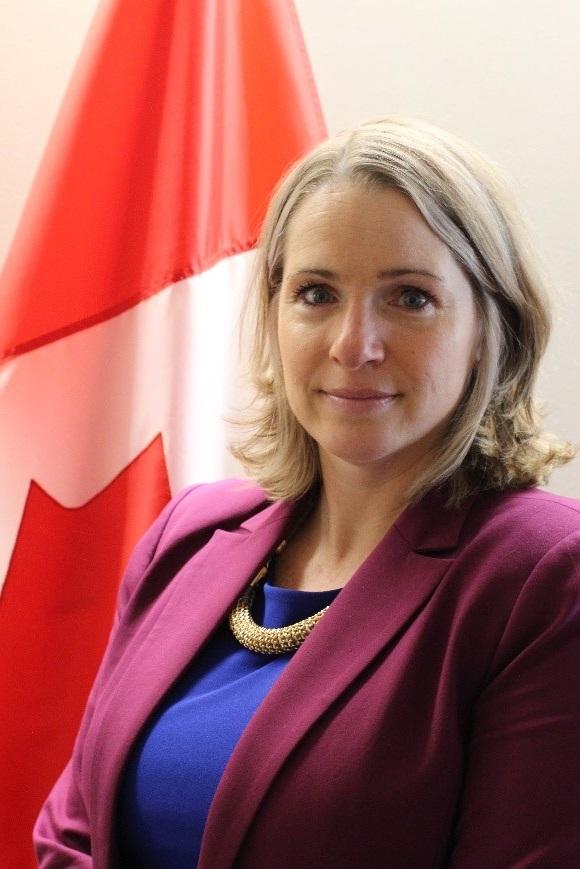
Nadia Bourély is the Minister-Counsellor for Economic and Trade Policy at the Canadian Embassy in Washington. Last Thursday, August 20, Ms. Bourély participated in a GBD virtual event, one that included both a GBD interview and an off-the-record conversation with members of the Global Business Dialogue. Today’s featured quote is taken from that interview, specifically that portion of it in which Ms. Bourély talked about CPTPP, the Comprehensive and Progressive Agreement for Trans-Pacific Partnership. We asked her first about how the agreement was working. Here is the beginning of her answer:
MS BOURÉLY:
CPTPP entered into force in December 3rd 2018, right. And for first six countries and then Vietnam shortly thereafter. So, it’s been in force for a year and a half, and we still have some remaining signatories that will, for whom it will enter into force after they ratify the treaty. So, I would say it is still early days, but a few thoughts here.
Canada is very proud to be one of the first five CPTPP signatories to ratify the agreement. Canada – you know, I alluded to this earlier in our conversation – obviously, we are a trading nation, and we are very committed to diversifying trade and investment with key markets around the world and strengthening Canada’s ties with Asia-Pacific partners. This is really important, and so for us the CPTPP is a very key, important part of that. It’s an ambitious free-trade agreement and we think also a very good example, illustration, of how you can have eleven very different nations coming together and defying protectionism by agreeing to strengthening the rules under which to conduct trade. And liberalize trade.
Is the CPTPP Door Open? We asked Ms. Bourély about the potential for expanding CPTPP, perhaps by welcoming the United Kingdom, which has expressed an interest in joining, or the United States, should it someday reconsider the question of TPP membership. Here is some of her response.
MS. BOURÉLY
You know, I think the CPTPP is very much designed for extension. I think the parties have regularly indicated their support for extension. It was reiterated when they met earlier this month. It’s in the joint statement* that they welcomed the interest by other countries, other economies, to accede. …
In terms of the UK, I understand that the UK has not formally applied to accede, but Canada certainly welcomes the interest it has expressed in joining the agreement, as we will welcome any [countries/economies] that are interested and able to meet the high standards of market access commitments and rules that have been established by the agreement.
As for the U.S., we always look for ways to reinforce the partnership. To date, the U.S. has not expressed an interest acceding to the CPTPP. And obviously the accession of the U.S. or any other economy would be subject to terms and conditions set by the membership. Decisions are to be made on the basis of consensus, but, you know, as I think I’ve made clear, the CPTPP is very much designed for extension.
CPTPP’s practical benefits. As with any trade agreement, the test of CPTPP is whether it advances the trading interests of the participating economies. Ms. Bourély made it quite clear that Canada has reaped significant benefits from the agreement that began as TPP and came to fruition as CPTPP. Canadian pork producers, for example, have seen a 10 percent increase in their exports to Japan since the agreement went into effect. Canadian beef exports to Japan have increased 65 percent. Add to that Canada’s cereal exports to Vietnam and machinery and auto parts to Australia and New Zealand, and the evidence that Canadian producers are benefiting from CPTPP seems strong indeed.