July 13, 2026 | CRA Member Newsletter Updates: Legislative, State Budget, Regulatory, Local & Federal and Political Updates, California Retail Policy and Law Conference 2026, Member News, CRA Outreach & Activities | | Message from the President | | | |
As we head into the final stretch of the legislative session, the pace in Sacramento shows no signs of slowing. Following an exceptionally busy June filled with policy committee hearings, the Legislature has adjourned for its summer recess. While legislators are back in their districts meeting with constituents, the California Retailers Association team is continuing to advocate on behalf of our members and prepare for what will undoubtedly be a pivotal August.
When the Legislature returns from summer recess on August 3, lawmakers will begin the final month of the legislative session - a critical period when the fate of hundreds of bills will be decided before they are sent to Governor Newsom. One of CRA's highest priorities remains AB 2564 (Ward), legislation intended to address so-called "surveillance pricing." While we support the principle that consumers should never pay higher prices based on their personal information, we remain concerned that, as currently drafted, the bill creates unnecessary legal uncertainty surrounding loyalty programs, digital coupons, personalized offers, and other customer engagement practices that millions of Californians voluntarily use every day to save money.
Over the past several months, CRA has worked extensively with the bill's author, legislative leadership, coalition partners, and stakeholders to pursue meaningful amendments that would preserve consumer savings while addressing the bill's stated objectives. Those discussions continue. At the same time, with final legislative votes expected in August, CRA has launched the Protect My Discounts public affairs campaign to educate consumers, policymakers, and opinion leaders about the bill's potential unintended consequences and reinforce that consumer privacy and consumer affordability are complementary, not competing, public policy goals. The campaign includes statewide and district-targeted digital advertising, earned media, grassroots outreach, coalition expansion, and direct legislative engagement during this critical final phase of the legislative session.
Beyond the Legislature, the regulatory landscape continues to evolve rapidly. California's packaging laws remain a significant focus. A coalition of 17 state attorneys general, together with the Association of Wholesaler-Distributors, recently filed litigation challenging SB 54, adding to the growing number of legal challenges surrounding California's packaging regulations.
At the same time, the California Affordable Packaging coalition (CAP - of which CRA is a member) released a new economic analysis examining the projected costs associated with SB 54 implementation. The report concludes that compliance costs could be substantially higher than originally projected and raises additional questions regarding implementation, affordability, and the practical challenges facing businesses and consumers.
CRA also continues to await a decision on our motion for a preliminary injunction challenging SB 343, California's Truth in Recycling law. The outcome of that case could have significant implications for California's broader packaging and recyclability framework, including implementation of SB 54. We will continue to keep members informed as developments occur.
Inside this newsletter you'll find updates on our priority legislation, regulatory developments, local government initiatives, federal policy, and upcoming events - including the California Retail Policy & Law Conference, where we are finalizing what promises to be one of our strongest agendas yet.
Thank you, as always, for your engagement and continued support of the California Retailers Association. Our advocacy is strongest when we work together, and I appreciate the partnership and leadership our members continue to demonstrate as we navigate another consequential legislative session.
I hope you enjoy the remainder of the summer, and I look forward to working with all of you as we head into what promises to be a very active August.
Rachel
| |
In This Newsletter Issue:
- Legislative Updates
- State Budget Update
- Regulatory Updates
- Federal and Local Updates
- Political Updates
- CA Retail, Policy & Law Conference
- Member News
- CRA Outreach & Activites
| | | |
The past month has been nonstop with policy committee hearings in the second house. Most legislators are now home in their districts and some will be heading out on educational tours including CFEE, which CRA's Sarah Pollo Moo will be attending later this month.
CFEE, which stands for the California Foundation on the Environment and the Economy, hosts an annual tour bringing together policymakers, regulators, industry representatives, environmental advocates and other stakeholders to examine best practices in the circular economy and recycling. This year's tour is called the "California Recycling Challenge" and will be taking participants to Texas including facility tours in Austin, Houston and Dallas Fort Worth.
Tour delegates include, in addition to CRA:
- Senator Catherine Blakespear, Chairwoman of the Senate Environmental Quality Committee
- Assemblymember Tina McKinnor, member of the Assembly Environmental Safety & Toxic Materials Committee
- Assemblymember Alexandra Macedo, member of the Assembly Natural Resources Committee
- Zoe Heller, Director of CalRecycle
- Fiona Ma, California State Treasurer
CRA's President and CEO Rachel Michelin went on a CFEE tour in Canada and this is the second year CRA is participating in a CFEE tour. These tours are an important opportunity for CRA to strengthen our relationships and gain insights into how other states are handling environmental laws and regulation.
CRA is working on our own educational tours to help our members better tell the retail story and shape policies that positively impact the retail industry. Stay tuned for updates as that venture takes shape. It is important to be proactive rather than reactive in our advocacy efforts.
Below includes updates on our top priority bills and additional legislation we are tracking and engaging on, on behalf of our members.
View CRA's Master Bill List HERE.
TOP PRIORITY BILLS
AB 2564 (Ward) Surveillance pricing
CRA Position: OPPOSE
- AB 2564 (Ward), the so-called "surveillance pricing" bill, would impose sweeping new disclosure requirements on personalized pricing and discounts that could sweep in everyday retail practices like loyalty offers, member pricing, and targeted coupons. While Senate amendments stripped the bill's own $12,500-per-violation penalty, retailers still face real exposure under California's Unfair Competition Law, which allows the Attorney General and district attorneys to seek civil penalties of up to $2,500 per violation and lets private plaintiffs bring class actions for any AB 2564 violation, with no cure period built in.
AB 1776 (Aguiar-Curry) Cartwright Act: violations
CRA Position: OPPOSE
- CRA registered opposition in Senate Judiciary Committee.
AB 2549 (Zbur) Electronic Waste Recycling Act of 2003: manufacturer notices
CRA Position: SPONSOR
- Bill was on consent in the only policy committee it was referred to in the second house (which was Senate Environmental Quality Committee) and now heads to the Senate Floor.
AB 2253 (Boerner) Solid waste: products: environmental marketing claims.
CRA Position: OPPOSE
- CRA testified in Senate Environmental Quality Committee where the oppose side had a huge showing. The bill, unfortunately, passed out of that committee without much debate and heads to the Senate Floor.
-
Watch the testimony HERE.
-
The amendments that were recommended by Senate EQ Committee staff and discussed by the author and sponsor are now in print. View the amendments HERE. While we believe these updates may remove some opposition, largely the oppose coalition is expected to remain. If you have additional feedback on these amendments, please let Sarah know.
- Next Steps: The Oppose Coalition has a meeting scheduled with the Governor's Office to discuss the bill and is planning a "full court press" going into August. The oppose coalition is also meeting with Senator Sabrina Cervantes, Chairwoman of the Senate Appropriations Committee (where the bill heads next) to discuss concerns and continued problems with the bill.
- Call To Action: Companies that brands/retailers use for AR purposes need to check that those companies only need proportional. The oppose coalition has heard almost if not all AR needs both proportional AND nonproportional. We need AR providers to weigh in so please help spread the word to your AR providers if your company uses any.
AB 1693 (Zbur) Accelerated retailer building plan approval: tenant improvements.
CRA Position: SPONSOR
- CRA testified in support in Senate Judicary Committee.
-
Watch the testimony HERE.
Additional Legislative Updates
AB 40 (Bonta) California Environmental Quality Act: environmental impact reports: coal handling, storage, and export.
CRA POSITION: OPPOSE
-
This is a new bill that emerged through a gut and amend. AB 40 - known as The Community First Coal Review Act creates a new mandatory environmental impact report requirement for large coal handling, storage, or export projects. Although AB 40 is framed around coal handling, storage, and export, its impacts could reach beyond a single commodity or project applicant. By applying to “handling, storage, or export” and to approvals over “any portion” of a covered project, AB 40 could implicate port facilities, bulk terminals, storage sites, transloading operations, rail-served industrial property, and related logistics infrastructure necessary to move goods through the supply chain.
-
This bill idea comes from Asm Bonta and environmental groups push to block a proposed West Oakland coal terminal. Bonta quickly repurposed the bill using a gut-and-amend strategy after the Trump administration invoked the Defense Production Act to invest $75 million into the controversial project.
- CRA signed on to an oppose coalition letter. View the letter HERE.
- CRA also registered our opposition in Senate Environmental Quality Committee.
- The bill, unfortunately, now heads to the Senate Floor for a vote.
AB 649 (Lowenthal) Disability access: construction-related accessibility claim.
CRA Position: OPPOSE
- CRA registered opposition in Senate Judiciary Committee
AB 1148 (Sharp-Collins) Food packaging: hazardous chemicals.
CRA Position: OPPOSE UNLESS AMENDED
- CRA joining the OUA coalition (thank you to our members who provided feedback on the bill).
- CRA registered opposition in Senate Health Committee, the second of two policy committees the bill was referred to in the Second House. The bill heads to the Senate floor where the CRA team will be having meetings with the author's staff about CRA-specific concerns.
- Read the OUA coalition letter HERE.
AB 1609 (Zbur) Customer Service Chatbots.
CRA Position: CONCERNS
- CRA registered concerns in Senate Judiciary Committee.
AB 1622 (Blanca Rubio and Carrillo) Electrified security fences.
CRA Position: SUPPORT
- CRA registered support in Senate Local Government Committee.
CRA WIN - AB 1796 (Jackson) Licensed Professional Interior Designer Practice Act.
CRA POSITION: CONCERNS/WORKING WITH THE AUTHOR
-
The CRA Team secured amendments that removed our opposition to the bill and then the bill died in Senate Business and Professions Committee. THIS IS A CRA WIN as even with the amendments, we were not supportive of the bill.
AB 1883 (Bryan) Workplace surveillance tools.
CRA POSITION: OPPOSE
- CRA registered opposition in Senate Labor, Public Employment and Retirement Committee
AB 2108 (Sharp-Collins) Diversion: retail theft
CRA POSITION: SUPPORT
- CRA registered support in Senate Public Safety Committee
AB 2418 (Mark González) Local building permits: nonresidential private permitting review
CRA POSITION: SUPPORT
- CRA registered support in Senate Judiciary Committee
SB 226 (Cabaldon) Infrastructure revitalization financing districts.
CRA POSITION: OPPOSE
- CRA registered support in Assembly Local Government Committee.
SB 947 (McNerney) Employment: automated decision systems.
CRA POSITION: OPPOSE
- CRA registered opposition in Assembly Judiciary Committee
SB 1010 (Ashby) Solid waste: Refrigerant Stewardship and Recovery Act.
CRA POSITION: REMOVED FROM WATCH LIST
- The bill is now focused only on strengthening current enforcement structure and no longer a proposed Extended Producer Responsibility Program. Adding teeth to enforcement supports good operators in the residential refrigerator product space and supports the financial viability of recycling these products.
SB 1075 (Reyes) Air resources: toxic air contaminants: criteria air pollutants: community emissions reduction programs: local community emissions reduction plans.
CRA POSITION: OPPOSE
-
CRA signed on to an oppose coalition letter. Read the letter HERE.
SB 1103 (Pérez) Large retail stores: immigration enforcement: reporting.
CRA POSITION: OPPOSE
-
CRA testified in the Assembly Privacy and Consumer Protection Committee.
-
Watch the testimony HERE.
SB 1123 (Wiener) Administrative Procedure Act: major regulations
CRA POSITION: OPPOSE
-
The bill has an aggressive opposition effort, which included CRA. As a result, the bill was pulled from the Assembly Committee on Economic Development, Growth and Household Impact and is effectively dead for the session. THIS IS A CRA WIN.
SB 1172 (Hurtado) Bradley-Burns Uniform Local Sales and Use Tax Law: tax sharing agreements.
CRA POSITION: SUPPORT
- CRA registered support in Assembly Revenue and Tax Committee
SB 1314 (Menjivar) Cigarette or tobacco product retailers: new retail locations and sale of nitrous oxide.
CRA POSITION: OPPOSE
- CRA registered opposition in Assembly Business and Professions Committee
Legislative Deadlines
- August 3 - Legislature reconvenes
- August 31 - Last Day for Legislature to pass bills
- September 31 - Last day for Governor to sign or veto bills
| | |
CA Governor Signs Final 2027 State Budget
Following weeks of negotiations, CA Governor Gavin Newsom and Democratic legislative leaders approved a $352 billion budget for next year that raises some taxes, sets aside $6.4 billion for the year after and softens or delays billions of dollars in planned social service cuts.
The budget, Newsom’s last, will leave the California budget balanced for two consecutive years and reduce future year deficits significantly, state leaders say.
The agreement hands the term-limited Newsom a trophy to brandish during a widely expected presidential run after he leaves office at the end of the year: the talking point that his liberal priorities didn’t break the bank.
His stump-speech-esque remarks boasted of his eight years in office, during which record revenues collected from booming high-income sectors like tech allowed him to grow the state budget by 40% and pour money into subsidized child care, safety net expansions and universal free school meals.
He opened the address with a call to “democratize our economy” and a reference to his recent proposal for a national billionaires’ tax, even as he opposes a proposed one-time tax on billionaires’ assets at home. It’s a preview of a potential campaign based on Newsom’s self-styled “pragmatic progressivism.”
But in striking that balance, Newsom’s final budget leaves long-term funding problems to his successor to solve.
The state faced a steep funding cliff in January amid ballooning costs of Medi-Cal, the state’s healthcare program for low-income Californians, and the threat of losing tens of billions of federal dollars under President Donald Trump’s budget bill.
The final, approved 2027 state budget also includes targeted tax increases and revenue measures to avoid major social service cuts and shrink future deficits. Specific tax and revenue changes in the finalized budget, which CRA along with a large coalition of business groups opposed, include:
- Managed-Care Tax: Renews and revamps a tax on managed healthcare organizations.
- Corporate Tax Limits: Extends caps on corporate net operating loss tax deductions.
- Software and Services Tax: Increases levies and expands taxes to cover certain digital software sales and services
Visit https://ebudget.ca.gov to get more information.
| | |
City of Anaheim Self-Checkout Ordinance Update
Anaheim officials hesitated on joining a growing list of Southern California cities – primarily in Orange County – starting to require local supermarkets and retail drug stores to staff their self-checkout aisle and implement item limits.
It’s a move that is being backed by local grocery union leaders who say regulations will help curb retail theft and keep cashiers and customers safe as well as offer needed support for employees as they say companies are relying more on self-checkout and less on workers.
Grocers argue the regulations don’t impact retail theft and will only result in customers with a more expensive receipt no matter which cashier stand they use, adding self-checkout stands is a convenience many of their patrons expect.
Last month, Anaheim officials announced at a city council meeting they would be removing the ordinance from their agenda after directing staff about three months to bring back a self-checkout ordinance based on one adopted in Costa Mesa.
Read more.
CII Permit Update
Click HERE for the most up to date CII property list based on the criteria set forth in the Residual Designation. This includes properties identified by the RWQCB and properties identified through independent research. Together there are 662 properties on the list.
Refresher on the Issue:
As anticipated, the Los Angeles Regional Board released its revised Commercial, Industrial, and Institutional (CII) Permit along with notice that the Board will consider its adoption on July 23rd. The coalition working on this issue has been going through the revised draft to ensure the coalition's agreed upon changes are all incorporated.
The Los Angeles Water Board will not accept written comments on the Revised Tentative CII Permit prior to the adoption hearing. Members of the public may provide oral comments during the adoption hearing”. However, no rational for this skip of normal procedure seems to be provided. There are two take aways for the coalition:
- We may want to take exception to this procedural shortcut in writing prior to the hearing.
- In person presentations will be essential both objecting to the shortcutting of procedure and any additional substantive defects in the permit that have not been addressed.
Note the RWQCB did not provide a redline for the new draft permit against the previous version. In order to expedite review and provide comments please find the following:
-
Previous draft in word form HERE
-
Current draft in word form HERE
-
A comparison of previous draft with current draft HERE
For futher historical context on this issue: Following the Los Angeles Regional Water Quality Board (Board) workshop on the draft Commercial, Industrial, and Institutional (CII) Permit, the coalition working on this issue, which includes CRA, received excerpts of the revised CII Permit for review. Board staff was planning to provide an update on discussions/negotiations to the Board and then aiming to set an adoption hearing in June.
The Board directed staff to outreach to stake holders to discuss various topics for which board members requested additional input with the understanding that these discussions would help facilitate further refinements to the draft Permit that staff plan to report back to the Board by the end of the first quarter of 2026. These included:
- Who should be the permittee
- Option 1 capacity and pricing
- Permit implementation timing
- Application of the Permit to properties with Mixed Use designations
- Initial sampling requirements
- Definition of permeable surfaces
Additionally, related to the CII Permit, the nonprofit group California Coastkeeper Alliance filed seven petitions with regional water quality boards statewide urging them to require stormwater permits for “commercial, industrial and institutional” facilities. That includes malls, big-box stores and warehouses. They say that polluted water from businesses’ parking lots is fouling creeks, rivers and beaches, and that businesses should be held accountable with new permits. They are proposing that businesses could be charged a fee to help pay for municipal stormwater projects. Read more: https://www.coastkeeper.org/chino-creek-petition/
Read an LA Times article covering this issue below.
Los Angeles Times: Polluted Rain Runoff from Big Box Store Parking Lots Could See a Crack Down
For more information, don't hesitate to reach out to Sarah or Ryan.
NRF Tariffs Update
U.S. Customs and Border Protection’s (CBP) Office of Trade is hosting a webinar on Wednesday, July 15, 2026, at 2:00 p.m. ET titled CAPE Enhancements and Questions About Your IEEPA Refunds.
This webinar will present an overview of recent enhancements to CAPE for Type 09 reconciliation entries. CBP will also present additional updates on CAPE functionality and will provide answers to Frequently Asked Questions. CBP will also take your questions from the web audience.
To register for this free webinar, click here. All registrants will receive the access link for the webinar the day before the event, but entry into the webinar is on a first-come, first-served basis as seats are limited. This and other previously recorded webinars will be available for replay at Trade Outreach Webinars | U.S. Customs and Border Protection (cbp.gov).
The U.S. Customs and Border Protection (CBP) provided its latest update to the Court of International Trade on the status of the International Emergency Economic Powers Act (IEEPA) refunds as part of the Euro-Notions case. In the agency’s declaration, Brandon Lord, CBP’s Executive Director, Trade Programs Directorate, Office of Trade, noted:
As of 3:00PM eastern time on Monday, June 29, 2026, 213,939 CAPE declarations have been submitted, of which 149,840 CAPE declarations passed the file validations. The primary reasons that CAPE declarations fail the file validations are:
-
Importer of record or filer mismatches on CAPE declarations,
-
Entry Number validations (e.g., entry number is incorrect length; entry number does not exist),
- .CSV file not in alignment with the template published in the ACE portal.
As a reminder, CBP announced the agency completed the successful deployment for enhancements to the Consolidated Administration and Processing of Entries (CAPE) application in the Automated Commercial Environment Secure Data Portal (ACE Portal).
As of 3:00PM eastern time on Monday, June 29, 2026,
-
the CAPE declarations that passed the file validations cover 18.1 million entries with IEEPA duties that passed the entry specific validations and were accepted for the removal of IEEPA duties through CAPE;
- 15.92 million of the accepted entries have subsequently been liquidated and/or reliquidated without IEEPA duties; and
- 4.36 million entries included on CAPE declarations failed the entry level validations for the following primary reasons: 1.) the entry date is past CBP’s 90-day re-liquidation authority, 2.) the entry does not contain a Chapter 99 Harmonized Tariff Schedule number used to assess IEEPA duties, or 3.) the entry was already filed on a prior CAPE declaration.
As of 3:00PM eastern time on Monday, June 29, 2026, approximately $104.29 billion in both potential and certified refunds have been accepted for processing in CAPE. Of this total amount, refunds (duties plus interest) of approximately $71.06 billion have been completed using the CAPE Refund component, certified by the agency, and sent to the U.S. Department of Treasury (“Treasury”) for disbursement. CBP’s financial accounting system receives updates from Treasury that indicate these CBP certified refunds are being regularly dispersed. CBP continues to review and finalize the outstanding potential refunds via CAPE’s Review and Liquidation/Reliquidation component.
As of 3:00PM eastern time on Monday, June 29, 2026, 8,384 refunds have not been transmitted to Treasury because Automated Clearing House account information has not been provided by the importer of record or its authorized CBP Form 4811 designee.
At 5:00AM eastern time on Monday, June 29, 2026, CBP successfully deployed new CAPE functionality for use by importers and their brokers in ACE. This new functionality permits importers and their brokers to include on a CAPE Declaration entries that are unliquidated (or that have liquidated within the preceding 80 days) that were flagged for reconciliation, but for which no Reconciliation Entry (Entry Type 09) has been filed.
As of 5:00PM eastern time on Tuesday, June 30, 2026, 1.6 million entries flagged for reconciliation have been successfully filed in CAPE and are set for processing.
REMINDER: Feedback Due July 15 on Los Angeles County
Draft HHW EPR Ordinance
The CRA Team has several important updates concerning Los Angeles County's proposal to introduce a Household Hazardous Waste Extended Producer Responsibility Program (HHW EPR) to all unincorporated areas of the county with the option for cities to participate. The County told stakeholders, including CRA, that they will be holding stakeholder meetings on this proposal through the end of this year so a draft ordinance will not be introduced in 2026.
First: a reminder to please get Sarah feedback by July 15. We need feedback on the following:
- The draft ordinance drafted by LA County's Dept. of Public Works. Read the language HERE.
- LA County's Public Works Report, which includes their staff analysis for justification of pursuing a countywide HHW EPR program. Read the Report HERE.
Second: CRA has signed onto a draft coalition industry comment letter, led by the Household Commercial Product Association or HCPA.
See the letter HERE.
The letter's primary message is that before advancing a countywide HHW EPR program, the county should first conduct a comprehensive needs assessment to better understand the HHW system, identify what is driving current HHW challenges, and evaluate whether EPR is the appropriate policy response. The letter also provides comments on key provisions of the draft ordinance should the County ultimately decide to move forward with an EPR framework.
A lot of the comments in this letter are similar to those we made when a HHW EPR was being proposed at the statewide level via previous bills authored by Sen. Allen (SB 501-2025 and B 1143-2023), which ultimately ended up getting stripped down to being only expansions of existing stewardship programs in the state.
Third: A small group of industry advocates including CRA met with LA County and got the County to agree to a series of smaller, more focused industry specific group meetings with them through the remainder of the year. The suggested topics from HCPA, again the organization leading the industry coalition engaging on this countywide proposal, are below. Please review and let Sarah know if you have anything to add/edit. Sarah will send around a schedule of these meetings once we have them.
HCPA: we should avoid jumping straight into the mechanics of an EPR program and instead have the discussions be more major policy questions that need to be worked through first, so we don't get ahead of ourselves.
Let me know if you have any concerns or want to add anything. We can build out agendas as the meetings draw closer but if we can get them to commit to these, that would be great:
1. Problem Definition, Threshold Policy Questions & Data Needs
Objective: Establish a shared understanding of the challenges the county is seeking to address, identify the threshold policy questions that should inform future policy decisions, and discuss the information and analyses needed to support those decisions.
2. Covered Product Scope & Product Categories
Objective: Discuss the principles for defining covered products, the diversity of products within the HHW stream, and whether different product categories warrant different regulatory approaches.
3. Jurisdictional Considerations & Existing Regulatory Frameworks
Objective: Discuss issues unique to a county based program, including interactions with existing state programs, participating jurisdictions, existing stewardship programs, and the practical implications of implementing EPR at the local level.
4. Implementation Considerations
Objective: Discuss operational issues including collection infrastructure, service provider capacity, legacy products, reporting, implementation timelines, and other practical considerations.
5. Governance, Funding & Producer Responsibility
Objective: Discuss producer responsibilities, program governance, funding mechanisms, and administration of any potential program.
Fourth: We need Subject Matter Experts and/or detailed talking points and data/messaging to share from CRA members concerned about this proposal for these small industry focused group meetings with LA County Dept. of Public Works. If member companies do not want to come forward, which we understand, please send Sarah information she can use to provide meaningful feedback.
We know some of our members have been talking about a statewide HHW EPR preemption bill to thwart this LA County one and prevent other local jurisdictions from introducing similar proposals which would create a nightmare patchwork of compliance issues, but we need to first answer the question if EPR is the right answer for HHW.
An alternative proposal, available HERE - see yellow highlighted - includes a fee and grant program, which HCPA proposed last year to counter Sen. Allen's SB 501 when it was a statewide HHW EPR. We have also pasted key pieces of the alternative fee and grant proposal below. The funds would be generated by producers of the highest cost items - perhaps the top ten - for HHW management and disposal by weight and volume.
EPR should not be the default answer to every waste stream management and disposal issue.
- Be designed to collect a minimum of one hundred million dollars ($100,000,000) per year from participant producers and distribute as grants to local jurisdictions to ensure the safe and convenient collection and management of covered products.
- Funds granted in (a) may be used to:
- Compensate local jurisdictions for the partial or whole costs of collecting covered products. This shall include, but is not limited to, the cost of providing supplies for the collection of, transportation, and disposal of covered materials, including the jurisdiction’s labor and administrative costs based on the proportion of covered to noncovered products collected at the facility.
- costs pursuant to [above] shall be limited to the actual costs of, supplies, transportation, and management of a covered product
- Increase access to convenient collection of covered products, including permanent collection sites, expanded hours of operation, temporary collection sites, curbside collection, and collection events
Finally, LA County Dept. of Public Works has promised they will send data to us that supports their Public Works Report and draft ordinance and we will share that as soon as we have it, but please note neither the State of CA nor LA County have done a statewide or countywide specific needs assessment for HHW management and disposal so introducing an EPR is very premature before we know what is needed and what is best best to implement a program to support proper management and disposal of HHW. As soon as we have this data, we will share it out.
Southern CA Businesses Lose Fight Over Gas-Powered Appliances
Southern California air regulators can move forward with new limits on the sale of certain gas-powered appliances, including water heaters.
Despite pushback from businesses and developers, the 9th Circuit Court of Appeals in a 2-1 ruling upheld restrictions on commercial and industrial gas appliances in four Los Angeles-area counties.
The ruling directly affects roughly 1.3 million water heaters and industrial boilers in L.A., Orange, Riverside and San Bernardino counties, according to the Sierra Club, a defendant in the lawsuit. South Coast Air Quality Management District adopted the mandate in 2024, which aims to reduce greenhouse gas emissions and pollution.
The air board earlier this year backed down from extending the restrictions to residences.
Opponents argued that the restrictions violated federal law by banning appliances protected by the Energy Policy and Conservation Act, and that the rules would limit consumer choices and raise the cost of appliances.
But the court held the air district had the power to target pollution sources under the Clean Air Act.
Circuit Judge Lucy Koh, in the majority opinion: “If Congress wanted to interfere with the system of federal-state collaboration set up by the (Clean Air Act), impede upon the EPA’s statutory authority to protect the public's health and welfare, or restrict states' ability to comply with federal air quality standards, one would expect Congress to have said so. But Congress said nothing.”
Read more.
| | |
California's Ballot Measures Update
The 14 measures that will appear on the Nov. 3 ballot were going to be as many as 20 before last-minute compromises settled three dueling measure conflicts. One pitted personal injury lawyers against rideshare companies, a second involved hospital executives and a health care union, and the third dealt with vote minimums for local taxes.
Whether the compromises make policy sense or not, contending parties got enough out of them to warrant dropping their ballot measures.
However, the most prominent ballot measure conflict over whether California should impose a 5% wealth tax on billionaires defied resolution. The measure, sponsored by the SEIU healthcare workers union, will be Proposition 40 and will compete with two countermeasures sponsored by billionaire Sergey Brin and other Prop. 40 foes, Proposition 41 and Proposition 42. They could, if passed with higher vote counts, kneecap the wealth tax.
At one point the wealth tax advocates offered to reduce its bite to 2% as a compromise, but made no headway with opponents, most prominently Gov. Gavin Newsom.
Another tax measure, sponsored by the California Teachers Association, would make permanent a temporary surtax on high-income taxpayers first enacted in 2012 — but it could get caught in the shootout over Prop. 40. Democratic legislative leaders gave it some protection with a last-minute decree that it would appear on the ballot as Proposition 3. Thus voters will deal with it before confronting Props. 40, 41 and 42 much further down the ballot.
Given its high stakes and the attention it is getting in national media, the wealth tax is destined to be not only the single most controversial ballot measure this year but probably have the most expensive dueling campaigns, possibly setting a record.
Read more.
California Voters Souring on New Taxes - Even in Deep Blue Territory
Despite California's reputation as a high-tax, high-tolerance state, new polling and June primary election results suggest voter appetite for additional tax increases is eroding -including in traditionally progressive strongholds. Only 57.5% of local tax measures on the June ballot were approved, a sharp drop from the roughly 70% passage rate in recent prior elections.
For the business community, a shifting tax climate is significant. California already ranks fifth in the nation for per-capita tax burden, collecting over $400 billion annually more than $10,000 per resident. Any further erosion of voter willingness to approve new taxes could slow the pipeline of local measures targeting hotels, short-term rentals, and businesses, giving the industry a meaningful opening heading into November.
The signs of voter fatigue are showing up across the state. San Francisco voters rejected two business-targeted tax measures in June, including a gross receipts tax hike and a levy on companies with large executive pay ratios. A vacant property tax in San Diego and a sales tax increase in Contra Costa County also failed. A Los Angeles County healthcare sales tax barely squeaked through. Underlying the trend is growing economic anxiety: a Public Policy Institute of California poll found 44% of Californians cite cost of living and the economy as the state's top issue, and nearly three in four expect difficult economic times ahead, with that pessimism cutting across party lines.
November's ballot will be a critical test of just how far voter sentiment has shifted. Read more.
| California Retail Policy and Law Conference 2026 | |
Please Join Us!
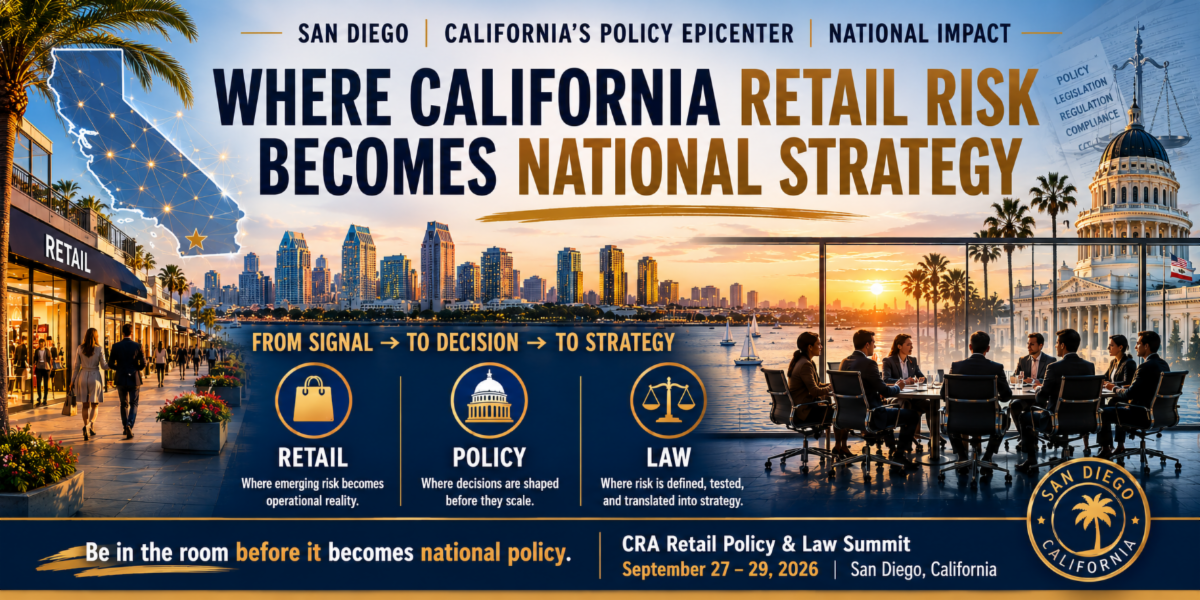
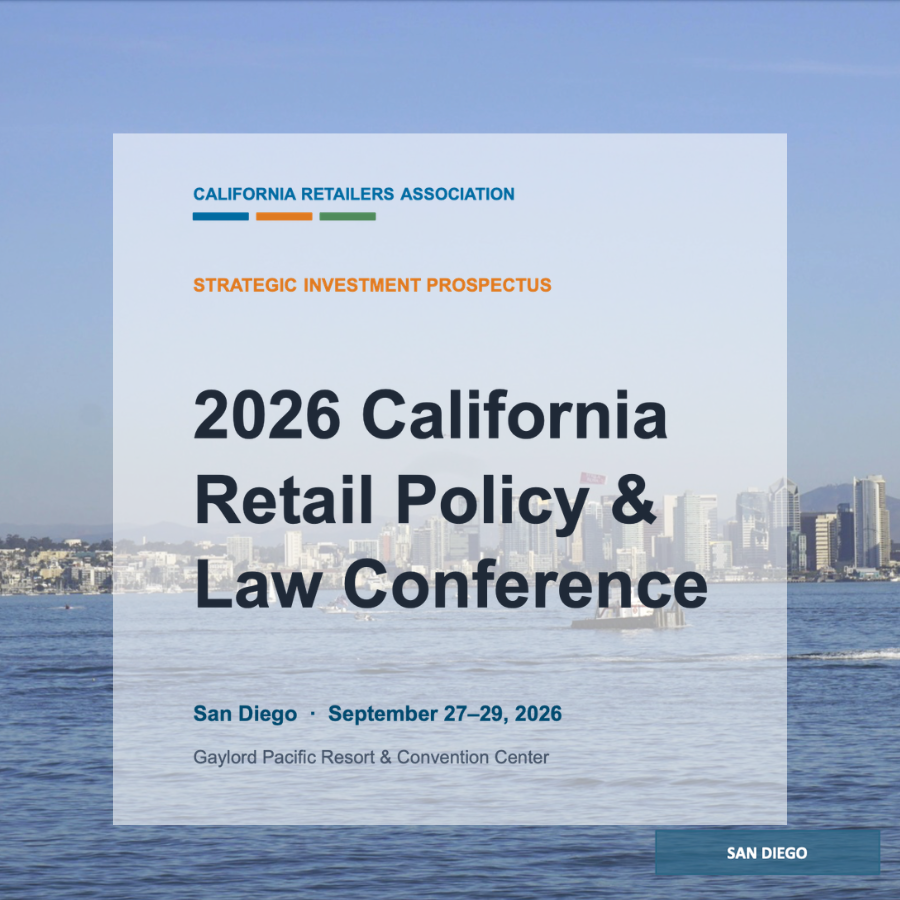
California Retail Policy & Law
CONFERENCE 2026
California is often where the next legal, regulatory, and enforcement challenges for retail take shape. The issues debated here rarely stay here - within months, they can shape compliance expectations, litigation strategy, and policy across the country.
Join retail leaders, in-house counsel, compliance executives, government affairs professionals, regulators, and outside counsel for three days of focused discussion on the legal and policy issues affecting retail now and, in the years, ahead.
This is not a trade show - it is a working conference designed to help participants turn complex developments into practical strategy.
| |
Conference sessions will address:
- California Invasion Privacy Act (CIPA), privacy, and ad-tech enforcement.
- Artificial intelligence, algorithms, and pricing.
- CARB, CA Department of Toxic Subtsances Control, climate disclosure, and Environmental, Social and Governance (ESG) reporting.
- Extended Producer Responsibility, SB 54, packaging, textiles, and e-waste.
- Workforce, Private Attorneys General Act (PAGA), class actions, and Americans with Disabilities Act (ADA) issues.
- National patchwork, copy-cat laws, and post-election enforcement risk.
- And more!
| | |
ATTENDEES WILL GAIN
- Practical guidance from policy, regulatory, and legal professionals.
- Direct insight into California policy and regulations that often become national models.
- A forum for discussion with peers navigating similar operational and compliance challenges.
- CLE-eligible programming in California and select other jurisdictions.
| |  | |
WHO SHOULD ATTEND
- General counsel and deputy general counsel.
- Compliance and risk officers.
- Privacy, AI, and data governance leaders.
- Government affairs and state policy teams.
- Employment, litigation, and labor counsel.
- Sustainability, EPR, and product compliance leaders.
- Outside counsel in privacy, AI, labor, environmental, and retail litigation.
| |
|
Gaylord Pacific Resort & Convention Center, San Diego
Set at the waterfront Gaylord Pacific Resort & Convention Center, the conference offers space for both formal sessions and the informal conversations where trust, insight, and partnerships are built. The property is seven miles from downtown San Diego and overlooks the Chula Vista Marina and the Pacific.
Contact Us
For questions and help with sponsorship and registration, contact events@calretailers.com.
| | | | |
100 Years Strong:
Safeway Celebrates a Century Serving Northern California
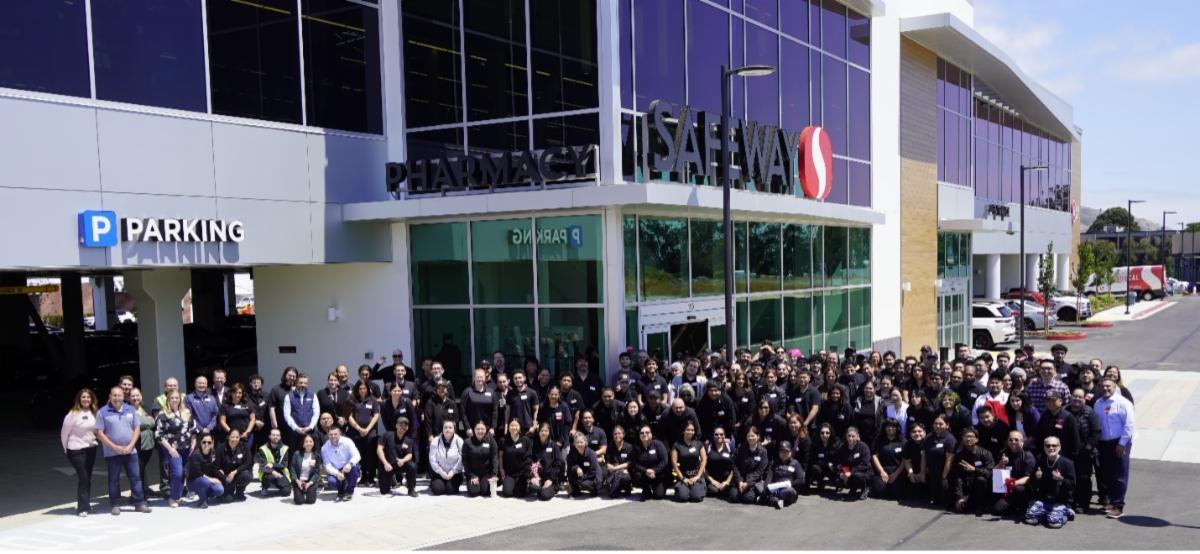
Safeway is celebrating its 100-year anniversary serving Northern California. The company started in this region in 1926 and launched community activities and opened their newest store in South San Francisco. Through 262 stores spanning Northern California, Safeway acts as a community hub, a place where neighbors connect, families shop, and communities come together, just as it did a century ago.
To celebrate its 100th year, Safeway kicked off the “Centennial Shuffle,” inviting customers in the region to experience a week of fun and interactive in-store activities, which included prize opportunities for shoppers ranging from grocery credits to giveaways, including two new SUVs. Additional activities included customer appreciation moments, tastings, discounts, and surprises across stores.
The Safeway Foundation also marked their 100 years of helping communities fight hunger by donating $100,000 total, $25,000 each, to four of Northern California’s oldest hunger relief organizations: Second Harvest Food Bank Santa Cruz County (1972), F.I.S.H. of the Santa Rosa Area (1972), Food Bank of Contra Costa and Solano (1975), and Sacramento Food Bank & Family Services (1976).
Read more.
| | |
Target Team Members Give Back with the
Los Angeles Regional Food Bank
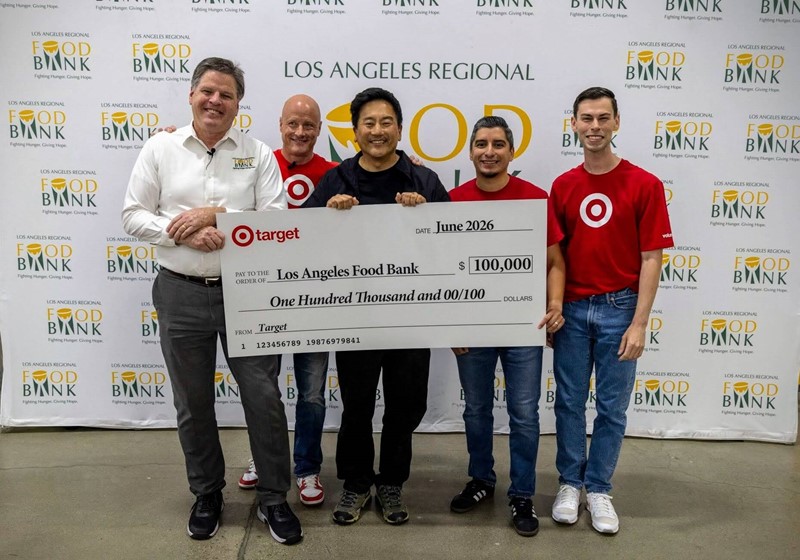
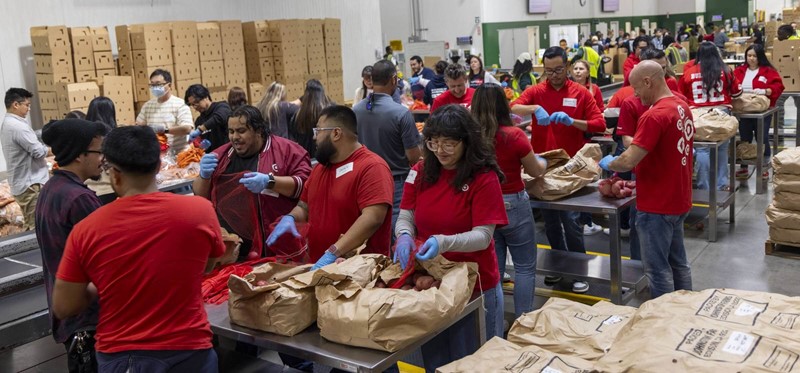
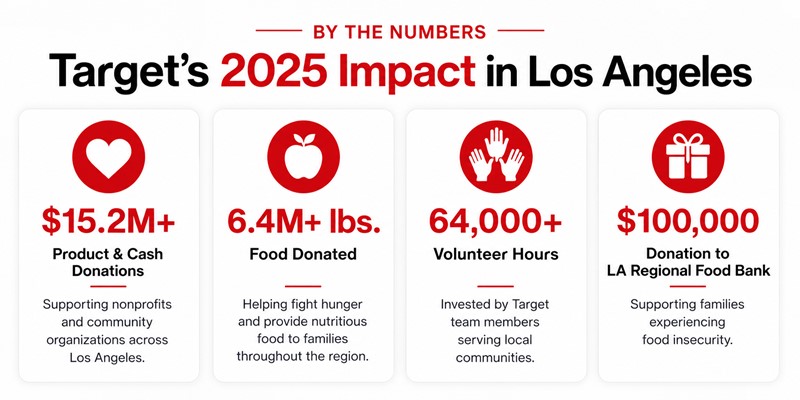
Target team members presented the Los Angeles Regional Food Bank with a $100,000 donation to help advance its mission of providing nutritious food to neighbors experiencing food insecurity throughout Los Angeles County. Following the check presentation, dozens of Target team members volunteered alongside Chef Roy Choi to pack essential food kits for families across the region.
It was a meaningful day of service that reflected something Target believes deeply: when businesses, nonprofits and community leaders come together, business can make an even greater impact.
Los Angeles chef, restaurateur and James Beard Award-winning television personality Roy Choi recently partnered with Target on the limited-time Good & Gather Collabs + Roy Choi collection, which celebrates the power of food to bring people together.
Target's partnership with the Los Angeles Regional Food Bank is just one example of how Target continues to invest in communities across Los Angeles. Through volunteerism, food donations, nonprofit partnerships, and community investment, Target is committed to helping build a stronger, healthier Los Angeles.
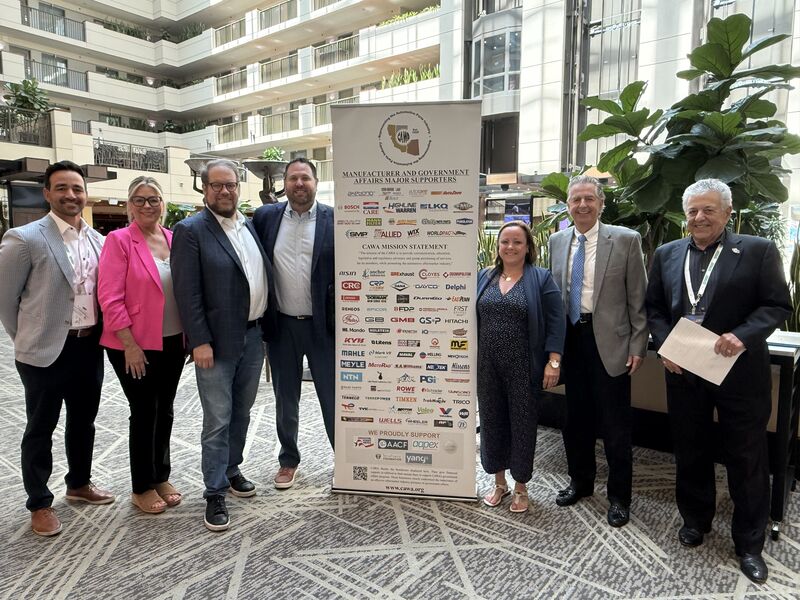
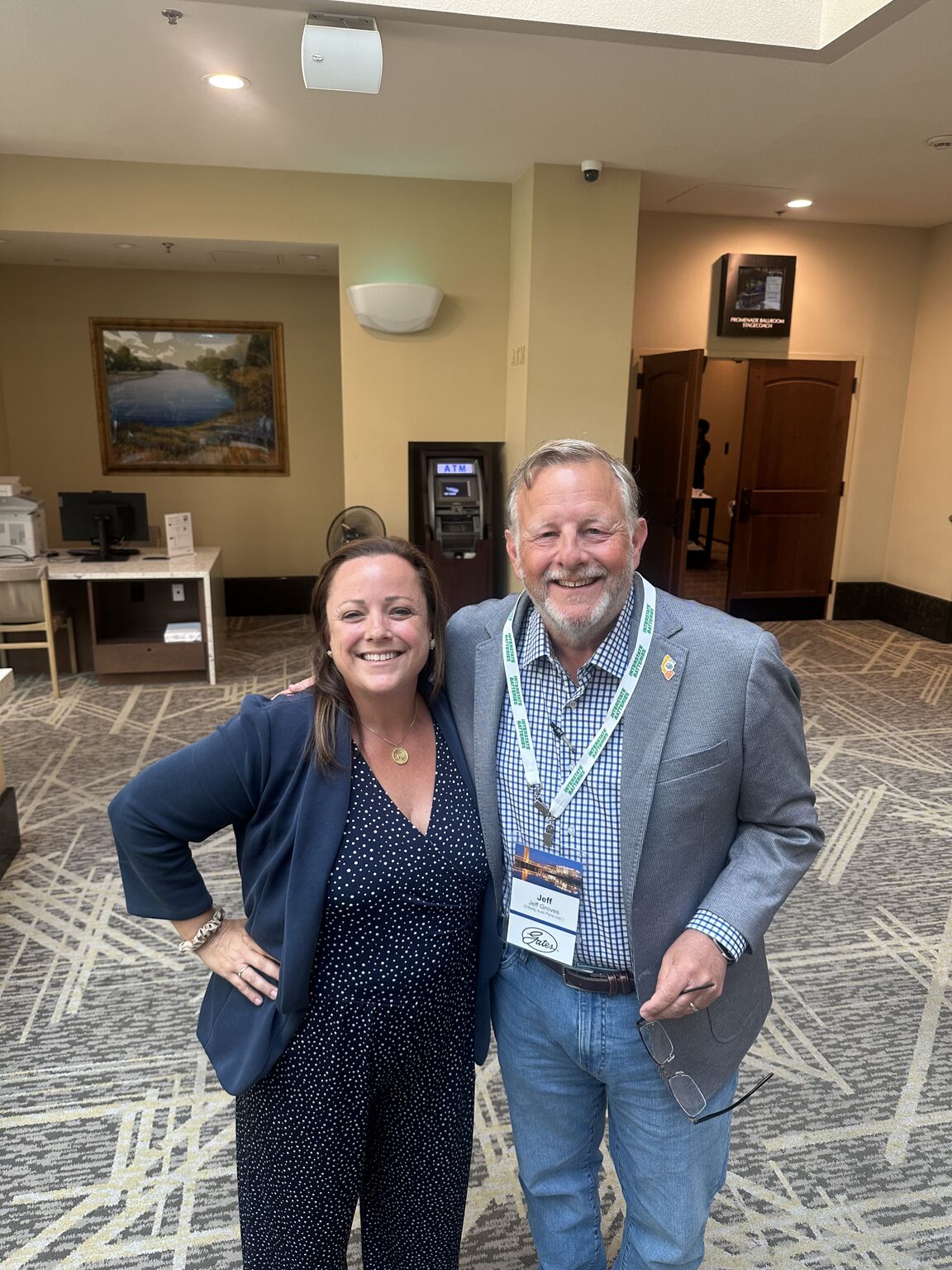
| | | | CRA Team Joined Legislative Leaders at the Legislative Black Caucus Juneteenth Celebration. Rachel Michelin, Ryan Allain, Leticia Garcia and Opio Dupree (Macy's) joined legislative leaders and community members for the California Legislative Black Caucus's annual Juneteenth celebration, an evening honoring the history and significance of Juneteenth while strengthening relationships with lawmakers and fellow stakeholders in Sacramento. | | CRA's Sarah Pollo Moo spoke to the CA Auto Wholesalers Association (CAWA) on their CA Industry Panel covering the latest updates in California for the automotive industry including political, regulations, legislation, primary election results and what to expect as we move through the rest of the year. It was great to see some of CRA's automotive retail member companies including O'Reilly Auto Parts! | | |
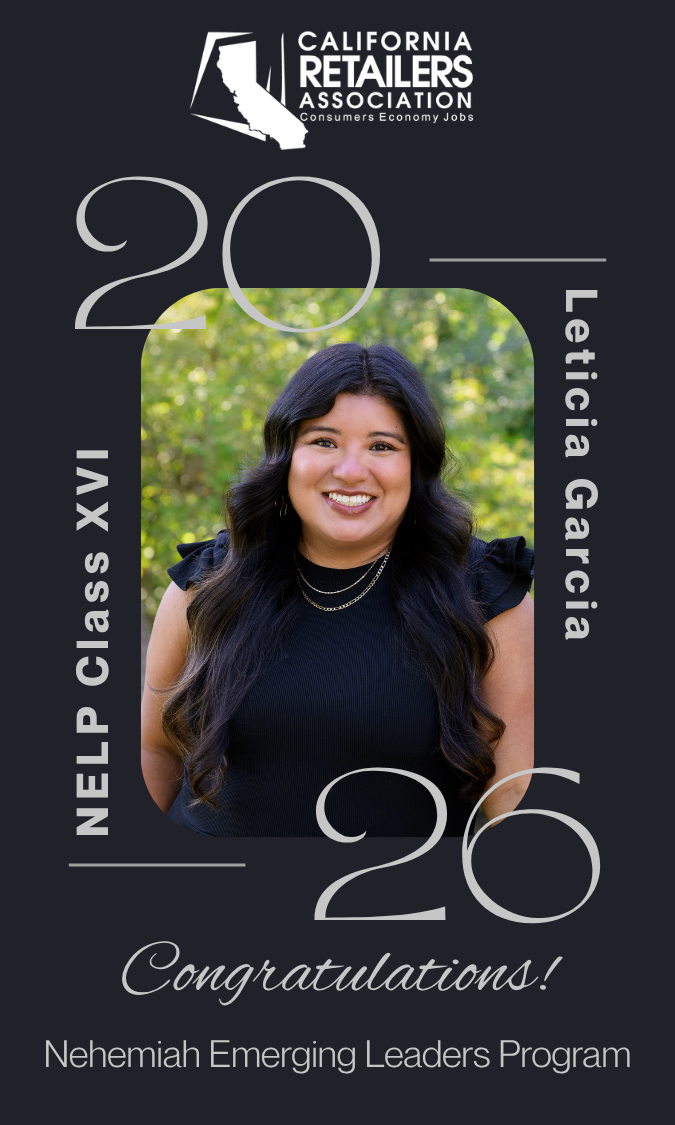
CRA's Leticia Garcia graduated from the Nehemiah Emerging Leaders Program (NELP). NELP is a competitive, 10-month executive and professional development program in Sacramento designed to train mid-career professionals from underrepresented backgrounds (women, people of color, veterans, LGBTQIA+, and individuals with disabilities) for civic, nonprofit, and corporate board leadership.
The NELP Class XVI held their graduation ceremony and celebration at The Sofia, Home of B Street Theatre. The event marked the completion of the 10-month executive training cohort, bringing the total number of program alumni to 249. Congratulations Leticia!!!!
| | |
California Retailers Association https://calretailers.com/ | |
Follow CRA on Facebook, Twitter, Linkedin and Instgram to stay up to date on the latest developments in statewide and local legislation and policies, regulations, relevant industry and member related news and association events. |
| | | |