-
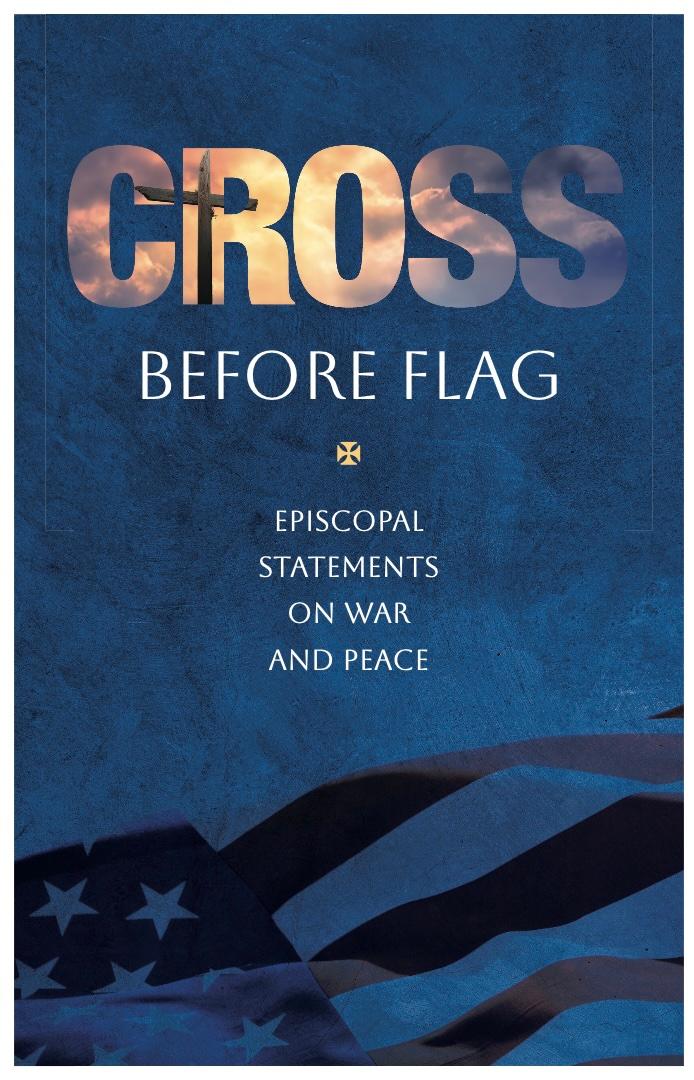
"Cross Before Flag" newly revised and digitally accessible: EPF's historic publication on The Episcopal Church's teachings on war & peace has been updated for the first time in 20+ years
-
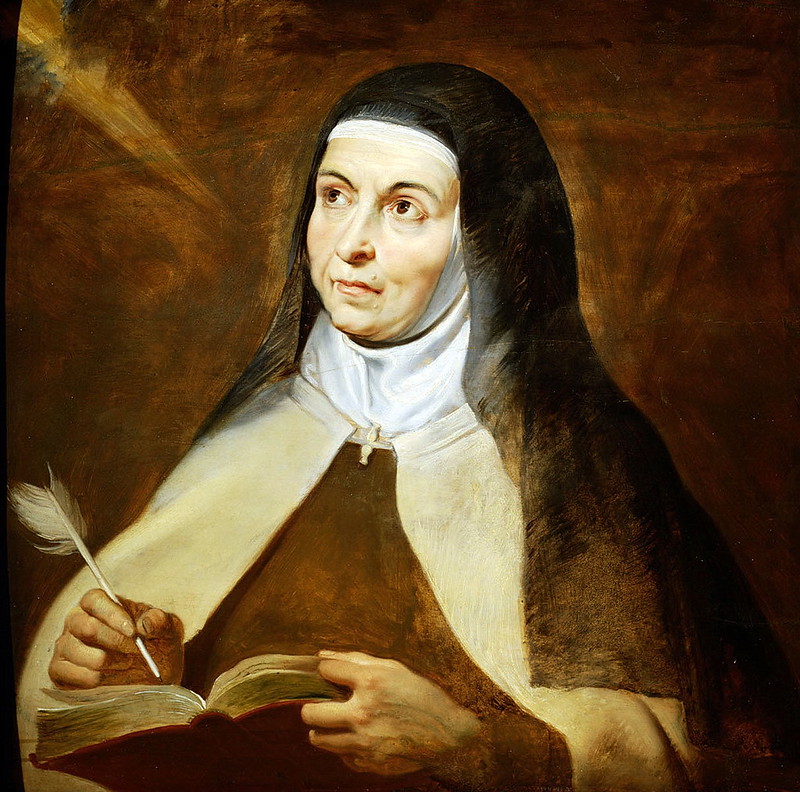
"In honor of the Feast of St. Teresa of Ávila" by Cambria Bold
-
Freedom Ride 2026: Join this week's dramatic bus ride through the Southeast retracing the steps of the 1961 Freedom Rides
- EPF Bridge Campaign Update!
-
Peace Calendar: TEC "Faithful Investing" webinar on 10/22; EPF Conscientious Objection Action Group to meet on 10/24
| | |
First revised edition of "Cross Before Flag" since 2005 now available for usage throughout church
New, free digitally-downloadable brochure issued just in time for diocesan convention season, and in advance of potential automatic enrollment of young men in potential military draft, starting in December, threatened by Trump administration
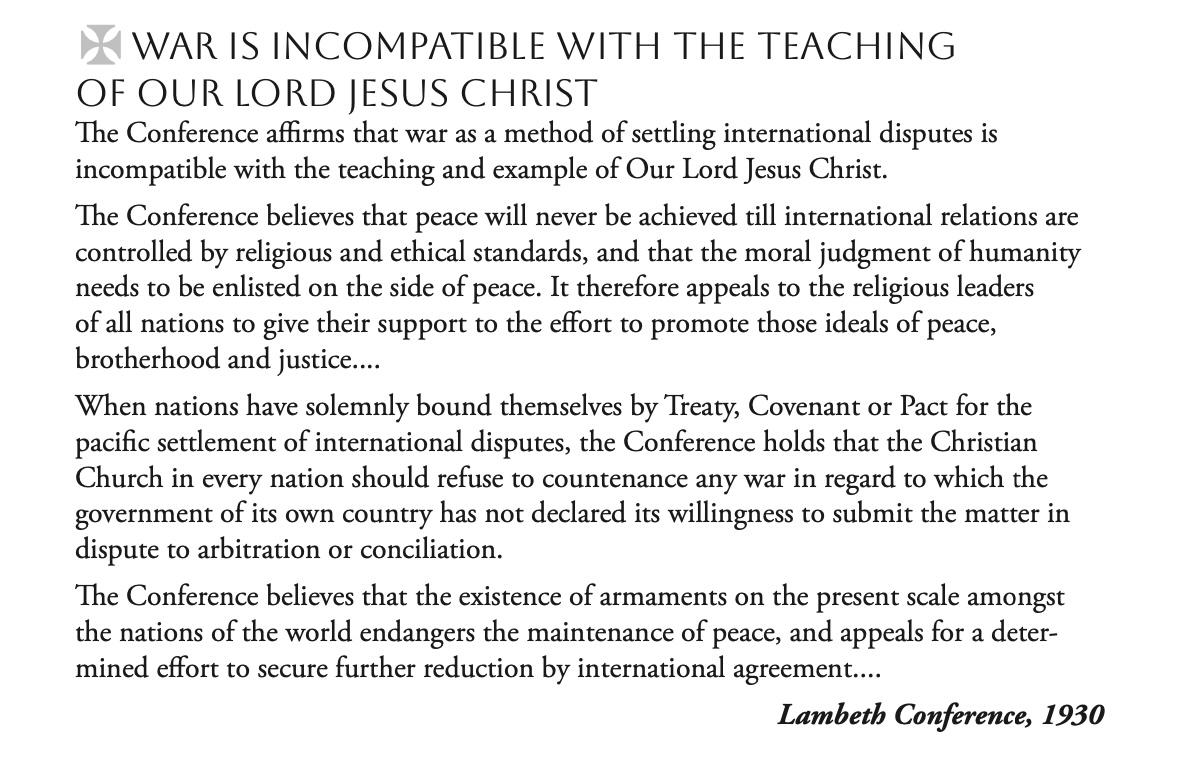
First published six decades ago, in 1966, by the Episcopal Peace Fellowship, "Cross Before Flag: Episcopal Statements on War and Peace" has been distributed by the tens of thousands throughout the Episcopal Church. The brochure, which provides official statements and resolutions on war and peace, has long been considered an essential resource for individuals, congregations, and church structures struggling with questions of how to respond faithfully to conflict and conscience.
Last updated in 2005, EPF has now fully revised and updated "Cross Before Flag" for renewed usage throughout our church. For the first time, the publication is available in digital, printable formats so that it may be electronically distributed with ease and printed in homes and churches.
"The statements in this booklet represent the church’s efforts, across generations, to address the realities of war and peace, and to proclaim God’s Word in a world that continues to sanction war and violence. As you read these statements, listen for God’s Word to you."
| |
More than 75 resolutions and statements are included, from 1916 through 2024, and address numerous concerns for peacemakers. War and militarism -- including conscientious objection & draft counseling, nuclear arms & proliferation, landmines & chemical weapons, terrorism, just war theory, the "right to protect," and more -- are core themes. Also included are official church statements on other relevant topics regarding structural violence, such as human rights, gun violence, economic conversion & alleviating poverty, religious nationalism, and social investments.
Furthermore, a study guide is included for the first time, providing two pages of probing questions for readers and small groups to reflect on the content of the publication and its meaning for our lives of ministry and purpose.
The new brochure is being released just in time for the fall-winter season when most local Episcopal dioceses hold their annual conventions. And with important content about themes of conscientious objection to military service, this release is also in advance of the federal government's proposed changes this December to the draft registration process for young men, as defined by the Military Selective Service Act.
EPF's "Cross Before Flag" updating project was led and managed by former EPF executive director the Rev. Kerith Harding, and was enabled by a generous grant from the Historical Society of the Episcopal Church -- includes the text of resolutions and statements issued by The Episcopal Church's General Convention and Executive Council, TEC's House of Bishops, and the Lambeth Conference of Anglican Bishops. We extend immense gratitude to Kerith, graphic designer MaryLou Cadwell, copy editor Ethan Vesely-Flad, and HSEC for their invaluable contributions to make this newly-revised edition possible.
Access the booklet-format PDF version of "Cross Before Flag." (Use this version to print out, and then staple together, a hard-copy booklet for use in your home, congregation, or diocesan convention.)
Access the consecutive-page PDF version of "Cross Before Flag." (This version is best for reading the brochure electronically on your computer or mobile device, or for printing in a non-bounded format.)
| | |
In honor of the Feast of St. Teresa of Ávila (celebrated on October 15)
By Cambria Bold
St. Teresa of Ávila knew, in her bones, how difficult it was to write about prayer. She admitted as much in the very first line of her definitive work, The Interior Castle, which she wrote over the course of six months in 1577.
Ordered by a superior to write a treatise on prayer for her Carmelite sisters, the saint had neither the desire nor the will to write another book. (She was 62 years old at the time and had already written several.) However, “knowing that the strength given by obedience usually lessens the difficulty of things that seem impossible,” she agreed and found, when her 80,000-word manuscript was complete, that her given theme had shifted. She hadn’t just written a book about prayer; she’d written a book about God. (“It treats only of what [God] is,” she wrote in a letter one week later.)
It is sometimes easier to name what seems impossible than what is possible. Doing the work of justice, dismantling violence, and striving to be peacemakers feels like an impossible task. We know the powers that move in the world. We witness the undoing of neighborliness, the undying acts of cruelty, the unmaking of creation. It’s why we can be tempted to merely contemplate goodness instead of working for it, as St. Teresa knew well. She wrote: “Sometimes [we are given] great desires so that we will avoid setting ourselves to the task at hand, [which is] serving the Lord in possible things, and instead be content with having desired the impossible.”
St. Teresa’s life and writings remind us that prayer without action is merely contemplation, and action without prayer is merely movement. The two are whole only when they work together, the former leading to the latter, with God’s abiding love and friendship the sustaining throughline. The culmination of the journey through the seven mansions of the “interior castle” of the soul, as St. Teresa imagined it, isn't just to be united with God in the innermost chamber; it’s to have our attention transformed by the union, to experience a sort of “strange forgetfulness” of our individual capacities and preoccupations so that we can turn outward to the world with love.
It is about understanding, finally, what is possible.
And so, St. Teresa calls us to pray. She calls us to pray—before and in the midst and after all is done—to ground us in God’s love and keep us open to what is possible through that love. She calls us to pray for God to bring us ever closer to God’s self. She calls us to pray for the strength to serve in present, possible ways instead of standing still in the shadow of the impossible. “The important thing,” she gently reminds us, “is not to think much but to love much, and so do that which best stirs you to love.”
| |
Cambria Bold is a writer, editor, and licensed lay preacher in the Episcopal Church. She has a bachelor’s degree in English literature from Wheaton College and is completing a Master of Divinity at Duke Divinity School. She lives in St. Paul, Minnesota, with her family.
Photo above of c.1615 painting of Teresa of Avila from the Kunsthistorisches Museum Wien in Vienna, Austria. Photo by lluisribesmateu1969 via Flickr-CC.
| |
Freedom Ride 2026
Sixty-five years ago, the Freedom Riders boarded buses in Washington, D.C. bound for New Orleans. They never made it. This month, their journey continues.
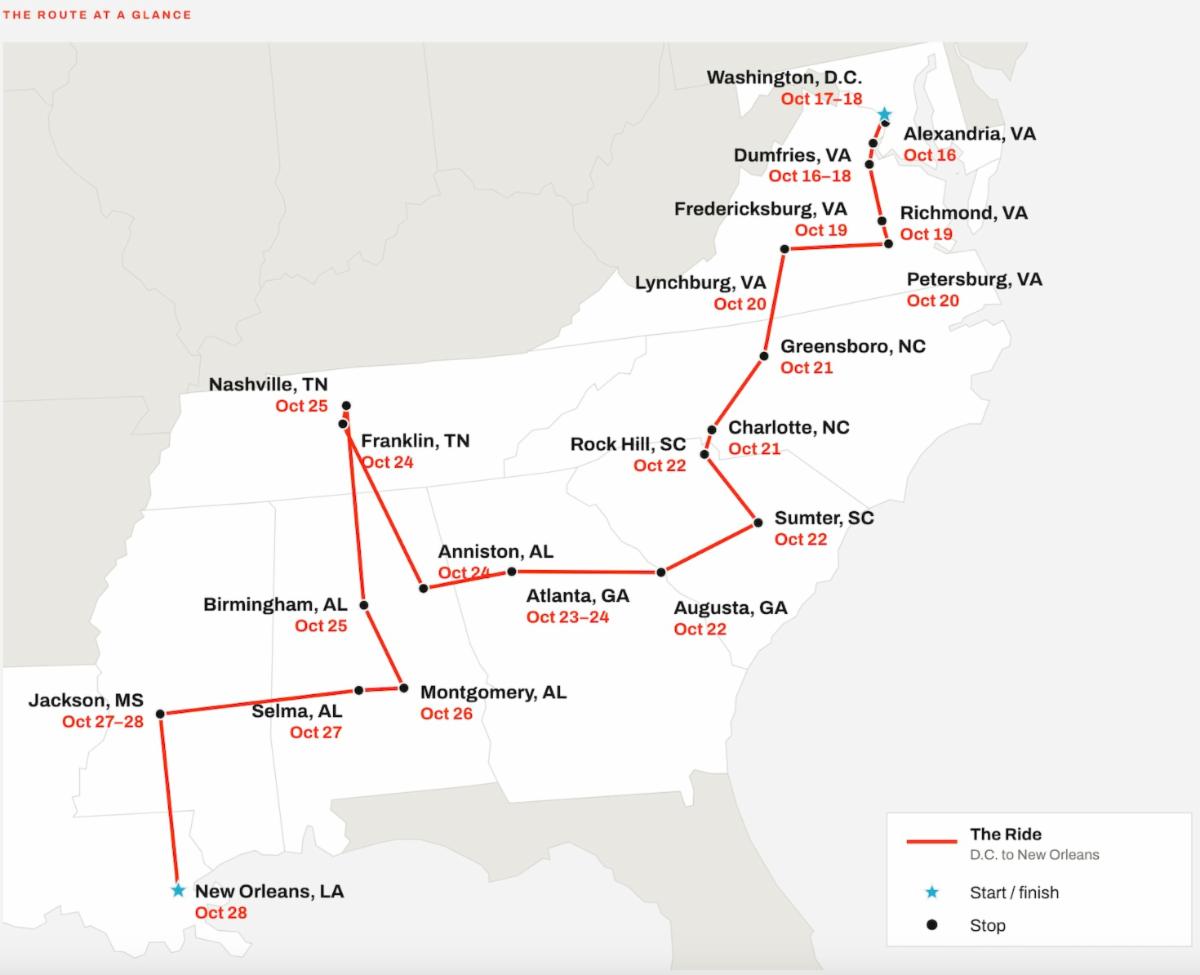
The Ride 2026 is a 12-day national bus tour and feature documentary retracing the 1961 Freedom Ride route, October 17–28, in the final weeks before the midterm elections. Original Freedom Riders and their families are on board, including relatives of Hank Thomas, John Lewis, Charles Person and the Petway family, alongside civil rights leaders, faith leaders, artists and pilgrims.
The route covers 19 cities across eight states plus D.C., from Richmond and Greensboro to Rock Hill, Atlanta, Anniston, Birmingham, Nashville, Montgomery, Selma, Jackson and Baton Rouge, before arriving in New Orleans. Rev. Dr. Michael Waters and Pastor Doug Pagitt are executive producers, Rev. Traci Blackmon is organizing partner, and Sura Mallouh is directing the documentary being filmed along the way.
The Ride is a non-partisan 501(c)(3) effort convened by Vote Common Good, Greater Things Foundation, Faith Out Loud, Americans United and Red Letter Christians. You can ride as a pilgrim, send a delegation, or sponsor the buses, the film or a 1961 Freedom Rider. Learn more and follow along at theride2026.org.
| | | | |
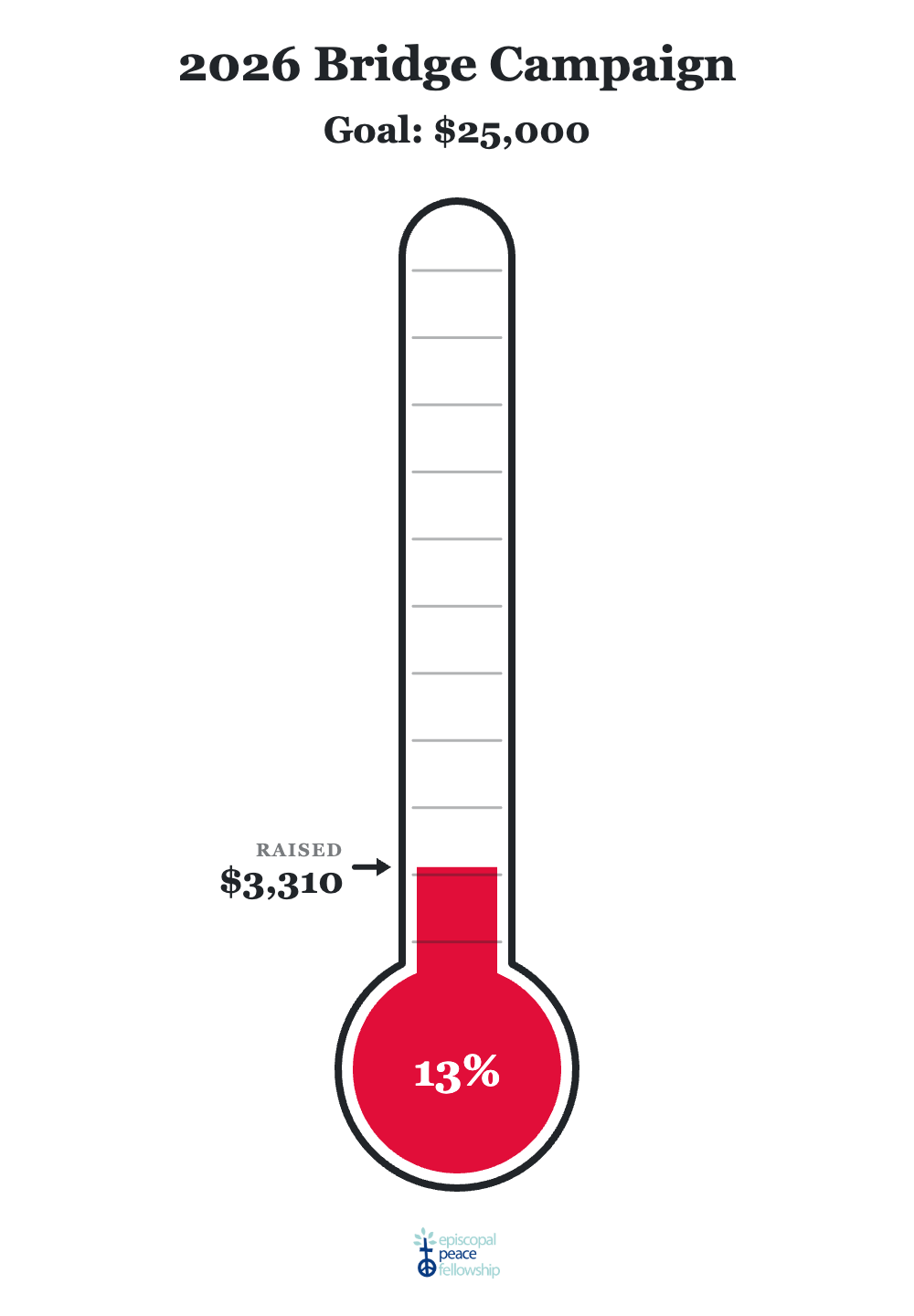
EPF Bridge Campaign Update!
Blessed are the peacemakers. And peacemakers are showing up! In two weeks, you have given $3,310 to the Bridge Campaign. Now we need $1,690 more by All Saints' Sunday, November 1st, to hit our first marker of $5,000.
Your gifts fuel the planning and governance work that will shape EPF's next chapter, starting with our November National Executive Council retreat. This is not a campaign to fund a finished plan. It is a chance to help build one. The thermometer tracks our full $25,000 goal. Give today at the link below, close the gap, and help us cross the bridge together.
| | |
"Faithful investing: Putting our values to work" webinar
Hosted by The Episcopal Church's Division of Public Policy, Partnership, and Witness
Join The Episcopal Church’s Division of Public Policy, Partnership, and Witness in this webinar exploring socially responsible investing and corporate social responsibility. Hear from leaders in the field and learn how the church puts its values into action through its investments.
Guest speakers include:
- Samuel Jones, president, Heartland Initiative
- Christopher Lacovara, chief financial officer, The Episcopal Church
- Sarah Lawton, chair, Executive Council Committee on Corporate Social Responsibility
- Mary Minette, senior director of shareholder investments, Mercy Investments
- Rebecca Blachly, chief of public policy, partnership, and witness, will host the event.
Spanish interpretation will be available, and a recording will be shared with all registrants within 24 hours of the event.
Register here for the webinar.
| |
Oct. 24: EPF Conscientious Objection Action Group meeting
Following a summer hiatus, EPF's Conscientious Objection Action Group will hold its first meeting of the fall on Saturday, October 24, from 1:00-2:00pm Eastern Time (10-11am Pacific). Several of the CO Action Group's working groups have been at work during this break, developing materials and resources under their areas of interest, which will be discussed. The three working groups are: CO Formation Resources, CO and The Episcopal Church, CO Advocacy.
The CO Action Group will also discuss the concerning proposed federal legislation slated for late 2026 regarding the ending of voluntary Selective Service System registration. Anyone between ages 18-25 who was assigned male gender at birth will be automatically registered for the draft under these new guidelines. These would create a significant barrier to those who, because of conscience, wish to declare their intention to pursue conscientious objection as an alternative to military service.
To access the Zoom link for the meeting or for more info, contact the Rev. Bob Davidson via email
| |
|
Oct. 22: Episcopal Church webinar on "Faithful Investing" (see above)
Oct. 24: EPF Conscientious Objection Action Group meeting (1:00pm Eastern, email Bob Davidson for more info)
Oct. 24: United Nations Day (est. 1945)
Oct. 24-30: U.N. Disarmament Week
Oct. 25: Remembering the launch of the U.S. invasion of Grenada (1983)
Oct. 26: PATRIOT Act signed by George W. Bush, enacting dramatic new elements of so-called "war on terror" (2001)
Oct. 27: First National People of Color Environmental Leadership Summit (1991)
Nov. 1: All Saints Day
Nov. 3: U.S. Election Day
Nov. 11: Episcopal Peace Fellowship founded on Armistice Day (1939)
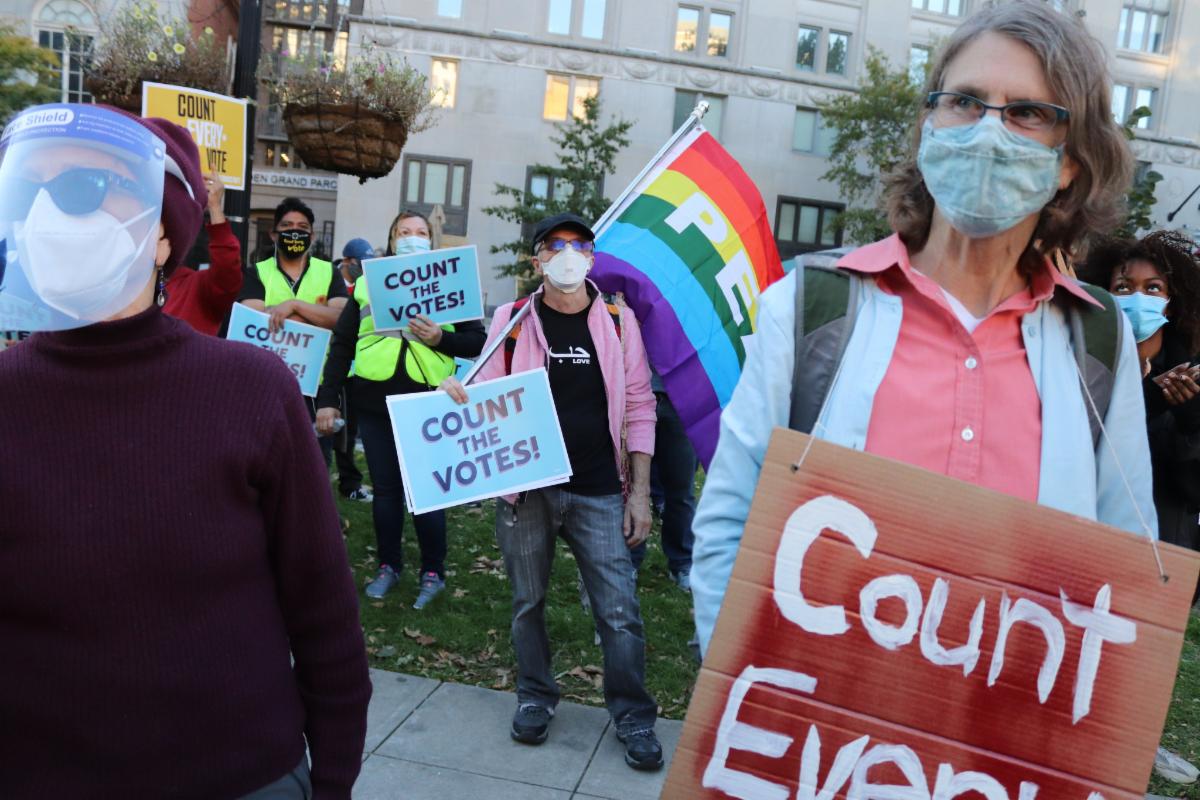
Photo of Count Every Vote Rally in 2020 by Elvert Barnes, Flickr/CC.
| | |
Now is a great time to join us in our work for justice and peace!
To become a member of EPF, click here
| | | | |