News and Opportunities To Learn & Grow | |
Getting to Know Our Penn State Partner Faculty and Researchers | |
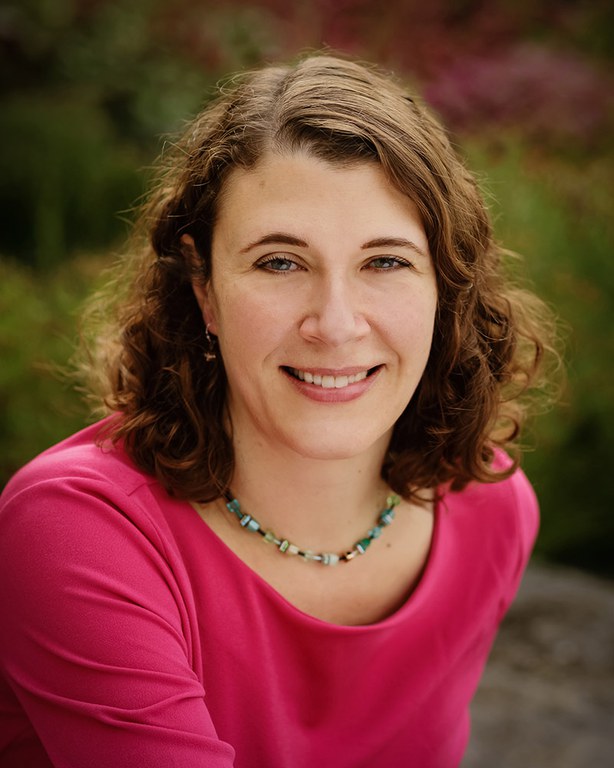
Christina Grozinger, Ph.D.
Publius Vergilius Maro Professor of Entomology
Director, Center for Pollinator Research, Insect Biodiversity Center
| | |
|
|
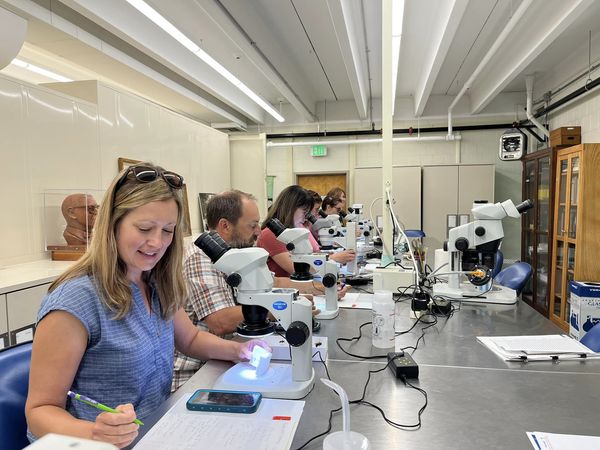
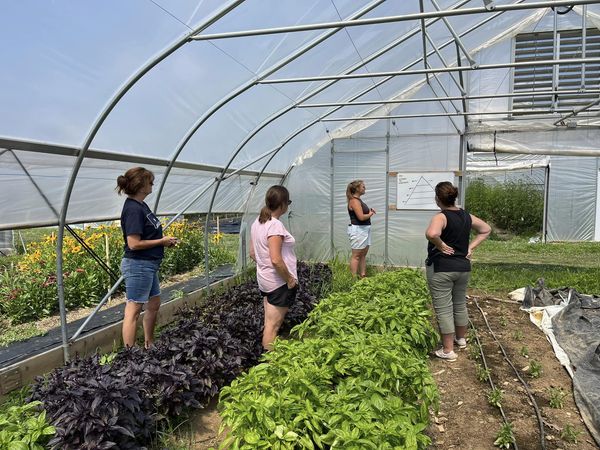
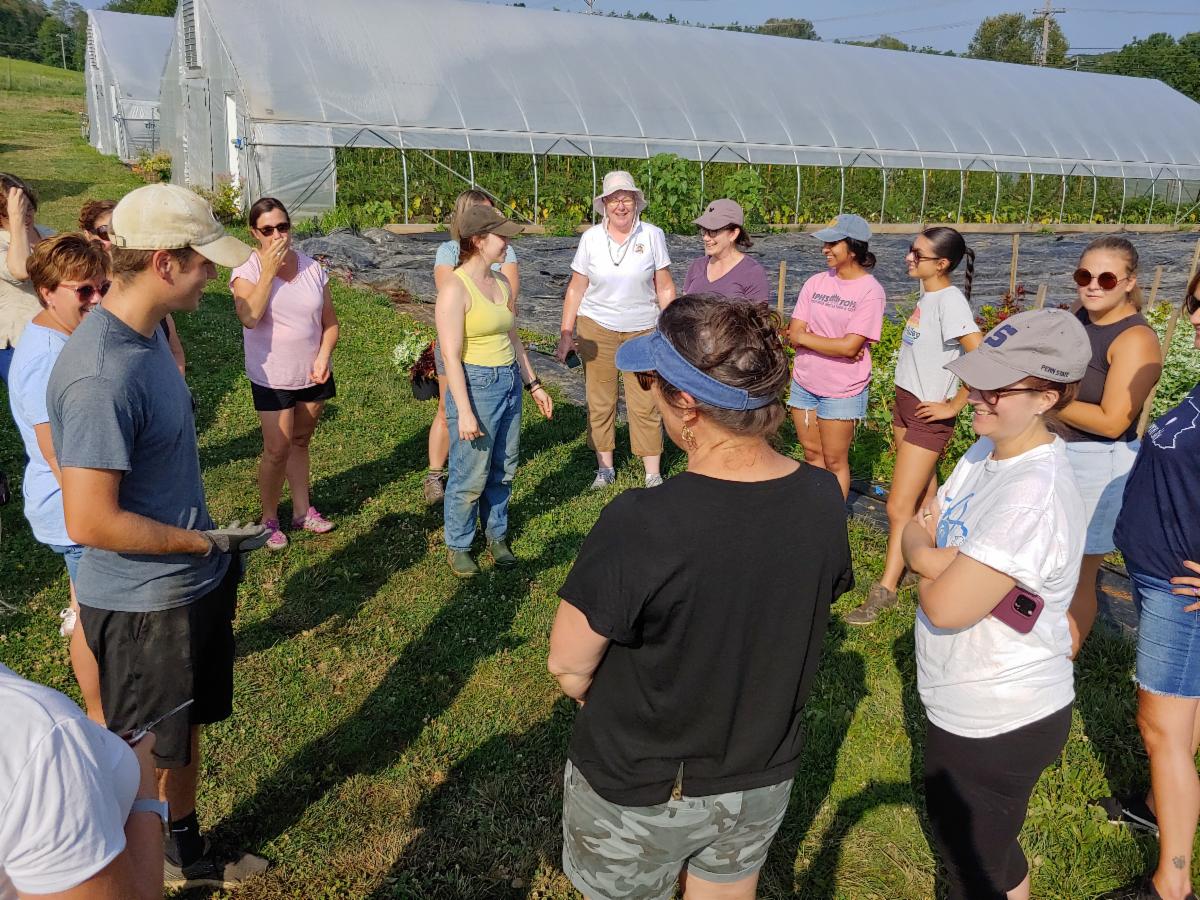
At CSATS, we are greatly inspired by Dr. Christina Grozinger and her work with pollinators. Bees are critical pollinators in natural and agricultural landscapes and key model systems for the study of social behavior. Dr. Grozinger's research group examines the mechanisms underlying social behavior and health in honeybees and related species. Her studies on social behavior seek to elucidate the proximate and ultimate mechanisms mediating cooperation and conflict in insect societies. Her studies on pollinator health evaluate the impacts of biotic and abiotic stressors at the molecular, physiological, and behavioral level, and examine how bees’ resilience to these stressors can be bolstered by management practices and environmental contexts, particularly by improved nutrition. To help beekeepers, growers, land managers, and members of the public better assess and mitigate the stressors that their managed and wild bee populations experience, Grozinger works with the Beescape team to develop models and decision support tools to evaluate landscape conditions and predict bee health at local scales. To develop automated monitoring tools for insects, Grozinger leads the INSECT NET graduate training program, funded by the NSF Research Traineeship Program. The Grozinger lab group is highly collaborative and interdisciplinary, with individuals from multiple programs and perspectives.
Dr. Grozinger's favorite part of working with K12 educators and students is all the questions they ask about pollinators. Because educators and studies are coming at these topics from totally new perspectives, they ask different questions than scientists and some of these questions lead to new and exciting research studies. Since CSATS helps students try on STEM identities to explore career options in STEM, we asked Dr. Grozinger what led her to a STEM career and her current STEM identity, she said "I originally was interested in studying biology because I wanted to know how living things - plants and animals - that I saw in the world around me worked. My brother was keeping bees and told me fascinating stories about their behavior, and so I decided to focus on bees for my research."
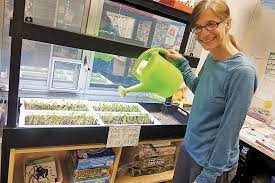
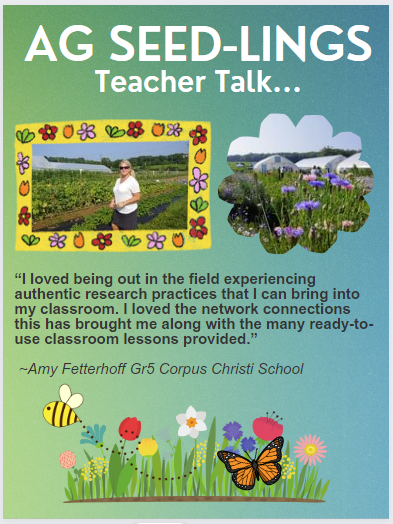
Dr. Grozinger’s most recent partnership with CSATS has been through our very popular program AG SEED-LINGS and its associated classroom resources.
Since Penn State is known for its famous Penn State Berkey Creamery, we all have our own opinion on what Creamery ice cream flavor is the best. When people visit the Creamery, we don't just enjoy the wonderful ice cream, we benefit from the science, research, and engineering that helps us get from Cow to Cone (in just 12 steps). For Dr. Grozinger, her favorite Creamery ice cream flavor is WPSU Coffee Break.
#WeAre grateful to learn and grow with and from Dr. Grozinger as our CSATS faculty/researcher partner. You can find out more about Dr. Grozinger and her amazing work at this LINK.
| | |
|
CSATS Connects with the
School District of Philadelphia
Impactful, authentic STEM adventures await!
| |
|
|
Our Impact
Can Increase Your Impact
| |
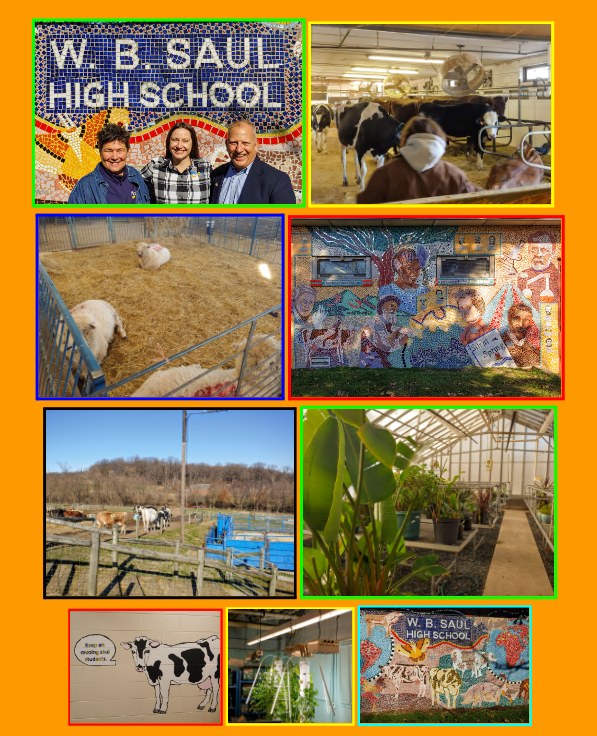
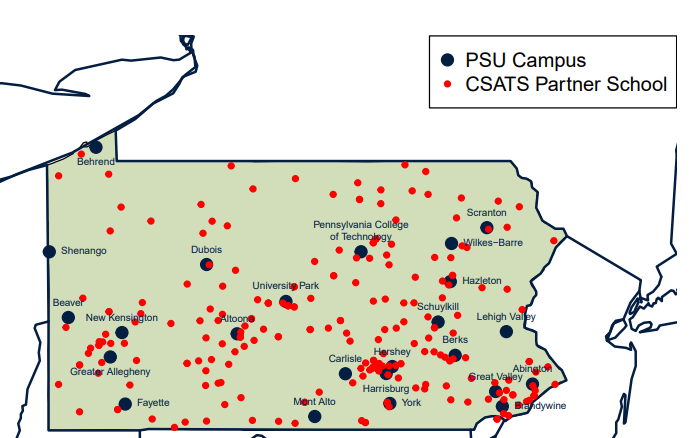
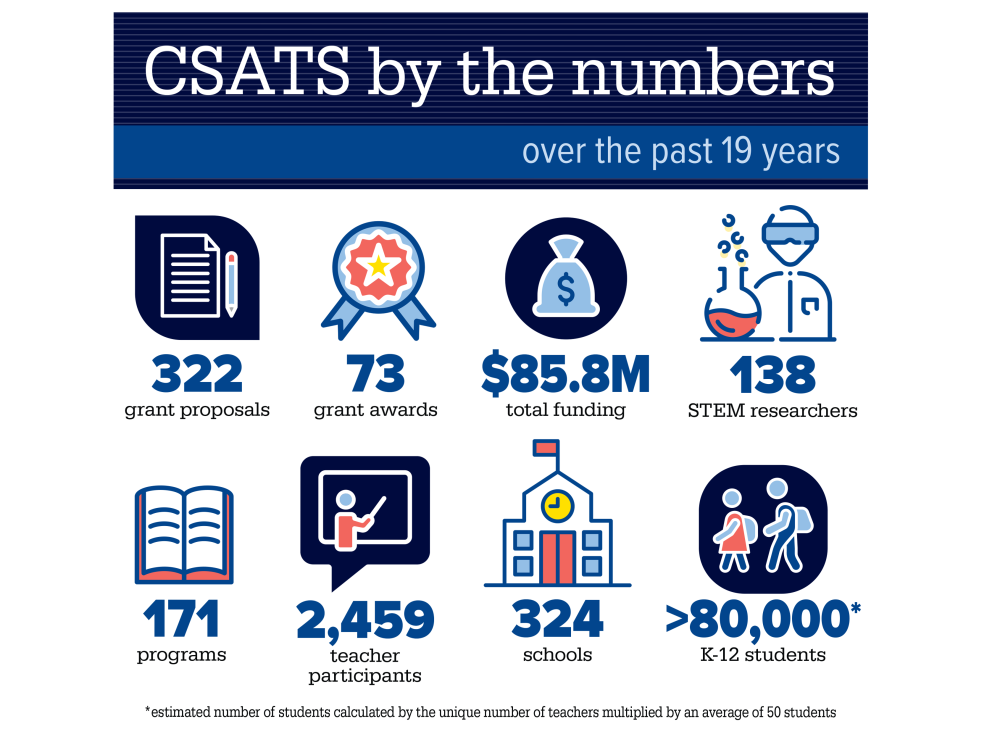
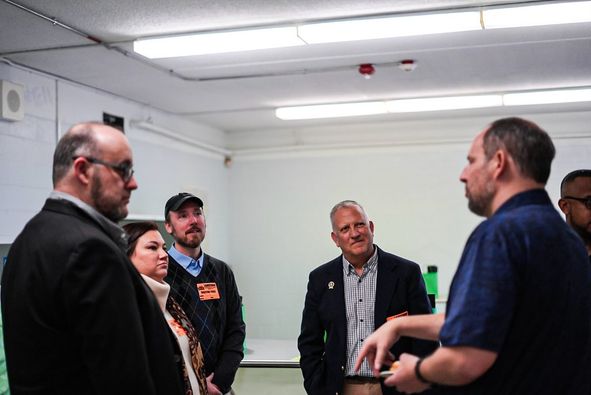
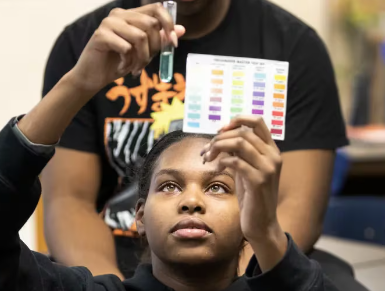
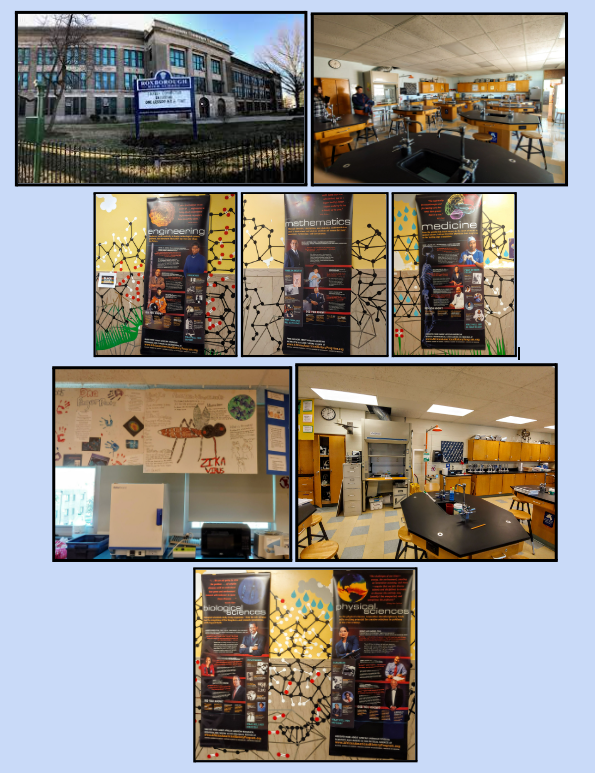
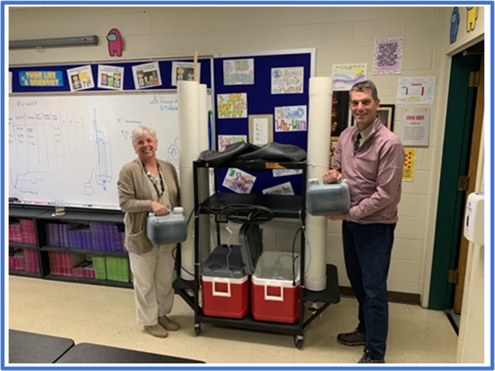
For nearly two decades, CSATS has been fostering relationships with schools throughout the Commonwealth. During the month of February, we toured some amazing schools in the School District of Philadelphia to celebrate their impactful programming and to inquire how we can support their mission. W.B. Saul, Roxborough, and Lankenau are three magnet schools doing amazing programming with passionate, dedicated students.
They embrace Convergence Education, the idea that authentic, complex problem-solving often involves creative, collaborative transdisciplinary approaches. This convergence breaks down traditional subject silos and enhances the engagement of learning through applied math and the creative arts. One such project is their mussel research project in which they are working with the clean water stakeholders to improve the quality of water in the Schukyl River through bioremediation of freshwater mussels.
At CSATS, #WeAre gratefully inspired by the teachers, students, and schools we have the privilege of working with like those in the School District of Philadelphia. Please consider allowing us to help you increase your impact through authentic STEM. Contact Jeff Remington for more information on starting your authentic STEM journey.
| | | |
|
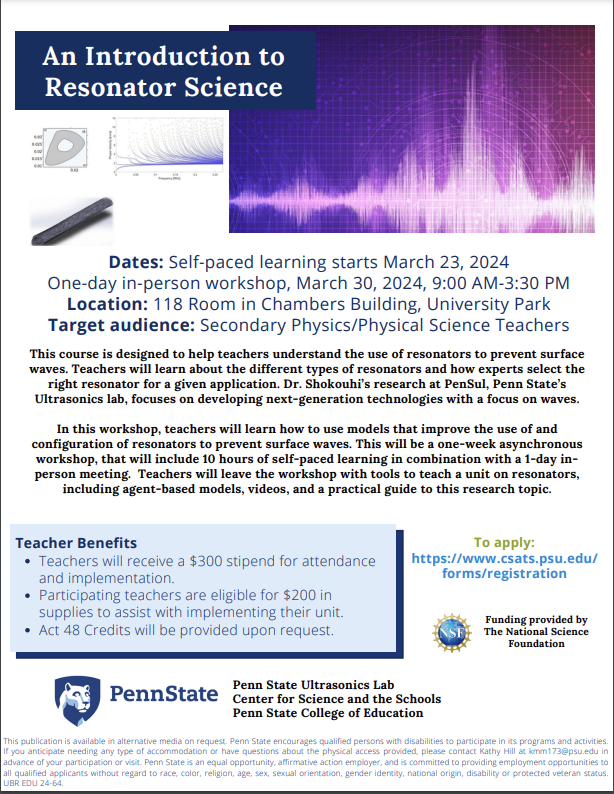
Resonator Science
Surface Waves, Earthquakes, and More.
$300 Stipend Available + $200 In Classroom Supplies
One-day in-person workshop, March 30, 2024, 9:00 AM-3:30 PM
118 Chambers Building, University Park
| |
|
This course is designed to help teachers understand the use of resonators to prevent surface waves (Earthquakes). Teachers will learn about the different types of resonators and how experts select the right resonator for a given application. Dr. Shokouhi’s research at PenSul, Penn State’s Ultrasonics lab, focuses on developing next-generation technologies with a focus on waves.
In this workshop, teachers will learn how to use models that improve the use of and configuration of resonators to prevent surface waves. This will be a one-week asynchronous workshop, that will include 10 hours of self-paced learning in combination with a 1-day in-person meeting. Teachers will leave the workshop with tools to teach a unit on resonators, including agent-based models, videos, and a practical guide to this research topic.
Target Audience:
- Secondary physics, engineering, and technology teachers
Participant Benefits:
- Teachers will receive a $300 stipend for attendance and implementation.
- Participating teachers are eligible for $200 in supplies to assist with implementing their unit.
- Act 48 Credits will be provided upon request.
Questions/Comments? Contact Amber Cesare
| |
|
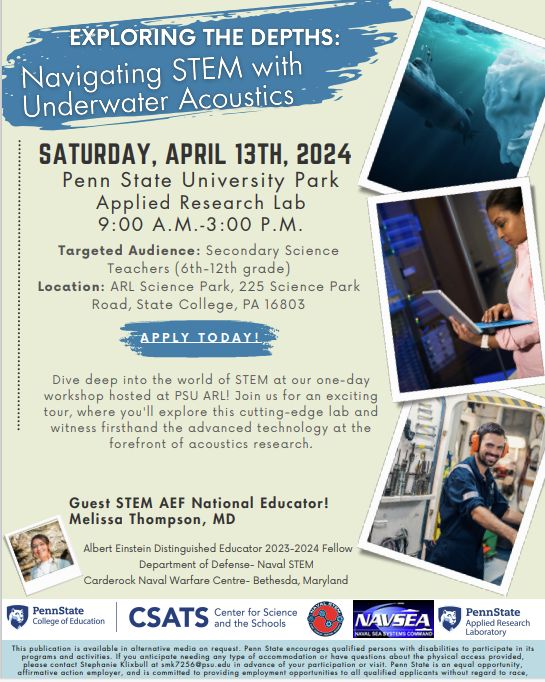
Exploring the Depths:
Navigating STEM with Underwater Acoustics
One-day in-person workshop, Saturday, April 13, 2024, 9:00 AM-3:00 PM
Penn State, University Park
| |
|
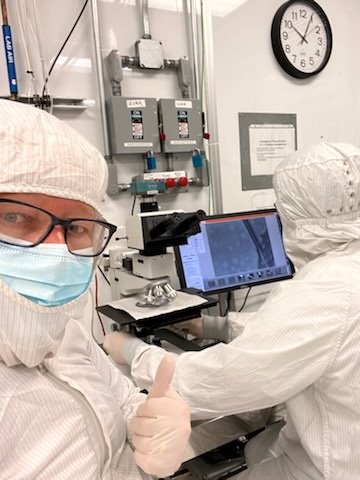
Dive deep into the world of STEM at our one-day workshop hosted at PSU Applied Research Labs (ARL)! Join us for an exciting tour, where you'll explore this cutting-edge lab and witness firsthand the advanced technology at the forefront of acoustics research. Educators will not only learn about the Applied Research Lab but as well as participate in science/engineering activities to take back to the classroom from DoD & Naval STEM resources.
Target Audience:
Participant Benefits:
- Free PD
- Tour of the Applied Research Labs
- Swag
- Lunch provided
- Free Parking
- Act 48 Credits will be provided upon request
Questions/Comments? Contact Stephanie Klixbull
| |
|
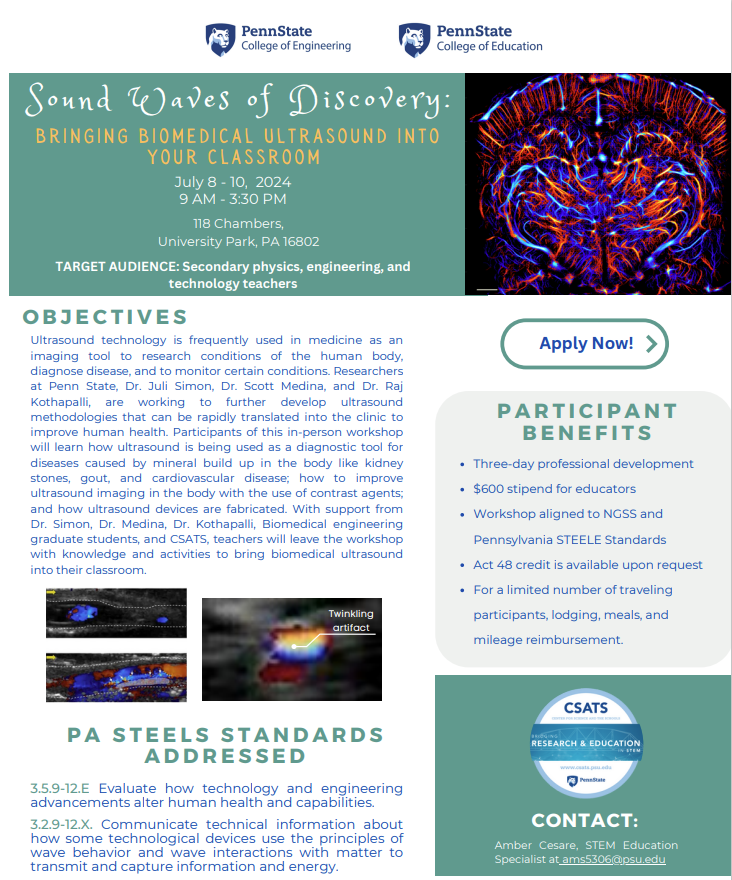
Soundwaves of Discovery
Bringing Biomedical Ultrasound Into Your Classroom
$600 Stipend Available
Three-day in-person workshop, July 8-10, 2024, 9:00 AM-3:30 PM
Penn State, University Park
| |
|
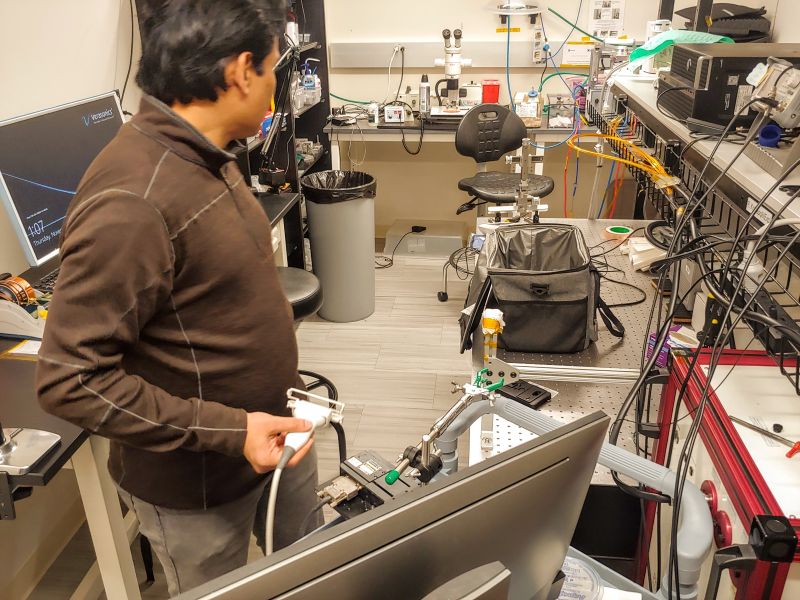
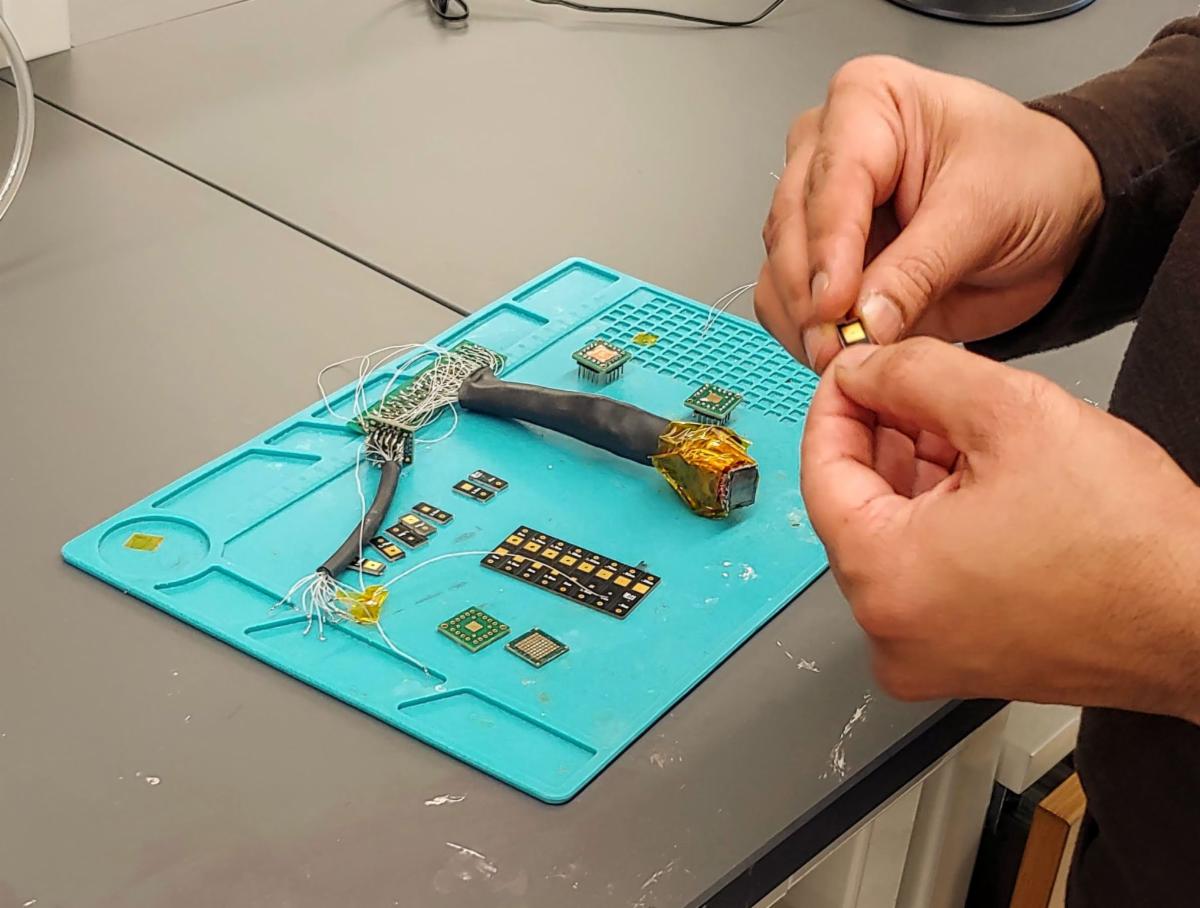
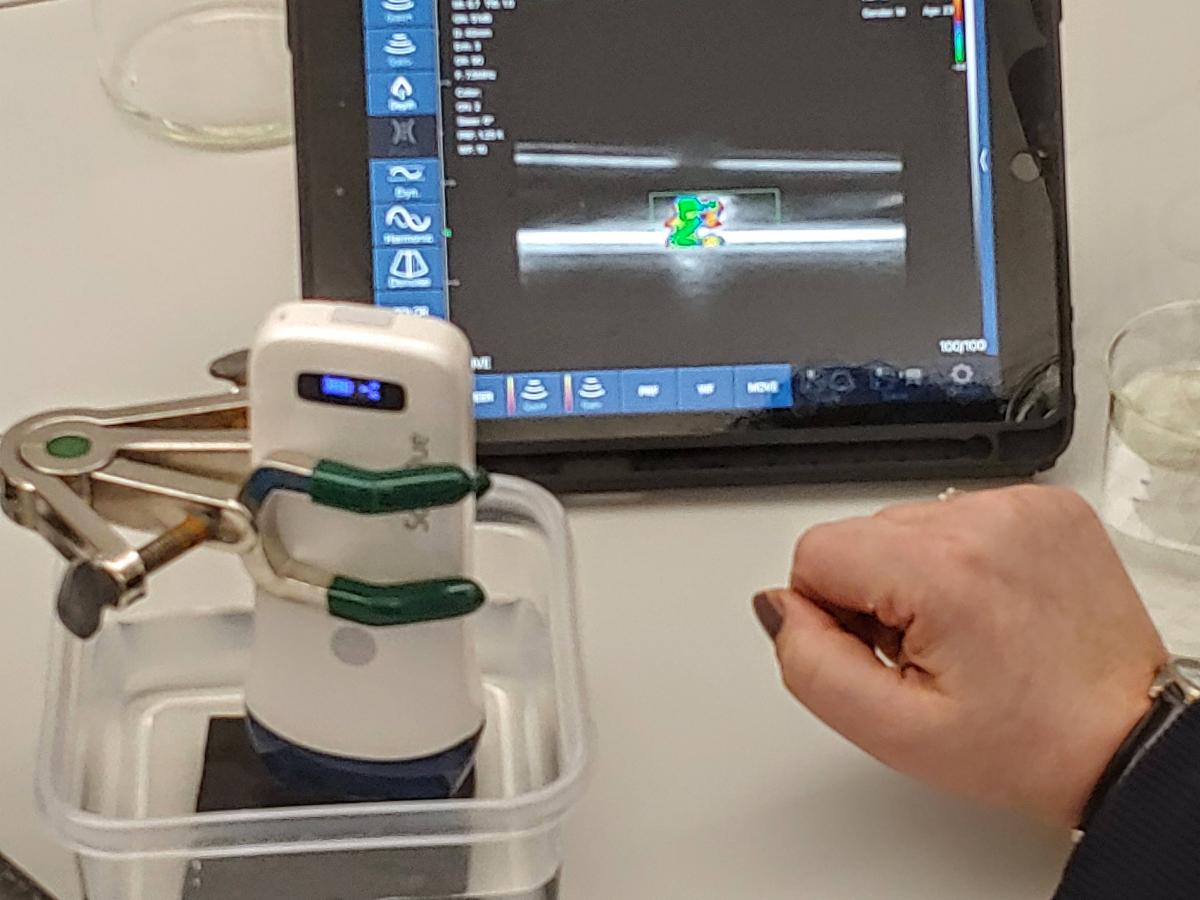
Ultrasound technology is frequently used in medicine as an imaging tool to research conditions of the human body, diagnose disease, and monitor certain conditions. Researchers at Penn State, Dr. Juli Simon, Dr. Scott Medina, and Dr. Raj Kothapalli, are working to further develop ultrasound methodologies that can be rapidly translated into the clinic to improve human health. Participants of this in-person workshop will learn how ultrasound is being used as a diagnostic tool for diseases caused by mineral build up in the body like kidney stones, gout, and cardiovascular disease; how to improve ultrasound imaging in the body with the use of contrast agents; and how ultrasound devices are fabricated. With support from Dr. Simon, Dr. Medina, Dr. Kothapalli, Biomedical engineering graduate students, and CSATS, teachers will leave the workshop with knowledge and activities to bring biomedical ultrasound into their classroom.
Target Audience:
- Secondary physics, engineering, and technology teachers
Participant Benefits:
- Three-day professional development
- $600 stipend for educators
- Workshop aligned to NGSS and Pennsylvania STEELE Standards
- Act 48 credit is available upon request
- For a limited number of traveling participants, lodging, meals, and mileage reimbursement.
Questions/Comments? Contact Amber Cesare
| |
Paid Summer Research Opportunities for Teachers
CSATS Research Experience for Teachers (RETs)
$6000 Stipend
June 17, 2024 - August 2, 2024
Virtually or at University Park, PA
Application Deadline: March 31, 2024
| |
|
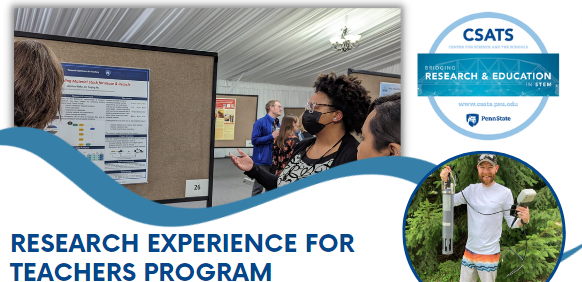
During this 7-week full-time, research experience, teachers work with a faculty member on an authentic research project and receive professional development virtually by the Penn State Center for Science and the Schools (CSATS) to help translate the experience to the classroom. Teachers will conduct their research either in-person or virtually based on the research placement and the teacher's location. There are a variety of placements to choose from, but teachers will be placed based on their areas of interest and the courses taught.
RET programs for the Summer of 2024:
RET Benefits:
- Access to experts in research and education. Work on an authentic research project with Penn State research faculty and translate it back to the classroom with Penn State science education faculty.
- Stipends. $6000 stipend for summer research and developing a classroom research project to implement during the academic year.
- Graduate course credit. Opportunity to earn up to 3 graduate credits through Penn State (SCIED 597)
RET Requirements:
- Must be a secondary STEM teacher with at least 3 years of full-time teaching experience
-
Must commit to implementing a classroom research project during the 2024 - 2025 school year
RET Placements:
- Bioinformatics Research with Dr. Denise Okafor, Assistant Professor of Biochemistry and Molecular Biology, and of Chemistry
- Computational Biology Research with Dr. Mingfu Shao, Charles K. Etner Early Career Professor School of Electrical Engineering and Computer Science
Get a bird's eye view of the program HERE.
Questions/Comments? Contact Tiffany Lewis
| |
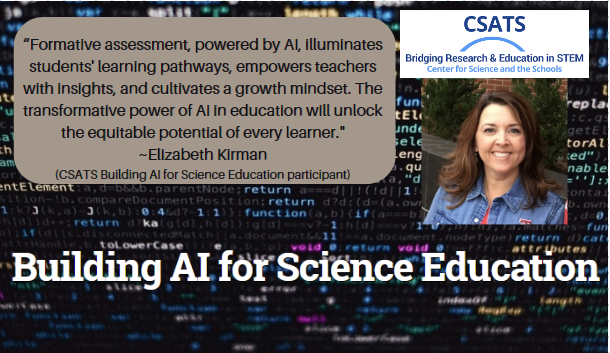
Building AI for Science Education
$200 Travel Stipend Available + $500 to Pilot the Program
Two-day in-person workshop, July 1-2, 2024, 9:00 AM-4:00 PM
Penn State, University Park
| |
|
What is Artificial Intelligence (AI)? How can humans and machines partner in the educational setting? What if AI could examine student writing in science and provide real-time feedback?
In this 2-day summer workshop, teachers will work with computer science engineering faculty and education faculty to learn about how AI systems are designed. To build and test the AI, teachers will "feed" the PyrEval system using examples of student writing. Feedback regarding student understanding will be generated as output and examined for use by both teachers and students.
Teacher Benefits:
- Teachers will receive access to all digital materials, including teacher guides, written materials, and student prompts.
- This workshop is FREE to all educators with Act 48 credit available.
- $500 stipend for piloting the AI with students in their classroom.
- $200 stipend and travel expenses (mileage, lodging, meals) for attending the workshop.
Questions/Comments? Contact Jeff Remington
| |
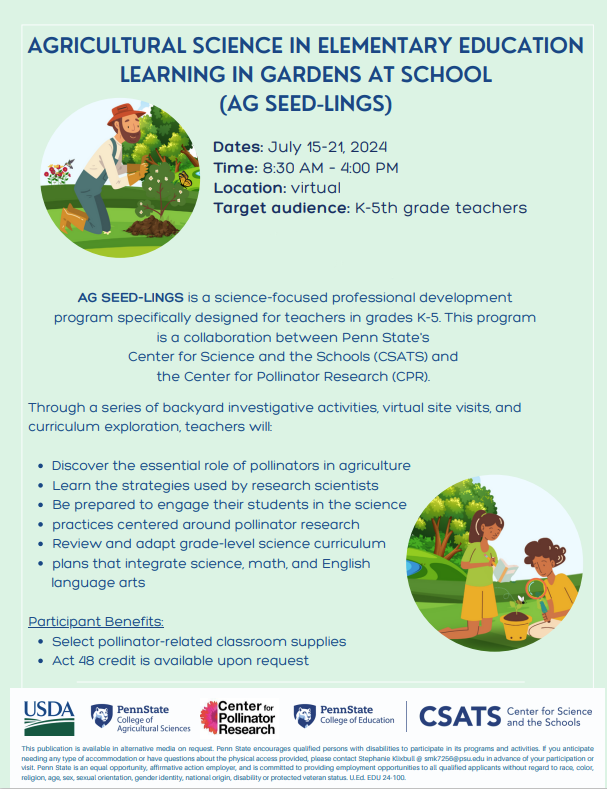
AG-SEEDLINGS Follows Up On Great 2023 Summer of PD
AG-SEEDLINGS Summer 2024 Offering and FREE Lesson Resources
Virtual workshop, July 15-21, 2024, 8:30 AM-4:00 PM
| |
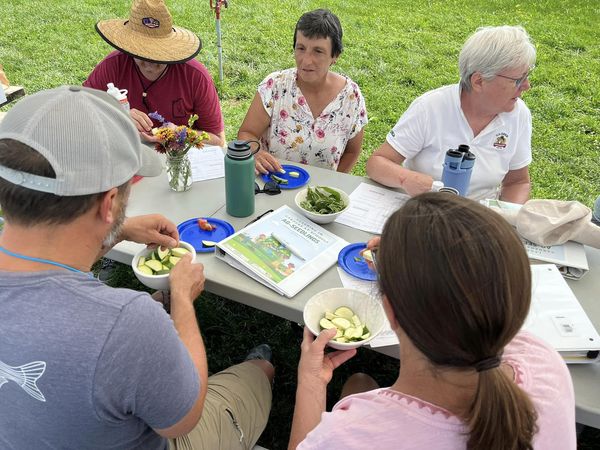
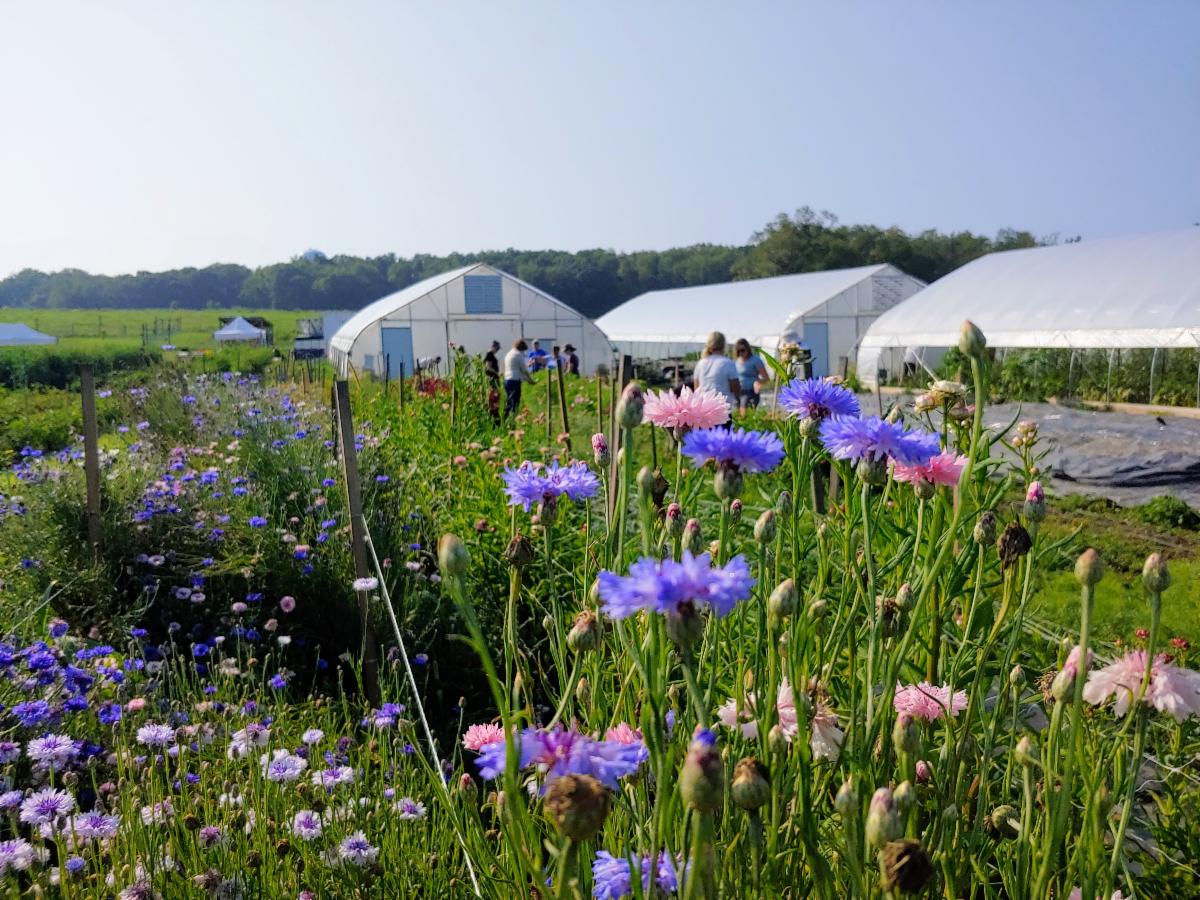
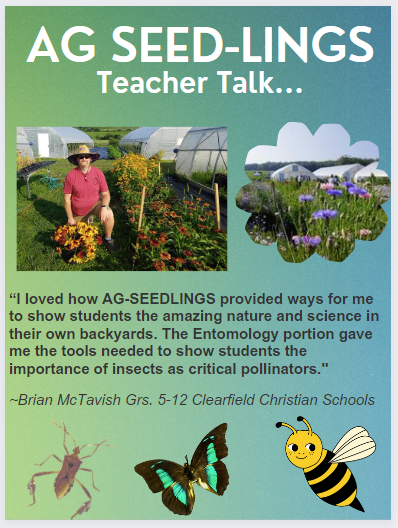
Teachers you've heard the BUZZZ... back by popular demand, Ag-SEEDLINGS. Summer 2024. 7/15-21 Virtual. Pollinator-related supplies and activities are available. Act 48 Available. Details and registration can be found at the button below. Spots are filling up fast for this popular course. Don't delay! | |
|
Take advantage of AG-SEEDLINGS lesson resources from the 2023 workshop. Teacher-tested and approved, these lessons are "spot on for STEAM K-5 classrooms" as mentioned by a reviewer on our CSATS social media platform. Teachers this summer loved all that they learned. Now you can share in their enthusiasm for AG-SEEDLINGS - Teacher Resources - Ag Science in Elementary Education - Learning in Gardens at Schools by simply clicking the button below.
Questions/Comments? Contact Stephanie Klixbull
| |
Sent on behalf of Penn State AI Hub | |
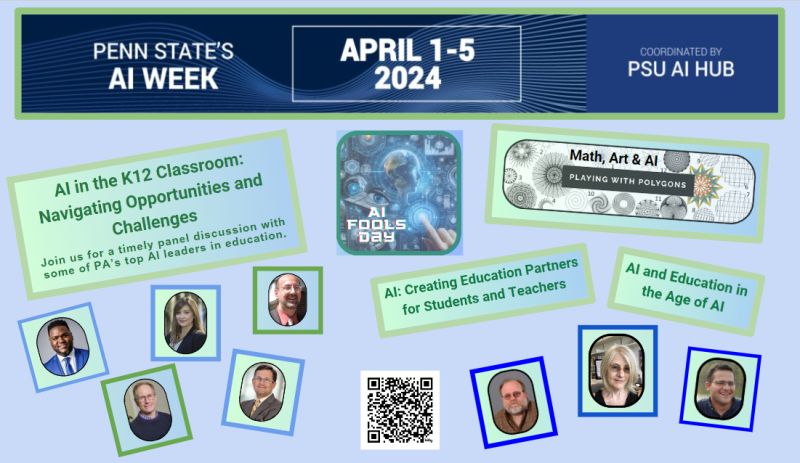
AI Fools Day Leads AI Week
Join Us for a Day of Insightful Webinars on AI for K12
Virtual
| |
|
AI in K-12 Education
Join us for a series of expert K12 AI presenters and panelists discussing salient issues with AI in the k12 space. This registration will give you access to all presentations from 10:30 AM to 1:30 PM.
10:30 AM – 11:30 AM
Math, Art, & AI
Join us for an engaging webinar with Dr. Erfle, where he explores the intersection of Math, Art, and AI. Discover how “Learning Math while Creating Art by Playing with Polygons” empowers students through Electronic String Art. The website Playing with Polygons (PwP) offers accessible learning, encouraging creativity and understanding. Topics include counting questions, spirals, and cardioids, all with adjustable parameters. Don’t miss insights into teacher resources and alignment with Common Core State Standards. Dr. Steve Erfle’s Bio
11:30 AM – 12:00 PM
AI and Education in the Age of AI
Join us for a salient presentation from Dr. Mahdavi as he delves into how artificial intelligence is revolutionizing learning. From personalized student support to helping educators with daily tasks, this webinar explores the intersection of AI and education, shaping a brighter tomorrow from a researcher in the field. Dr. Mehrdad Mahdavi’s Bio
12:00 PM – 12:30 PM
AI: Creating Education Partners for Students and Teachers
Join us as Dr. Passonneau shares her team’s work on enhancing student learning through natural language processing (NLP). She will share how their software, PyrEval-CR, provides immediate feedback to middle school students and their teachers, aiding essay revision and diagnosing writing skills and science comprehension. Insights will also be shared from assessing college physics lab reports and other projects related to open-ended questions for undergraduate statistics education, including a new dataset with questions provided by five partner institutions, and responses from students across the U.S., including bilingual students and non-native speakers. Their innovative approach demonstrates the effectiveness of NLP in student assessment and feedback, showing AI can be an effective partner in student learning and teacher delivery of material. Rebecca Passonneau’s Bio
12:30 PM – 1:30 PM
Panel Discussion AI in the Classroom: Navigating Opportunities and Challenges
Join us as we gain insight from some of Pennsylvania’s leading K12 AI Leaders as they share thoughts on the current impact of AI in education, ethics, and legal implications, potential impact, collaborative AI efforts across sectors, and actionable steps for AI in the present time.
Hosted by Dr. Demetrius Roberts, Special Consultant to PD on STEM & Computer Science
Panelists Dr. Dave Touretzsky – CMU, Jefferey Sultanic, JD – Fox Rothschild LLP, Dr. Jamie Payton – Temple, Dr. Gerry Letendre – Penn State
Bios
| |
How can CSATS help your school? | |
Interested in learning more about the Center for Science and the Schools and other opportunities for teachers and students available from Penn State? How can your school become involved in STEM projects with us?
Please contact the CSATS Outreach Liaison Jeff Remington (jeff_remington@psu.edu) to set up a phone or in-person appointment with your school to review your STEM needs and goals!
| | |
Our opportunities are possible due to research grants with scientists and engineers. However, in order to expand the work we do to further impact K-12 education in STEM and provide further resources, materials, and experiences for teachers, this is made possible by the support of our donors. To make a donation to Penn State Center for Science and the Schools, please visit our GIVE page and also see our current IMPACTS across Pennsylvania and the nation.
| |
Follow us on social media | | | | |