CSRO and the Underwater Biosimilars Coalition Pushes Congress and CMS to Address Biosimilar Reimbursement in Medicare Advantage | | |
In May, CSRO and the Underwater Biosimilars Coalition – of which CSRO is a Co-Chair – submitted testimony to the Senate Appropriations Subcommittee on Labor, Health and Human Services, Education, and Related Agencies requesting report language to accompany the FY 2027 LHHS appropriations directing the Centers for Medicare and Medicaid Services (CMS) to establish, through rulemaking or guidance, a formulary adequacy standard for provider-administered biosimilars in Medicare Advantage (MA). CSRO and the Underwater Biosimilars Coalition believe formulary adequacy standards can help alleviate some of the “underwater” reimbursement faced by physicians when biosimilars are reimbursed below their acquisition costs due to distorted average sales prices (ASP).
Simultaneously, CSRO and the Coalition have been meeting with members of Congress on this issue. Rep. Onder, MD (R-MO), an allergist, has agreed to lead a Dear Colleague letter amongst his colleagues in the House urging CMS to establish formulary adequacy standards. CSRO conducted over a dozen meetings with members of the House GOP and Democrats Doctors’ Caucuses, encouraging members to join this letter to CMS. CSRO recognizes the challenges that underwater reimbursement places on practices and will continue to advocate for policies that address these issues.
| | CSRO Warns Senators Against Potential Most Favored Nation (MFN) Drug Pricing Amendment | | |
Last week, CSRO took swift action after learning that a Most Favored Nation (MFN) drug pricing amendment was being considered for the budget reconciliation bill. CSRO sent comments to key Senators to make its strong opposition clear. Budget reconciliation — a procedural mechanism that allows legislation to pass the Senate with a simple majority rather than the 60 votes typically required — lowers the political barriers needed to advance budget bills into law.
CSRO's outreach underscored how a potential amendment could restrict patients' access to prescription drugs and, in some cases, cause patients to postpone or forgo treatment, leading to negative health outcomes. CSRO also detailed how the policy could undermine the viability of private practices nationwide and, most importantly, endanger the buy-and-bill model used by many rheumatology practices. Specifically, MFN drug pricing would threaten the add-on payment for drug administration, which, under Medicare Part B, is the Average Sales Price (ASP) plus 6%. Rheumatology practices depend on this add-on to cover drug acquisition costs, equipment, staffing, facilities, and spoilage insurance, and without it, many risk receiving underwater reimbursements. CSRO will continue to monitor the reconciliation process to ensure this provision is not included in the final package.
| | Legislation Around the Country | | IL: CSRO, CRS, and AWIR Urge Illinois Lawmakers to Oppose PDAB Bill That Would Restrict Patient Access | | |
CSRO, together with the Chicago Rheumatism Society (CRS) and the Association of Women in Rheumatology (AWIR), submitted comments to the Illinois House Executive Committee and the full Senate opposing legislation that would establish a Prescription Drug Affordability Board (PDAB) in the state. CSRO also launched a grassroots campaign urging Illinois rheumatology practices to contact their state Senator to oppose SB 3496's advancement in the legislature.
SB 3496 would create a PDAB, referred to as the Health Care Availability and Access Board, and impose an upper payment limit on physician-administered medications — a policy that the three organizations warned would seriously harm both patients and providers. Specifically, the bill would apply the Medicare Maximum Fair Price to medications administered in Illinois, resulting in many rheumatology practices incurring a financial loss. If enacted, this could make it financially unsustainable for practices to continue administering these therapies in-office, ultimately forcing patients to seek care at hospitals and other higher-cost sites of service.
| VA: Governor Spanberger Vetoes PDAB Legislation – Victory for Rheumatology Community | |
On May 19, Governor Spanberger vetoed the General Assembly's latest attempt to establish a Prescription Drug Affordability Board (PDAB) in Virginia. Prior to issuing the veto, the Governor had returned the legislation to the General Assembly with proposed amendments that would have created a study panel to evaluate the effectiveness of a PDAB before any implementation. Ultimately, the General Assembly rejected those amendments. In advance of the Governor’s veto, CSRO joined other provider groups in sending a letter urging her to veto the legislation.
Harry Gewanter, MD, FAAP, MACR, who serves on the CSRO Board, played a leading role in the coalition’s opposition efforts and authored its final letter. Dr. Gewanter worked to mobilize coalition partners and to educate the Governor's office on why PDABs fail to achieve their stated goal of lowering drug costs — a conclusion supported by the experiences of other states that have adopted them in recent years.
This latest legislative effort marked Virginia's fifth attempt to establish a PDAB. Former Governor Glenn Youngkin vetoed similar bills during his term, and this latest veto continues that pattern. The outcome represents a significant victory for CSRO and the broad coalition of patient and provider groups it has partnered with, particularly given the growing public pressure to address drug affordability in the state.
| |
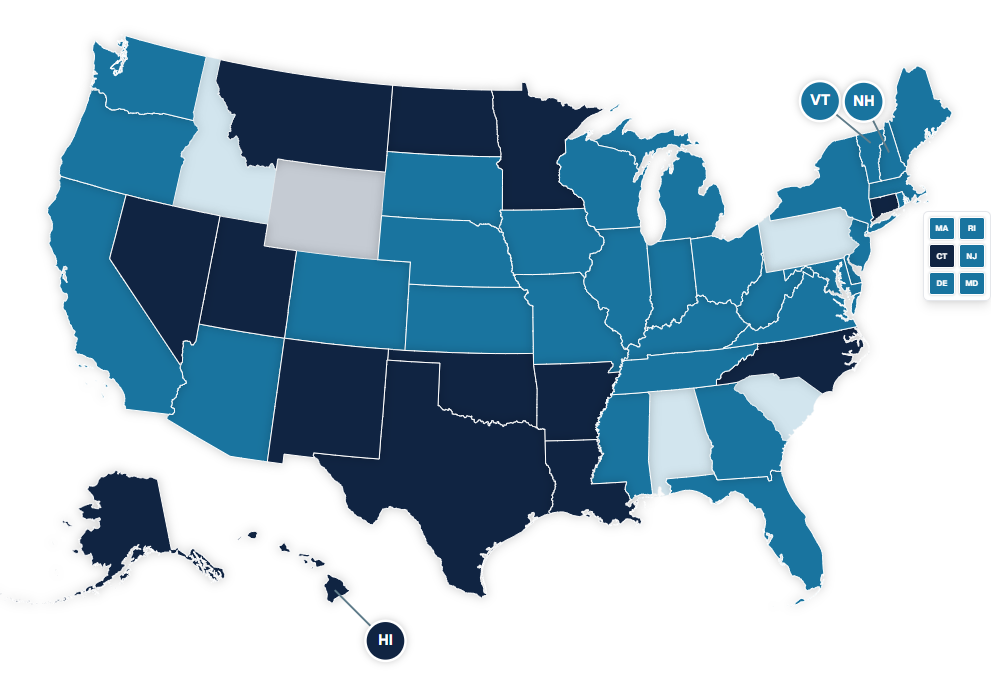
Want to learn more about the legislation introduced in your state? Visit CSRO’s Map Tool to find all of the new and enacted bills within CSRO’s policy priorities.
| |
| | |
What's Happening in the States
Interested in learning more about CSRO’s engagement in the states? Visit our State Legislation Correspondence page to review the letters submitted to state legislatures on CSRO’s priority issues.
| Click above to access CSRO’s new State Legislative Tracker to find the status of CSRO’s priority legislation affecting the rheumatology community and its patients at the state level. | | Mark Your Calendar: Upcoming Events
| | |
Business of Rheumatology Seminar Series - Decoding the “Big Beautiful Bill”: Practical Strategies for Rheumatology Practices: July 1, 2026
Join us for a timely and informative webinar exploring evolving payer strategies—including potential Medicare and Medicaid cuts—and what they could mean for practice sustainability, reimbursement, and patient access. This session is part of our ongoing webinar series, generously supported by Johnson & Johnson.
Register here!
| |
Business of Rheumatology Seminar Series - Building a Clinical Research Program in Community Rheumatology Practice: September 16, 2026
Join us for the September Business of Rheumatology webinar as we discuss how practices can successfully engage in clinical research to improve patient care and support practice growth. This session is part of our ongoing webinar series, with support from Johnson & Johnson.
Register here!
| |
Day on the Hill: October 2, 2026
Join us in Washington D.C. for CSRO's Day on the Hill! Register here.
| |
Advocacy Conference: October 2-3, 2026
Join us in Washington, D.C. for CSRO’s flagship Advocacy Conference to learn, network, and strategize around patient access to care. Register here.
| |
Business of Rheumatology Seminar Series - Smart Payer Contracting and Transparency in Coverage: December 2, 2026
Join us for our December Business of Rheumatology webinar to learn how to navigate payer contract negotiations with confidence. This session is part of our ongoing webinar series, generously supported by Johnson & Johnson.
Register here!
| | |
Action Center
Use CSRO's convenient online platform to easily find out who your elected officials are and engage with them directly.
Career Center
Locate the perfect fit whether you're looking for new career opportunities or trying to find the right candidate.
Explanatory Statement: “Underwater” Biosimilars
To aid in addressing the issue of "underwater" biosimilars with payers, CSRO has created a document to illustrate the extent of the problem.
Legislative Map Tool
Find your state on our interactive map tool to learn about current or proposed policy and ways you can take action to make an impact.
Payer Issues Reporting Form
Request assistance with any payer relation issues that may be impacting your patients or office.
Policy Correspondence
Easily access all of CSRO’s policy letters submitted to payers, state, and federal governments as an informational resource.
Rheum for Action
Learn about the latest advocacy issues in CSRO's advocacy column authored by Dr. Madelaine Feldman and produced in partnership with Medscape.
Step Therapy Cover Sheets
Review CSRO's state-specific step therapy materials that help guide practices in gaining an exemption from step therapy protocols.
| | |
Questions?
Please visit the CSRO website for other news and updates, and do not hesitate to contact us with any questions at info@csro.info.
| | | | |