CT CAN End Homelessness Digest

This digest serves as a monthly update of CT CAN End Homelessness, including Committee and Sub-Committee Reports, upcoming meetings and events, and other relevant information about our state's homeless response effort.


Your input and participation are what make CT CAN End Homelessness possible. All of our meetings are open to the public. Please join us at a meeting, invite your colleagues, or share this with your networks. Thank you for all you do, and together, we will end homelessness in Connecticut.

Department of Housing

Shelter Capital Improvement NOFA

We are pleased to share the following announcement from the Department of Housing regarding funding for capital improvement projects for shelters and homeless service providers.


"The State of Connecticut Department of Housing is committed to supporting our State’s homeless shelters and homeless service providers; those who assist in meeting the basic needs of our homeless individuals and families.   


The Department of Housing announces the availability of funding approved for GRANTS-IN-AID TO NONPROFIT ORGANIZATIONS FOR CAPITAL IMPROVEMENTS TO FACILITIES THAT ARE USED TO HOUSE THE HOMELESS OR PROVIDE SERVICES TO THE HOMELESS. 


The goal of this NOFA is to provide capital funding to upgrade the condition of existing emergency shelter and other homeless service facilities (such as food banks), including upgrades to support the overall health and safety of shelter residents. Examples include improvements to kitchens, bathrooms and sleeping areas, beds, generators, painting, plumbing and electrical repair and upgrades, heating and air conditioning systems, and energy conservation."  


CLICK HERE to download and view the Full NOFA.

Committee Updates

CAN Leadership Updates:


CT CAN Leadership discussed a number of changes in federal policy and funding that will have significant impact on our clients.


Changes to SOAR and SSVF:

  • SOAR Technical Assistance officially ended on August 18, but DMHAS has committed to funding ongoing SOAR positions.
  • Possible solutions include integration with SSVF to fill in the gaps created with the loss of this program funding.


SNAP and Medicaid Work Requirements:

  • Homelessness will not exempt individuals from new SNAP general work requirements, but does exempt individuals from the additional Able-Bodied Adult Without Dependents (ABAWD) requitements.
  • Medicaid will also require 80 hours of work or engagement per month for eligibility.
  • Learn more about national SNAP changes here and CT specific changes here.
  • Agencies should consider opening more volunteer positions to meet engagement criteria.
  • CT CAN Leadership will continue to coordinate with state agencies and other cross sector partners to pursue waivers and meet resource gaps.


Extreme Weather Planning:

  • A $1.5 million dollar funding gap is still projected for cold weather services in FY25.
  • CT CAN is pursuing several public and private avenues to close this gap.


Changes to the NOFO:

  • The upcoming NOFO from is expected to shorten to one year and shift funding priorities, particularly favoring mental health treatment models over supportive service-only projects. The group discussed potential creative responses and adaptations. This committee will:
  • Work to provide agencies with grant writing support, including developing talking points and question templates.
  • Form a subcommittee to coordinate CoCs and partners around NOFO support.
  • Identify who is losing benefits and how to prepare providers.

Policy & Advocacy Updates:


The Policy and Advocacy Committee has begun preparations for the upcoming legislative session while remaining responsive to recent federal policy changes.


Key updates:

  • Leadership: Caitlin Rose has joined as the new co-chair and Central CAN representative.
  • Planning Ahead: The committee is developing strategies for the 2026 legislative session, including roundtables and community engagement to inform the new CT CAN End Homelessness Legislative Agenda.


Federal Policy Response:

  • In July, the President proposed a federal budget that consolidates the Continuum of Care (CoC) into the Emergency Solutions Grant (ESG) program—cutting funding by an estimated $532 million. We shared our fact sheet with Connecticut’s Congressional delegation and national advocates to raise awareness.
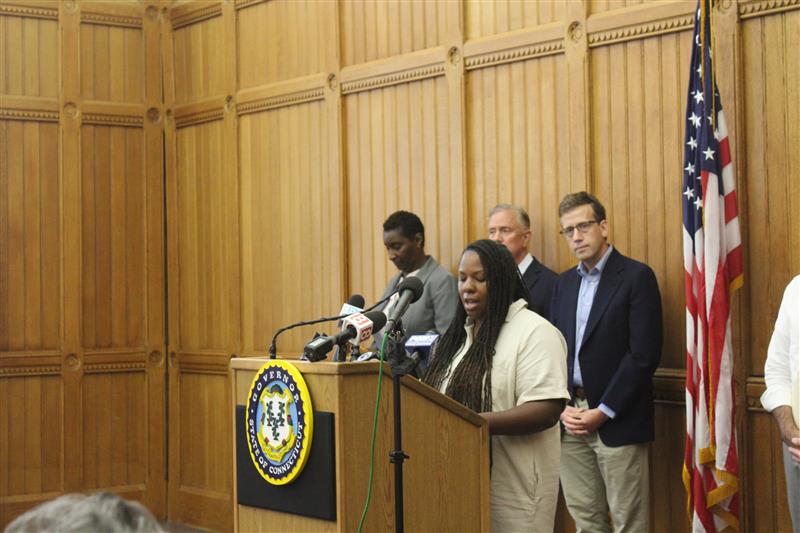
  • Later that month, the federal administration issued an executive order expanding the criminalization of homelessness was issued. In response, we sent a letter to Governor Lamont urging him to reject this harmful directive. The Governor responded by hosting a press conference—joined by state and federal leaders—to denounce criminalization and affirm Connecticut’s commitment to compassionate, evidence-based solutions.


Stay Involved:

Ongoing updates will be shared as developments occur at both state and federal levels. Join us every third Tuesday of the month or reach out to kwhitney@cceh.org to get involved!

Youth and Young Adult (YYA) Updates:


Equity Capacity Building Grant

The YYA Subcommittee has received the Equity Capacity Building Technical Assistance Grant, facilitated by the Systems Alignment Innovation Hub.

  • Launch: September 2025 (first hour of each YYA meeting, October–March)
  • Support Team: Dr. LaMont Green & Alicia Woodsby
  • Goals:
  • Expand youth leadership and engagement
  • Strengthen collective impact efforts
  • Develop a long-term sustainability plan


Youth Action Hub: Virtual “ReCenter”

The Youth Action Hub has launched the Virtual ReCenter, a prototype online drop-in space designed for youth and providers.


Features:

  • A safe, judgment-free environment for peer and provider interaction
  • Real-time access to legal, social work, employment, and other support professionals
  • Peer support led by trained youth researchers
  • Hosted on Discord to eliminate transportation and scheduling barriers


Next Steps:

Explore the platform and share feedback to ensure the space meets evolving youth needs.

Coordinated Entry & Outreach Updates:


This month, the subcommittee welcomed a presentation from Quinnipiac University School of Law’s Homeless Mitigation Mediation Project (HMMP). In partnership and extension of a contract with the Department of Housing, HMMP is offering mediation and dispute resolution services to support the homeless response system.


Additional Focus Areas:

  • Data & Outreach: Enhancing data collection on unsheltered homelessness as colder months approach to ensure timely and effective support for those at risk.
  • Extreme Weather Response: An Extreme Weather Ad-Hoc Group has been established to develop protocols and best practices for responding to severe weather events. The group aims to help providers act quickly and collaboratively to protect unsheltered individuals from weather-related harm.

Join the Civic Roundtable!

Civic Roundtable is a collaboration platform to increase communication and engagement within CT CAN End Homelessness. It contains committee agendas, meeting minutes, resources, and discussions. If you would like to learn more about the work of CT CAN End Homelessness's committees, please join us here.

For any inquiries, insights, or further discussion, contact Amber Freeman at afreeman@cceh.org

Upcoming Meetings

These sessions are a space for community members to contribute to achieving our goal of eliminating homelessness. Your participation enriches our open dialogues and collective efforts to develop lasting solutions.

Youth and Young Adult Subcommittee

The Policy & Advocacy Committee leads the statewide advocacy efforts of the Homeless Response System throughout the calendar year.


Date: September 9th, 1:30 pm - 3 pm

Exit Subcommittee

The purpose of the Exit Subcommittee is to increase exits to housing, decrease the length of time homelessness, and reduce returns to homelessness.


Date: September 12th, 12 pm - 1 pm

Policy and Advocacy Subcommittee

The Policy & Advocacy Committee leads the statewide advocacy efforts of the Homeless Response System throughout the calendar year.


Date: September 16th, 1 pm - 2:30 pm

Coordinated Entry and Outreach Subcommittee

The purpose of the Entry Subcommittee is to improve coordinated entry and to provide households access to appropriate services and shelter quickly. The purpose of the Outreach and Engagement Subcommittee is to identify, engage, and house all unsheltered individuals and families using a coordinated approach across the state


Date: September 25th, 12 pm - 1 pm

(860) 721-7876 | info@cceh.org | www.cceh.org

Facebook  Twitter