CT CAN End Homelessness Digest | | |
This digest serves as a monthly update of CT CAN End Homelessness, including Committee and Sub-Committee Reports, upcoming meetings and events, and other relevant information about our state's homeless response effort.
Your input and participation are what make CT CAN End Homelessness possible. All of our meetings are open to the public. Please join us at a meeting, invite your colleagues, or share this with your networks. Thank you for all you do, and together, we will end homelessness in Connecticut.
| | |
Leading Through Change, Together
The past several weeks have reminded us that Connecticut's homeless response system is strongest when we work together.
As our state responded to both dangerous extreme heat and preparations for the upcoming cold weather season, CT CAN End Homelessness brought providers, Coordinated Access Networks, municipalities, state agencies, outreach teams, and community partners together to coordinate a statewide response. Together, we identified emerging needs, elevated local perspectives, shared solutions across regions, and worked to ensure Connecticut responded with consistency, urgency, and compassion. While every community faces unique challenges, our collective efforts demonstrated the importance of statewide coordination and a shared commitment to protecting our neighbors experiencing homelessness.
At the same time, we have navigated one of the most significant periods of federal uncertainty our field has experienced in years. Proposed changes to the HUD Continuum of Care program, litigation affecting federal homelessness funding, and evolving federal policy have required Connecticut to respond quickly and collaboratively. Throughout these developments, CT CAN End Homelessness has worked alongside providers, advocates, state agencies, and elected leaders to communicate the realities facing our homeless response system, provide data and analysis to inform decision-making, and advocate for the resources our communities depend upon.
This work extends far beyond responding to immediate challenges. Across our committees and subcommittees, partners continue strengthening coordinated entry, improving pathways to permanent housing, advancing youth leadership, refining statewide governance, and preparing our system for the future. These efforts may not always make headlines, but they are the foundation of a stronger, more coordinated homeless response system.
As we look ahead, our priorities remain clear:
-
Protect the housing resources Connecticut has worked so hard to build.
-
Strengthen Connecticut's response to extreme weather, ensuring people experiencing homelessness can safely come indoors during periods of dangerous heat and cold.
-
Support local communities through coordinated statewide leadership, connecting providers, municipalities, Coordinated Access Networks, and state agencies around shared solutions.
-
Strengthen coordinated entry and housing pathways, reducing the time people experience homelessness and increasing access to permanent housing.
-
Elevate the voices of people with lived expertise, ensuring those closest to the challenges help shape the solutions.
-
Advance policies that prevent and solve homelessness, while defending the federal and state resources that make this work possible.
Thank you for your partnership, your leadership, and your unwavering commitment to this work. Whether you serve on the front lines, lead a community organization, work in government, advocate for policy change, or bring lived expertise to our efforts, you are helping build a Connecticut where homelessness is rare, brief, and non-recurring.
Together, CT CAN End Homelessness.
Sarah Fox, MSW
Chief Executive Officer
Connecticut Coalition to End Homelessness
| | 2026 NAEH Capitol Hill Day | | |
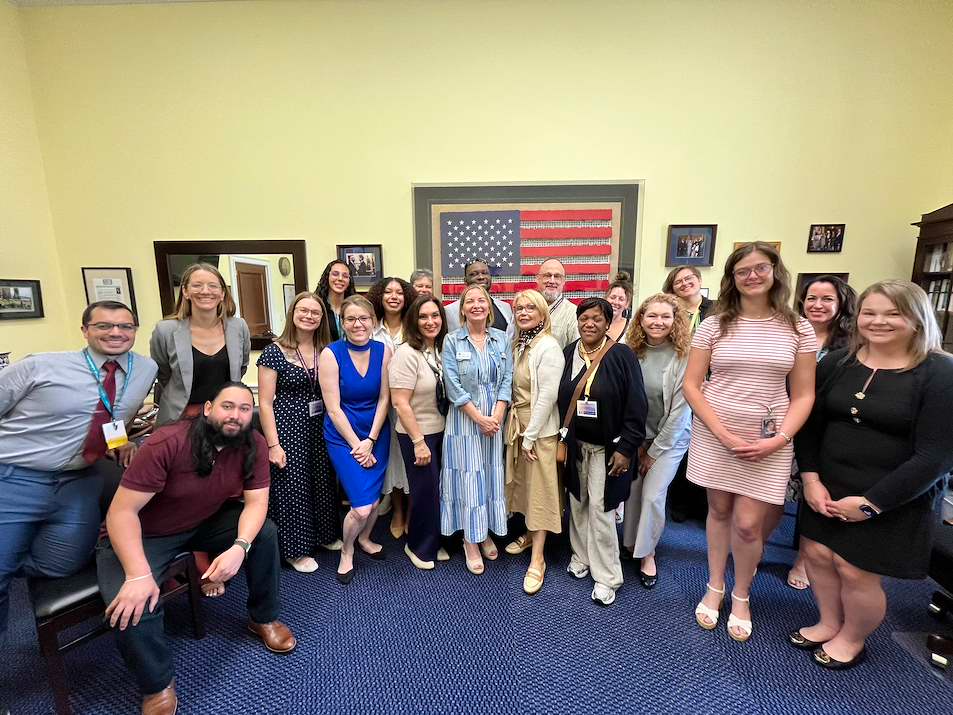
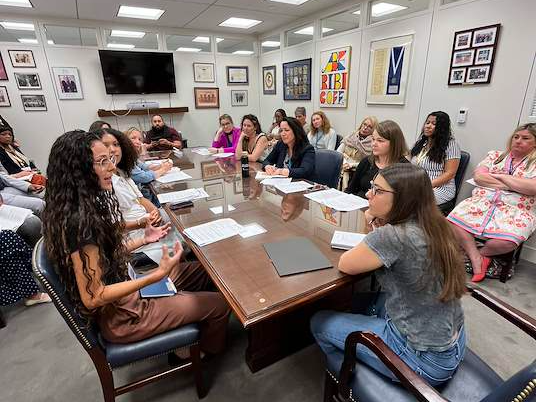
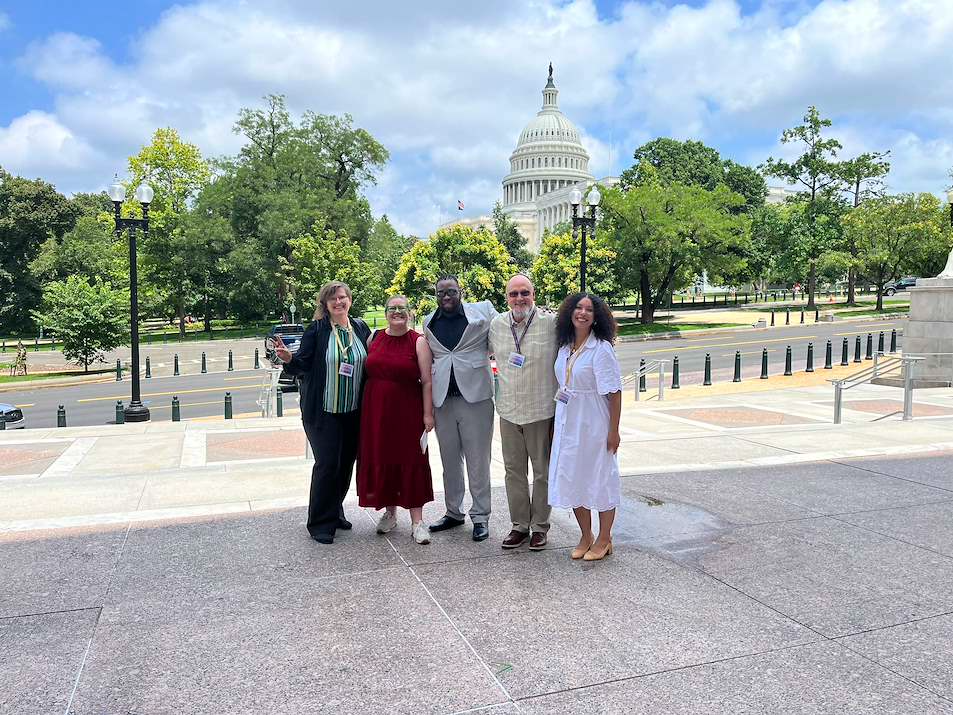
On Thursday, July 9th, advocates from across Connecticut attended the National Alliance to End Homelessness' Capitol Hill Day, taking the opportunity to strengthen our relationships with our Congressional delegation, commend them for passing the bipartisan 21st Century ROAD to Housing Act, and sounding the alarm about changes to federal funding and HUD policy.
TAKE ACTION: You can continue the Congressional advocacy beyond Washington, D.C. – just check out the links in this update, including Connecticut’s state fact sheet, and contact Senator Blumenthal, Senator Murphy, and your House member to let them know your thoughts!
Here’s what we shared:
The National Alliance’s FY27 Funding request: We are seeking a total of $57.05 billion in federal homelessness and housing funding for the Homeless Assistance Grants (HAG), including the Continuum of Care (CoC) Program and Emergency Solutions Grants (ESG) accounts, Tenant-Based Rental Assistance (TBRA), and Section 202 Supportive Housing for Older Adults programs.
Threats to Connecticut's Continuum of Care (CoC) Program Funding: We asked members of Congress to include language in the FY 2027 appropriations bill that would help protect CoC funding and ensure stability for communities. Advocates shared the real-life consequences of HUD’s attempted funding and policy changes. For Connecticut, this means the potential loss of a minimum of $35.4 million in permanent housing resources, or the equivalent of 2,080 households, including veterans, families with children, older adults, and youth.
Congressional protection from harmful Administration policy: Providers need stability in the face of proposed changes to SAM.gov registration and federal grantmaking rules that could result in millions of dollars being withheld, delayed, or rescinded altogether. They also need Congress to defend existing Equal Access protections, and to protect access to vital resources for mixed-status families, who are currently being targeted through changes to PRWORA, the SAVE system, and other federal programs and regulations. Lastly, they need the backing of our members of Congress to help Connecticut communities resist the national push to criminalize homelessness.
We are incredibly grateful to the advocates who joined us this year – it was our privilege to make our voices heard alongside yours, especially those of you who are new and at the front line of the work to solve homelessness. We are continuing our federal and administrative advocacy week by week, keeping pace with new developments, and will continue to keep everyone updated on our state and national progress on these issues!
| | |
Steering Committee Updates:
This month's meeting focused on preparing for the FY 2026 Continuum of Care (CoC) Notice of Funding Opportunity (NOFO), planning for potential federal funding changes, and strengthening Connecticut's response to extreme weather. Members discussed strategies to protect permanent housing subsidies while adapting rapid rehousing and supportive services models to align with evolving federal requirements. The committee also identified several outstanding implementation questions, including guidance related to SORNA compliance, service participation expectations, Codes of Conduct, and the potential impacts on households facing the highest barriers to housing.
The committee also received updates on the Policy & Advocacy Committee's co-chair transition, upcoming opportunities to engage candidates through housing-focused forums, and early planning for the Safe Night law enforcement training pilot. Members emphasized the importance of provider engagement, clear communication, and ensuring implementation aligns with principles of dignity, due process, and the non-criminalization of people experiencing homelessness.
Finally, the Connecticut Department of Housing (DOH) previewed the upcoming cold weather Request for Proposals (RFP), while members discussed ongoing efforts to update Connecticut's extreme weather protocols ahead of the January 2027 implementation deadline. The conversation highlighted the need for stronger municipal engagement, regional planning, clearer activation procedures, and improved coordination among emergency management, outreach teams, shelters, 211, DOH, DMHAS, CCEH, and local partners to strengthen the state's response to severe weather.
| |
Coordinated Entry and Outreach Committee Updates:
The committee continued its work to strengthen Coordinated Entry by improving both data quality and day-to-day system operations. Members discussed refinements to HMIS data collection, including updates to better capture the current episode of homelessness and the ZIP code of a participant's last permanent housing. Providers also highlighted ongoing challenges with duplicative workflows across HMIS and Smartsheet, reinforcing the need for more standardized and streamlined diversion, outreach, and referral processes. The committee also discussed improving access to the CT Housing and Homeless Training Academy Learning Management System (LMS) to make onboarding and required trainings more intuitive for providers.
The committee also continued conversations around Connecticut's response to extreme heat, emphasizing the need for stronger coordination between municipalities, homelessness service providers, and state agencies. Members noted that critical information about cooling centers is often shared through informal channels, underscoring the need for clearer communication and more consistent emergency response protocols. Discussions also highlighted ongoing implementation considerations under Public Act 26-13, including the need for statewide standards and dedicated funding to better address the needs of people experiencing homelessness during extreme heat events.
Looking ahead, the committee identified upcoming engagement with the Department of Emergency Management and Homeland Security (DEMHS) as an important opportunity to strengthen coordination, clarify expectations, and improve real-time communication among municipalities, providers, and state partners to ensure extreme weather responses are centered on safety and access.
| | |
Policy & Advocacy Updates:
Over the last few weeks, the Policy & Advocacy Committee has been responding to developments at the federal level with proactive administrative advocacy, and preparing for the 2027 legislative session. In late June, the campaign shared a follow-up letter to Attorney General Tong and Governor Lamont, with the news that Rhode Island's district court had vacated HUD’s 2025 Continuum of Care NOFO, but that the risk to permanent housing, rental assistance, youth homelessness funding, provider capacity were still substantial. On July 7th, Attorney General Tong joined multi-state litigation on the 2026 NOFO to defend our state against HUD's attempted cuts and policy changes. Members of the committee brought these and other issues to our members of Congress, as well as data and stories from the work in the field, as part of the National Alliance to End Homelessness Capitol Hill Day on July 9th.
Looking ahead, CANs will be starting local site visits, walking tours, and other opportunities for state, local, and federal lawmakers to learn about our system and the critical work we do. The Committee also approved an expedited legislative priority process for August and September to ensure that advocates are prepared and coordinated for our advocacy and education work throughout the rest of the summer and fall. Finally, at Tuesday's meeting, Committee members confirmed Tricia Cunningham (Always Home) and Jered Bruzas (United Way of Greater Waterbury) as new co-chairs. Thank you again to Kara and Jim for their service, especially in the interim!
From our partners at NAMI: The federal government is implementing changes that would make it harder for many people with mental illness to keep their Medicaid coverage. This rule would create new barriers to accessing treatment and care. The public comment period ends July 31, and we need advocates like you to speak up now.
| | |
Youth and Young Adult (YYA) Updates:
The Youth & Young Adult (YYA) Subcommittee recently held breakout discussions to identify priorities for strengthening the committee's work and improving outcomes for youth experiencing homelessness. Participants emphasized the importance of building trust, improving communication, clarifying the committee's purpose and decision-making process, and ensuring youth with lived expertise are meaningfully engaged and compensated for their contributions. Members also discussed ongoing challenges, including limited staffing capacity, reduced funding, transportation barriers, and the need for expanded youth-specific resources and leadership development opportunities.
Looking ahead, the Tri-Chairs will use the breakout feedback to develop draft recommendations, clarify goals and timelines, and continue gathering participant input as the committee works toward a stronger, more collaborative statewide response to youth homelessness.
| | |
Exit Updates:
The Exit Subcommittee continued advancing statewide strategies to increase exits to permanent housing, reduce the length of time people experience homelessness, and prevent returns to homelessness. During the June meeting, members discussed strengthening landlord engagement efforts, responding to the impacts of SNAP benefit changes on households experiencing homelessness, and developing more consistent statewide guidance for shelter suspensions and re-entry practices. The committee also reflected on key takeaways from the 2026 Annual Training Institute (ATI), explored opportunities for continued cross-sector collaboration, and reinforced the use of Civic Roundtable as a central hub for resource sharing and communication.
The committee also welcomed its new co-chairs, Lorrie Jean-Charles, CAN Manager at The Housing Collective, and Rachael Cohen Halwick, Rapid Rehousing Program Manager at CCADV. Their leadership will support the committee’s continued efforts to advance coordinated strategies and strengthen statewide collaboration around exits to permanent housing.
Looking ahead, the committee will continue advancing work on landlord engagement, shelter guidance, and cross-system collaboration. Members also expressed support for exploring quarterly joint meetings with the Entry, Exit, and Outreach committees to strengthen coordination and improve housing outcomes statewide. The next Exit Subcommittee meeting is scheduled for July 10, 2026.
| | Committee Leadership Updates | |
We are excited to welcome new co-chairs for the State Advocacy Committee and Exits Subcommittee!
State Advocacy Committee Co-Chairs:
-
Tricia Cunningham, Executive Director, Always Home
-
Jered Bruzas, Chief Impact Officer, United Way of Greater Waterbury
-
Staff Contact: Katherine Whitney, Community Impact Program Manager, CCEH
Exits Subcommittee Co-Chairs:
-
Lorrie Jean-Charles, CAN Manager, Exits, The Housing Collective
-
Rachael Cohen Halwick, Rapid Rehousing Program Manager, Connecticut Coalition Against Domestic Violence
-
Staff Contact: Samm Williams, Emergency Shelter Support Manager, CCEH
Please join us in congratulating Tricia, Jered, Lorrie, and Rachael and welcoming them into their new leadership roles. We are grateful for their willingness to serve and look forward to the experience, perspective, and leadership they will bring to the Campaign’s work.
| | These sessions are a space for community members to contribute to achieving our goal of eliminating homelessness. Your participation enriches our open dialogues and collective efforts to develop lasting solutions. | | |
Youth and Young Adult Subcommittee
The Policy & Advocacy Committee leads the statewide advocacy efforts of the Homeless Response System throughout the calendar year.
Date: August 11, 1:30 PM - 2:30 PM
| | |
Exit Subcommittee
The purpose of the Exit Subcommittee is to increase exits to housing, decrease the length of time homelessness, and reduce returns to homelessness.
Date: August 14, 12:00 - 1:00 PM
| | |
Policy and Advocacy Subcommittee
The Policy & Advocacy Committee leads the statewide advocacy efforts of the Homeless Response System throughout the calendar year.
Date: August 18, 12:30 - 2:00 PM
| | |
Coordinated Entry and Outreach Subcommittee
The purpose of the Entry Subcommittee is to improve coordinated entry and to provide households access to appropriate services and shelter quickly. The purpose of the Outreach and Engagement Subcommittee is to identify, engage, and house all unsheltered individuals and families using a coordinated approach across the state
Date: August 27, 11:30 AM - 1:00 PM
| | | | |