|
Please share this edition of Wildlife Highlights with other outdoor enthusiasts
and help our subscription list grow!
| |
Connecticut Junior Duck Stamp Art Contest Happening Now | |
|
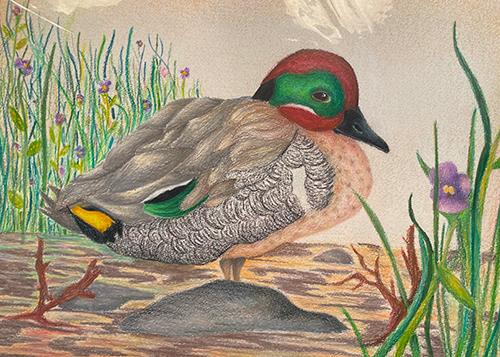
The annual Connecticut Duck Stamp Art Competition is part of a concerted effort to encourage more young people to explore the natural world and increase conservation awareness. Connecticut residents from kindergarten through grade 12 are encouraged to create and submit a drawing or painting featuring native waterfowl (ducks or geese). The winning artwork will be featured on the 2024 Connecticut Migratory Bird Conservation Stamp! Julia Phillips took second place last year in the 10-12 grade age group with this painting of a green-winged teal!
Funds generated from the sale of Connecticut Duck Stamps are used solely for the development, management, preservation, conservation, acquisition, purchase, and maintenance of waterfowl habitat and wetlands. To date, over 3,800 acres of Connecticut wetlands have been restored or enhanced using Duck Stamp funds!
Please encourage any young artists in your life to participate. There is no cost, and submissions must be postmarked by March 15, 2023.
Contest guidelines, entry forms, and more . . .
| |
New Online Submission Process for Natural Diversity Data Base Reviews | |
|
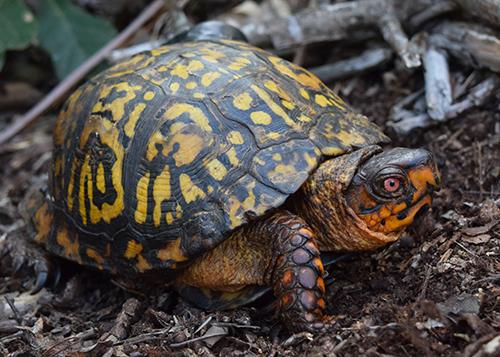
Requests for DEEP Natural Diversity Data Base (NDDB) reviews can now be submitted on-line, via DEEP’s ezFile website. The NDDB performs hundreds of environmental reviews each year to determine the impact of proposed development projects on state-listed species and help landowners conserve the state’s biodiversity. This new on-line process enables many routine inquiries to be answered quickly and automatically, as well as improves the ability to obtain information for management and conservation plans. You can help the NDDB by submitting observations of state-listed species, like this eastern box turtle.
More on the NDDB . . .
More on how to contribute data . . .
| |
Looking Back at Black Bear Activity in 2022 | |
|
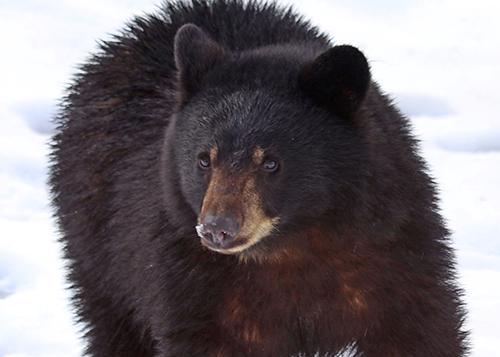
Over the past year, the Wildlife Division received over 10,000 sightings of black bears from the public. For many residents, seeing a bear was a common, almost weekly occurrence during the warmer months, while others encountered bears in their backyards for the first time. Bears have been spotted in every city and town across Connecticut in recent years, and with these increased sightings, comes reports of conflicts with bears and damage caused by bears. Most conflicts involve food attractants and are easily preventable when responsible residents take steps to secure garbage and remove birdfeeders.
More serious conflicts are on the rise, too. Hundreds of reports of bears damaging structures like garages, fences, sheds, decks, and livestock pens have been received by the Wildlife Division. Bears entered or broke into nearly 70 homes last year, across 22 different cities and towns in Connecticut, far surpassing the totals from any previous year.
While many bears are denning for much of the winter, you should not be surprised to still see some active, especially during milder weather. It is best to continue practicing good habits to keep bears from finding food rewards around your home, such as keeping trash inaccessible and refraining from putting out birdfeeders in areas with bear activity.
More on living with black bears . . .
| |
Restoration of Great Meadows Salt Marsh | |
|
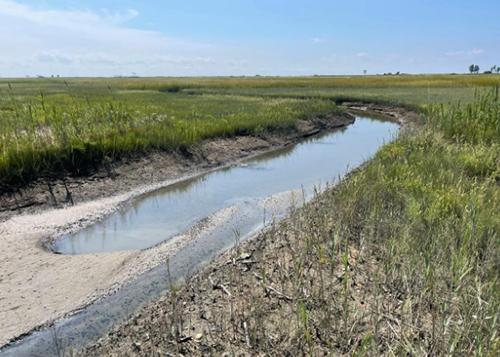
Last year, work began to restore Connecticut’s Great Meadows Salt Marsh in Stratford. The marsh, a Globally Important Bird Area, and part of the Stewart B. McKinney National Wildlife Refuge, is home to many state-listed species, including saltmarsh sparrows, snowy egrets, diamondback terrapins, and the marsh pink—a beautiful flowering plant. So far, construction crews have removed excess soils, regraded the marsh, dug tidal channels to better drain and flush the marsh, and created higher ground for nesting saltmarsh sparrows. Volunteers, high school students, and partners also planted more than 165,000 grasses and other salt-marsh plants!
More on this important restoration effort . . .
| |
Tips for Winter Bird Feeding | |
|
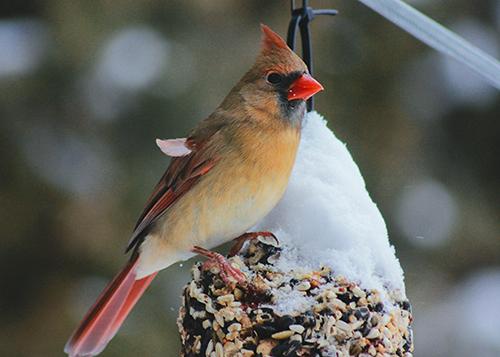
Feeding birds in winter is a rewarding way to watch wildlife at home, but it comes with the responsibility of doing so safely and ethically and using enough discretion to know when feeding can happen and when it should not. It is important to understand that birds are very well adapted to survive on their own without relying on food provided by people, as there are ample natural food sources across the landscape. Think of the food you are providing birds as a bonus. Our winter feeding guide offers some best practices for feeding birds in Connecticut while reducing commonly overlooked problems. If you really want to make a positive impact for birds, consider managing your backyard habitat by planting native plants that will provide year-round food for all birds.
More on feeding birds during winter . . .
| |
Forest Management Improves Forest Health and Benefits Wildlife | |
|
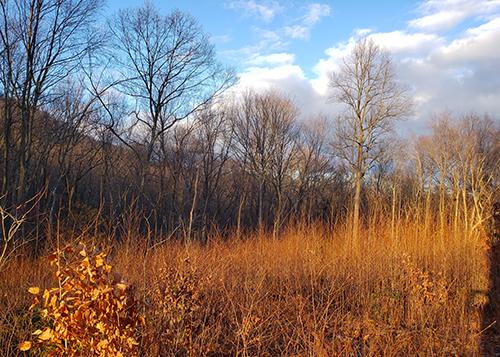
A diverse forest is a healthy and resilient forest. DEEP Foresters and Wildlife Biologists manage state lands to create a variety of age classes, sizes, and species to create a “mosaic landscape”. Forest management is important because it makes forests less susceptible to a particular insect or disease, as well as intense storms. It also provides critical wildlife habitat for a wider array of species. Many state-listed species have specific habitat requirements that are no longer common on Connecticut’s landscape, and without forest management, these species would be further imperiled.
More on forest management in Connecticut . . .
| |
Species Spotlight: River Otter | |
|
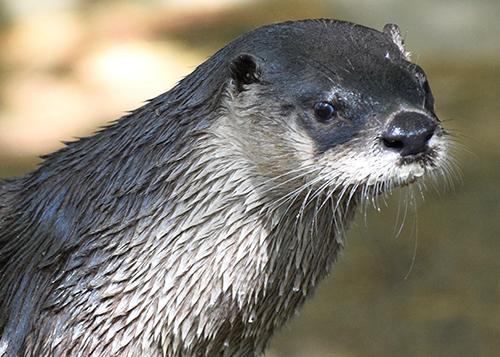
The river otter is the largest member of the weasel family (Mustelidae) found in Connecticut. The state's otter population is healthy and stable, but many residents do not get the opportunity to view a river otter in the wild, as otters typically avoid contact with humans.
River otters inhabit streams, rivers, lakes, and freshwater and saltwater marshes. They prefer to live in marshes and along wooded rivers and streams with pools and overhanging rocky banks where they primarily feed on fish, crayfish, shellfish, and amphibians.
More on the river otter . . .
| |
|
Stay Connected!
Follow us on Social Media
| |
|
-- Quick Links --
Your Feedback Is Important to Us!
Send your comments or suggestions to deep.ctwildlife@ct.gov
|  | |
The Connecticut Department of Energy and Environmental Protection is an Affirmative Action/Equal Opportunity Employer that is committed to complying with the requirements of the Americans with Disabilities Act. If you are seeking a communication aid or service, have limited proficiency in English, wish to file an ADA or Title VI discrimination complaint, or require some other accommodation, including equipment to facilitate virtual participation, please contact the DEEP Office of Diversity and Equity at 860-418-5910 or by email at deep.accommodations@ct.gov. Any person needing an accommodation for hearing impairment may call the State of Connecticut relay number - 711. In order to facilitate efforts to provide an accommodation, please request all accommodations as soon as possible following notice of any agency hearing, meeting, program or event.
This program receives Federal financial assistance from the U.S. Fish and Wildlife Service.
Under Title VI of the 1964 Civil Rights Act, Section 504 of the Rehabilitation Act of 1973, Title II of the Americans with Disabilities Act of 1990, the Age Discrimination Act of 1975, and Title IX of the Education Amendments of 1972, the U.S. Department of the Interior prohibits discrimination on the basis of race, color, national origin, age, sex, or disability. If you believe that you have been discriminated against in any program, activity, or facility, or if you need more information, please write to:
Office of Diversity, Inclusion and Civil Rights
U.S. Department of the Interior 1849 C Street, NW
Washington, D.C. 20240
| | | | |