2020 Fishing Licenses are Available Now!
|
|
100% of your investment funds fishing!
|
|
CT DEEP Fisheries Division Covid-19 update
web page
|
|
SOCIAL DISTANCING WHILE FISHING IS A MUST!
Fishing is a great way to spend time outdoors, reduce stress, and possibly catch a tasty meal. The Fisheries Division along with the CDC, State of CT DPH, and the DEEP strongly encourage social distancing and not fishing with anyone other than people living in the same space.
|
|
Connecticut Fishing COVID-19 Update
Anglers are encouraged to follow these guidelines to enhance social distancing:
- If you’re not feeling well, stay home! Signs and symptoms of coronavirus include fever, cough and shortness of breath.
- Rather than traveling to some of the most popular spots like Trout Parks and Community Fishing Waters, or the Salmon, upper Farmington River or Housatonic Rivers, try a small stream or pond you may not have visited before or one close to your home. If you arrive at a favorite fishing spot and see that crowds are forming, choose a different location, or return another day or time.
- Observe the CDC's minimum recommended social distancing of six feet from other people. Practice it and know what it looks like – basically a fishing rod distance apart.
- Follow the CDC’s guidance on personal hygiene. Wash your hands, carry hand sanitizer, cover your mouth and nose when coughing or sneezing, and avoid surfaces that are touched often, such as streamside trees, boulders along streamside trails, handrails on fishing piers and docks.
- Bring water or drinks and a trash bag. Leave no trash, take everything out to protect park workers.
|
|
Latest Updates from the Fisheries Division
|
|
2020 Weekly Fishing Reports
:
We are suspending publishing our very popular weekly fishing reports. As we strongly encourage and support social distancing, publicizing areas with good fishing may be counter to public health objectives. We will commence our reports as soon as possible. We will still publish our
list of stocked waters
each Wednesday and Friday afternoon.
|
|
Please
contact us
if you would like to suggest a location(s) with good public access where stocking would be beneficial to motivate people to take up the sport of fishing.
|
|
2020 Fishing Regulations
:
There will not be any changes to the
Freshwater
(Inland) Regulations for 2020.
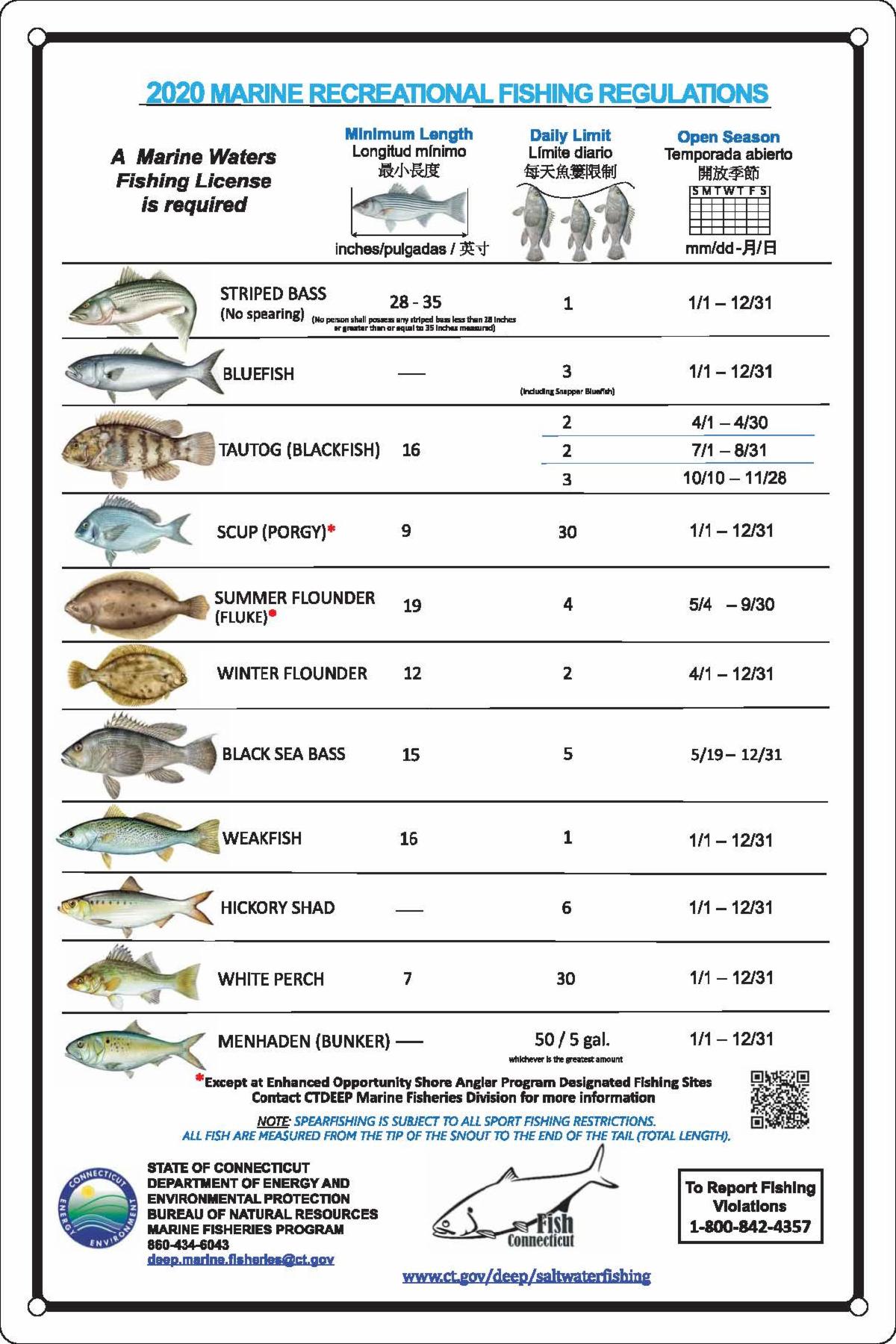
Marine Regulations
have been finalized and are as indicated below.
|
|
Public Input for Warmwater Fisheries (Bass, Pike, Walleye, Channel Catfish, Panfish)
:
The CT DEEP Fisheries Division has had to suspend our public meetings. We plan to restart the process as soon as we can host gatherings safely.
Please see the section below if you would like to contribute your opinion via online methods.
|
|
We are very pleased to invite you to follow us on
Instagram (@ctfishandwildlife)
. Be sure to share your best stories of CT Fish and Wildlife with us and most importantly - with your social network. We may be apart by at least 6 feet, but we are only a quick swipe away! See you soon.
|
|
UPDATE for FAIRFIELD County:
The Covid-19 pandemic continues to evolve, and as more public health data are acquired, we have the ability to make informed decisions on how best to continue protecting the public, angling community and our staff. Based on these new data,
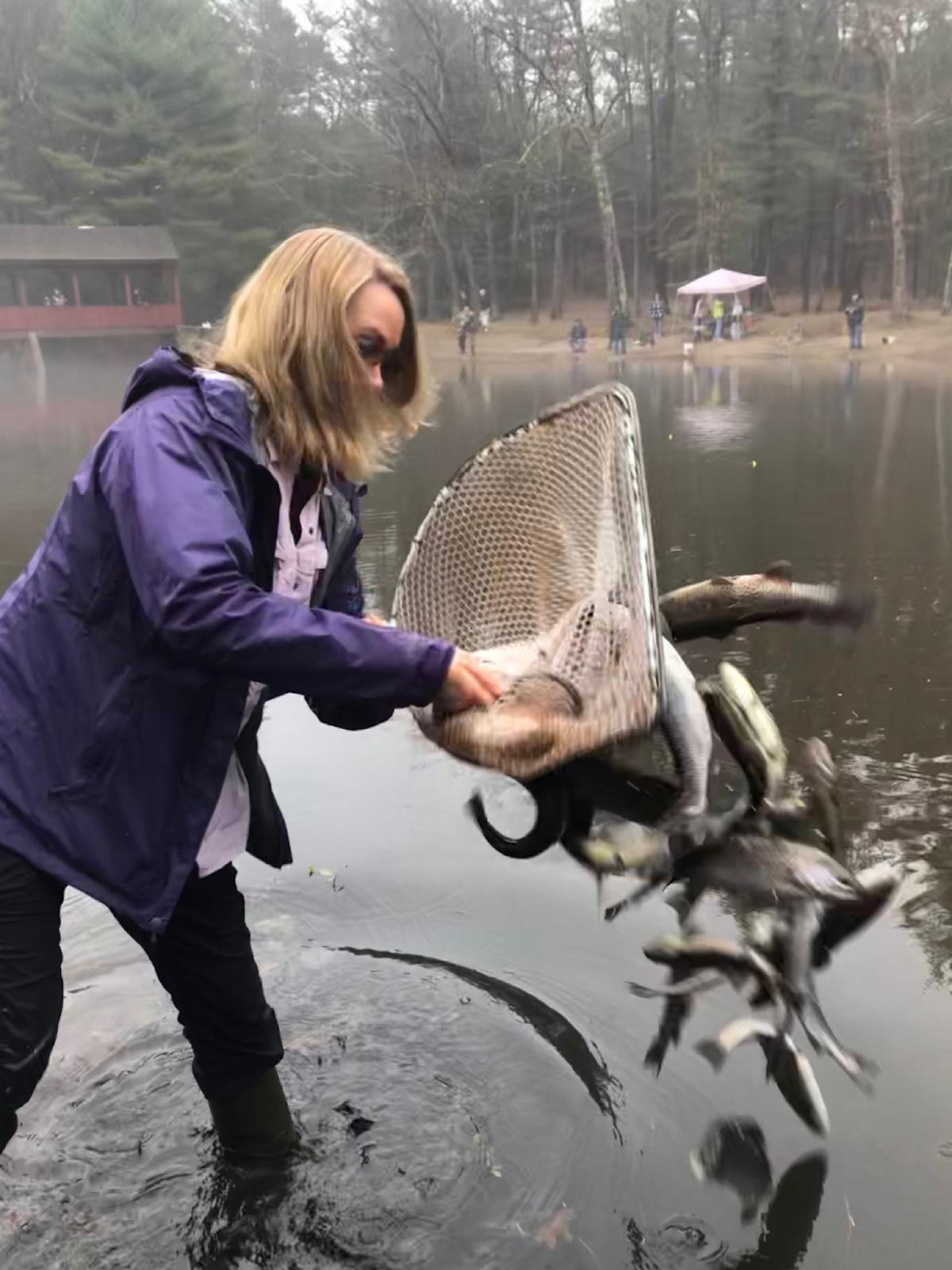
we will soon resume stocking trout into Fairfield County waters that are currently open to the public for fishing
. We realize some waters, the access to which are under local jurisdiction, may remain closed and will therefore not get stocked.
Please remember that social distancing is a must, and that anglers must remain at least 6 feet from one another (unless you are fishing with members of the same household). If you happen across any of our staff actively stocking do not approach them.
Please respect the need to make sure these essential staff can do their jobs without interference.
|
|
The Story (map) of Connecticut's State Fish
|
|
View the
Story Map
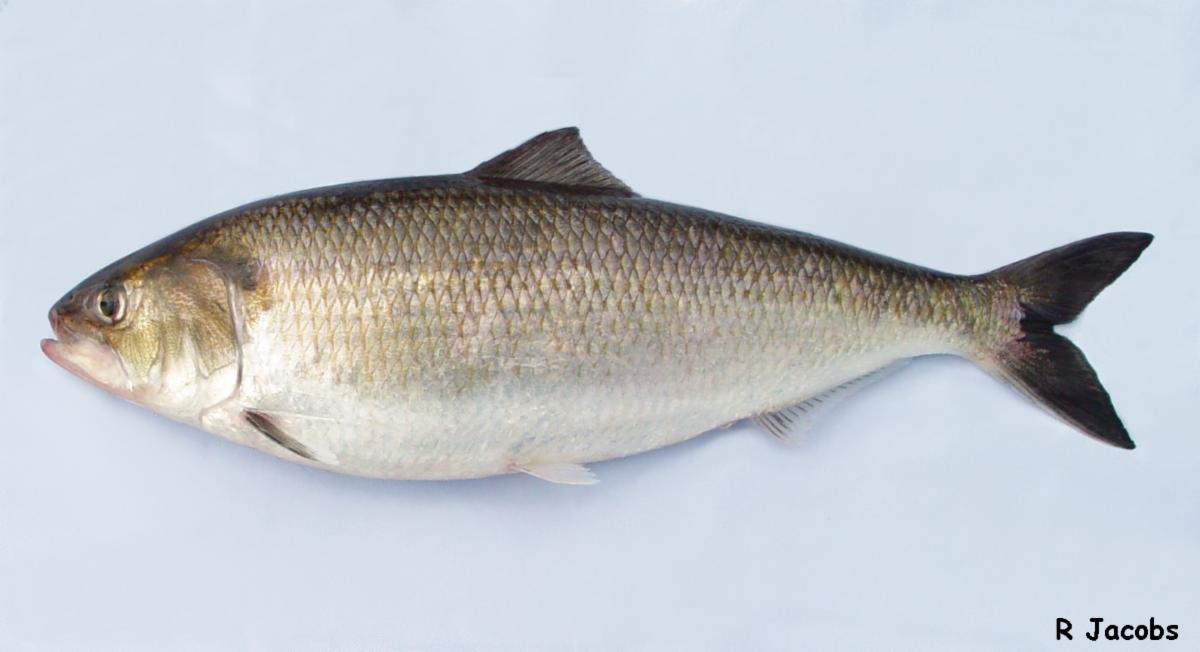
about the longest river in New England. At just over 410 miles, the Connecticut River flows southward from New Hampshire, near the border of Quebec and the United States, to Long Island Sound. It is a fertile valley and throughout early colonial history, the River supported those who settled on its banks. Among the abundant fish and wildlife species in the area, the river hosts American Shad, a species which has been referred to as the "fish that fed America's founders." Since 1978, the Fisheries Division of CT DEEP has monitored this stock of shad, the sport and commercial fisheries and assessed future years' runs by measuring abundance of young-of-year shad at
six sites
within the Connecticut portion of the Connecticut River. We know the River has changed over the years but "change" can be difficult to quantify. This
story map
describes some of the recent changes to the land cover adjacent to these sampling sites.
A team of DEEP Fisheries Division biologists headed by Tom Savoy has developed a
Story Map
project about the American Shad of the Connecticut River and some of our division’s long-standing studies. The project recounts the studies initiated for the Connecticut Yankee Atomic Powerplant and our long-term American Shad juvenile index sampling, perhaps the longest database of its kind for shad in the nation. This presentation includes some great photos and data.
|
|
2020 Channel Catfish Stocking
:
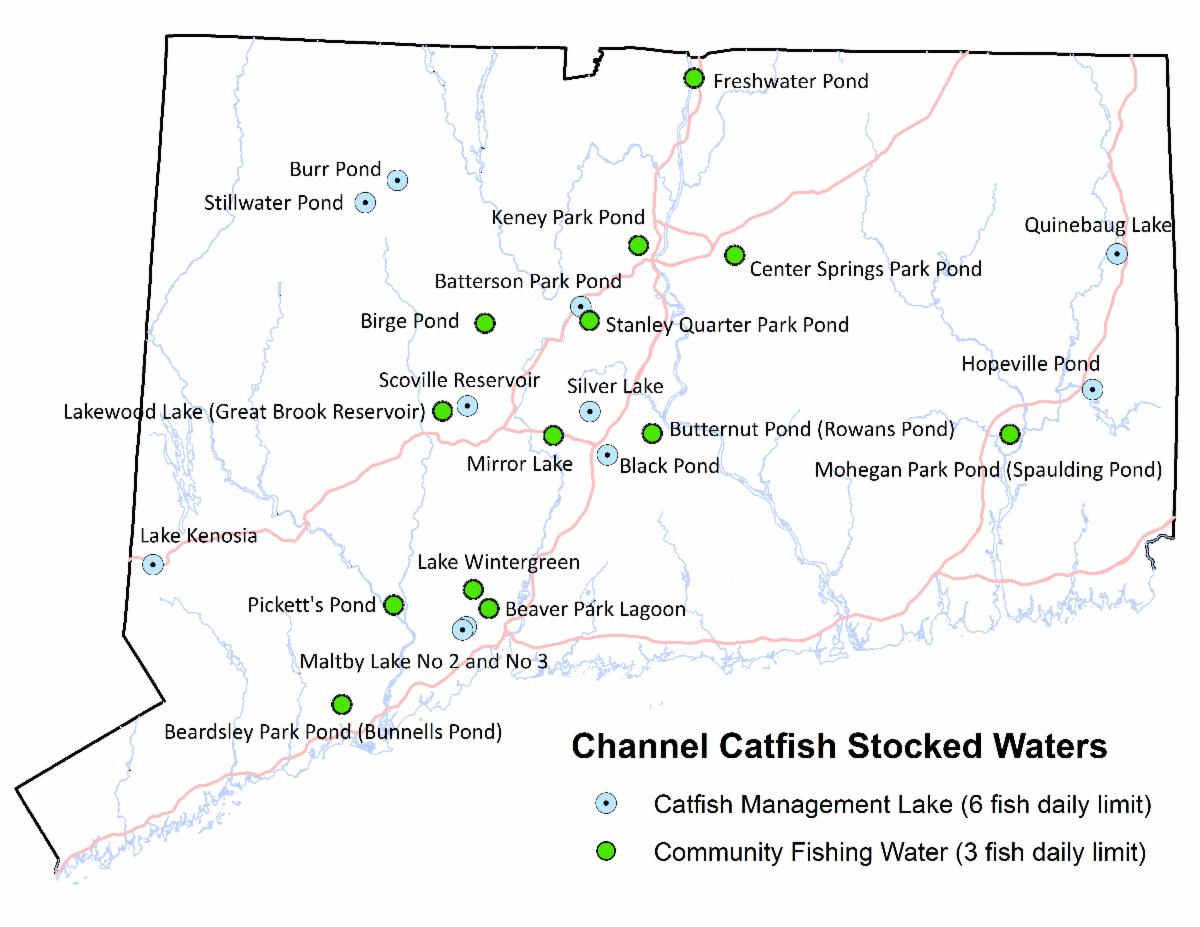
Due to the the logistics required to stock these fish and our need to follow current social distancing protocols, the Fisheries Division has cancelled our Channel Catfish stocking for 2020.
We would like everyone to know that our past stocking has created a quality fishery in many of our
Catfish Lakes.
Our stocking of yearling fish for just over a decade has created a very fishable population. Second, if you are not aware, the natural population in the Connecticut River is world class. You can easily get your catfish fix at any one of these locations.
Catfish are nocturnal bottom feeders that hunt their prey by tasting it using their "barbells" or whiskers. Your best chance at success is fishing in the evening and into dark, on the bottom with a fresh bait (night crawler, live shiner, chicken liver, or cut fish such as bluegill or eel chunks).
We often are asked, what is the difference between a White Catfish, Channel Catfish and a Bullhead. Wow your friends and neighbors with the info in our "
No Bull its a Cat
" article in
CT Wildlife Magazine
(page 8).
|
|
Marine Regulations for 2020
|
|
Striped Bass:
Connecticut along with almost all other coastal states has implemented a 28-35" slot limit for striped bass in 2020. This regulation was adopted in response to the overfished condition of the stock, and is intended to protect older, larger female fish from harvest.
This means that 1 Striped Bass that is 28.0 to 34.9 inches may be kept per day.
Any fish less than 28 inches must be released. Any fish 35 inches or larger must be released.
This regulation applies in the marine and inland districts.
Note there was a typo on page 21 of the print version of the 2020 fishing guide. It should read slot limit of 28-35 inches, not 28 inches as printed
.
Bluefish:
Connecticut along with all other coastal states has implemented a reduced bag limit for bluefish in 2020: 3-fish for private anglers, 5-fish for party/charter boat anglers. The reduced bag limit was adopted in response to the overfished condition of the stock
(no size limit or closed season).
Sea Bass, Summer Flounder (Fluke), Scup (Porgy), Tautog (Blackfish)
and all other marine recreational fisheries, no changes from 2019 to 2020.
|
|
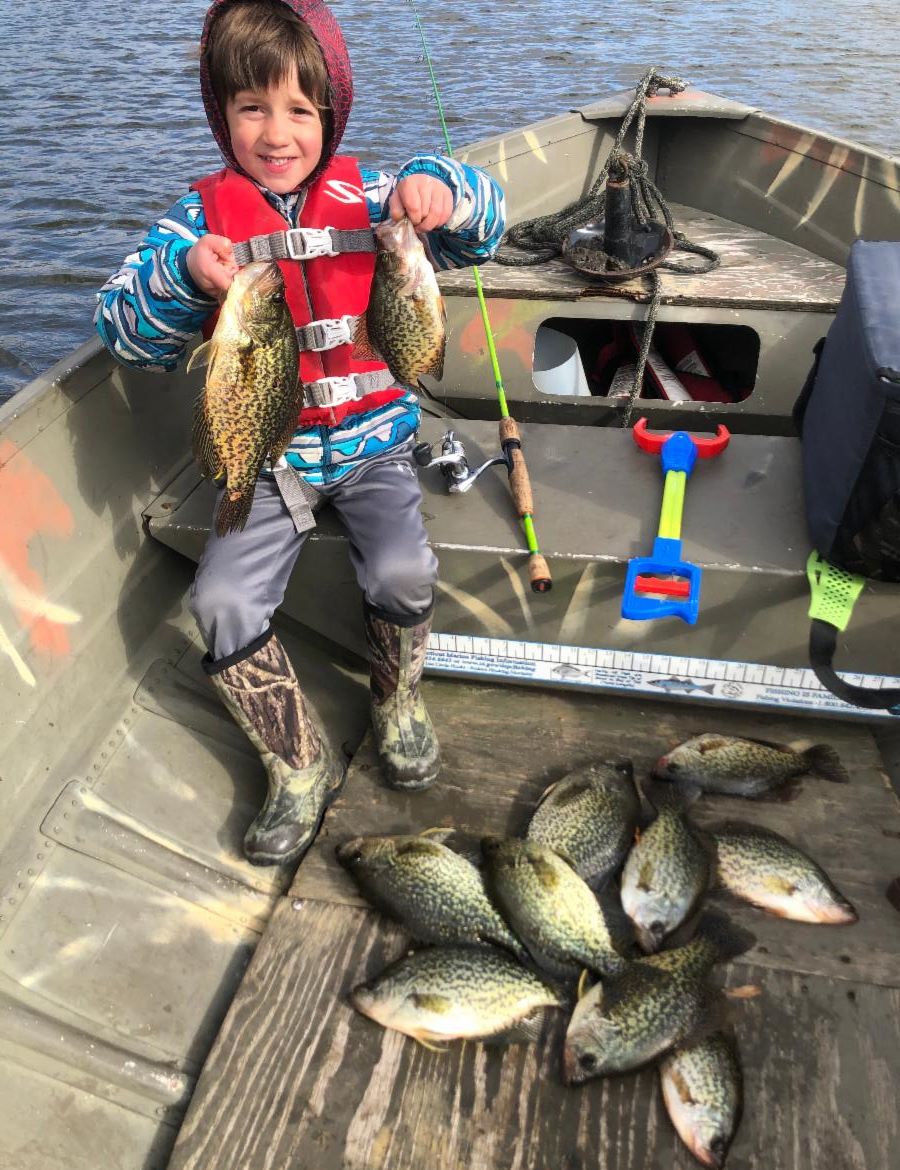
MAY is PRIMETIME for PANFISH
|
|
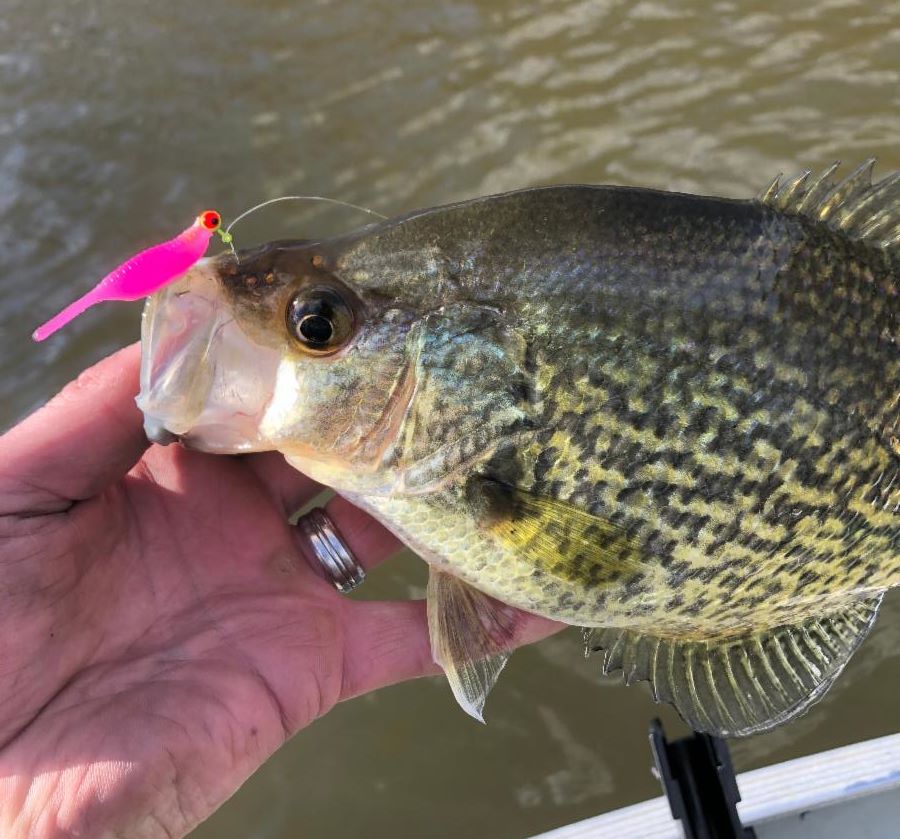
"Panfish" are a term for the collective group of fish that include black crappies (aka calico bass), yellow perch, white perch, rock bass, and all sunfish species. Panfish likely got their name for how terrific they are in the fry pan! Find a great recipe on our
PANFISH PRIMER.
In May, water temperatures warm triggering panfish movement into shallow water to feed and build nests for reproduction.
NOW is the time to get out to your local lake and pond and go panfishing!
Fishing for panfish is simple!
- Fishing rods should be “light” or “medium-light” so you can feel the subtle hits, and line should be 4 pound to 8 pound test.
- A worm (for sunfish or perch) or small shiner (for crappies or perch) fished a few feet under a bobber is all that is needed.
- A small jig head (1/32nd – 1/16th ounce) rigged with a 1-2 inch soft plastic bait is irresistible to panfish and many other fish species! Cast the jig out and slowly (very slowly) reel in bouncing along bottom, or place a bobber a few feet above the jig and slowly twitch and retrieve back.
Where to fish
- Look for a shoreline or shallow cove that receives lots of sun – the water will be warmest here attracting fish.
- Aquatic vegetation, rock piles, and fallen trees are HOTSPOTS for panfish and many other fish.
- Panfish are abundant in just about every lake, pond, and larger river in CT, but you can search the CT is Fishy interactive application to find a panfish hotspot near you!
There is no minimum length or creel limit (number of fish allowed per day) for panfish (exception is 7” min size and 30 white perch a day in the CT River), but please only keep what you will eat! Let the real big ones go so they can spawn, and keep medium size panfish for dinner (this is called “Selective Harvest”).
|
|
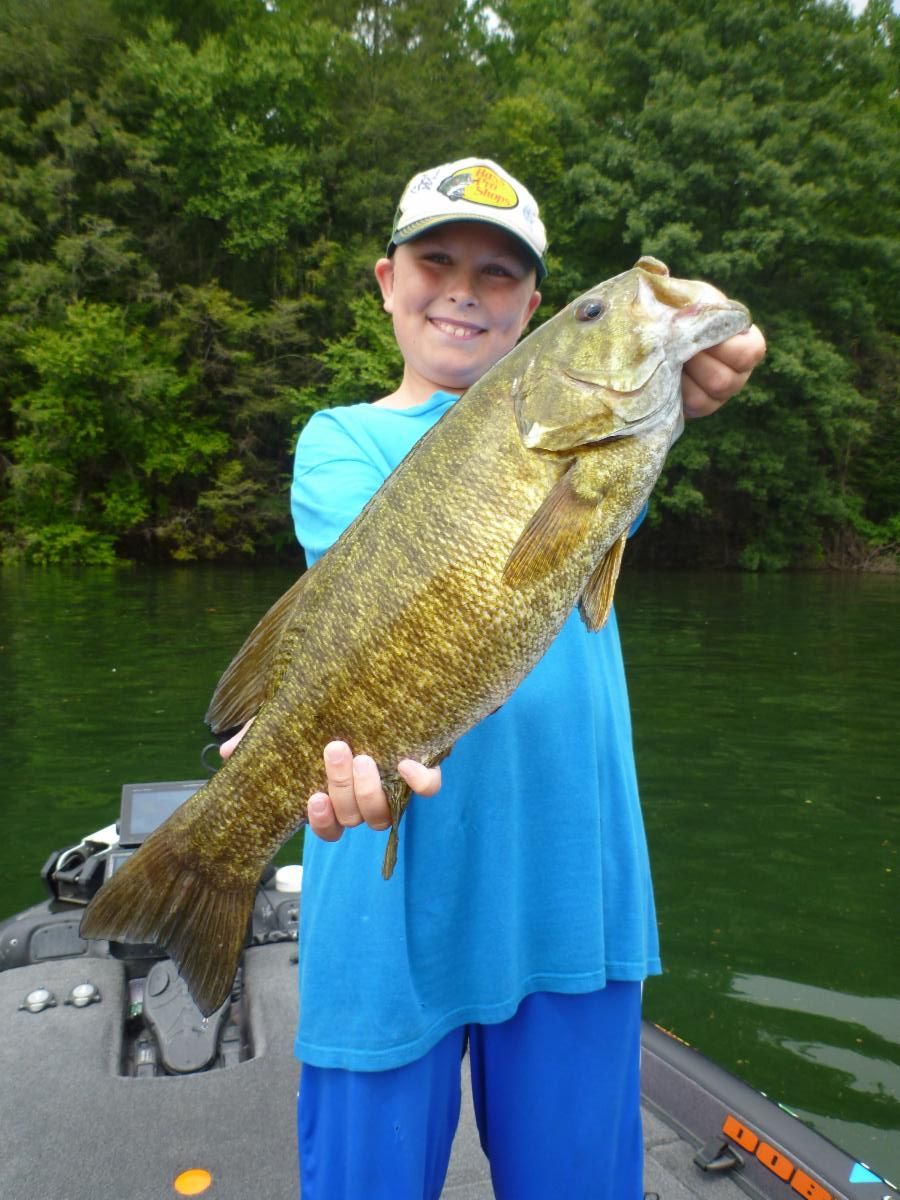
Fishing Challenge - For YOUth
|
|
|
|
Fishing is the perfect family activity during this time of "distance learning" and being "socially distant". CT's FREE
Youth Fishing Passport
is your child's ticket to all of the amazing outdoor discoveries fishing has to offer. Fishing involves knowing about habitat, environmental quality, food webs, life history of species, and so much more. You can get a Youth Fishing Passport, for those 15 or younger, using our
online licensing system
. Register your child as a new user. If you have questions please
contact us
.
|
|
Fishing Challenge Scorecard
|
|
The Youth Fishing Passport -
Fishing Challenge
is a year long fishing scavenger hunt. To have you catch count, simple snap a photo of your fish (from our
scorecard
) and email it to
us
. The top four anglers (who catch the most different types on our list) receive a prize pack full of fishing swag.
|
|
NEW for 2020
Catch and Release State Records
|
|
Documentation of Connecticut's State Record Fish has long been about the heaviest fish every recorded. This meant the fish needed to be harvested in order to be weighed on a certified scale. To meet the growing preference and desire of anglers to release and not keep their record catch, the Fisheries Division has implemented a state record for the "longest" fish every measured. Check out the current state records for
Freshwater
and
Marine
.
Successful release after the catch is completely dependent on how you handle the fish. We recommend the
following tips
for improved success.
|
|
2020 Warmwater Fisheries Public Discussions
|
|
The CT DEEP Fisheries Division began hosting five public discussions to seek angler input on Connecticut's warmwater fisheries (Bass, Pike, Walleye, Catfish, Panfish, Carp). Similar to the trout and salmon discussions held in October of 2019, these face-to-face discussions will help us to shape the future of warmwater fishing. Unfortunately we have paused these face-to-face discussions. We plan on hosting a webinar in the near future, but in the meantime, we have two online tools so you can contribute to this discussion:
and
|
|
2020 Fishing Guide - Access Online Anytime
|
|
The 2020 Fishing Guide is available. The best and fastest way to get your copy is online. We have a couple of options for you:
- The DEEP Webpage as a pdf
- In digital book format at the e-regulations page
|
|
Bonus Striped Bass Tag Program - Suspended
|
|
In light of the overfished condition of the coastal striped bass stock and the need to reduce harvest, the Department has decided to suspend the Bonus Striped Bass Program until the stock recovers. Low rates of program participation, as evidenced by low numbers of Striped Bass Bonus Program Voucher returns in recent years, also contributed to the Department’s decision to suspend the Striped Bass Bonus Program. Get details
here
.
|
|
This month's mystery fish was the Sea Lamprey (
Petromyzon marinus
)
. We are in the process of creating an online version of our book "The Fishes of Connecticut" and a few pages available. Check out the
page for Lamprey
.
Lamprey is native to Connecticut and as such is not destructive to our fish community. This is much different than the situation in the
Great Lakes
, where the lamprey was introduced and not native.
The Sea Lamprey is considered to be anadromous, migrating from salt water to inland rivers where the fish build a nest "redd". After the nest is completed the adults spawn and die. Recently hatched lamprey are called
ammocoetes
and spend about a year feeding on decaying plant material within soft mucky stream sediments. After the first year of growth, the ammocoetes metamorphos to look just like a mini-version of the adult.
This photo is a juvenile lamprey, recently transformed, that was captured on it's way out to sea. After a few years at sea feeding on fish (lamprey are a parasite), the adults return to the inland rivers and streams to start the cycle over again. In recent years, our Diadromous fisheries program has been moving some pre-spawn adult lamprey above dams in order to bolster the numbers of this native fish.
|
|
This Month's Mystery Fish
|
|
Información disponible en español
|
|
|
|
|
|
|