|
Please share this edition of Wildlife Highlights with other outdoor enthusiasts
and help our subscription list grow!
| |
Provide Input to the CT Wildlife Action Plan | |
CT DEEP is now revising the State Wildlife Action Plan (CT SWAP) for 2025 and is looking for your input! Are there any plants or animals in the state you feel are in greatest need for conservation? Let us know by using this Public Input Form.
A State Wildlife Action Plan (SWAP) identifies species of greatest conservation need and their affiliated habitats, and the threats they face. The SWAP then prioritizes conservation actions and research needs to address problems facing these species and habitats. Importantly, creating a SWAP that is approved by the U.S. Fish and Wildlife Service allows various organizations to apply for specific forms of federal funding to implement conservation actions outlined in the Plan. Connecticut completed its first State Wildlife Action Plan in 2005 (then called a Comprehensive Wildlife Strategy), revised it in 2015, and with 2025 rapidly approaching, DEEP is now in the process of revising it again to set the framework for conservation until 2035.
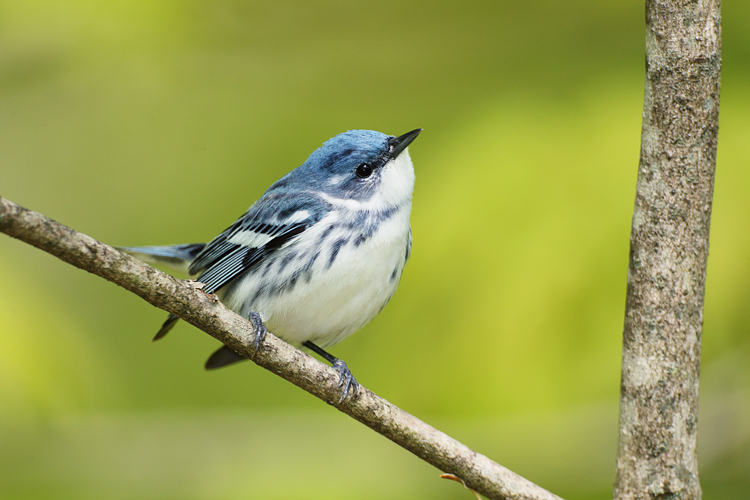
The cerulean warbler, pictured here, is currently considered a "very important" species of greatest conservation need in the CT SWAP, and it is also listed as a state species of special concern in Connecticut.
More on the CT Wildlife Action Plan . . .
| Calling All Young Artists! | |
|
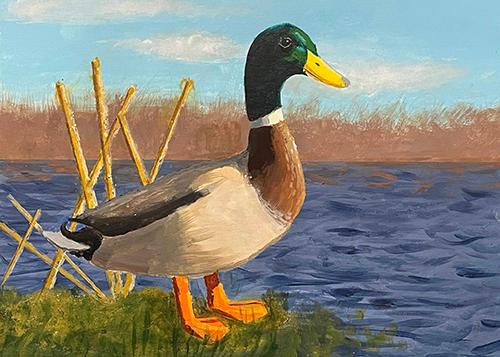
Connecticut students, kindergarten through grade 12, can support wetland conservation in the state by entering the 2024 Connecticut Junior Conservation Stamp Art Competition.
To enter, students create and submit a drawing or painting featuring native waterfowl (ducks or geese). There is no cost, and submissions must be postmarked by March 15, 2024.
This competition is intended to encourage more young people to explore the natural world and increase conservation awareness. The “Best in Show” winner will have their art featured as the 2025 Connecticut Migratory Bird Conservation Stamp! The winning submission will also be entered in the Federal Junior Duck Stamp Contest.
More details on how to enter . . .
| |
Where Do Black Bears Spend the Winter? | |
|
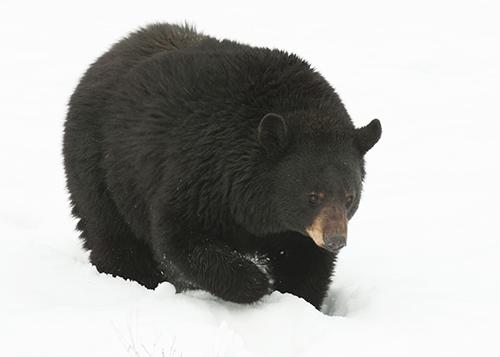
Despite the mild winter so far, many black bears are now denning. Some of the most common bear dens include brush piles, slash piles, or fallen trees. Black bears may also take advantage of rock crevasses and ledges and hollow trees as places to spend the winter. In some cases, a black bear may even decide that its “den” is simply resting at the foot of a tree. These ground nests are usually just a sparse mat of leaves and twigs and are typically located in thick vegetation, such as mountain laurel. Bears are also known to den under decks and sheds in people’s backyards.
While denning straight through most of winter is necessary for pregnant female bears, other bears can remain active, especially when temperatures are mild, and food is available. Even if you do not live in an area with regular bear activity, you should "Be Bear Aware" year-round.
More on how black bears are adapted to endure the cold . . .
| |
First-ever State of the Bats Report | |
|
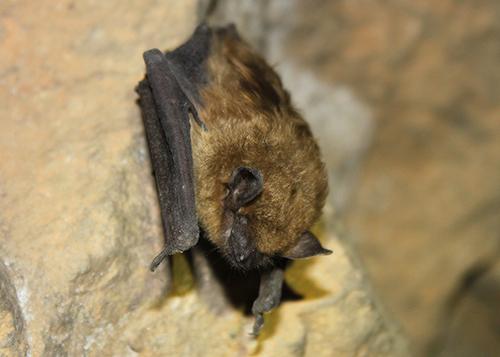
Last year, the first-ever State of the Bats Report was published by the North American Bat Conservation Alliance (NABCA), a multinational coalition from the United States, Mexico, and Canada, including Bat Conservation International.
Experts believe that up to 82% of bat species in North America will be impacted by climate change in the next 15 years, especially by severe drought and temperature extremes. The other top threats to bats in North America include habitat loss, the bat disease white-nose syndrome (WNS), and mortality from wind turbines.
The report highlights the importance of bat conservation, not only for their biodiversity value, but for the ecosystem and economic services bats provide in terms of pest control, pollination, seed dispersal, ecotourism, and their utility to innovation and science.
View the report . . .
| |
Join Us Next Month for the 18th Annual Winter Festival | |
|
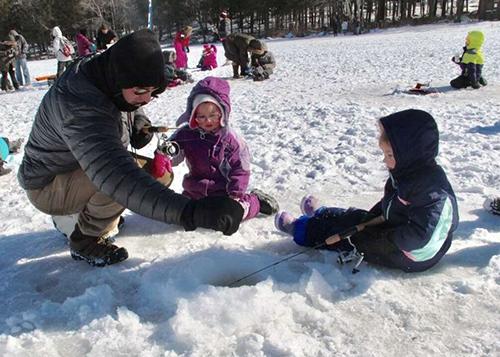
The No Child Left Inside® (NCLI) Program, in partnership with Fish with CARE and the City of Torrington, will be hosting the 18th Annual Winter Festival Event at Burr Pond State Park in Torrington, Connecticut on Saturday, February 3, 2024 (weather date of Sunday, February 4, 2024) from 10:00 AM to 3:00 PM.
This event is all about what you can do and see during winter! There will be ice fishing (pending ice thickness and safety), guided hikes, story times, search and rescue dogs, demonstrations, ice sculptures, marshmallow roasting, a bonfire, furs and pelts, live animals, City of Torrington Police and Fire, CT State Environmental Conservation Police, and much more! Chuckles the Groundhog from the Lutz Children's Museum will be making a special appearance. Bring your family and friends and join us for a great day of winter activities and fun!
More details on Winter Festival 2024 . . .
| |
Thank You to Our Volunteers! | |
 | 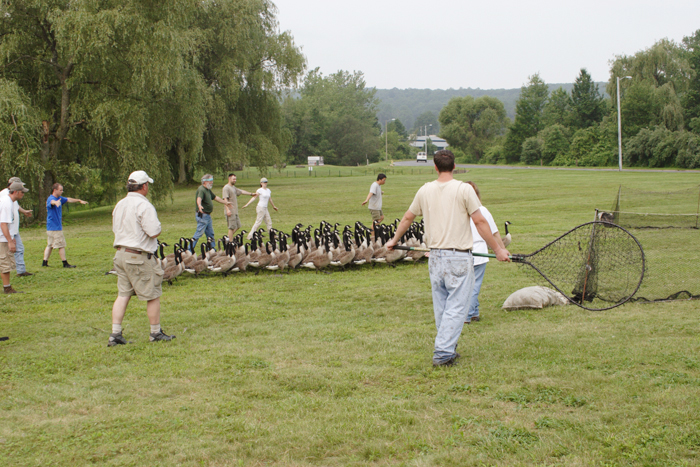 | At the beginning of a new year, many of us like to reflect on the past year. So, the Wildlife Division would like to take a moment to recognize the many volunteers who chose to spend their time assisting us in 2023. The list of all projects that volunteers provided assistance to is very long. Some of the projects include monitoring nesting birds like bald eagles, ospreys, peregrine falcons, bluebirds, and more; banding resident Canada geese statewide (pictured); conducting acoustic monitoring for bats; and participating in annual surveys like the Midwinter Bald Eagle Survey - to name just a few projects. Special recognition goes to the volunteer instructors with the Conservation Education/Firearms Safety Program, who donate countless hours to teach basic hunter/trapper safety education courses to future hunters and trappers, and to the Master Wildlife Conservationists, who help with various wildlife projects and conduct numerous outreach programs at libraries, schools, and other venues. Volunteers provide extra hands needed to help complete the Wildlife Division's numerous tasks. We are beyond grateful for all that our volunteers do. Thank you to each and every 2023 volunteer (you know who you are!) and we look forward to seeing you in 2024!
| |
Species Spotlight: Blue Jay | |
|
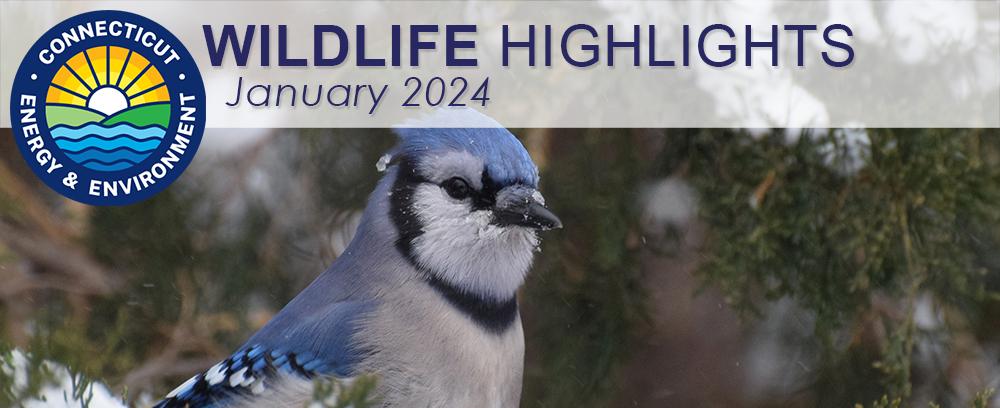
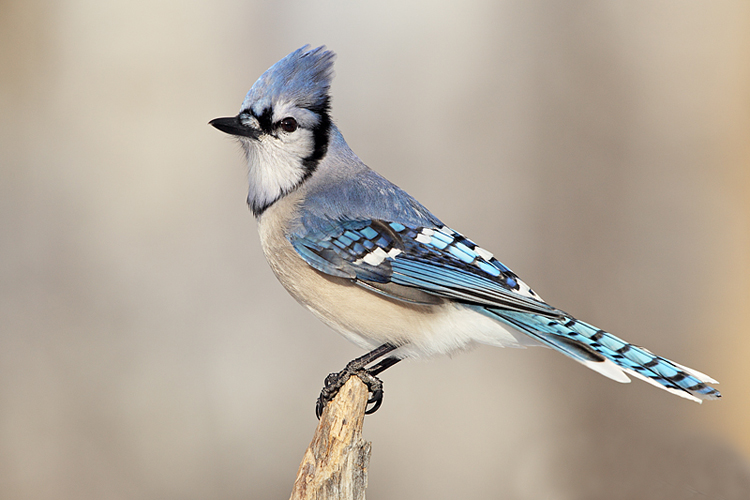
The blue jay is one of several jay species that occur in North America and is common in Connecticut year-round. Found in both rural and urban areas, blue jays are frequent backyard visitors and can be easy to spot with their bright blue feathers and noisy calls. Like other members of the Corvid family, which also includes ravens, crows, and magpies, blue jays are noted for their intelligence. In addition to their familiar “jeer-jeer” call, blue jays produce a wide range of sounds and are known to mimic multiple raptor species, especially hawks. One hypothesis behind this mimicry is that it’s intended to scare other birds away from a food resource that a blue jay is interested in.
Blue jays feed largely on plant matter, such as seeds, nuts, and berries, but also eat insects and other invertebrates, small animals, carrion, and eggs of other birds. They are fond of acorns and beech nuts, and like squirrels, will gather and cache these in the ground for winter. Any cached acorns or other tree nuts that are not eaten may germinate. In this way, blue jays can help tree species colonize new locations or transfer genetic material from one population to another.
Blue jay migration is variable and occurs within the geographic range of the species, which is confined to the United States and Canada, primarily east of the Rocky Mountains. Not all individuals in a population migrate, and some that do migrate do not migrate every year. Blue jays breed in Connecticut and are here year-round, but we are likely to observe different individuals during different seasons.
| |
|
Stay Connected!
Follow us on Social Media
| |
|
-- Quick Links --
Your Feedback Is Important to Us!
Send your comments or suggestions to deep.ctwildlife@ct.gov
|  | |
The Connecticut Department of Energy and Environmental Protection is an Affirmative Action/Equal Opportunity Employer that is committed to complying with the requirements of the Americans with Disabilities Act. If you are seeking a communication aid or service, have limited proficiency in English, wish to file an ADA or Title VI discrimination complaint, or require some other accommodation, including equipment to facilitate virtual participation, please contact the DEEP Office of Diversity and Equity at 860-418-5910 or by email at deep.accommodations@ct.gov. Any person needing an accommodation for hearing impairment may call the State of Connecticut relay number - 711. In order to facilitate efforts to provide an accommodation, please request all accommodations as soon as possible following notice of any agency hearing, meeting, program or event.
This program receives Federal financial assistance from the U.S. Fish and Wildlife Service.
Under Title VI of the 1964 Civil Rights Act, Section 504 of the Rehabilitation Act of 1973, Title II of the Americans with Disabilities Act of 1990, the Age Discrimination Act of 1975, and Title IX of the Education Amendments of 1972, the U.S. Department of the Interior prohibits discrimination on the basis of race, color, national origin, age, sex, or disability. If you believe that you have been discriminated against in any program, activity, or facility, or if you need more information, please write to:
Office of Diversity, Inclusion and Civil Rights
U.S. Department of the Interior 1849 C Street, NW
Washington, D.C. 20240
| | | | |