|
April 2026, Issue 1 | CTSC Newsletter
To ensure you're always viewing the entire newsletter, check at the bottom of the email to see if the newsletter has been "clipped" and, if so, click "view entire message". You can also view the full newsletter on the News and Announcements page of our website
| | Click on the images below to be directed to more information: | | |
Building Replicable Stem Cell Therapies for Real‑World Patient Impact
In the newest episode of Stories of Impact, the CTSC spotlights Dr. Tracey Bonfield, a 2018 CTSC Annual Pilot Awardee, and her groundbreaking work advancing human mesenchymal stem cells (hMSC) from the lab to the clinic. Dr. Bonfield’s research led to the first Phase I clinical trial demonstrating the safety of hMSC therapy in adults with cystic fibrosis and produced novel donor‑selection tools that are now being replicated and applied across multiple diseases. This episode highlights how translational impact extends beyond individual products to include reproducible methods, clinical evidence, and shared infrastructure that accelerate progress toward better patient outcomes.
Watch the video below, or explore past and future episodes on the CTSC YouTube channel
| | |
Funding Opportunity: POCTRN Innovation Awards:The Point of Care Technology Research Network (POCTRN) has announced six Innovation Award opportunities to support the development of point‑of‑care technologies addressing chronic disease, infectious disease and disease prevention. Priority areas include cancer detection; heart, lung, blood and sleep disorders; sexually transmitted infections; and emerging infectious diseases, particularly in low‑resource settings. Awards of up to $150,000 are available, along with up to 12 months of in‑kind support to help advance technologies toward real‑world use. Investigators interested in applying are encouraged to contact Dr. Umut Gurkan, CTSC Commercialization Expert, for questions or strategic guidance.
| | |
Mind and Body Interventions to Restore Whole Person Health via Emotional Well-Being Mechanisms (R61/R33 Clinical Trial Required): The purpose of this NOFO is to support rigorous, well-powered mechanistic clinical trials examining how mind and body interventions (e.g., mindfulness meditation, yoga, acupuncture, massage) influence innovative mechanisms of emotional well-being (EWB) and their associations with whole person health. Studies must evaluate EWB mechanisms as the primary outcome and include the Whole Person Health Index as a secondary outcome to advance understanding of health restoration across the lifespan.
| | |
Tracking Policy Impact of Translational Science at the CTSC
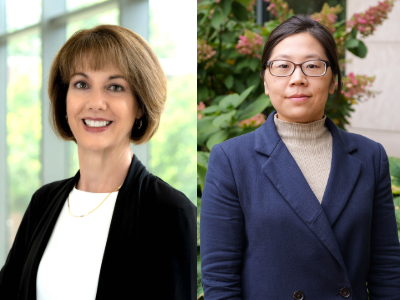
Clara Pelfrey, PhD, CTSC Director of Evaluation, and Lixin Zhang, PhD, CTSC Assistant Director of Evaluation, describe how they are using Overton Index to systematically track and demonstrate the policy impact of CTSC-supported research. By integrating Overton policy citation data into a mixed-methods evaluation framework, their work shows how translational science influences public health policy, clinical guidelines, and government decision-making globally.
Learn more about how the CTSC measures real-world policy impact
| | |
Emotion Regulation Support for ICU Surrogates
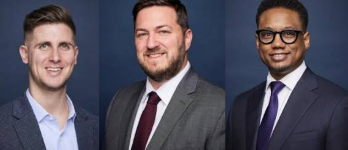
CTSC KL2 scholar graduates Grant Pignatiello, PhD, RN, Nicholas K. Schiltz, PhD, and Ronald L. Hickman Jr., PhD, RN, led a pilot study evaluating REFRAME, a tablet-based emotion regulation app for surrogate decision-makers of critically ill ICU patients. The brief cognitive reappraisal intervention was feasible, well accepted, and associated with greater reductions in depressive symptoms compared with usual care. These findings suggest that integrating short, technology-based emotion regulation tools into ICU practice may support surrogate psychological well-being.
Read the full article from our KL2 Scholars
| | |
Rethinking the Evaluation of Unintentional
Weight Loss
CTSC Pilot Review Committee member and Mock Study Section leader Goutham Rao, MD, led a UH ADVANCE Center study examining the evaluation of unexplained unintentional weight loss. The findings support a more conservative, evidence-based approach focused on clinical inquiry and monitoring rather than extensive testing, with the goal of reducing unnecessary care and improving patient experience.
Learn why Goutham Rao, MD, says less testing may be better for unintentional weight loss
| | |
Big Data and Artificial Intelligence in Transfusion Medicine
Umut Gurkan, PhD, co-director of the CTSC Translational Fellows Program and lead of the CTSC Annual Pilot Award Program, is a senior author on a recent Vox Sanguinis review describing how big data and artificial intelligence are transforming transfusion medicine. The article highlights AI-enabled precision red blood cell diagnostics, digital crossmatching, and interoperable health data as key drivers toward safer, more personalized, and more efficient transfusion care.
Read more about Dr. Umut Gurkan’s AI-driven research in transfusion medicine
| | | | |
CTSC Scientific Writing Open Office Hours
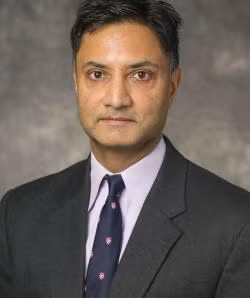
Speaker: Roberto Alers-Velazquez, PhD
| | | | |
CTSC Science Cafe:
"Commercialization and Impact"
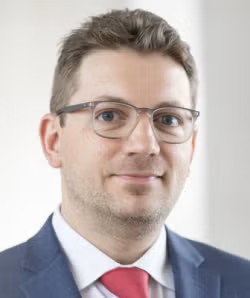
Speaker: Umut Gurkan, PhD
| | | | |
CTSC Big Data Open Office Hours
*no registration needed*
Moderators: Craig Jarrett, MD & Ashley Hughes, PhD
| | | | |
Healthcare Delivery & Implementation
Science Center Speaker Series:
"Patient and Stakeholder Engagement in Implementation Research"
| | | | |
CWRU Spring Master's Poster Symposium & Activities Fair
Event Details
| | | | |
CTSC Distinguished Speaker Series:
"Food Insecurity and Chronic Disease Outcomes: Mechanisms, Pathways, and Interventions"
Event Details | CME Available
| | | | |
CTSC Webinar: NIH Common Forms Review
Speaker: Sue Marasco, PhD
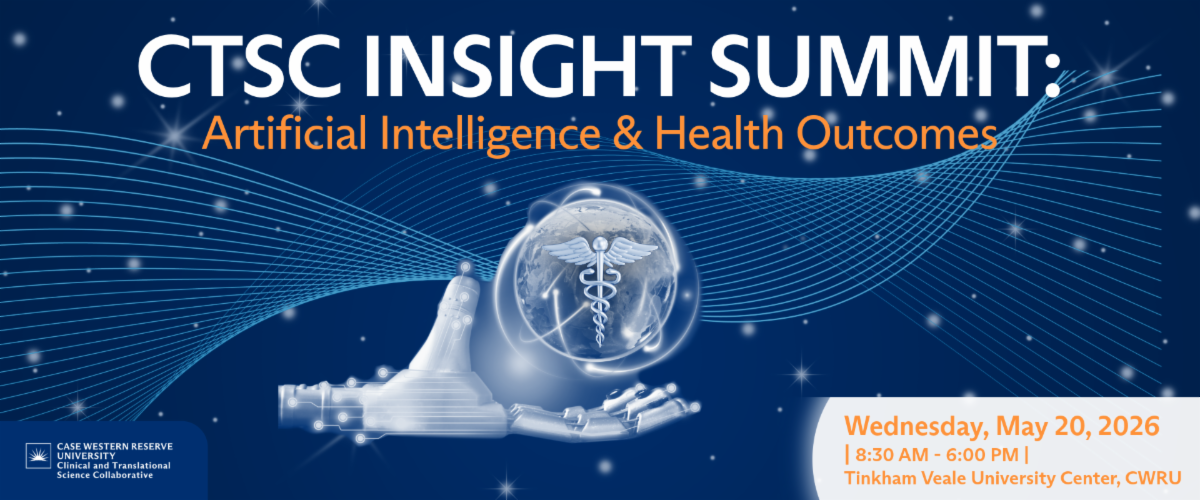
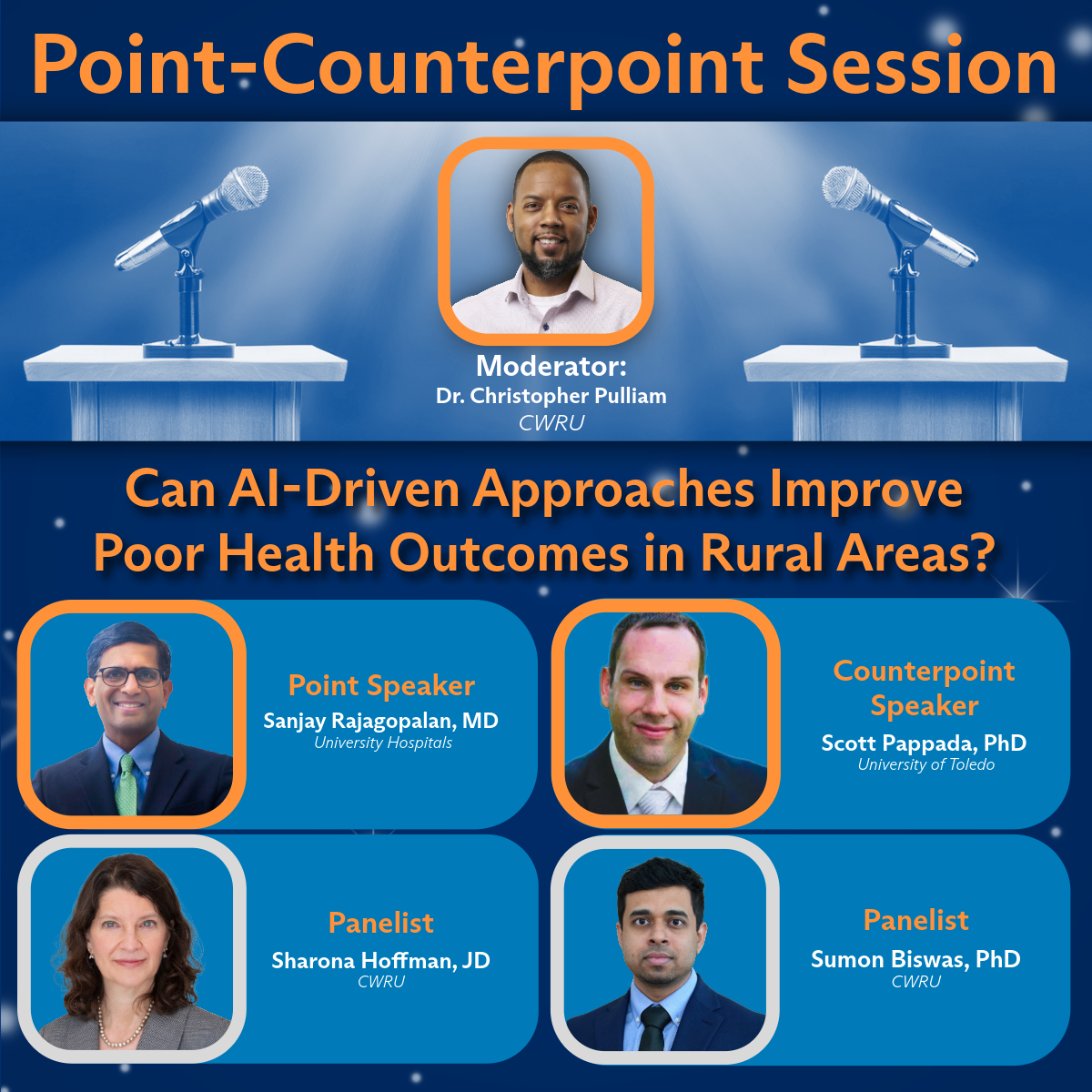
| | The CTSC Insight Summit: AI and Health Outcomes brings together clinicians, researchers, technologists, policymakers, and community partners to explore how AI-driven innovation can improve health outcomes, particularly in chronic disease and real-world settings. The summit will feature a Point–Counterpoint and panel discussion on “Can AI-Driven Approaches Improve Poor Health Outcomes in Rural Areas?” The discussion examines both the promise and responsibility of AI in advancing healthcare. | | |
Supporting the Next Generation of Researchers
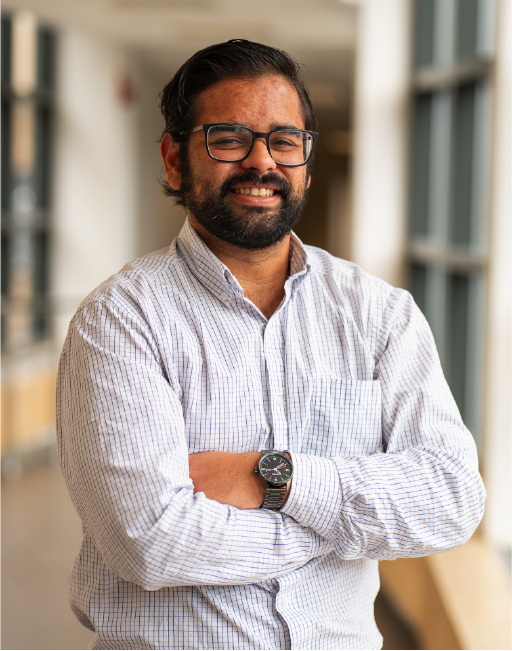
CTSC Senior Scientific Editor Roberto Alers‑Velazquez, PhD, recently participated in the CWRU School of Medicine Spring Poster Session, working one‑on‑one with medical and graduate students to strengthen the clarity, impact, and clinical relevance of their research presentations. This hands‑on mentoring aligns with the CTSC Mock Study Section by helping trainees clearly articulate significance, innovation, and translational impact—core elements of successful NIH applications. Dr. Alers‑Velazquez specializes in NIH grant development, medical writing, and scientific editing for translational research and clinical trials.
Interested in scheduling a consultation or inviting Dr. Alers‑Velazquez to present at a workshop? Submit a SPARC request to get started.
| | |
Common Forms Review: Open Office Hours
Join Sue Marasco, PhD, Assistant Director of Research Programs and Proposal Development with the CTSC, every Friday from 12:00–1:00 PM (via Zoom) for Common Forms Review Open Office Hours. These sessions provide guidance on recent NIH changes to the Biographical Sketch, support for current and pending submissions, and answers to your Common Forms questions. No registration necessary.
Topics include:
- Overview and guidance on NIH Common Forms requirements
- Step-by-step support using SciENcv
- Compliance tips and answers to individual questions
| | Click on the images below to be directed to more information from the CTSC and our colleagues: | | | |
ACTS Membership for Community Members
CTSC community partners are eligible to become members of the Association for Clinical and Translational Science (ACTS). Community members are able to access ACTS' member benefits, including:
- Discounted registration to the annual Translational Science meeting
- Opportunities to participate in Special Interest Groups and Committees
- Access to the ACTS community platform website, Tradewing
- And more!
To join, community members can create an account on the ACTS website and join under Case Western Reserve University.
| | |
| How did you like this email? | | | | | | |