|
May 2026, Issue 2 | CTSC Newsletter
To ensure you're always viewing the entire newsletter, check at the bottom of the email to see if the newsletter has been "clipped" and, if so, click "view entire message". You can also view the full newsletter on the News and Announcements page of our website
| | Click on the images below to be directed to more information: | | |
Warm greetings,
May has been an exciting and productive month for our community, marked by innovation, collaboration, and forward momentum in translational science.
We were proud to host our first-ever Mock Study Section, a milestone initiative designed to strengthen study design and readiness through collaborative feedback and real-world simulation. We also celebrated an outstanding CTSC Insight Summit, which brought together investigators, innovators, and thought leaders to explore the transformative role of artificial intelligence in improving health outcomes. The event featured engaging panel discussions, a dynamic poster session, and vibrant cross-disciplinary dialogue, demonstrating both the depth of expertise and the enthusiasm across our network.
In conjunction with the summit, we are pleased to announce our new Themed Pilot: “Enhancing Translational Impact: Integrating AI for Improved Health Outcomes.” This opportunity will support four pilot awards up to $50,000 each, aimed at accelerating the application of AI in clinical and translational research.
Thank you to everyone who contributed to making these initiatives such a success. Your dedication continues to drive meaningful progress and innovation!
| | |
New Themed Pilot Opportunity:
"Advancing Clinical and Translational Science with AI"
The CTSC of Northern Ohio is now accepting applications for a new Themed Pilot funding opportunity focused on integrating artificial intelligence (AI) to enhance clinical and translational research and improve health outcomes. Projects may leverage approaches such as machine learning, large language models, computer vision, and other advanced AI tools, with a strong focus on rigor, reproducibility, and translational impact. A consultation with the CTSC staff is required for the themed pilot application process. This opportunity will support four pilot awards up to $50,000 each.
| | |
Data Coordinating Center for Multi‑Site Investigator‑Initiated Clinical Trials (U24):
The National Heart, Lung, and Blood Institute (NHLBI) at the NIH is seeking applications to establish a Data Coordinating Center (DCC) to support investigator‑initiated, multi‑site clinical trials. This milestone‑driven U24 cooperative agreement runs in parallel with a companion Clinical Coordinating Center (CCC) UG3/UH3 award and will provide centralized project coordination, data management, biostatistical support, and collaboration on community engagement activities.
| | |
Mind and Body Interventions to Restore Whole Person Health via Emotional Well-Being Mechanisms (R61/R33 Clinical Trial Required): The purpose of this NOFO is to support rigorous, well-powered mechanistic clinical trials examining how mind and body interventions (e.g., mindfulness meditation, yoga, acupuncture, massage) influence innovative mechanisms of emotional well-being (EWB) and their associations with whole person health. Studies must evaluate EWB mechanisms as the primary outcome and include the Whole Person Health Index as a secondary outcome to advance understanding of health restoration across the lifespan.
| | |
CTSC Launches Free Research Education Platform
Canvas Catalog brings together self‑paced clinical and translational research education in one easy-to-access platform. In each newsletter, we’re spotlighting a different Canvas Catalog learning track. This month, we’re featuring the Undergraduate and Master’s Research Education & Resources track, designed to support students early in their research journeys with foundational training, skill-building resources, and guidance for exploring careers in clinical and translational science. Join the growing community of CTSC members discovering flexible, on‑demand learning through Canvas Catalog.
| | Undergraduate and Master’s Research Education & Resources: | | Research Integrity Training | This module provides a foundational understanding of research integrity and the role of the Institutional Review Board (IRB). Learners will identify key areas of ethical concern and gain tools to distinguish research misconduct from non‑compliance, helping ensure research is conducted responsibly and in alignment with ethical standards. | |  | This module offers a comprehensive overview of clinical trials, including the different types and phases, key strategies for success, and the role of blinding. Learners will also explore critical considerations in trial design and review real‑world examples to reinforce core concepts. | | | |
CTSC Highlights National Impact at ACTS 2026
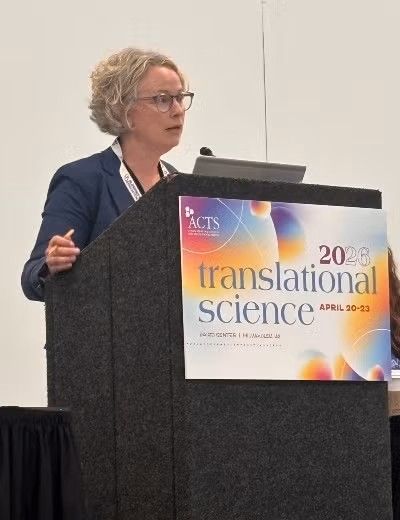
The CTSC of Northern Ohio made a strong national impact at the Association for Clinical and Translational Science (ACTS) Translational Science 2026 conference, showcasing leadership in community-engaged research, informatics, and evaluation. CTSC representatives led sessions and presented posters highlighting innovative approaches to strengthening community advisory boards, improving research recruitment through advanced data integration, and using evaluation to translate data into meaningful stories of impact. CTSC members receive a free ACTS institutional membership with access to ACTS news, a subscription to The Journal of Translational Science (JCTS), and News on the Hill.
Read the full article about the CTSC's impact at ACTS 2026
| | |
Beyond GLP‑1: Redefining Cardiometabolic Care
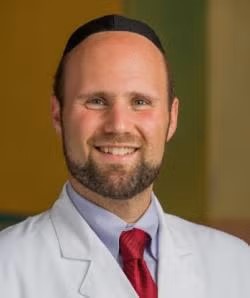
In this Science@UH podcast episode, Ian Neeland, MD, Co-Lead of the CTSC Pilot Module, joins Daniel Simon, MD, to discuss rapid advances in incretin‑based therapies and their expanding role in cardiometabolic care. The conversation explores the shift from GLP‑1 receptor agonists to dual and triple agonists, highlighting breakthroughs in weight loss, diabetes management, and cardiovascular risk reduction. Dr. Neeland also addresses emerging oral therapies, combination approaches to preserve muscle mass, expanded indications beyond obesity, and ongoing challenges.
Learn more about Dr. Neeland's GLP-1 study
| | |
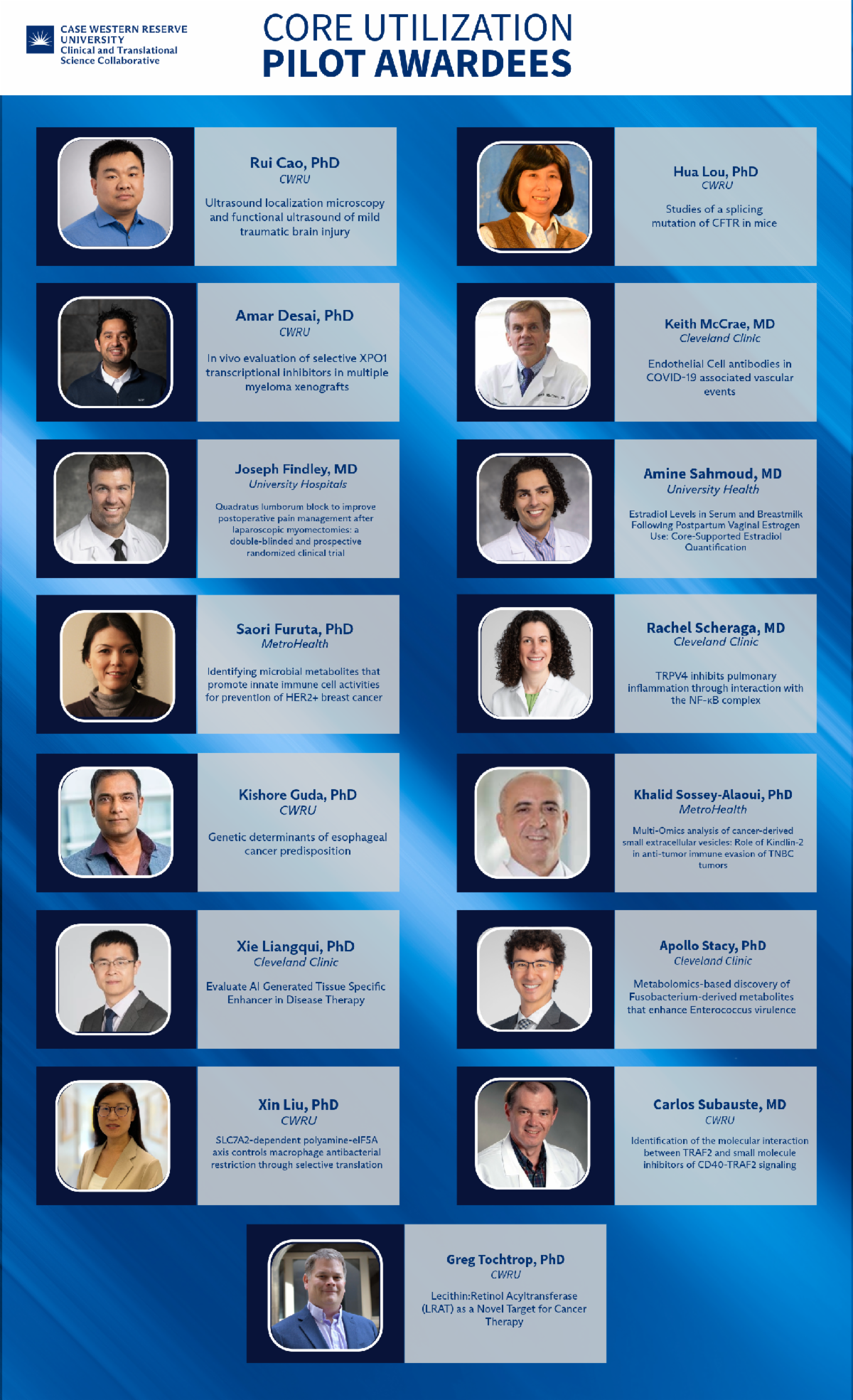
Congratulations to our 2026 CUP Awardees!
These awards support the early stages of innovative, interdisciplinary, and collaborative research projects, helping investigators advance their work toward external funding and peer-reviewed publications. This year’s selected projects will utilize eligible Core facilities across our partner institutions. Proposals are accepted on a rolling basis and are due on the first day of each month.
Learn more about our Core Utilization Pilot Program.
| | | | |
CTSC Distinguished Speaker Series:
"AI in Academic Medical Centers:
It's About Data and Adaptability"
Event Details | CME Available
Speaker: Elmer V Bernstam, MD
| | | | |
CTSC Scientific Writing Open Office Hours
Speaker: Roberto Alers-Velazquez, PhD
| | | | |
CTSC Common Forms Open Office Hours
Speaker: Sue Marasco, PhD
| | | | |
CTSC Science Cafe:
Alzheimer's Disease
Speakers: Jagan Pillai, MD and Jonathan Haines, PhD
| | | | |
CTSC Big Data Webinar:
Cosmos vs. TriNetX Databases
Speakers: Craig Jarrett, MD & Ashley Hughes, PhD
| | | | |
CTSC Co-Learning Event:
Stronger Through Collaboration
Speaker: Susan Freimark
| | | | |
CTSC Resource Utilization Studio
Information Session
| | |
Community Voices Advance Healthy Aging Research
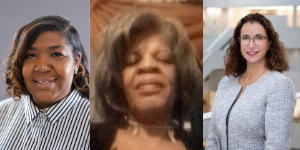
On Thursday, April 30, the Community Engagement (CE) Studio team convened a Healthy Weight Management and Healthy Aging studio at the MidTown Collaboration Center to gather community input that will inform future research on aging well. Led by Principal Investigator Lia Logio, MD, the session engaged adults ages 50 and older in discussion about how weight management, nutrition, physical function, medications, and access to supportive resources intersect to influence healthy aging. Participants shared lived experiences related to weight loss and maintenance, concerns about anti‑obesity medications, Food Is Medicine strategies, and the broader support systems needed to maintain health, independence, and quality of life as we age. Community Facilitator Tiffany James emphasized the importance of community‑engaged research, while Community Expert Renee Wren highlighted increased awareness around nutrition and empowerment to seek professional guidance. Insights from this studio will help shape future research aimed at supporting healthy aging in the Cleveland community.
Learn more about how you can get involved with CTSC CE Studios
| | |
Co‑Learning Event: Skill‑Building Workshop
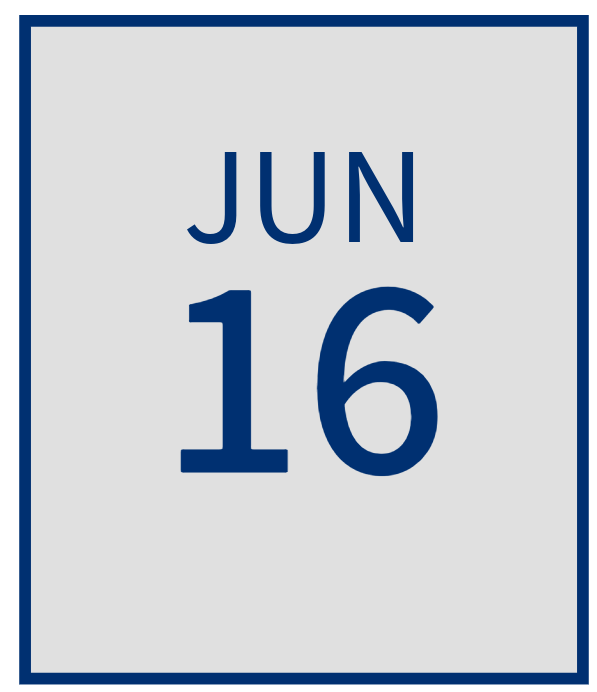
This Community Engaged Research Co‑Learning Event brings together CTSC‑affiliated faculty, staff, collaborators, and community partners for an interactive skill‑building workshop focused on strengthening collaboration in community‑engaged research and will take place on Tuesday, June 16, 2026, from 4:00–6:30 PM at the MidTown Collaboration Center. Grounded in team science and asset‑based thinking, participants will explore strategies to recognize and leverage individual and team strengths, deepen interdisciplinary and community partnerships, and build more effective and sustainable research collaborations.
Register for the Co‑Learning Event: Stronger Through Collaboration
| | |
Spinal Cord Injury CE Studio
This Community Engagement (CE) Studio brings together community members and researchers to inform the development of a Spinal Cord Injury Living Learning Lab (SCILL) and will take place on Wednesday, June 24, 2026, from 12:00–2:00 PM via Zoom. Participants include adults age 18 and older living with a cervical spinal cord injury (injury occurred at least six months ago and requiring assistance with daily activities), as well as caregivers who provide regular care for someone with a cervical spinal cord injury. Participant insights will help shape future research, care, and resources for adults living with spinal cord injuries.
Register for the Spinal Cord Injury CE Studio
| | |
CTSC Hosts Inaugural Mock NIH Study Section
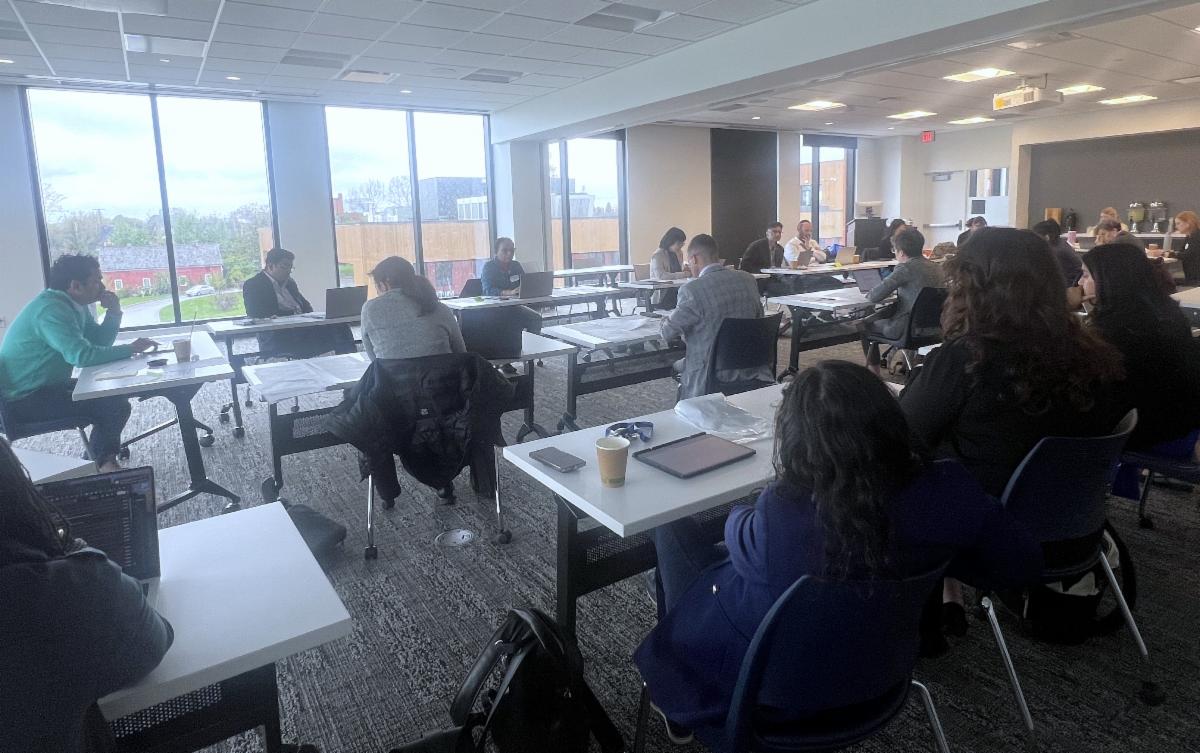
The CTSC recently hosted its first Mock NIH Study Section, bringing together investigators, faculty reviewers, community partners, and staff for a hands‑on grant review experience modeled after the NIH process. Led by co‑chairs Ian Neeland, MD, and Goutham Rao, MD, the session reviewed eight proposals and gave investigators valuable real‑time insight into how applications are discussed, evaluated, and scored, with constructive written and live feedback to strengthen submissions. The inclusion of a community perspective highlighted the importance of relevance and impact, and the successful pilot reflects the collaborative spirit of the CTSC while laying the groundwork for future sessions to support more competitive NIH proposals.
Read the full article about the CTSC Mock Study Sections
| | Click on the images below to be directed to more information from the CTSC and our colleagues: | | | |
ACTS Membership for Community Members
CTSC community partners are eligible to become members of the Association for Clinical and Translational Science (ACTS). Community members are able to access ACTS' member benefits, including:
- Discounted registration to the annual Translational Science meeting
- Opportunities to participate in Special Interest Groups and Committees
- Access to the ACTS community platform website, Tradewing
- And more!
To join, community members can create an account on the ACTS website and join under Case Western Reserve University.
| | |
| How did you like this email? | | | | | | |