|
"Thanks for listening! Just a heads-up: this podcast is fully produced and generated by artificial intelligence. While we strive for quality, AI can sometimes get facts wrong or 'hallucinate' information. Please be sure to double-check any data, advice or claims made in this episode before taking them as gospel. In other words, we make no claims of truth or accuracy on this podcast and suggest you do the same. Enjoy the show!"
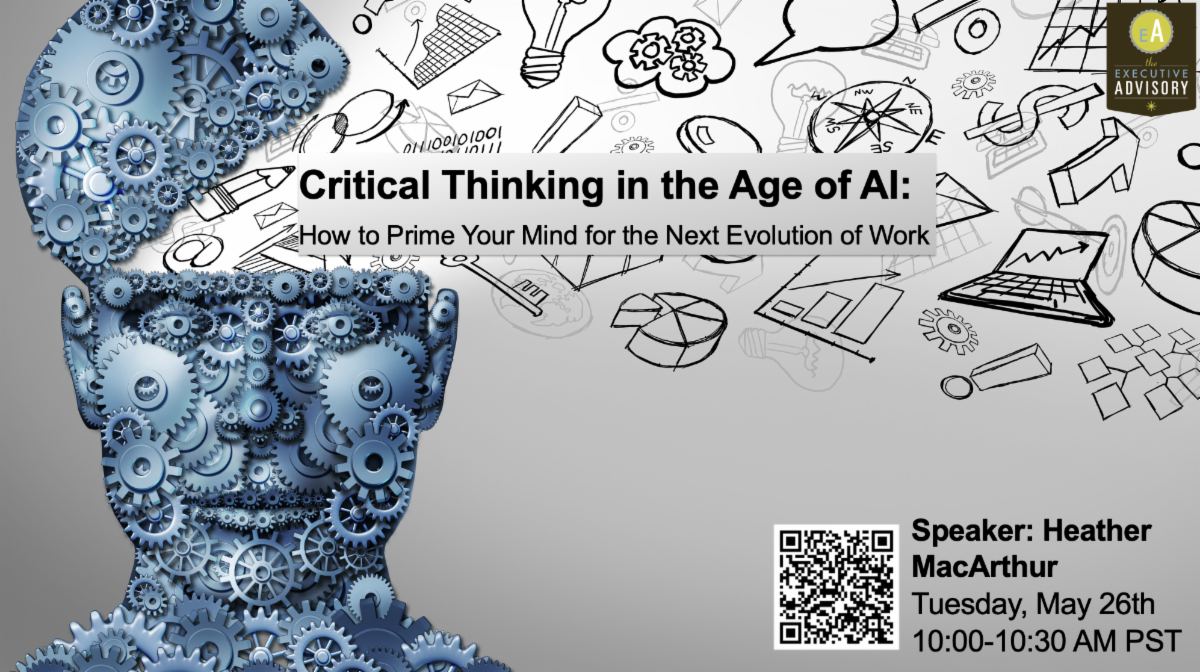
The AI disclaimer even tells me that I need to be a critical thinker and evaluate their claims when listening to the Podcast I just tuned into. However, I can’t help but wonder if AI will end up having just the opposite effect and create lazy thinking instead of critical thinking?
If you’ll humor me for just a minute…I remember when critical thinking required you to physically go to a library, search for the card catalogue, check out the microfiche, and take notes on what you read. There was something about the physical effort and time required to do the research. The internet expedited this process exponentially. You could research hundreds...nay thousands of sources in minutes without having to use the Dewey Decimal Classification system. But we didn’t. We typed in a few words or asked the search engine a question and most of us focused on the top three results. As a matter of fact, 99% of us never go past the first page. We got a little lazy.
Search engines curate the knowledge they think is most relevant. However, that knowledge hasn’t always been accurate or truthful. For example, in the early Google days, when you typed in “Holocaust,” your top results outlined it as a hoax. Results were based on popularity. We traded the dusty stacks of knowledge in the library for an algorithm that served up "truth" like a fast-food drive-thru—convenient, salty, and questionable in nutritional value.
If Google was a helpful, albeit occasionally biased, librarian, AI is that one friend who speaks with the unearned confidence of a man in a tuxedo who has no idea where he is. It doesn't "know" anything; it predicts the next likely word or number in a sentence. It’s essentially spicy autocorrect.
The danger isn’t that the machines are getting smarter; it’s that we’re getting lazier. We are becoming the human equivalent of a "skip intro" button. If we stop the investigation of the sources, we aren't just outsourcing our research; we’re outsourcing our discernment. We’re handing the keys of our intellectual castle to a bunch of code that thinks glue is a valid pizza topping because it found it on a subreddit once.
We should use AI. Nowadays, we need to use it. Let it summarize that 40-page report or suggest a recipe for kale that doesn't taste like sadness. But for heaven’s sake, we need to keep our hands on the wheel and not just take AI’s output as knowledge or truth. The moment we stop asking "Yes, but is this true,” is the moment we become history’s most well-informed idiots. We can’t allow AI to auto-drive without being in the passenger seat critically evaluating whether or not we’re heading in the right direction.
|