News & Updates
Conference of Western Attorneys General
July 12, 2023
|
|
ENDANGERED SPECIES ACT (ESA) |
|
Climate change driving an expansion of the Endangered Species Act
The U.S. Department of the Interior is reacting to climate change by proposing an expansion of the Endangered Species Act. The final rule, published in the Federal Register would allow it to establish experimental populations of endangered species in places outside of their normal historical range.
The department claims that because climate change may make habitat unsuitable for a species, the department can establish new experimental populations in a habitat that it believes is suitable for the conservation of the species — even though the land lies outside the species' historic range. Updating the rule will allow the Service to keep pace with corresponding science, department officials said, showing that climate change and invasive species are pushing plants and animals into completely new geographic areas.
The existing regulations restrict the reintroduction of experimental populations to only the species’ historical range, except under extreme conditions.
This is an issue in Colorado, given the voter-approved mandate to reintroduce wolves — which the department is classifying as a non-essential experimental population. Colorado’s law has already limited the actions landowners and livestock owners can take to protect their property against predation by listing the gray wolf as an endangered species under state law. This prohibits killing a wolf unless it is a direct threat to human life. Livestock damage is compensated through a program established by state Parks and Wildlife.
|
|
NOAA rejects ESA petition for bull kelp
Bull kelp does not warrant listing under the United States Endangered Species Act, according to National Oceanic and Atmospheric Administration (NOAA) Fisheries. The Center for Biological Diversity, a nonprofit known for protecting endangered species and other wildlife through legal action, petitioned the agency to declare bull kelp a threatened or endangered species in September 2022.
Bull kelp is a primary seaweed species grown for commercial aquaculture along the West Coast. In Alaska, sugar, ribbon, and bull kelp production grew by 200 percent from 2017 to 2019, resulting in an annual commercial harvest of 112,000 pounds, according to NOAA Fisheries. In 2022, the U.S. Department of Agriculture announced a $500,000 grant to boost kelp aquaculture in Alaska, and federal lawmakers have introduced legislation to study the growing industry. Congress is also considering establishing a new office of aquaculture within USDA to help promote and foster kelp aquaculture.
|
|
The new permit for the New Mexico nuclear waste facility includes safety provisions
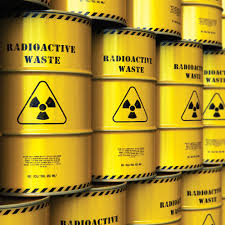
State officials negotiated with the federal government a new draft permit for the Waste Isolation Pilot Plant in southeastern New Mexico that they say would provide greater regulatory oversight and safeguards at the repository over the next decade. Officials with the New Mexico Environment Department announced that an agreement was reached after four days of negotiations. The state first outlined its terms in December, seeking to ensure that high-level waste such as diluted plutonium wouldn't find its way to the state.
The Waste Isolation Pilot Plant in southeastern New Mexico plays a key role in the nation's multibillion-dollar effort to clean up radioactive waste left behind by decades of nuclear research and bomb-making. Currently, it's licensed to take what is known as transuranic waste, which is waste generated by the nation's nuclear weapons program that is contaminated with radioactive elements heavier than uranium.
New Mexico also could move to revoke the permit if Congress were to increase WIPP's capacity or expand the types of waste that could be sent there. State officials and watchdogs have said that language serves as a hedge against New Mexico becoming the nation's permanent dumping ground. Under the permit, the Energy Department would have to document its progress in siting another underground repository in a state other than New Mexico through a new annual report as well as hold quarterly meetings to update the public.
|
|
SCOTUS affirms Indian Child Welfare Act
The US Supreme Court upheld a decision in a 7-2 vote on the constitutionality of the 1978 Indian Child Welfare Act, which established standards for removing Native American children from their families and created a preference for placing those who are removed with either relatives or other Native American families. As reported by SCOTUSblog, the US Supreme Court agreed in February 2022 to hear arguments in Haaland v. Brackeen and three consolidated cases following a mixed ruling out of the Fifth Circuit Court of Appeals. Justice Amy Coney Barrett wrote for the majority in yesterday's ruling, in a 34-page opinion; Justices Clarence Thomas and Samuel Alito each filed separate dissents.
|
|
Duke Energy and Amazon Unveil Kentucky rooftop solar project
Kentucky’s biggest rooftop solar development is now online through a partnership of Duke Energy Corporation and Amazon.com Inc., which are both aiming to boost progress toward corporate climate goals. The project is Duke's largest regulated rooftop solar development, the fourth utility-scale solar project in Kentucky owned and operated by the company. It aligns with Duke's goal to achieve net-zero carbon emissions by 2050 and Amazon's commitment to do the same by 2040.
The new array, based near the Cincinnati/Northern Kentucky International Airport in Boone County, is in operation and can produce up to 2 megawatts of electricity — enough to power about 400 homes and businesses. The added solar power is also a step toward cleaning up the energy mix in coal-heavy Kentucky. Solar installations in Kentucky have climbed over the years, due in part to federal incentives. More than 80 MW of new solar capacity was installed in Kentucky in 2022.
The new solar project consists of more than 5,600 photovoltaic panels on an 800,000-square-foot Amazon Air Hub rooftop, a $1.5 billion site that opened in 2021 to support the online retail giant's growing air cargo network. The changes were approved by state utility regulators in March and are set to go into effect in October, but they face a legal challenge from some clean energy and environmental groups.
|
|
Almost half of U.S. tap water contains ‘forever chemicals’
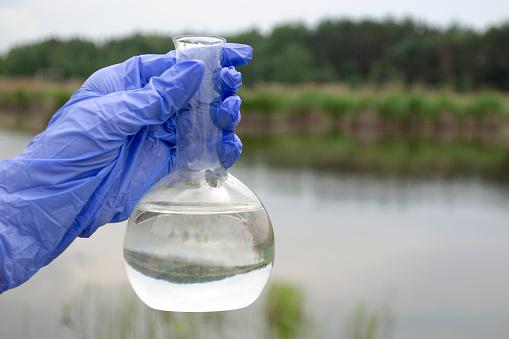
In a first-of-its-kind study, the U.S. Geological Survey determined that at least 45 percent of water supplies are polluted with PFAS. The report offers yet more ammunition to regulatory proponents who have pushed for a strong-armed approach to cracking down on PFAS. Their push has already sparked significant results, with the tackling of the chemicals through a range of statutes as regulators seek to bring the crisis under control.
In the report released, scientists found that both private and government-regulated public water sources contain one or more types of PFAS. That proliferation extends to "at least 45% of the nation's tap water," according to USGS estimations, with the number possibly higher.
Although the presence of those compounds in water systems has long been established, the USGS study sheds light on the sheer extent of the contamination. Scientists collected tap water samples from 716 locations while working to represent areas described as having low, medium, or high levels of human impact. A low categorization includes public lands offering some level of protection from people, while medium extends to residential and rural areas that are not known to have sources of PFAS contamination.
The USGS findings underscore just how challenging imposing those thresholds will be, given that much of the country's water is impacted. Utilities have long asserted that the cost and feasibility of addressing the crisis will require significant aid from the government, with the burden otherwise set to fall on taxpayers. In the meantime, many have turned to litigation targeting chemical giants like 3M and DuPont as they seek damages, a trend that has spawned settlement agreements stretching upward of $12 billion.
|
|
The Environment and Natural Resources Division is hosting upcoming training sessions for state government environmental law practitioners. Each training is virtual and free to attend!
Counsel for State and Local Affairs | Law and Policy Section | Environment and Natural Resources Division | U.S. Department of Justice
|
|
|
|
Session 3: Bringing Civil Cases to Protect Animal Welfare
Zoom Webinar
July 13, 2023, 2:00-3:00 PM Eastern Time
This presentation, provided by Trial Attorney Mary Hollingsworth, who has handled many of ENRD's animal welfare protection civil cases, she will review the civil authorities available and discuss the types and nature of evidence required to establish an effective claim.
|
|
|
|
Session 4: Best Practices for Community Outreach to Further Environmental Justice
Zoom Webinar
August 8, 2023, 2:00-3:00 PM Eastern Time
This presentation will take the form of a panel discussion. The panelists will discuss ways of planning for community outreach, providing meaningful opportunities for community input and information, and effectively using the information gained through community outreach to further the goals of enhancing equity in environmental enforcement.
|
|
Haaland v. Brakeen, --- S. Ct. ---, 2023 WL 4002951 (June 15, 2023).Petitioners failed to demonstrate that the Fifth Circuit erred in holding that the provisions of the Indian Child Welfare Act (ICWA) were within Congress’ authority to enact, and ICWA’s placement preferences, recordkeeping requirements, and mandate that active efforts be made to prevent the breakup of Indian families did not violate the anti-commandeering provisions of the Tenth Amendment.
|
|
In re Cal E., a Minor, 2023 IL App. (4th) 220930, --- N.E. 3d --- (June 16, 2023). Good cause existed to deny transfer of placement proceedings regarding two minors enrolled as members of a remote Alaskan Native Village accessible only by plane when nearly all witnesses necessary to determination of the best interests of the minors lived in Illinois. Additionally, parents’ objections to the transfer were not rendered a nullity by the death of both parents.
Graham v. White, 2023 WL 4141662 (N.D. Okla. June 22, 2023). On petition for habeas corpus, federal court ordered release of member of Cherokee Nation convicted in state court for manslaughter occurring within bounds of Muscogee (Creek) Nation Reservation prior to holding in McGirt v. Oklahoma, finding that the Oklahoma Court of Criminal Appeals (OCCA) arbitrarily vacated district court’s grant of post-conviction relief issued in reliance on (OCCA’s) decision, later vacated, that
|
|
postconviction relief was available to invalidate convictions that were final before McGirt was decided.
Incorporated inter-tribal council providing health and community development services to member Tribes, which owned and controlled the council, was an arm of the Tribes entitled to tribal sovereign immunity.
Oil company was required to exhaust tribal court remedies before bringing federal action to enjoin proceedings by allotment owners claiming breach of agreement with the company to prohibit smoking by company employees while on right-of-way through allotments.
Land, purchased by Tribe pursuant to Congressional directive that $100,000 of Indian Claims Commission judgment be used to purchase lands to be held in trust, fell within the Indian Gaming Regulatory Act’s settlement-of-a-land-claim exception to the general prohibition on gaming operations on lands acquired after October 17, 1988.
|
|
All summaries are posted in CWAG's google docs account, accessible through the link below. Should you have any issues with the links, contact Patricia Salazar at psalazar@agalliance.org with any questions.
|
|
Conference of Western Attorneys General
5050 Laguna Blvd | Suite 112-323 | Elk Grove, California 95758
|
|
|
|
|
|
|