News & Updates from CWAG
June 6, 2023
|
|
|
|
Colorado Attorney General Phil Weiser released the following statement regardingU.S. Supreme Court’s opinion in Sackett v. U.S. Environmental Protection Agency. |
|
Arizona Attorney General Kris Mayes announced she has filed suit against manufacturers of products that contain per- and poly-fluoroalkyl substances (or “PFAS”), a class of man-made chemical compounds causing widespread pollution of the State’s groundwater.
The lawsuit, filed in Maricopa County, alleges that PFAS compounds used in various industrial and consumer products contaminated the environment and present an ongoing public health risk.
PFAS compounds do not break down in the environment and will remain for decades unless clean-up efforts are undertaken. The suit alleges that the manufacturers knew of these risks yet failed to inform State regulators, users, or consumers of the hazards posed by using these products as directed.
|
|
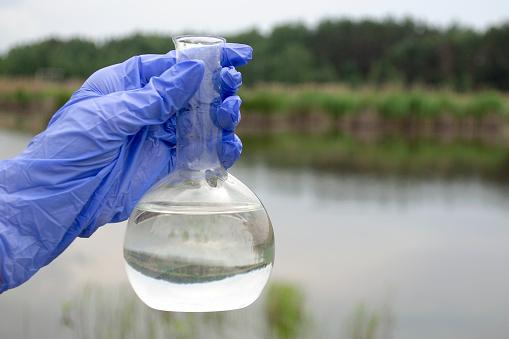
Attorneys General of the States of Arizona, California, Colorado, Connecticut, Delaware, Illinois, Maine, Maryland, Massachusetts, Michigan, New Jersey, New York, North Carolina, Oregon, Pennsylvania, Wisconsin, and the District of Columbia urged the EPA to finalize proposed PFAS drinking water standards. A 17-state coalition filed comments to the U.S. Environmental Protection Agency (EPA) supporting the agency’s proposal to set enforceable drinking water standards for six per- and polyfluoroalkyl substances—more commonly known as PFAS or “forever” chemicals. |
|
Supreme Court limits federal government’s ability to police pollution in certain wetlands
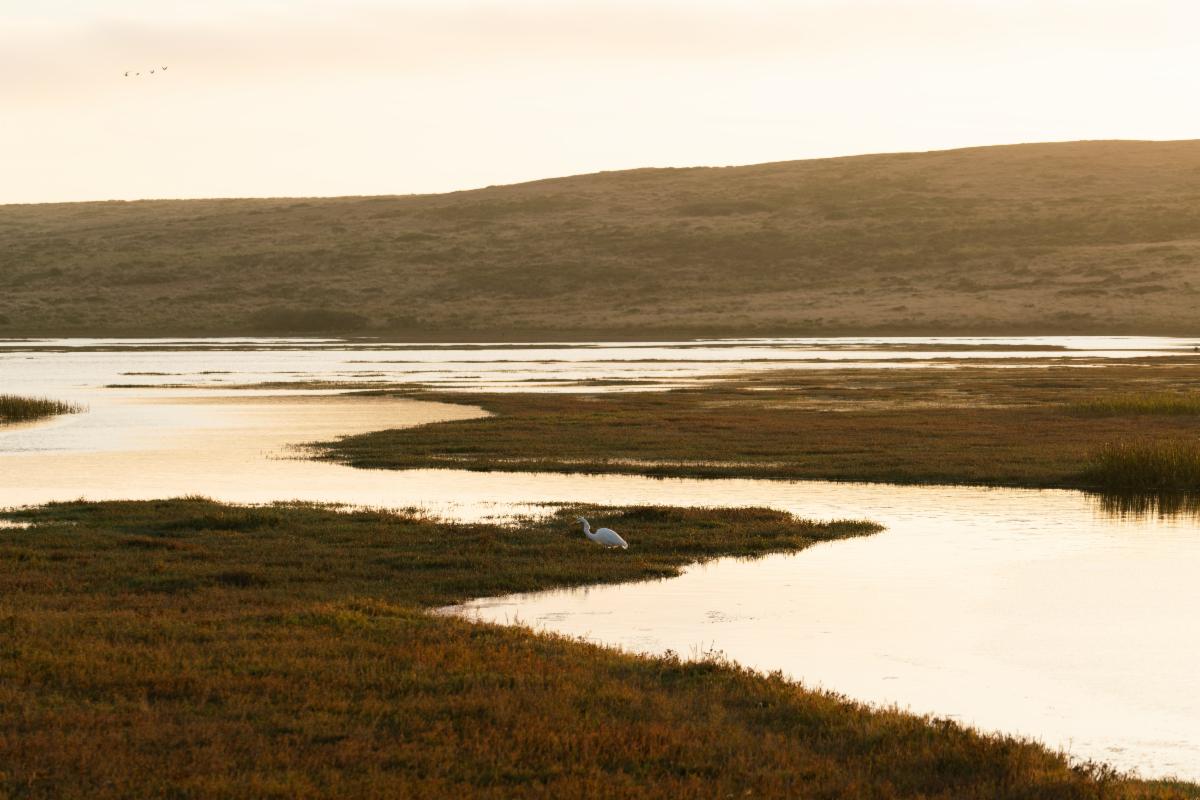
The Supreme Court limited the federal government’s authority to police water pollution into certain wetlands, the second decision in as many years in which a conservative majority narrowed the reach of environmental regulations. The outcome could threaten efforts to control flooding on the Mississippi River and protect the Chesapeake Bay, among many projects.
The justices boosted property rights over concerns about clean water in a ruling in favor of an Idaho couple who sought to build a house near Priest Lake in the state’s panhandle. By a 5-4 vote, the court said in an opinion that wetlands can only be regulated under the Clean Water Act if they have a “continuous surface connection” to larger, regulated bodies of water.
|
|
The District Court of Wyoming found that four hunters did not trespass while crossing from one corner of public land to another
The corner-crossing battle in Wyoming seems to be over. The District Court of Wyoming found that crossing from one corner of public land to another corner of public land is legal while stepping through private airspace.
The ruling comes after four hunters crossed a corner of the Elk Mountain Ranch. A U.S. District Judge ruled in favor of four hunters who crossed a corner of the Elk Mountain Ranch.
The Order states: “. . . the Court finds that where a person corner crosses on foot within the checkerboard from public land to public land without touching the surface of private land and without damaging private property, there is no liability for trespass.”
The fact that the hunters won the civil case will have broad implications for public land hunters in Wyoming.
|
|
|
|
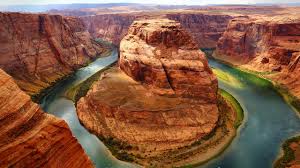
The Colorado River is shrinking. See what’s using all the water and what this means for California. |
|
Farmers in the Klamath River Basin are pressing the Supreme Court to intervene in their long-running battle over the region's water — asserting that what started out as a challenge to a federal agency's operating plan now threatens to undermine water rights across the West. The Klamath Irrigation District, which represents farms and other water users in Oregon and California, filed a petition to the Supreme Court seeking to review its latest challenge to the Bureau of Reclamation. |
|
The Environment and Natural Resources Division is hosting upcoming training sessions for state government environmental law practitioners. Each training is virtual and free to attend!
Counsel for State and Local Affairs | Law and Policy Section | Environment and Natural Resources Division | U.S. Department of Justice
|
|
Session 2: Effective Expert Reports in Federal Cases - Zoom Webinar
June 13, 2023, 2:00pm - 3:00pm Eastern Time
Most environmental enforcement actions require testimony by expert witnesses. This interactive presentation will discuss working with expert witnesses when reviewing and finalizing expert disclosures. After reviewing the federal requirements for expert disclosures, participants will be asked to review excerpts of actual draft expert reports and spot issues related to compliance with the legal requirements and effective strategy. In a guided discussion of these issues, participants will discuss how to remedy the identified issues and how to effectively work with various types of experts and personalities to ensure an accurate but persuasive presentation of the facts.
|
|
Session 3: Bringing Civil Cases to Protect Animal Welfare - Zoom Webinar
July 13, 2023, 2:00-3:00 PM Eastern Time
This presentation, provided by Trial Attorney Mary Hollingsworth, who has handled many of ENRD's animal welfare protection civil cases, she will review the civil authorities available and discuss the types and nature of evidence required to establish an effective claim.
|
|
Session 4: Best Practices for Community Outreach to Further Environmental Justice - Zoom Webinar
August 8, 2023, 2:00-3:00 PM Eastern Time
This presentation will take the form of a panel discussion by several of ENRD's Environmental Justice Coordinators. The panelists will discuss ways of planning for community outreach, providing meaningful opportunities for community input and information, and effectively using the information gained through community outreach to further the goals of enhancing equity in environmental enforcement, particularly with respect to decisions regarding the appropriate relief for environmental violations.
|
|
All summaries are posted in CWAG's google docs account, accessible through the link below. Should you have any issues with the links, contact Patricia Salazar at psalazar@agalliance.org with any questions.
|
|
Oglala Sioux Tribe v. U.S., 2023 WL 3606098 (D.S.D., May 23, 2023). The United States has a treaty duty unique to the Oglala Sioux Tribe to provide protection and law enforcement cooperation and support on the Pine Ridge Reservation, but whether the Tribe will ultimately succeed on the merits on its claim that the duty requires the U.S. to provide funding above current base funding and service population calculations is “debatable,” requiring discovery and development of a factual record.
|
|
to proposed mining road through federal, state, and Alaska Native Corporation (ANC) lands restricted mining company from conducting ground-disturbing road construction on ANC lands regardless of whether the ANCs were signatories to the PA.
Northern Alaska Env’t Ctr. v. Haaland, 2023 WL 3661998 (D. Alaska, May 25, 2023). Programmatic Agreement (PA) to resolve National Historic Preservation Act issues relating to proposed mining road through federal, state, and Alaska Native Corporation (ANC) lands restricted mining company from conducting ground-disturbing road construction on ANC lands regardless of whether the ANCs were signatories to the PA.
Driever v. Reeb, 2023 WL 3723730 (D.N.M., May 30, 2023). Federal court lacked subject matter jurisdiction to hear claim that grandmother of Indian children was entitled to ten days notice prior to state court order awarding temporary custody of children to other grandmother due to emergency situation.
|
|
BIA could not partition the 5.55% interest held in fee by another owner.
|
|
Conference of Western Attorneys General
5050 Laguna Blvd | Suite 112-323 | Elk Grove, California 95758
|
|
|
|
|
|
|