|
Children with Autism Spectrum Disorder (ASD) often experience anxiety, which can range from mild to more clinically impairing presentations. It is important for providers working with children with ASD to have practical tools to support children in managing anxiety.
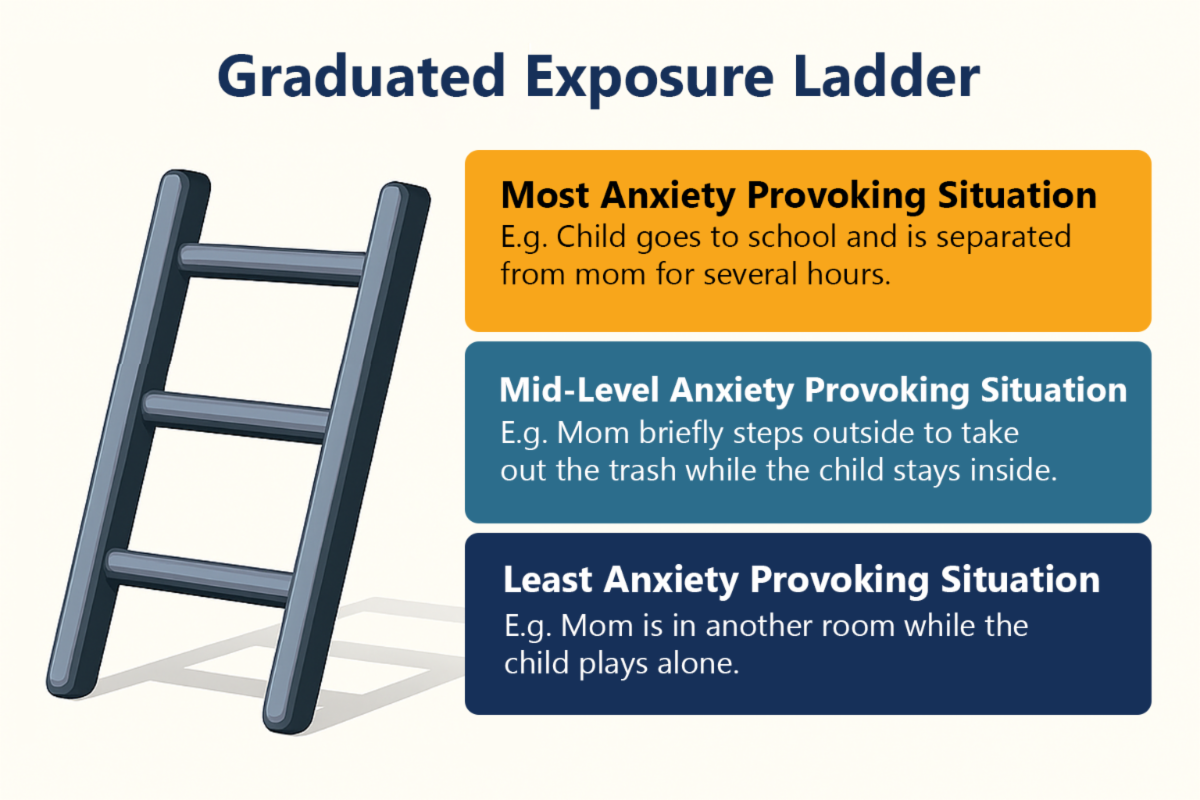
One effective approach is called graduated exposure. This involves helping children gradually face anxiety-provoking situations in a structured and supportive way. You can think of it like a three-step ladder: the top of the ladder represents the most anxiety-inducing situation, the middle step as moderate, and the lowest step as a lower or somewhat anxiety-inducing situation.
For example, consider an eight-year-old boy with ASD who is afraid to be separated from his mother, even at home. The top of the ladder might be being separated from her while at school. The middle step could be staying home while she briefly steps outside to take the trash out. The lowest step might be the child staying in one room while she is in another part of the house.
To support the child through these steps, begin by identifying soothing and enjoyable activities. For children with limited speech, this might include favorite toys, foods, or sensory experiences. You can also introduce coping strategies such as mindfulness skills (e.g., awareness of each breath) or relaxation skills. It’s helpful to practice these coping skills during calm moments so the child becomes familiar with them and can use them more easily when feeling anxious.
Next, work with the family to take small, manageable steps toward facing anxiety-inducing situations. These steps should be paired with practicing coping strategies or enjoyable activities. For instance, the child might play with his favorite dinosaur toy in the living room while his mother goes into her bedroom and closes the door for 10 seconds. Once he can do this comfortably for several days, the next step might be extending the time to a few minutes. Over time, the mother can gradually increase both the duration and distance, eventually stepping outside for brief tasks or even supporting the child attending school without her.
Visual supports can also be very helpful. These might include illustrations of breathing techniques, visual schedules, or charts that show how many times the child needs to practice a skill before earning a reward, such as a fun activity or tasty treat. For verbal children, adding a coping statement to the visual support can reinforce helpful ways of thinking. For example: “Mom and I are going to be safe. We’ll see each other soon.”
Most importantly, the process should be engaging and positive. Incorporating the child’s interests can make practice more motivating, enjoyable, and meaningful. When children associate these steps with fun and success, they’re more likely to build confidence and resilience in the face of anxiety.
See our free downloadable autism resources: Autism Resources
|