|
Dear ,
As of July 1, the new California state budget took effect, and with it the full restoration of the $20 million state appropriation for CASA programs, funding that had been eliminated in its entirety the year before. This restoration is the direct result of our network’s legislative advocacy. Across all 44 local programs, program leaders, board members, staff, volunteers, and supporters met with their elected officials, made calls, sent emails, signed letters, and told the stories of the children and youth we serve in the foster care and juvenile justice systems. It was the highest level of legislative advocacy in the history of our network, and those constituent voices strengthened and amplified our work in Sacramento.
This investment restores a meaningful measure of financial security to all 44 local programs and to the state association that supports them, and it allows us to begin expanding our reach. Our shared goal remains unchanged: that every child and youth in the foster care and juvenile justice systems has the consistent support and steadfast advocacy of a CASA volunteer.
With gratitude,
| | | | |
Vince Hall
CEO, California CASA Association
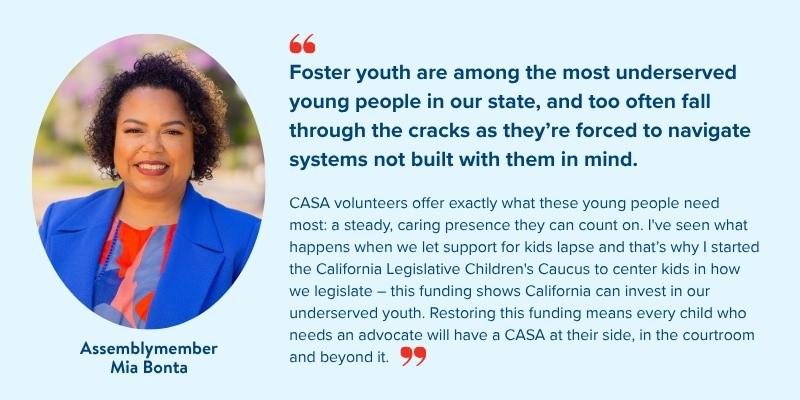
| | The restoration of $20M in one-time State funding for CASAs was a significant win for our network of 44 programs and a strong endorsement of the CASA model by the California Legislature and Governor. Assemblymember Mia Bonta, our budget champion in the Assembly shared her support with this statement: | Our budget advocacy continues as we work to secure a permanent source of State funding for CASAs, one that will provide a stable stream of revenue that enables our network to dedicate its time to fulfilling our collective mission of advocating for children and youth in the foster care and juvenile justice systems. | | |
After years of advocacy led by California CASA and its network, in May 2026, California Assembly Bill 741 (Ransom) took effect. The bill requires the California Department of Justice to provide real-time notifications to Court Appointed Special Advocate (CASA) programs if a current volunteer or employee is added to the Child Abuse Central Index (CACI). Previously, CASA programs relied on re-fingerprinting volunteers every four years. The bill closes a dangerous gap by ensuring real-time alerts are made to programs.
With the California Legislature returning to session this week, we continue tracking the 13 bills we have taken a support position on.These bills aim to strengthen family preservation and kinship placement, increase protections for vulnerable youth, improve access to education, housing, and extended care, and advance equity for tribal communities and foster youth.
| | |
Regional Meetings Strengthen
Collaboration Across California
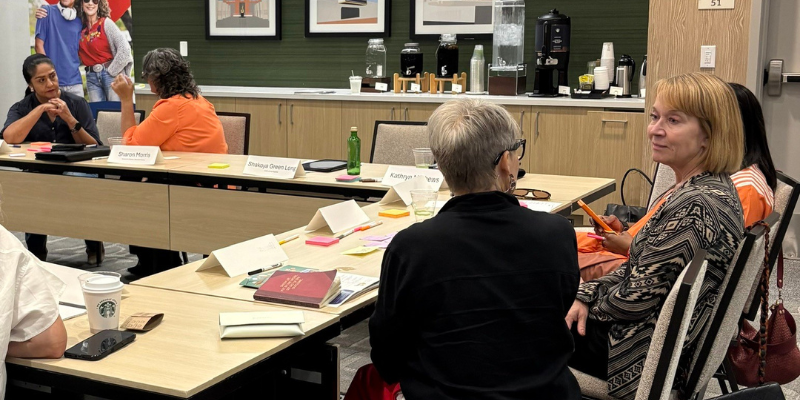
| This Spring and Summer, we hosted a series of regional meetings across the state, including North/Bay Area (May 28–29) and Southern California (July 17-18). Each convening brought together CASA program leaders for two days of connection, shared learning, and strategic discussion. Participants engaged in interactive exercises, such as a facilitated problem-solving lab and group reflections, creating space to exchange ideas and identify strategies applicable across their region. Meetings also included dedicated time for networking, allowing attendees to build relationships and deepen connections. Regional meetings continue to play an important role in aligning our work, elevating promising practices, and strengthening our network. | | California CASA State Conference | | |
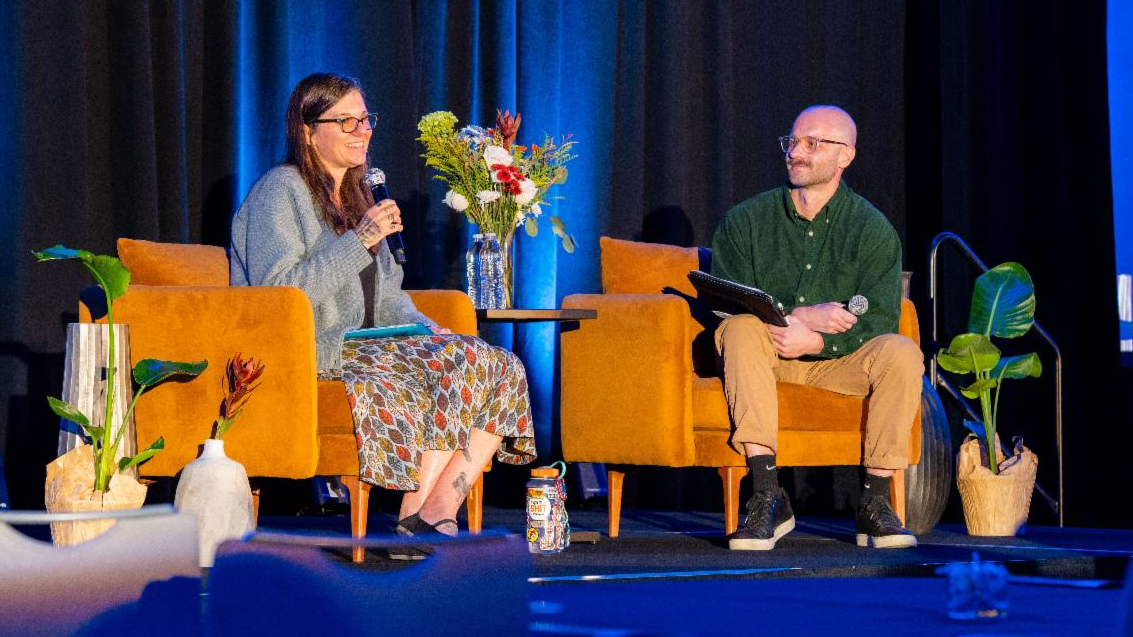
This September, California CASA will welcome over 350 staff from across the state to our 2026 California CASA State Conference. Centered around this year's theme, "Coming Together, Shaping Our Collective Impact," the conference will provide opportunities to strengthen connections, share promising practices, and explore new ideas that advance our collective work on behalf of children and youth in foster care and the juvenile justice systems.
The three-day event will feature inspiring plenary speakers: Jarl Mohn, President Emeritus and former CEO, National Public Radio (NPR), Dr. Robert Sege, Professor of Medicine and Pediatrics at Tufts University and Co-Director of the HOPE National Resource Center, and Thomas Vozzo, former CEO and Current Advisor at Homeboy Industries; engaging breakout sessions with tracks in juvenile justice and foster care programming, philanthropy and communications, leadership, and volunteer recruitment; and meaningful networking opportunities designed to foster collaboration across California's CASA network.
| Thank You to Our 2026 Conference Sponsors: | | Network Training Highlights | | We continue to support the network through a strong lineup of webinars designed for CASA staff, volunteers, and leadership. During the last quarter, we hosted seven trainings covering key areas such as financial resources, mental health, youth development, education, and organizational operations, delivered in partnership with expert organizations, including the American Foundation for Suicide Prevention, The Bridgespan Group, Seneca Center, San Francisco CASA, and John Burton Advocates for Youth. | | Introducing the New California CASA Website | |
We're excited to unveil the redesigned California CASA website! With a fresh new look, streamlined navigation, and expanded volunteer education resources, it's easier than ever to learn about our mission, explore available resources, and discover how you can make a difference as a CASA volunteer.
Special thanks to Andrea Levin for bringing our vision to life!
| | DID YOU KNOW? As of January 1, 2026, you can now deduct up to $1,000 in charitable donations ($2,000 for couples), regardless if you itemize. Lock in your support and tax savings today! | | California CASA is a 501(c)(3) nonprofit organization. All gifts are tax-deductible to the extent allowed by law. Our IRS tax ID number is 68-0163010. California CASA is a member of National CASA/GAL. | | | | |