Employment Defense

August 2026

DOL Opinion Letters Address Hybrid Worker Travel and Pre-Shift Work: California Employer Takeaways

On July 22, the U.S. Department of Labor's Wage and Hour Division issued two new opinion letters addressing questions that have become increasingly common in today’s remote-work reality: when does commuter travel for hybrid workers become compensable time, and when does pre-shift work trigger the start of compensable hours?


The New Opinion Letters


FLSA2026-9: Mid-Day Commuting for Hybrid Workers


The first opinion letter tackles a fact pattern familiar to many employers with flexible work arrangements: an employee who, for personal convenience, requests to start and end the workday from home to avoid rush hour traffic – commuting to and from the office midday instead. The DOL opined this type of mid-day travel does not constitute compensable time:


Generally, travel from home to work before the workday begins, and from work to home after it ends, is considered a “regular commute” that is not compensable.


Per the DOL, an ordinary home-to-work or work-to-home commute “is not considered work under the FLSA” whether it occurs before, after, or within the workday.


Note, however, that if mid-day travel is not “ordinary” – because it primarily benefits the employer rather than the employee for example – it may still be compensable.


The practical effect: employers with hybrid arrangements where employees voluntarily split time between home and the office need not treat mid-day commutes as compensable worktime, provided the arrangement is at the employee’s request. Note, however, other travel during the workday - such as travel from job site to job site, or from the office to a job site and back- remains compensable time.


FLSA2026-10: Field Employees


The second opinion letter issued on July 22 addresses compensable time for field workers. This opinion letter involved a field service engineer who installs and services MRI systems at client locations, has no fixed office, and drives an employer-provided vehicle. Each morning between 7:00 and 8:00 a.m., the engineer receives service request pages and then calls clients to schedule appointments – sometimes from home before leaving, and sometimes while driving to the first job site.


Per the DOL the “minimal time” spent accepting pages (approximately 15 seconds each) is excluded from compensable hours worked, whereas calling clients to schedule appointments is compensable time.


California employers beware: Under California law, any time an employee is subject to the employer’s control, that time must be recorded and paid. Further, the “minimal time” concept (also known as de minimis) is no longer recognized in California and was officially rejected by the California Supreme Court in Troester v. Starbucks Corporation.


In other words, California employers should not follow the guidance provided in FLSA2026-10. Notably, employers who have field employees should also be aware that while traveling to different job sites is considered an expectation of the job, traveling to a distant worksite may be considered compensable travel time. 


Upcoming Presentations


August 27, 2026:


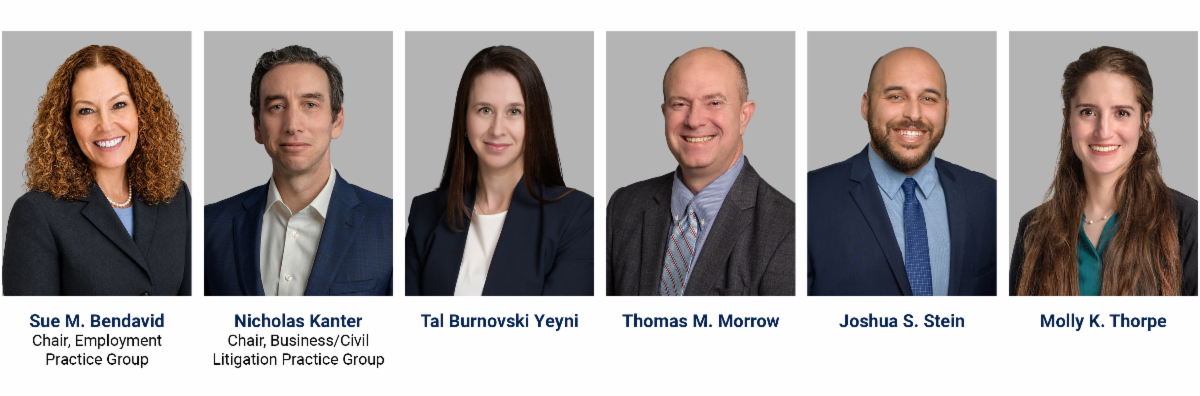
California mandated Anti-Harassment, Discrimination, Bullying and Retaliation Training for Non-Supervisors, available through Lorman Training. Sue M. Bendavid presents. Registration and purchase details available at the Lorman website.


September 17, 2026:


California mandated Anti-Harassment, Discrimination, Bullying and Retaliation Training for Supervisors, available through Lorman Training. Sue M. Bendavid presents. Registration and purchase details available at the Lorman website.


October 8, 2026:


Live webinar, Hiring Best Practices for Non-HR Mangers, available through Lorman Training. Tal Burnovski Yeyni presents. Registration and purchase details available at the Lorman website.


Employer Pro Tip:


Audit Off-the-Clock Work

Employers should periodically audit whether non-exempt employees are performing work before clocking in, after clocking out, during meal periods, or outside their scheduled hours. Common examples include checking or responding to emails or messages, completing paperwork, preparing for the workday, finishing an assignment, or taking work home.


A policy prohibiting off-the-clock work is important, but it is not enough if supervisors know – or should know – that employees are working outside recorded hours. Employers should remind managers and employees that all time worked must be accurately recorded and reported.


If an audit identifies off-the-clock work, identifying and correcting any underlying causes can help prevent small amounts of unpaid time from becoming a larger wage and hour problem.


Employer FAQs:


What is the timing for taking meal and rest breaks?


A meal period must begin no later than the end of the employee’s fifth hour of work. A second meal period must begin no later than the end of the tenth hour. For example, if an employee clocks in at 8:00 a.m., the first meal period must start by 12:59 p.m. and the second by 5:59 p.m.


Rest breaks should occur as close to the middle of each work period as practicable.


If rest periods are paid, can I require employees to remain on-site during breaks?


No. Although rest periods are paid, they must be duty-free. See Augustus v. ABM Security Services, Inc. (2016) 5 Cal.5th 257, 269: “[D]uring rest periods employers must relieve employees of all duties and relinquish control over how employees spend their time.”


Publications 
& Presentations

Best of L.A. Legal 2026, Los Angeles Magazine - Sue M. Bendavid selected


Leading Employment Lawyers: Los Angeles 2026, Doyle's Guide - 
Sue M. Bendavid
recommended


2026 California Employment Defense: Mid-Year Update, webinar - Sue M. Bendavid and Tal Burnovski Yeyni


AI, CCPA, FEHA: Navigating New California Risks in HR, Professionals in Human Resources Association (PIHRA) - Sue M. Bendavid presented


Employment Blogs

California Court Rules: Harassment Based on Sexual Orientation Is Sexual Harassment

- Molly K. Thorpe


California Minimum Wage Increases in 2027 - Sue M. Bendavid


IRS Updates Mileage Reimbursement Rate: What California Employers Should Know - Sue M. Bendavid

Employment Practice Group

 
LinkedIn  Instagram  Facebook  X