Letter from the Executive Director | |
Dear Friends of the California Marine Sanctuary Foundation,
As we embark on a new year, I’m excited to share exciting updates and milestones in our collective mission to protect our coasts and ocean.
In our journey toward California’s 30x30 goals, the BEST (Baylands and Estuary Science Towards 30x30) working group has been hard at work addressing the critical challenges estuaries face, such as sea level rise and water quality. These vital ecosystems are not only the lifeblood of biodiversity but also a natural defense against climate change. We’re proud of the efforts by CMSF scientist Dr. Rikki Eriksen and our partners to ensure estuaries remain functional and thriving for generations to come.
As we reflect on the ten years since California’s marine protected areas (MPAs) were established, it’s clear that our efforts are making a difference. The Decadal Management Review confirms that MPAs are working, yet it also highlights the need for ongoing adaptation in the face of climate change. Our unique network of MPAs offers an invaluable opportunity to build resilience against these stressors, and we’re committed to strengthening this legacy.
Finally, I’m excited to announce two unique opportunities to join our mission. We are hiring a Chief of Staff to help guide our growing organization, and we’re thrilled to host a NOAA Coastal Resilience Fellow, who will support vital outreach and communication efforts. If you’re passionate about marine conservation and seeking meaningful ways to make an impact, we encourage you to explore these roles.
| Thank you for your dedication to California’s coast and ocean. | |
|
Robert Mazurek
Executive Director
California Marine Sanctuary Foundation
| |
Achieving 30 X 30 in California Estuaries
(BEST – Baylands and Estuary Science Towards 30 X 30)
| |
|
Estuaries, with their diverse habitats including tidal wetlands and marshes, mudflats and seagrass meadows, are immensely valuable ecosystems. These areas link the state’s diverse landscapes, famed forests, and rivers with ocean waters and sustain marine wildlife, including salmon, seabirds, Dungeness crab, oysters, and forage fish. These, in turn, support Tribal Nations and California’s economy by providing nurseries, feeding, and breeding grounds that are vital to subsistence, recreational and commercial fisheries. Native vegetation and habitats in estuaries also help reduce the effects of climate change by storing greenhouse gases, lessening the effects of ocean acidification, and safeguarding people from more intense and frequent storms and floods. Estuarine health, therefore, has implications for California’s coastal waters, including the state’s marine protected area network and fisheries, as well as land-based decision-making.
The Baylands and Estuary Science Towards (BEST) 30 x 30 workgroup was convened by our organizations and includes scientists and practitioners with expertise in California estuaries. This group recently identified sea level rise, impaired water quality, and continuing impacts from historically altered hydrology – including dikes, dams and other diversions – as the most significant threats facing estuaries.
| |
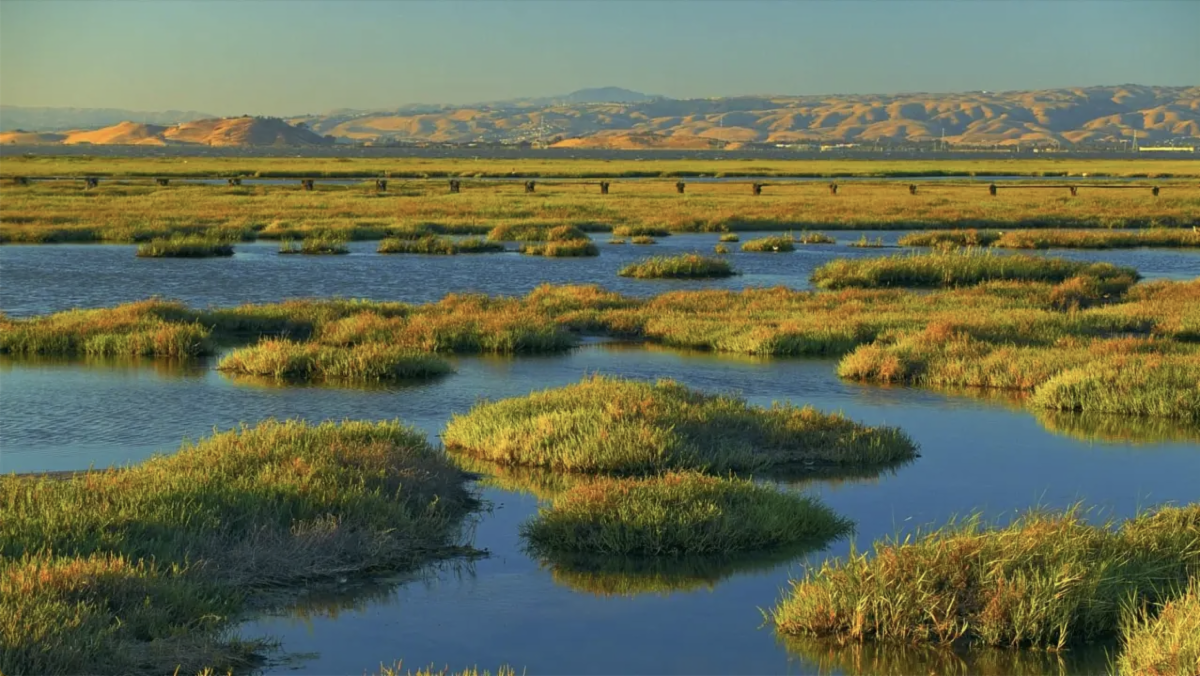
Photo showing the Bayland Nature Preserve near Palo Alto, California. Credit: Frank Chen/Getty Images. | |
These experts also note that managing and mitigating each of these threats to estuaries requires both marine and land-based management considerations and interventions, and that these considerations and interventions must be reasonably certain to occur before any area can achieve California "30x30 Conserved Area" status, which the state defines as “land and coastal water areas that are durably protected and managed to sustain functional ecosystems, both intact and restored, and the diversity of life that they support.” CMSF scientist Rikki Eriksen, PhD, is working with Pew, Central Coast Wetlands Group, and Coastal Policy Solutions to help ensure that California’s coastal communities are prepared for threats in the future. | |
Marine Protected Areas
Decadal Management Review
| |
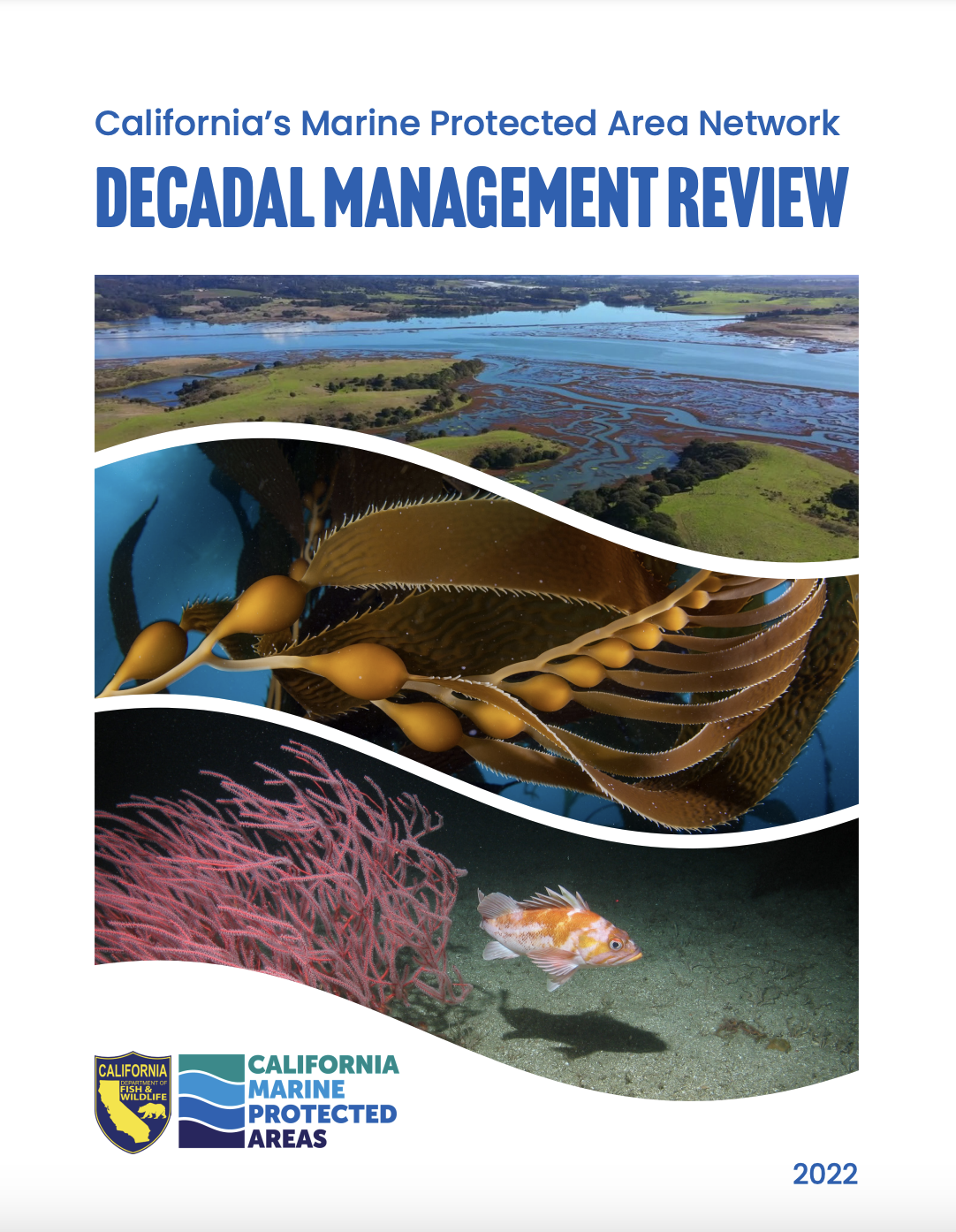
 | | Following an arduous community centered process, California established a globally recognized network of 124 marine protected areas, or MPAs in 2012. These MPAs, which run up and down our nearly 1,000-mile coastline in varying degrees of protection, limit certain consumptive human behaviors like fishing and collecting tidepool animals to protect and restore biodiversity and coastal resources. Led by the California Department of Fish and Wildlife (CDFW) and California Fish and Game Commission (FGC), this review process looks at how to improve success through adaptive management. From this process we have learned that California’s MPAs are working, but recovery often takes 15 or more years. Furthermore, we are starting to experience unprecedented climate disruption, which will have unpredictable consequences on our marine ecosystem. California’s network of MPAs presents a unique opportunity to evaluate the climate resiliency potential of MPAs against climate stressors like increased temperature, increased acidity, rising sea levels, changing tides and storm surges, increased erosion, and decreased oxygen.
CMSF marine scientist Rikki Eriksen, Ph.D. has led efforts to synthesize the relevant recent science of MPAs to identify opportunities to strengthen and adapt to future stressors. If you want to stay involved in the MPA adaptive management process, please find more information here.
| |
Meet Eggboards, the Newest Addition to the
Blue Whales Blue Skies Ambassador Program
| |
|
Eggboards is the latest company to join the Protecting Blue Whales Blue Skies Program as an Ambassador. Eggboards is a skateboard brand that focuses on "freedom and smooth rides" with a smaller board that as the name implies, is egg-shaped to offer a feel closer to a longboard, but with a shorter deck so it's easier to transport and travel with.
BWBS Ambassadors are consumer goods, brands, retailers, ports, and logistics companies committed to helping reduce ship strike risk to endangered whales, underwater noise and air pollution, and regional greenhouse gas emissions. They include: Santa Cruz Bicycles, Business & Pleasure Co., Limoneira, JAS Worldwide, The Block Logistics, Who Gives a Crap, Summit Coffee, The Port of Hueneme, Nomad Goods, Way Basics, Peak Design, Sonos and now Eggboards. Companies that ship with one or more BWBS VSR participants are eligible.
| |
We are thrilled to announce that our team at the California Marine Sanctuary Foundation (CMSF) is searching for a Chief of Staff. This exciting new role will serve as a strategic thought partner to the Executive Director and will play a vital role in staff and program management, organizational planning, program development, operational leadership, and will ensure the success of our overall initiatives. This is an opportunity to join our growing organization at the forefront of marine and coastal conservation efforts, and to make a tangible difference in protecting one of the world’s most iconic coastlines! | |
NOAA Coastal Resilience Fellowship | |
|
Are you interested in coastal resilience issues, marine science, environmental studies, scientific monitoring, and/or have a passion for community engagement around climate adaptation and building resilient communities?
California Marine Sanctuary Foundation and the Central Coast Wetlands Group have two fellowship opportunities, a Communications and Outreach Fellow and a Regional Monitoring Fellow, now open through the National Oceanic and Atmospheric Administration (NOAA) Coastal Resilience Fellowship program and funded as part of the NOAA Climate Resilience Regional Challenge (CRRC) grant.
The Communications and Outreach Fellow (based in Santa Cruz, CA) will assist the California Marine Sanctuary Foundation and the Monterey Bay Climate Adaptation Action Network (MBCAAN) in crafting and implementing a comprehensive communications strategy, including content creation for outreach, social media, reporting, and compelling storytelling to help build climate resilience within the region’s coastal communities (minimum High School diploma required).
The Regional Monitoring Fellow (based in Moss Landing, CA) will assist with the “Monterey Bay Climate Adaptation Regional Monitoring” project under the guidance of the Central Coast Wetlands Group located at Moss Landing Marine Labs. Activities will include collection of monitoring data, data analysis, and information sharing along with opportunities for living shorelines fieldwork. Resulting integrated regional assessment reports will support the design of future adaptation projects and policies (Master’s degree in relevant field desired).
These fellowships are full-time, hybrid in-person, two-year positions with great benefits, including medical, paid leave, transportation, and relocation expenses. Fellows will also receive on-the-job experience, mentoring, and training as a future coastal resilience leader. Positions commence in June 2025, through June 2027.
Eligibility requirements and application information may be found on the Coastal Resilience Fellowship webpage.
| |
Follow Us On Social Media | |
|
Let's connect on social media!
We post a lot of program related updates on our social channels so you can keep up on all things CMSF.
| | | | |