Letter from the Executive Director | |
For me, spring is a season of anticipation, growth, and connection—and this spirit is reflected in the work we’re doing at the California Marine Sanctuary Foundation. We’re embracing this time of year as an opportunity to deepen our relationships with community members and partners who make our mission possible.
This month’s newsletter highlights just a few examples of how these partnerships are flourishing. From the expansion of our ocean access equity work into new coastal counties, to the launch of the Monterey Bay Climate Adaptation Action Network, we are excited to build on the strong foundation we’ve created together. These efforts are grounded in listening, learning, and co-creating solutions that reflect the diverse needs and values of California’s coastal communities. With every new season and every new collaboration, we move closer to a more resilient future for our ocean.
Thank you for being part of this journey. We’re grateful for your support and look forward to what we can accomplish together in the months ahead.
| | |
Robert Mazurek
Executive Director
California Marine Sanctuary Foundation
| |
Our Newest OPC Grant
Expanding Ocean Access and Management
| | |
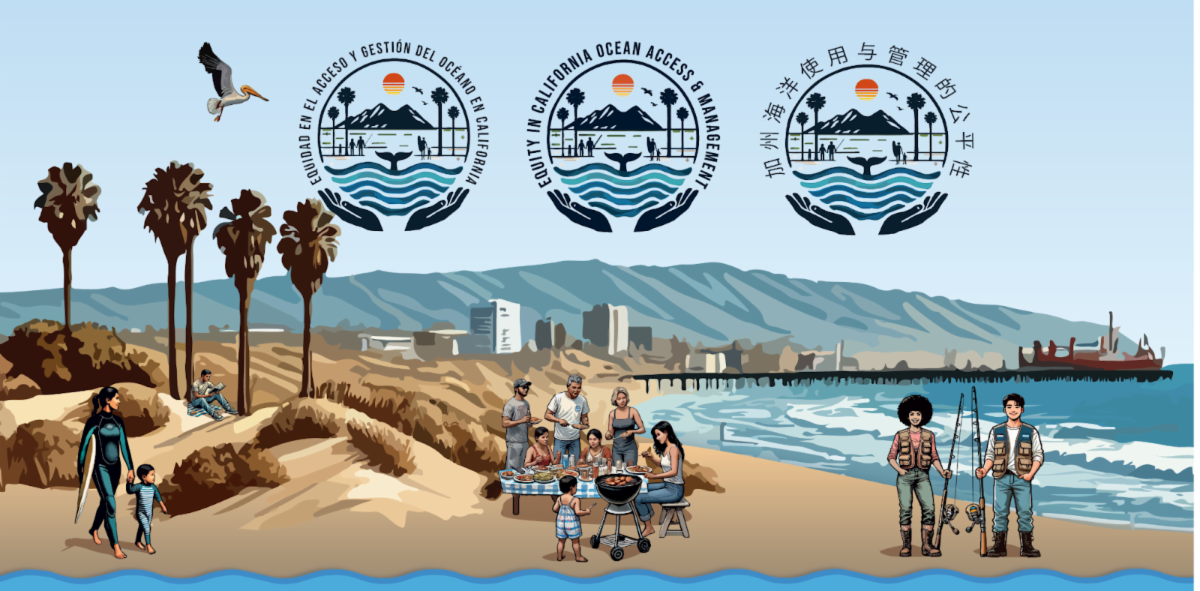
We want to share the great news that the California Ocean Protection Council (OPC) has funded two more years of the equity in ocean access and management project. The new grant is called Benefits and Barriers: Social Dimensions of Ocean Access and Marine Protected Areas Across California’s Coastal Counties. The results of this project will illuminate how ocean access, activities, benefits, and barriers vary among California’s coastal communities and how these benefits are influenced by social and environmental change.
Our new grant is a great tribute to the many people who have worked on the first two years of the project, including our community partners, students, sanctuaries, and OPC. So a big thank you to the many of you that have played roles in developing the survey, and in reaching over 2,000 people in three languages (English, Spanish, Chinese).
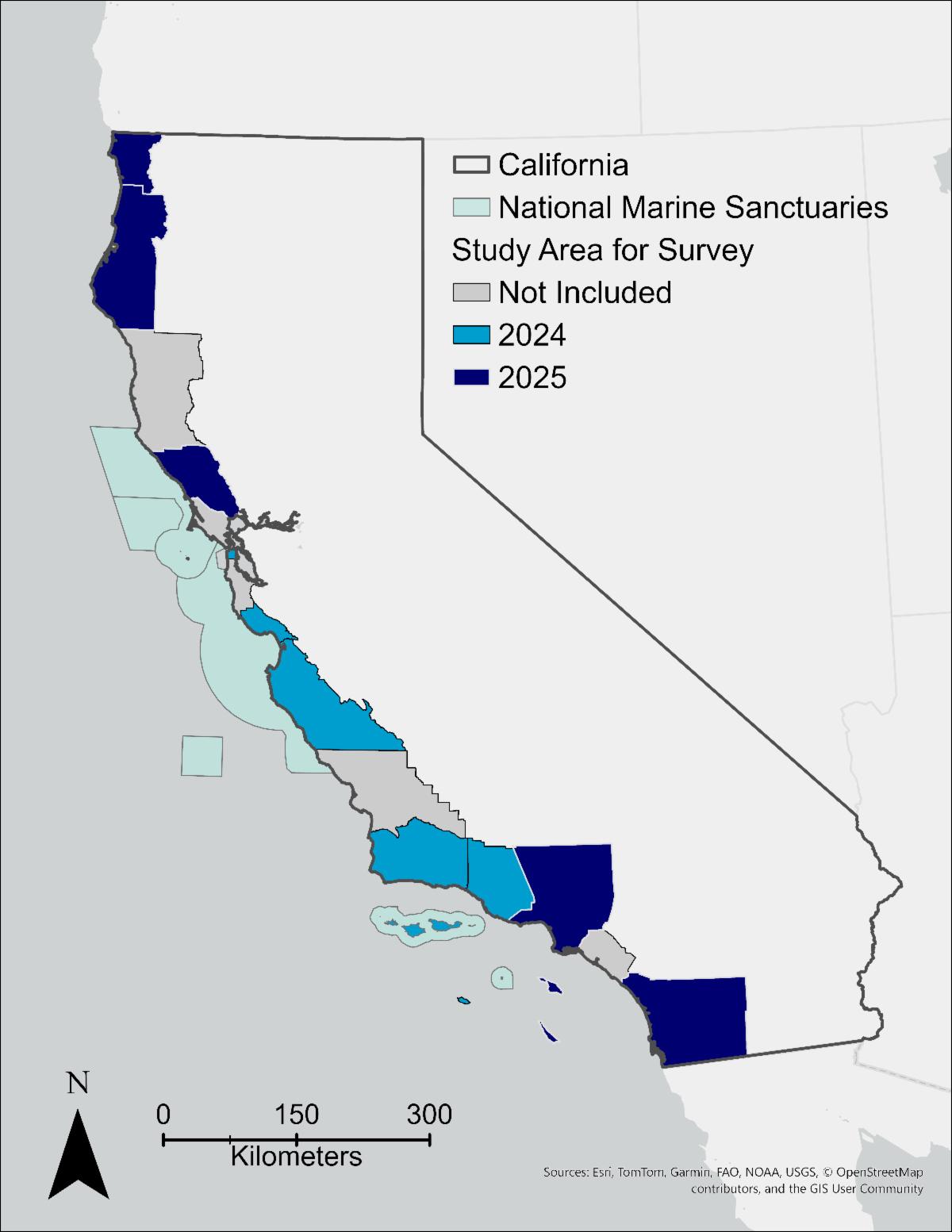
From 2025 to 2027, we will expand the survey and community partnerships in five new coastal counties (San Diego, Los Angeles, Sonoma, Humboldt, and Del Norte) and two new Sanctuaries (Greater Farallones and Cordell Bank). We will also continue to interview Tribal members to learn about specific Tribal concerns about ocean access. The project will remain focused on reaching communities that are not often included in ocean management to ensure that we have a sample of respondents that represents the state.
| |
Ocean Access Focus Groups Help Illuminate Community Experiences
Over the past two months, the ocean access project has been hosting focus groups in locations where we conducted the survey in 2024. At each focus group, participants reflected on the results of the survey for their communities, including local barriers to ocean access, how Marine Protected Areas (MPAs) could be designed to benefit their communities, and local impacts of changing ocean conditions. Our goals were to learn more about the reasons for the results, and to co-develop management suggestions addressing accessible MPAs and climate impacts to local oceans and local communities. Two focus groups were held in Spanish, and seven were held in English. We organized focus groups with community partners in San Francisco (with Literacy for Environmental Justice), in Watsonville (with Regeneracion), in Santa Barbara (with The Sea League), in Ventura (with MERITO Foundation), and in Oxnard/ Port Hueneme (with Reel Guppy Outdoor). We were helped by our graduate students Emma Gee (UCSC) and Taylor Trivino (University of Washington), and two former interns, Manuela Diaz (UCSB) and Lucas Lowe (UCSB). We’ll integrate the results from the focus group into our reports to OPC and the NOAA Sanctuary program.
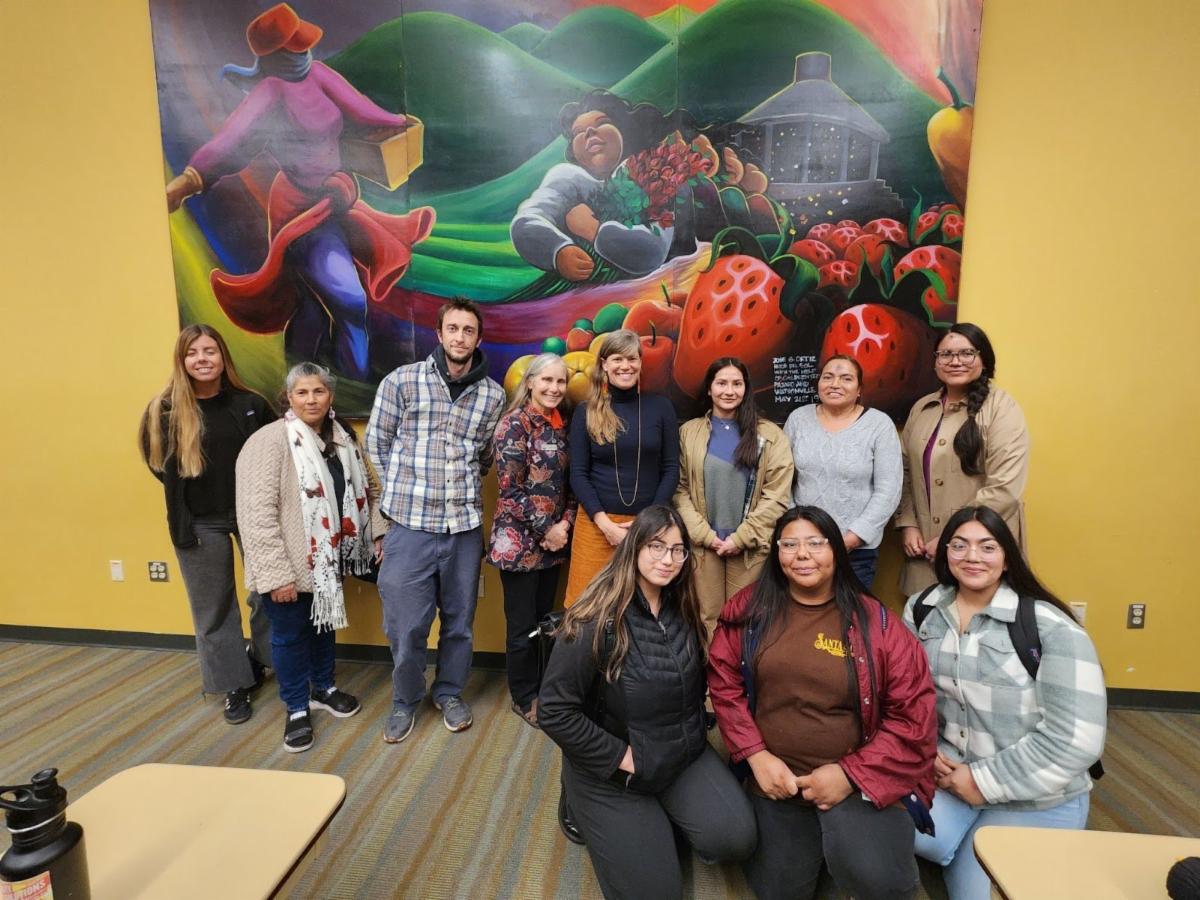
| | CMSF, UCSC, UCSB, and Regeneración Team members helped with the Spanish focus groups in Watsonville. | | |
As we think about starting this new phase of the project, we'd greatly appreciate any recommendations for connections with community leaders in the five new counties.
Partnerships have been essential for our success, and we plan to spend the next several months building partnerships in the new counties.
Any suggestions can be shared with Dr. Jenny Selgrath (jennifer.selgrath@noaa.gov).
| | Climate Resilient Monterey Bay Updates | | |
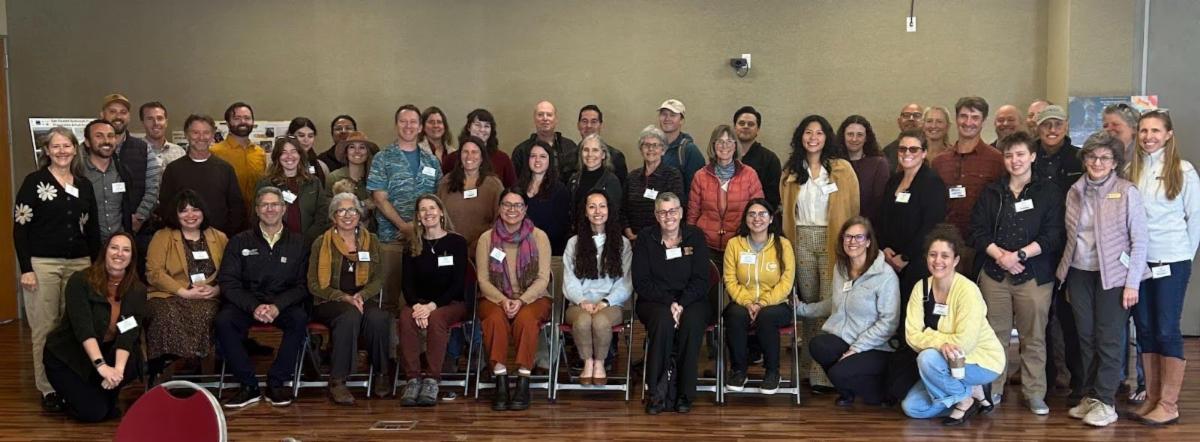
The Climate Resilient Monterey Bay grant awarded to CMSF as part of the NOAA Office for Coastal Management’s Climate Resilience Regional Challenge is off and running. In April, we enter our 7th month of this 5-year grant, and the momentum for a coordinated regional approach to climate adaptation is building. Despite the challenges of implementing this grant in the new Federal administration, CMSF is strengthening its partnerships across the region, with the official launch of the Monterey Bay Climate Adaptation Action Network (MBCAAN). Our inaugural MBCAAN meeting occurred on March 7th, with 22 different organizations represented. MBCAAN will continue throughout the full grant period and beyond to ensure longevity of the work and build the capacity of climate adaptation efforts in the region.
Please be sure to reach out to Emily Franc, MBCAAN Coordinator, if you’re interested in participating (emily@californiamsf.org). Additional engagements with the community and local Tribal groups in the region have also begun as part of our partnerships with Ecology Action, Regeneración, Four Directions, and Collaborative for Right Relations. This outreach effort will be instrumental in laying the groundwork for the climate adaptation work in the region to be conducted with an inclusive and cooperative approach.
| | Protecting Blue Whales Blue Skies | |
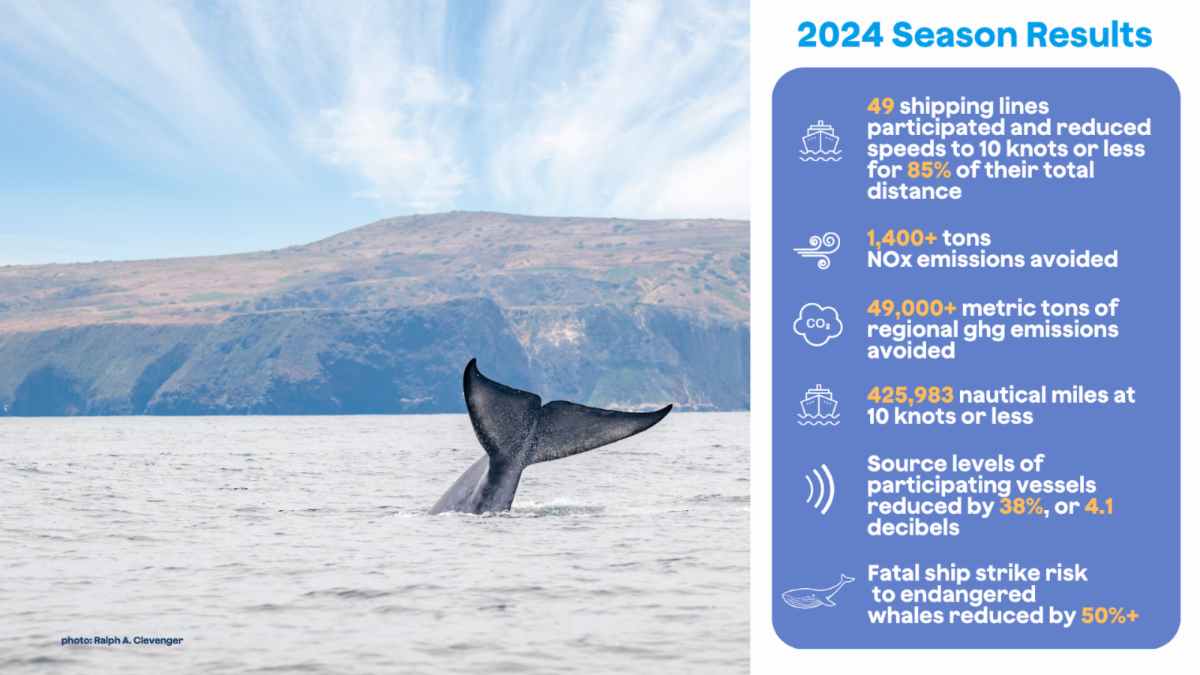
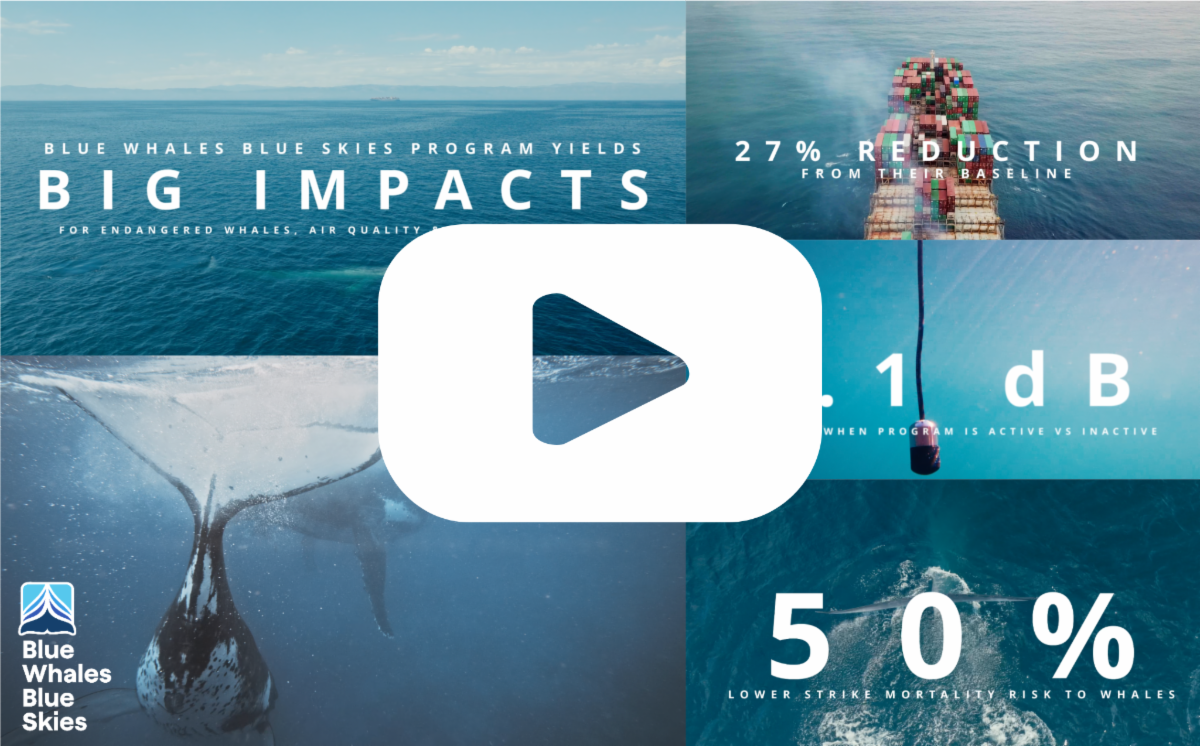
2024 Season | Blue Whales Blue Skies Vessel Speed Reduction | Vessels are critical to our economy, with over 80% of the world's trade facilitated by the maritime industry. The average container ship measures approximately four football fields, carrying about 15,000 standard 20-foot containers. These vessels carry goods and materials across the world’s oceans, often overlapping with important habitats for marine life. For marine species like whales, which have not evolved to avoid these massive ships, this can result in deadly collisions known as ship strikes. Ship strikes are a major contributor to whale mortality around the globe and are especially of concern in whale hotspots that overlap with major international shipping routes. However, if large vessels reduce their speeds to 10 knots or less in these areas when the likelihood of whale presence is highest, the risk of fatal strikes is reduced by 50% or more. Furthermore, reduced speeds result in fewer emissions of air pollutants and greenhouse gases. This is why Protecting Blue Whales and Blue Skies (BWBS) works to incentivize global shipping lines to voluntarily participate in vessel speed reduction measures in key areas off the California coast. | | | | |
Interested in learning more about what is happening at CMSF? Check out our blog! Our blogs are written by CMSF team members and dive deeper into the projects and initiatives they are leading.
Find our blog here, and subscribe for updates about our latest posts.
| | Follow Us On Social Media | | |
Let's connect on social media!
We post a lot of program related updates on our social channels so you can keep up on all things CMSF.
| | | | |