California Asphalt Pavement Association
Vol. 15, Issue 9 || Feb. 28, 2022
|
|
Greetings!
This weekly report contains news and information of interest to the asphalt pavement industry, customers and agency partners in California. Please feel free to distribute this newsletter to others who may be interested in asphalt pavements. To provide feedback or story ideas click HERE. Having difficulty viewing this newsletter? View as Webpage
|
|
What's wrong with this picture? |
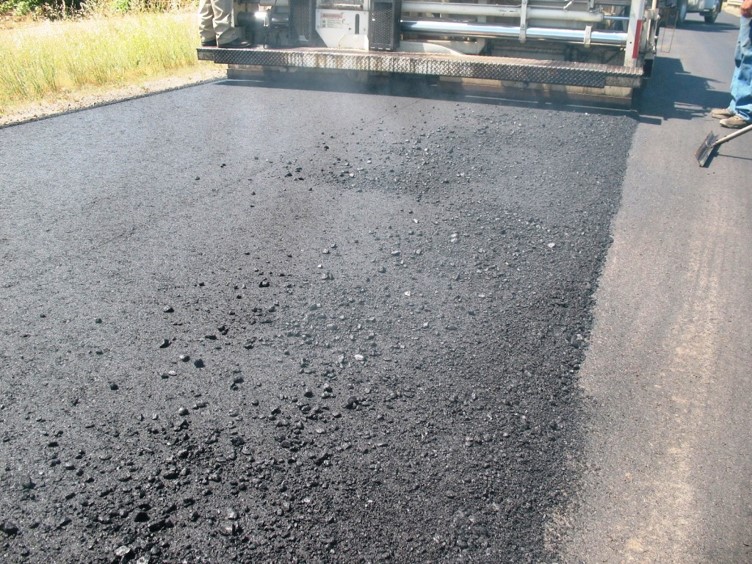
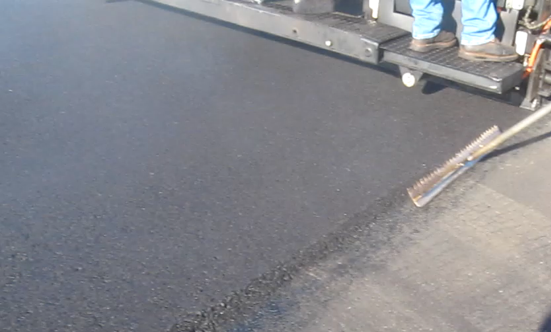
During last week's CalAPA virtual "Quality Asphalt Paving" training class, a sharp-eyed attendee spotted something amiss in Slide 108 of instructor Skip Brown's presentation. The photo was of a freshly placed asphalt mat with a crew of asphalt rakers walking behind the paving machine (the middle photo below).
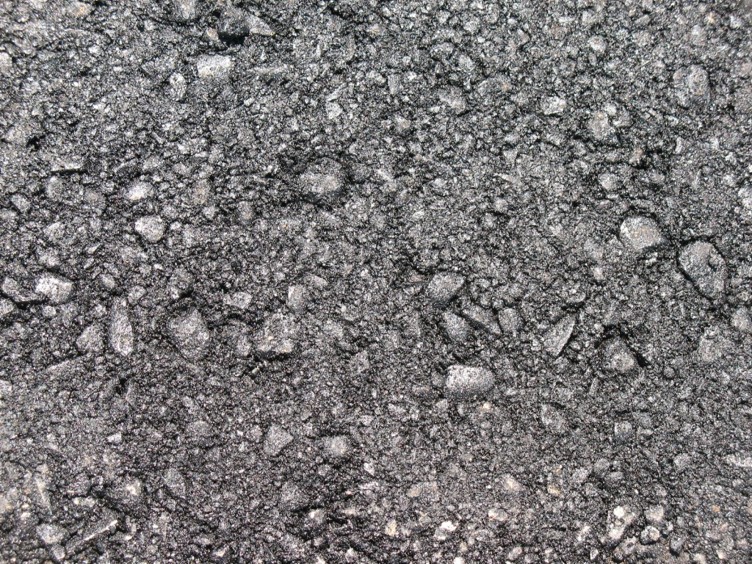
Although Brown didn't mention it at that point in his class (the slide was demonstrating a compaction wave), the attendee had correctly noticed loose rocks on top of the freshly placed mat of asphalt. Later in his class, Brown delved into this long-standing yet persistent problem on paving jobs: rakers pushing loose stones across the top of a freshly placed asphalt mat, which are then punched into the mat when the compacting rollers start making their passes. Sure, the rocks disappear into the pavement, but in doing so they create tiny air voids that are susceptible to intrusion by water and premature cracking, reducing the durability of the final product (the close-up of the asphalt pavement above is representative of this). Yet, year after year, too many paving crew personnel follow this practice, no doubt because somebody way back when told them to (incorrectly).
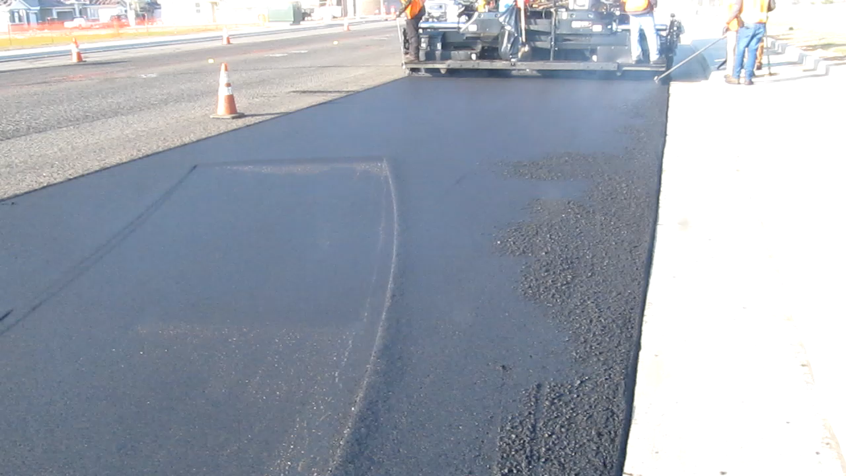
The better technique, as reinforced in all CalAPA asphalt classes, is for rakers to tamp down loose stones to create a slightly raised edge of the mat, where they will be properly incorporated with other asphalt and compacted by the rollers. In the photos below, only the last one depicts proper asphalt raking technique (not a single loose stone in sight). Asphalt Insider thanks Brown and his firm, Asphalt Consulting Services, for providing us the opportunity to share this "teachable moment.",
The tip is just one of many that make CalAPA classes essential for paving crews, supervisors, inspectors and others who care about a quality asphalt paving job. As we have said many times, what you don't know can cost you.
For more information about CalAPA asphalt training classes, click HERE to visit our website. The CalAPA Quality Paving Certificate program also drives home many of the industry-established best practices. More information about the QPC program can be found HERE.
A tip of the CalAPA hard-hat goes out to Jim Signore, Ph.D., P.E., a veteran pavement consultant with NCE, for highlighting this important issue and recommending we share it with a wider audience.
|
|
Long-life asphalt pavements steeped in history |
Regular readers of CalAPA publications have seen regular reports about the increasing use of Long-life (perpetual) Asphalt Pavement design in California, including on some of the most heavily traveled freeways anywhere. The design strategy, which produces asphalt pavements that last 40 years or longer and needing minimal maintenance, has garnered Caltrans awards for innovation.
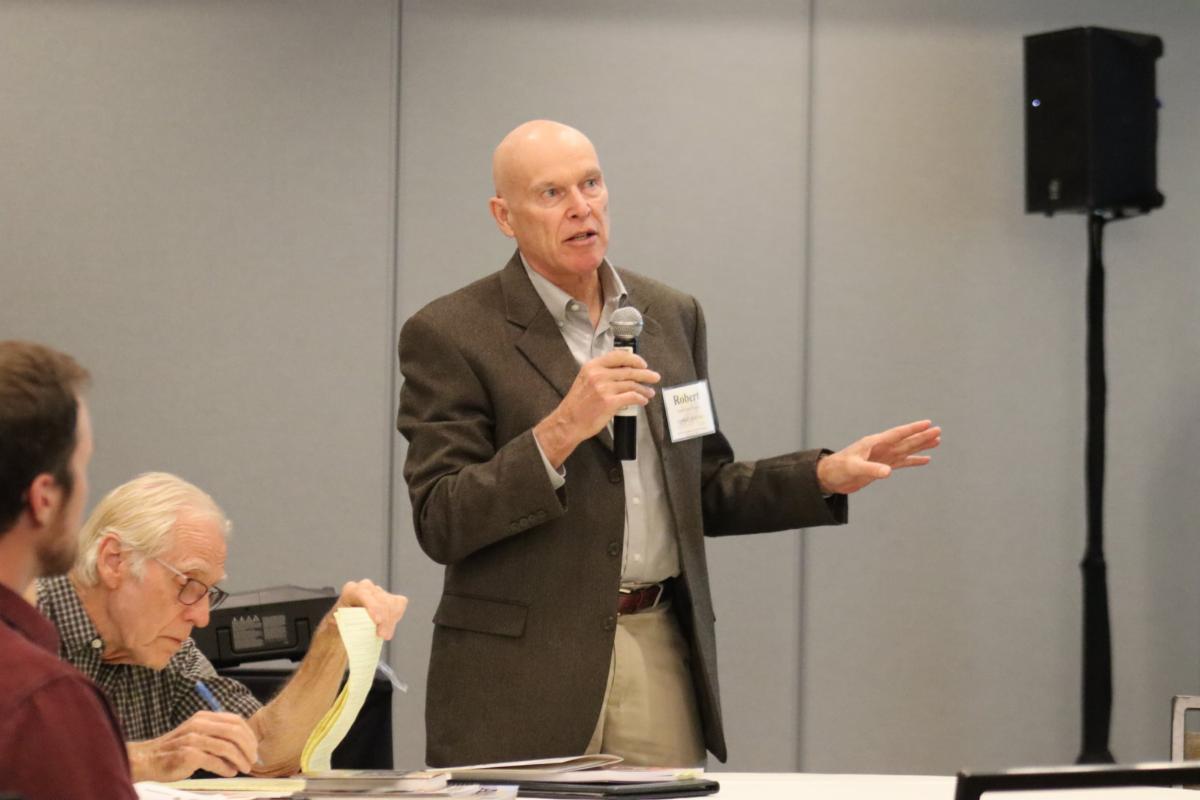
A common thread in these California projects is the work behind the scenes by Asphalt Institute Senior Engineer Bob Humer, P.E. (pictured at a CalAPA event), who is a walking encyclopedia on the pavement strategy and best practices for deployment.
Now Humer is back with an update for the Asphalt Institute magazine, which includes a nod to history, titled, "From ancient roads to perpetual pavements -- evolution in road structural design." California references appear throughout the article, from the California Bearing Ratio procedure that dates back to 1929, pavement test projects in San Diego, Stockton and elsewhere, and a nod to legendary Caltrans Materials Engineer Francis Hveem. Of course, recent Caltrans long-life asphalt pavement projects are also highlighted. For a good read of the evolution of this strategy, you can read the article on-line HERE. |
|
This photo depicts many loose stones strewn across the mat behind an asphalt paving machine prior to rolling. |
|
This photo meant do demonstrate a roller-caused compaction wave also reveals too many stones on top of the fresh mat. |
|
This photo depicts proper raking technique - no loose stones visible. |
|
Commentary: Work zone safety takes all of us |
To regular readers of this publication, the following will sound familiar: Everyone wants good roads, but they're not worth dying for.
Last week Toks Omishakin addressed the construction industry for the last time as director of Caltrans as he transitions to his new cabinet-level role as secretary of the California State Transportation Agency. He took the opportunity to again emphasize the important partnership between Caltrans and the companies that build transportation improvement projects in the state, and once again underscored the department's commitment to safety.
"Safety and work zone safety continue to be the top priority of the department," he said, noting the recent "safety summit" held between Caltrans and industry representatives that is meant to trigger improvements in policy and procedures to protect those who work on those transportation improvement projects. A report on the summit is being prepared, and a list of actions and timelines will result. The actions will build on recent steps taken by the department as a result of the industry-agency collaboration, such as updating its Code of Safe Practices (details HERE), developing new procedures for "traffic lookouts" (details HERE) and modifications of how to use law enforcement presence during installation and removal of traffic control systems (details HERE).
The latter item is one of the most important tools in the traffic safety toolbox, which makes the recent charges against 54 former and current California Highway Patrol officers in an overtime fraud scheme related to work zone safety enforcement even more troubling.
The charges, announced by California Attorney General Rob Bonta, center around a multi-year investigation of officers attached to the East Los Angeles station and alleges that they exaggerated the number of overtime hours they worked when they were assigned to provide protection detail for highway construction and maintenance work crews. Those programs are known as COZEEP (Construction Zone Enhanced Enforcement Program) and MAZEEP (Maintenance Zone Enhanced Enforcement Program). Essentially, the state pays for overtime for CHP officers to be stationed at active work zones to deter unsafe driving by motorists traveling through the area.
"Trust is a critical part of successful law enforcement," Bonta said in a Feb. 17 statement announcing the charges. "These defendants disregarded the law through their alleged actions and did so without thought would impact the California Highway Patrol or the community that trusted them to protect and serve. I'm thankful to CHP for its thorough investigation, and for working with the DOJ to hold these officers accountable." The official announcement is HERE.
As anyone who works in construction knows, a culture of safety is essential to provide maximum protection for workers. That includes a 100% commitment from everyone involved at all times. In this case, it is alleged that CHP officers were paid for overtime hours they did not work, and in some cases "manufactured fake warnings and assistance given to drivers" when, presumably, they should have been on the job looking out for the safety of workers in active work zones.
In Omishakin's new job, he will not only oversee Caltrans but also the California Highway Patrol. This will give him an opportunity to drive home the point that the lives of Caltrans maintenance crews and highway construction crews literally depend on every component of a robust safety plan to be implemented to the fullest extent to protect workers. Perhaps one of Omishakin's first directives in his new job is to invite some CHP officers to the next Worker Memorial Day service at the Capitol later this Spring so they can hear first-hand from the families of transportation workers lost in the line of duty. Information and photos from last year's event is HERE.
Indeed, work-zone safety is a top priority of the asphalt industry because lives depend on it. A work-zone safety video produced by the National Asphalt Pavement Association, a CalAPA partner, is HERE. Additional resources on this topic can be found HERE. |
|
Upcoming webinars to focus on resilience of flexible pavements following flooding & freeze-thaw events, Environmental Product Declarations |
The National Asphalt Pavement Association, a CalAPA partner, will be hosting free educational webinars on resilience of flexible pavements following flooding and freeze-thaw events, plus the very latest information on Environmental Product Declarations. The calendar of all NAPA webinars can be found HERE.
On Tuesday, March 8 from 11 a.m. to 12:30 p.m. PDT the "Resilience of Flexible Pavements Following Flooding & Freeze-Thaw Events" webinar will be conducted by Imad Al-Qadi, Ph.D, P.E., Dist.M.ASCE, Bliss Professor, University of Illinois Urbana-Champaign; and Erol Tutumluer, Ph.D., M.ASCE, Bliss Professor, University of Illinois Urbana-Champaign.
Since water is one thing that can damage all pavements, most are designed to prevent water intrusion. However, a recent focus on resilience has spurred engineers to reevaluate how pavements perform in floods, storms, and even freeze-thaw cycles. This webinar presents cases of flexible pavements across the United States that have been subjected to high moisture due to inundation or spring thaw cycles. The cases demonstrate that flexible pavements can be successfully constructed to withstand climatic changes if appropriately designed and built. Studies of flexible pavements that have performed in extreme climate conditions will be highlighted.
NAPA will conduct two webinars in March on Environmental Product Declarations. The first, "Environmental Product Declarations: What they are and how to use them," will take place on Wednesday, March 16 from 10 a.m. to 11:30 p.m. PST. NAPA's Kelly Kanaras, Director of Industry Promotion for NAPA, and Joseph Shacat, Director of Sustainable Pavements for NAPA, will provide participants with basic information about what EPDs are and how they are being used. The topics covered include the EPD framework, Product Category Rules, Life Cycle Assessment (LCA) and more.
A companion webinar delves into the NAPA-developed Emerald Eco-Label software tool to create EPDs. Version 2 of the tool has been recently released with important new features and capabilities. The educational webinar will be held on Tuesday, March 22 from 11 a.m. to 12:30 p.m. PST and feature Shacat as well as Dr. Ben Ciavola, CEO, Trisight Engineering.
Attendees of the companion webinar will learn about the data requirements for developing EPDs for asphalt mixtures, how to manage users and permissions with the Emerald Eco-Label software, and how to allocate data and document decisions. For more information on the NAPA Emerald Eco-Label software, click HERE.
For more information on NAPA webinars, click HERE. |
|
Each week we highlight a word, acronym or other term commonly used in the asphalt pavement industry in California.
POLYMER MODIFIED BINDERS (PMB). Polymer Modified Binders are used whenever extra performance and durability is desired. PBAs are used to concurrently meet the requirements for high temperature resistance to rutting and low temperature resistance to thermal cracking.
|
|
Paving Pointer of the Week |
Each week we highlight a key point or best practice of interest to asphalt paving crews, inspectors and others working in the field. We welcome suggestions. More tips can be found in our "Asphalt Parking Lot Construction Checklist" HERE. Information on the CalAPA "Quality Paving Certificate" program is HERE.
RECORD RETENTION AFTER PROJECT COMPLETION: Take a final photograph of the site for your records and retain all records from the project including: copies of all truck delivery tickets and record of all the temperature recordings and compaction readings you took during the project.
|
|
Each week we highlight a term that is specific to climate-change issues related to the asphalt pavement industry. This feature is intended to raise awareness of the asphalt industry's climate-change initiatives and the specialized terminology that goes with them. More information on the "Road Forward" asphalt industry climate initiative can be found HERE.
DOWNSTREAM COPE THREE EMISSIONS: Emissions (indirect) from the use of a company's product.
|
|
“I seek strength, not to be greater than my brother, but to fight my greatest enemy – myself."
-- Paul Calle, from a Native American prayer
|
|
CALAPA CALENDAR:
View all CalAPA events HERE.
*
"Asphalt Pavement 101" class (webinar)
Wednesday & Thursday, March 16 & 17.
*
Save the Date!
CalAPA Spring Conference "Tech Tune-up"
Tuesday, April 5
Embassy Suites by Hilton-North Orange County Hotel, 900 E. Birch St., Brea.
Registration opens soon!
*
Save the Date!
CalAPA "Spring Tee" Golf Event
Wednesday, April 6
Black Gold Golf Club, 1 Black Gold Drive, Yorba Linda.
Registration Opens Soon!
*
Registration Open!
CalAPA Annual Dinner
Thursday, May 19, 2022
Jonathan Club, 545 S. Figueroa St., Los Angeles
|
|
There's never been a better time to join the California Asphalt Pavement Association! Members receive insight and advanced notice on critical issues that impact every company's bottom line. CalAPA members also receive invitations to exclusive member-only events, in-depth "Member Alerts," our comprehensive asphalt market forecast for California, discounts and industry-specific networking opportunities not available anywhere else. CalAPA's new searchable on-line membership directory helps connect potential customers with member companies. Click HERE to download our Member Service brochure. Click HERE to view Vol. 1 of recent testimonials. Not convinced? Click HERE to view Vol. 2 of recent testimonials. Click HERE to send us an e-mail inquiry, or contact Bill Knopf with CalAPA at (442) 400-9697. |
|
|
|
2022 Asphalt Market Forecast |
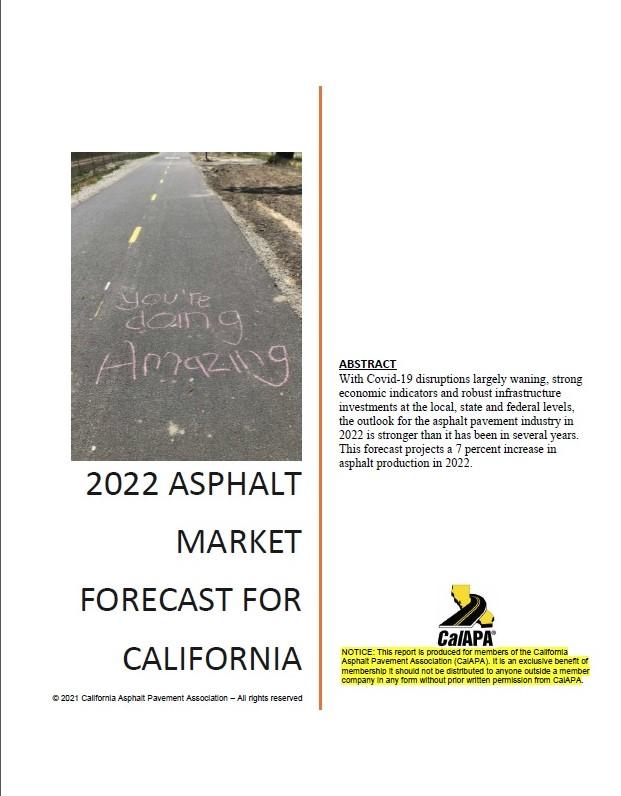
The 2022 Asphalt Market Forecast for California, an exclusive member-only benefit, is now available. If you missed the original distribution of this report, contact the association at the link below to request an electronic copy.
|
|
We hope you enjoy CalAPA's Asphalt Insider newsletter. We are committed to providing you with the most up-to-date information on technical issues, regulation, news, analysis, events and trends in California that is of interest to the asphalt pavement industry and our various agency partners. Click HERE to contact us with any comments or suggestions.
Sincerely,
Russell W. Snyder, CAE
Executive Director
California Asphalt Pavement Association (CalAPA)®
|
|
The "Asphalt Insider" is an official publication of the California Asphalt Pavement Association. For more information or to inquire about membership, call (916) 791-5044, or click HERE to contact us. Copyright © 2022 California Asphalt Pavement Association -- All Rights Reserved. The CalAPA name (No. 5,621,794) and logo (No. 5,621,795) are registered trademarks with the U.S. Patent & Trademark Office.
|
|
P.O. Box 981300, West Sacramento, CA 95798
1550 Harbor Blvd., Suite 211, West Sacramento, CA 95691
|
|
|
|
|
|
|
|