|
Although rubber in asphalt mixes has been in widespread use in California since the 1990s, field experience, training in best practices and research continue to add to the knowledge base. CalAPA highlighted the state of practice last April 18 when the association held a daylong technical workshop, “Where the Rubber Meets the Road” in Sacramento and on-line. Presentations from that event can be found on CalAPA’s SlideShare page HERE.
The University of California Pavement Research Center (UCPRC) was one of the presenters at the workshop, and previewed the center’s ongoing research on Rubberized Hot Mix Asphalt (RHMA) with a special emphasis on performance. The initial findings from the Caltrans-funded research effort have now been published and are available for download on-line HERE.
Caltrans and industry representatives, working collaboratively as part of the Pavement and Materials Partnering Committee (PMPC), have several outstanding questions that resulted in the development of this research study. Those questions include:
- Can Reclaimed Asphalt Pavement (RAP) be used in asphalt rubber mixtures with acceptable performance? Agencies that allow for an increase in the use of recycled materials, such as RAP, can demonstrate they are responding to public clamor for sustainability by producing asphalt mixtures locally with locally sourced materials.
- Can asphalt rubber be placed in lift thicknesses greater than 0.2’? The state requires Caltrans to use a minimum percentage of asphalt rubber materials in their pavement program each year as identified in state law (often referred to by its original Legislative bill designation, AB338). Asphalt rubber mixes are primarily used as a wearing surface. As Caltrans delivers more reconstruction projects due to the increased gas taxes from state and federal sources, there is a concern that they may not meet these minimum use requirements.
- Is there is a significant performance difference between ½” and ¾” Nominal Maximum Aggregate Size (NMAS) asphalt rubber mixtures? Agency engineers have expressed a concern that smaller NMAS mixes have lower strengths or stability compared to mixes with larger NMAS aggregates. The mix requirements for ½” and ¾” RHMA-G mixes are the same (such as Hamburg Wheel Track Test rutting requirements). This should mean that the mixes should perform similarly even though their NMAS is different. As the NMAS of a mixture increases, the challenges related to segregation during laydown and the permeability of the mixture increases (even at acceptable in place density values). Research in this vein from the National Center for Asphalt Technology at Auburn University (NCAT) RR 03-02 have studied and reported on this concern. To view the NCAT study, click HERE.
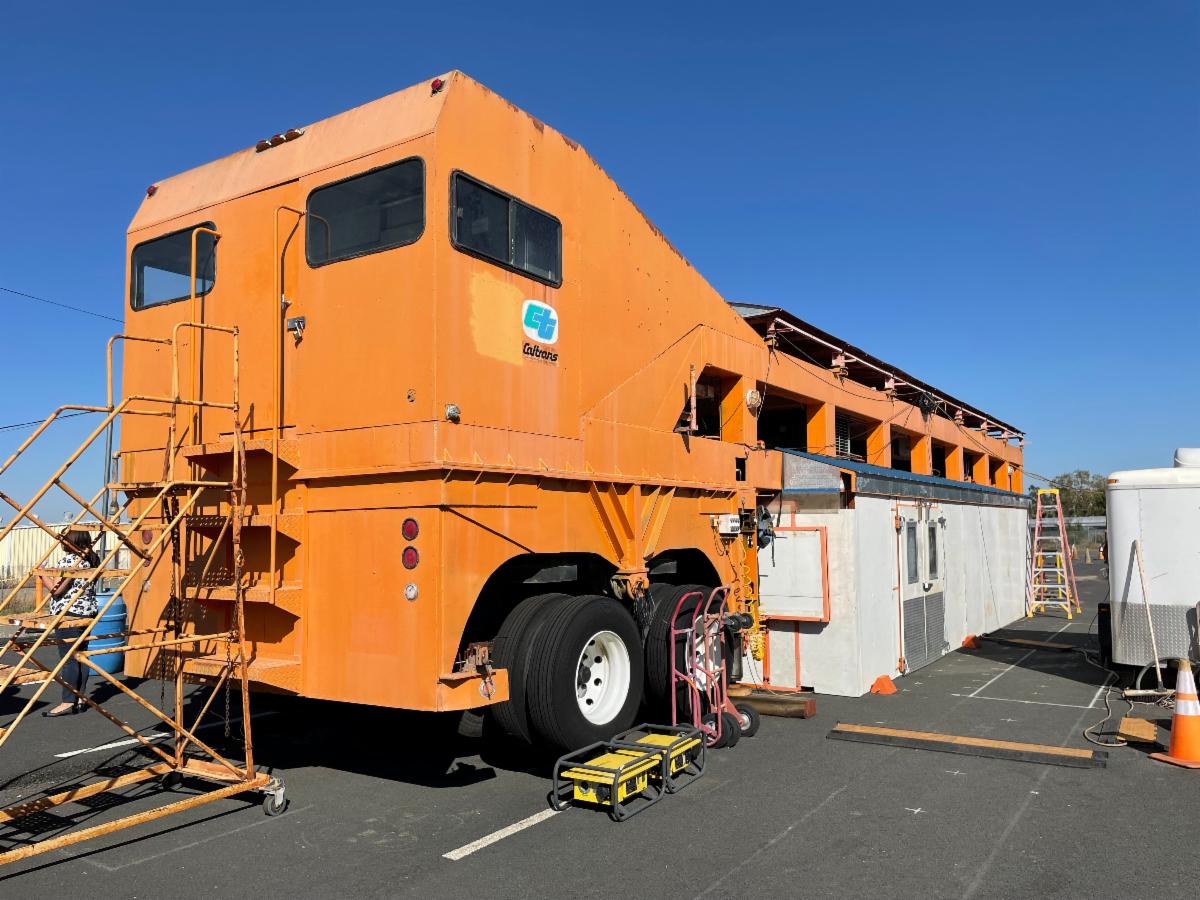
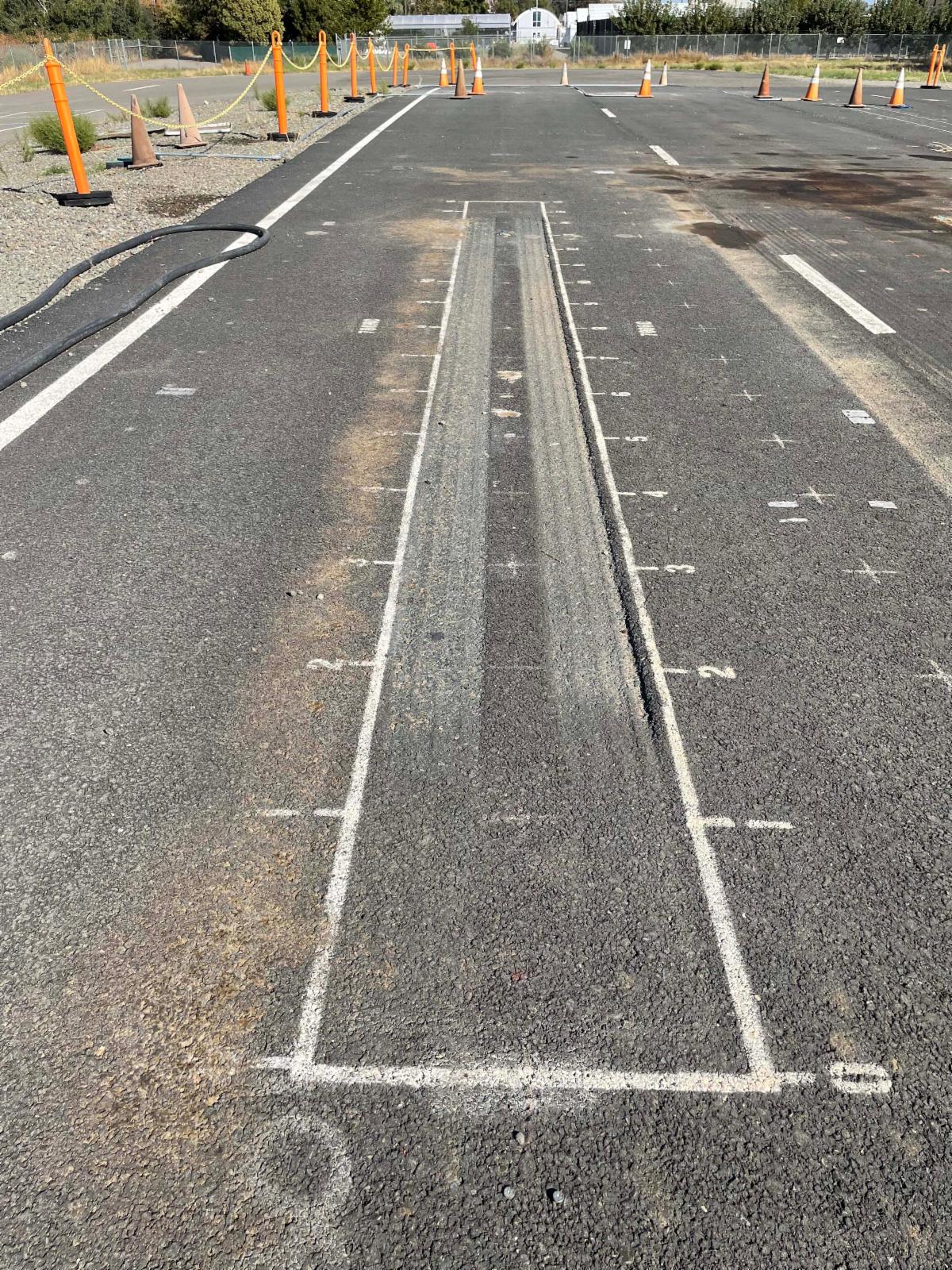
The UCPRC study evaluated four RHMA-G mixes ( ½” 0% RAP , ¾” 0% RAP, ½” 10% RAP, and ¾” 10% RAP) in segments from 0.2’ to 0.5’ thick. Several of these sections were trafficked utilizing the UCPRC Heavy Vehicle Simulators (HVS). The massive mobile testing machines can simulate decades of traffic in a few months. The machines also can control the environmental conditions of the pavement section (temperature and moisture) during operations.
Based on the initial HVA testing of these segments, UCPRC researchers reported a few significant observations. The segments did not exhibit cracking of the pavement surface. The performance for all of the mixes in the segments related to rutting were deemed “satisfactory.” NMAS as well as the incorporation of RAP did not have a significant impact on the segment performance, the researchers found.
After completing the HVS testing of the segments, UCPRC researchers also tested material samples utilizing mechanistic simulations (such as research-level rutting and fatigue testing) to ascertain mix performance characteristics. The results of this testing and any recommendations based on these results will be published in a second-phase report. The Caltrans-industry Pavement and Materials Partnering Committee (PMPC) RAP and RHMA Work Product Groups are anxiously awaiting the second phase of the report to determine the need for changes to the Caltrans design methodology, construction guidance, and/or specifications.
The Tire Recycling Act of 1989 levied a fee on all tires sold in California to be used for programs to create markets for waste tires. In 2005, the Legislature passed and the governor signed into law AB338, authored by then-Assemblyman Lloyd Levine, a Democrat representing the 40th Assembly District in the San Fernando Valley, which set targets for CRM use each year. The mandate is now referred to as Public Resources Code 42703. Another bill, SB876 of 1999, requires the department to report on rubber usage each year. The most recent published report is dated 2021 and is available on-line HERE.
California generates an estimated 51 million waste tires each year, and the state has been working to divert those tires from landfills to consumer products. The lead agency for this effort is a state agency known as CalRecycle (formerly the California Integrated Waste Management Board until 2010 when its responsibilities were folded into CalRecycle). Paving asphalt is the No. 1 source of Crumb Rubber Modifier (CRM), and it has been celebrated by the environmental community for its sustainability and by motorists for its smooth and quiet ride. The CalRecycle Tire Recycling and Market Development page on the CalRecycle website has more information on this topic and can be found HERE.
However, placement of RHMA can be tricky for the unaware. Experienced paving contractors have learned over the years to be mindful of the specific requirements for placing RHMA that differ from conventional Hot Mix Asphalt, including placement temperatures and weather conditions.
CalAPA has long supported the use of credible research to inform collaborations with public agencies on proposed changes to design and construction standards, specifications and test methods, including with regard to the use of rubber in asphalt mixtures. Additional updates on this and other relevant research on asphalt mixtures and rubber will be published in future issues of Asphalt Insider.
---[
Research Report information:
First-Level Analysis of Phase 1 Heavy Vehicle Simulator and Laboratory Testing on Four RHMA-G Mixes to Investigate Nominal Maximum Aggregate Size, Layer Thickness, and Performance with Aggregate Replacement from Reclaimed Asphalt Pavement.
This UCPRC Research Report can be found by clicking this LINK.
A previous Asphalt Insider article on the CalAPA workshop on rubber pavements was published April 24, 2023 and can be found on-line HERE.
|