|
The California Asphalt Pavement Association
Vol. 19, Issue 31 || Aug. 3, 2026
| | |
Greetings!
This weekly report contains news and information of interest to the asphalt pavement industry, customers and agency partners in California. Please feel free to distribute this newsletter to others who may be interested in asphalt pavements. To subscribe to the newsletter click HERE. To provide feedback or story ideas click HERE. Having difficulty viewing this newsletter? View as Webpage
| |
Proposed City of Los Angeles charter changes could lead to more taxpayer-subsidized asphalt sales on the open market | | |
The City of Los Angeles has been making its own asphalt for its own street-maintenance use since the 1940s. But recent fiscal woes has prompted the city to look into selling asphalt on the commercial market, and require the use of city-made asphalt on high-profile city projects.
The concept has met with scorn from business interests and fiscal reformers, as well as questions about its legality, but the city has been tight-lipped about its intentions. Until now.
A proposed change in the city charter is headed to the Nov. 3 ballot, Hidden in the language is an obscure provision that would allow the city to sell city-made products on the commercial market.
City Councilman Bob Blumenthal said the new language "could allow us to generate revenue from things like the sale of asphalt from a plant we already own and operate." His complete commentary on the measure is HERE.
Previously, a proposal by Councilwoman Heather Hutt only suggested the idea be studied. Multiple requests for documents related to the idea submitted by the Construction Industry Force Account Council have been rebuffed. Similarly, calls by Asphalt Insider to various city officials have not been returned.
The city has dressed up the charter changes in the most favorable light, portraying them as government reform that will help the city be more efficient in delivering services to constituents, including better park facilities. When the true facts behind the charter changes are brought to light, city voters will have the final say in November.
A previous Asphalt Insider report on this topic is HERE.
| |
Local streets and roads needs assessment report out, finds conditions deterioriating | |
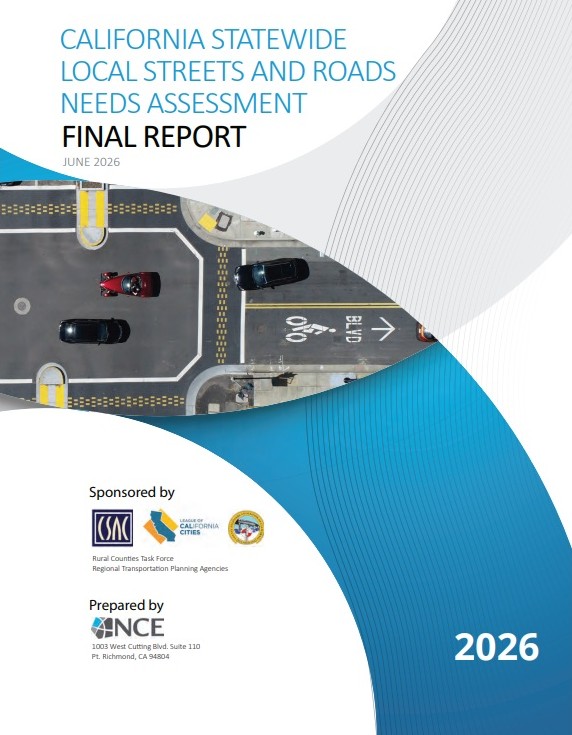
A comprehensive assessment of the state of city and county roads is out, showing roads are in bad shape and getting worse statewide despite the influx of SB1 road-repair dollars over the past several years. The report can be downloaded HERE.
"SB1 is a critical funding source that has resulted in cities and counties stabilizing the average statewide local pavement condition at 65 since its passage," the report concluded. "However, additional challenges have arisen, and the existing funding is no longer sufficient to maintain the existing conditions."
SB1, the "Road Repair & Accountability Act of 2017," raised fuel prices to pay for road and bridge repair, generating more than $50 billion over 10 years, with half of the funds devoted to local routes.
The report found the statewide condition of local streets and roads dipped slightly since the last report three years ago. Some reasons cited are higher construction costs, an aging infrastructure, and reduced funding from fuel taxes as Californians move toward more fuel efficient cars and EVs. Overall the report found the shortfall between current funding and what is needed to get local streets to an acceptable condition is more than $82 billion over 10 years.
Overall the Pavement Condition Index (PCI) is at 65, or in the "at risk" category. About a quarter of local routes are in much worse shape, falling into the "poor" category.
The findings of the report were previewed in a special pavement preservation-focused issue of CalAPA's official association magazine, California Asphalt, which arrived in mailboxes last week. An interactive on-line version of the issue is now accessible on-line HERE.
The influential needs assessment report, produced for the League of California Cities and the California State Association of Counties by NCE, will be the centerpiece of discussions of the state of California roads and why tax dollars can't seem to keep up with the aging of the system. Other supporters of the report include the County Engineers Association of California, the Rural Counties Task Force and the Regional Transportation Planning Agencies. The first needs assessment report was published in 2008, and it is highly regarded in transportation policy circles.
| |
Asphalt checklists? Check! | |
There isn't a single construction project under the sun that doesn't have checklists. Lots of them. Sometimes they're called punchlists. But they all perform the same function: make sure every step in the process is completed, in the right order and the right way, to ensure a successful project. Asphalt pavements are no different.
Recently a consortium of CalAPA partners have released a comprehensive treasure trove of resources for the asphalt industry built around the essential Asphalt Paving Handbook, with photos, videos, charts and graphs. And, yes, checklists.
Among the checklists that are freely available are geared toward those working at the plant and in the field. The checklists include:
To access these free resources click HERE.
Developed by the Asphalt Institute in collaboration with the Federal Aviation Administration, Asphalt Pavement Alliance, Federal Highway Administration, U.S. Army Corps of Engineers, and the National Asphalt Pavement Association, the online "Asphalt Paving Handbook" and accompanying mobile app covers roadway and airfield paving guidance. It includes topics such as materials, mix design, plant production, surface preparation, placement, compaction, joint construction, segregation prevention, and quality assurance.
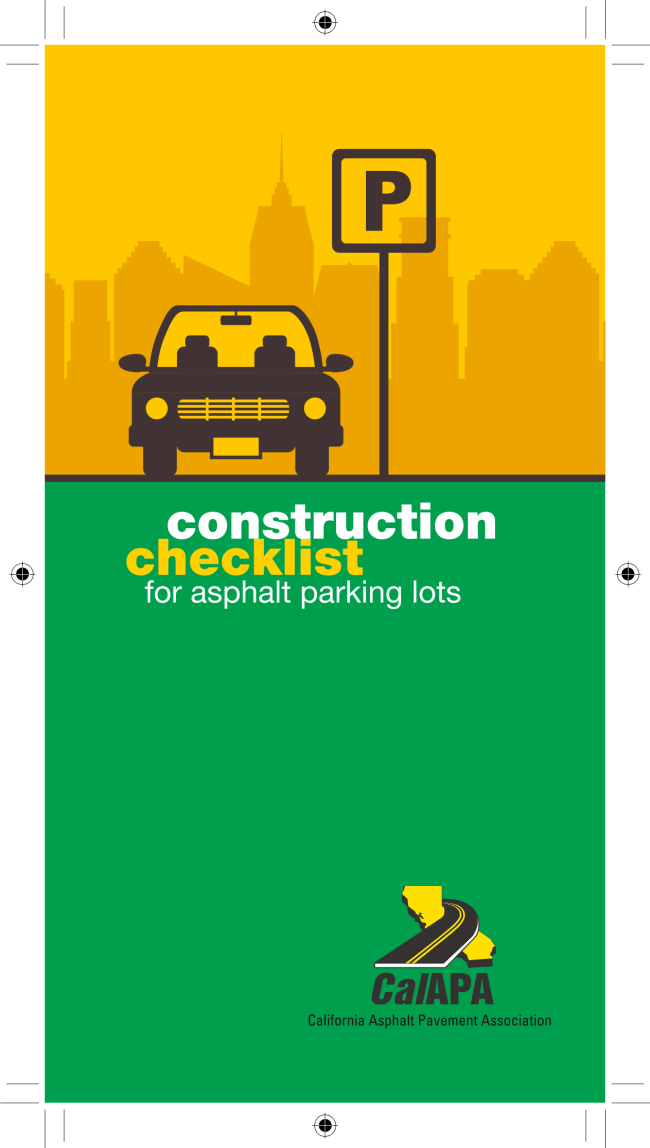
Another helpful resource, a parking lot construction checklist, is available as a free download from the CalAPA on-line publication page HERE.
| |
Commentary: 'Traffic Violence' has no place in serious transportation policy discussions | | |
Inflammatory rhetoric, so common in our politics these days, is making it's way into transportation policy discussions. The latest example is "traffic violence," a term increasingly used by the anti-road and anti-car crowd to demonize the way millions of Californians move about our state everyday, not to mention how most goods and services are delivered.
If you are driving, the slur suggests, you are a menace to society. You are responsible for thousands of deaths each year, not to mention fouling the environment. You should park your car in favor of walking, riding a bike or taking transit. And, by the way, your tax dollars devoted to upkeep of the roads you travel on should be diverted to other uses, such as bike and pedestrian infrastructure.
One prominent pro-transportation advocate noted the trend and mused recently, "So If I'm taking my kid to school, I have violent intent?" Nope. You're just taking your kid to school.
The term "traffic violence" has no place in serious transportation policy discussions, and CalAPA for one has begun to call people out on what it is: a violent assault on the English language.
| |
|
Each week we highlight a word, acronym or other term commonly used in the asphalt pavement industry in California.
FIBER MODIFIED SEALANT: Generally a hot-applied sealant that is composed of unmodified or modified asphalt cement and heat resistant polymeric fibers. It is commonly used to seal cracks in asphalt concrete pavements.
| |
Paving Pointer of the Week | |
Each week we highlight a key point or best practice of interest to asphalt paving crews, inspectors and others working in the field. We welcome suggestions. More tips can be found in our "Asphalt Parking Lot Construction Checklist" HERE. Information on the CalAPA "Quality Paving Certificate" program is HERE.
PAVING OPERATION: Ask yourself: Is the equipment properly maintained and in proper working order? Does the foreman have a paving plan (i.e., the paving lanes and passes are painted out and a roller pattern has been established)?
| | |
Each week we highlight a term that is specific to climate-change issues related to the asphalt pavement industry. This feature is intended to raise awareness of the asphalt industry's climate-change initiatives and the specialized terminology that goes with them. More information on "The Road Forward" asphalt industry climate initiative can be found HERE. A recent CalAPA magazine story on the topic is HERE.
RESILIENCE: The ability to anticipate, prepare for, and adapt to changing conditions.
| |
Caltrans Statewide Crude Oil Price Index | |
Editor's Note: As a convenience to our readers, Asphalt Insider reports the most current Caltrans "Statewide Crude Oil Price Index" posting. The department posts this monthly on its public website HERE. The index is used to calculate payment adjustments for paving asphalt under special provisions section "Payment Adjustments for Price Index Fluctuations" in those projects containing the section. The department posts the index on or about the first business day of the month using the daily Brent crude oil prices from the previous month as reported by Business Insider. Inquiries about the index should be directed to Caltrans at: Oil.Index@dot.ca.gov .
July 2026: $457.2 ($/ton)*
Last month: $565.2
1 year ago: $378.5
(*) The August numbers were not posted by Caltrans at press time
| |
|
"The only man who never makes mistakes is the man who never does anything.”
– Theodore Roosevelt
| | |
We hope you enjoy CalAPA's Asphalt Insider newsletter, widely regarded as the most influential publication of its type in California. We are committed to providing you with the most up-to-date information on technical issues, regulation, news, analysis, people, events and trends in California that is of interest to the asphalt pavement industry and our various agency partners. To subscribe to the newsletter, click HERE. For comments, questions or to suggest a story idea, click HERE. We are committed to promptly notifying our readers of any errors in this publication. Please click on the comment link above to alert the editor of any errors or omissions.
Sincerely,
Russell W. Snyder, CAE
Executive Director
The California Asphalt Pavement Association (CalAPA)®
| | The "Asphalt Insider" is an official publication of the California Asphalt Pavement Association. For more information or to inquire about membership, call (916) 791-5044, or click HERE to contact us. Copyright © 2026 California Asphalt Pavement Association -- All Rights Reserved. The CalAPA name (No. 5,621,794) and logo (No. 5,621,795) are registered trademarks with the U.S. Patent & Trademark Office. | | | | |