California Asphalt Pavement Association
Vol. 16, Issue 6 || Feb. 6, 2023
|
|
Greetings!
This weekly report contains news and information of interest to the asphalt pavement industry, customers and agency partners in California. Please feel free to distribute this newsletter to others who may be interested in asphalt pavements. To provide feedback or story ideas click HERE. Having difficulty viewing this newsletter? View as Webpage
|
|
FHWA officials from far and wide tour DeSilva Gates asphalt plant in Sunol as part of collaborative peer exchange program |
They came from far-flung destinations such as Puerto Rico, Guam and the U.S. Virgin Islands, but they all had something in common -- a thirst for knowledge about how asphalt is made.
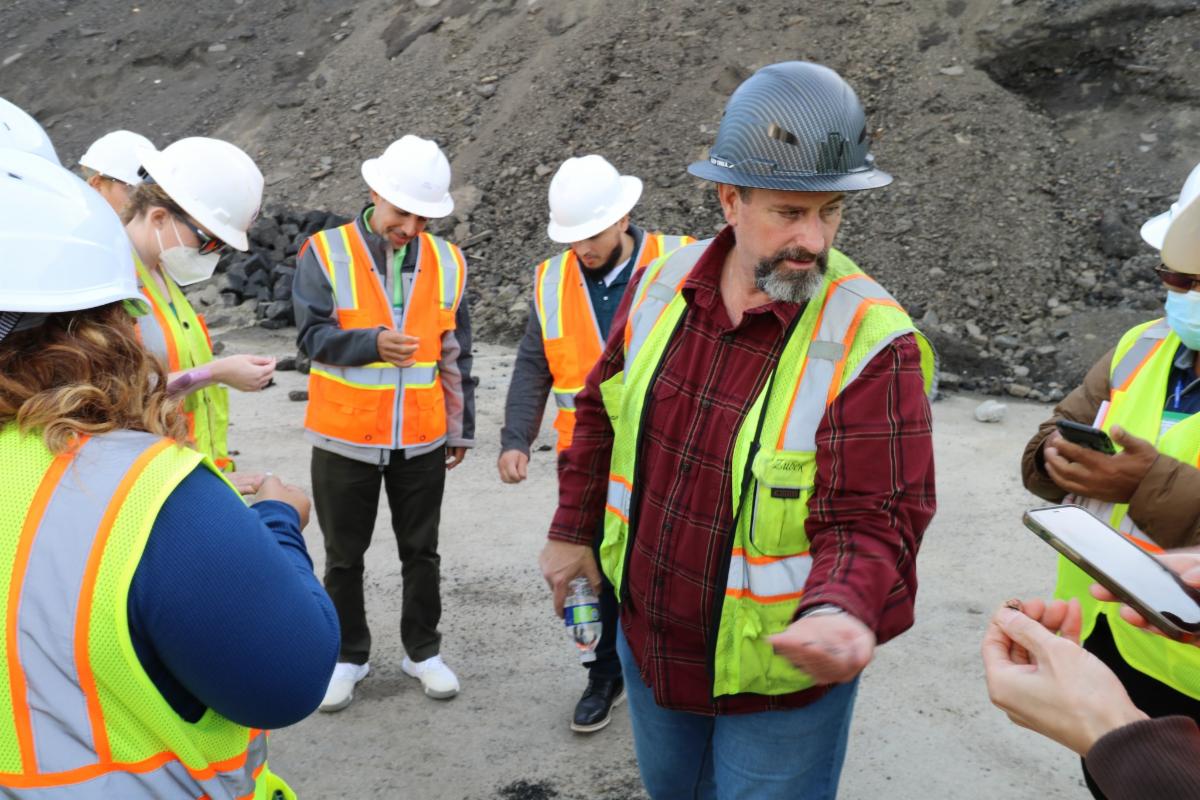
CalAPA member DeSilva Gates materials hosted a tour of its Sunol asphalt plant and aggregate mining operations on Jan. 27 for two dozen Federal Highway Administration officials, which was coordinated by Chu Wei, asset manager and pavements engineer for the FHWA's California Division. The group got an up-close view of how Hot Mix Asphalt is made at a plant, including how aggregates and additives are incorporated into the mix, and how testing helps confirm that the final product that is placed on a project will perform as designed.
The group included representatives from the FHWA Headquarters, California and Hawaii divisions, and Local Technical Assistance Program, and also from Puerto Rico, Guam, the U.S. Virgin Islands and the Commonwealth of the Northern Mariana Islands.
The FHWA conducts various peer exchanges to help stay current on innovations and best practices in the transportation and construction industry, which is in alignment with the agency’s “Every Day Counts” initiative to identify and promote new, innovative and underutilized technologies, techniques and other best practices, encouraging their widespread adoption. You can learn more about the FHWA’s Every Day Counts initiative HERE.
“The FHWA’s U.S. Territorial Peer Exchange group enjoyed the tour at the DeSilva Gates Sunol Plant, and this allows the group to view and learn about this innovative plant facility in California,” the FHWA’s Wei said following the event. “Special thanks to our gracious tour hosts, Tracy Zubek and Lisa Nordine.”
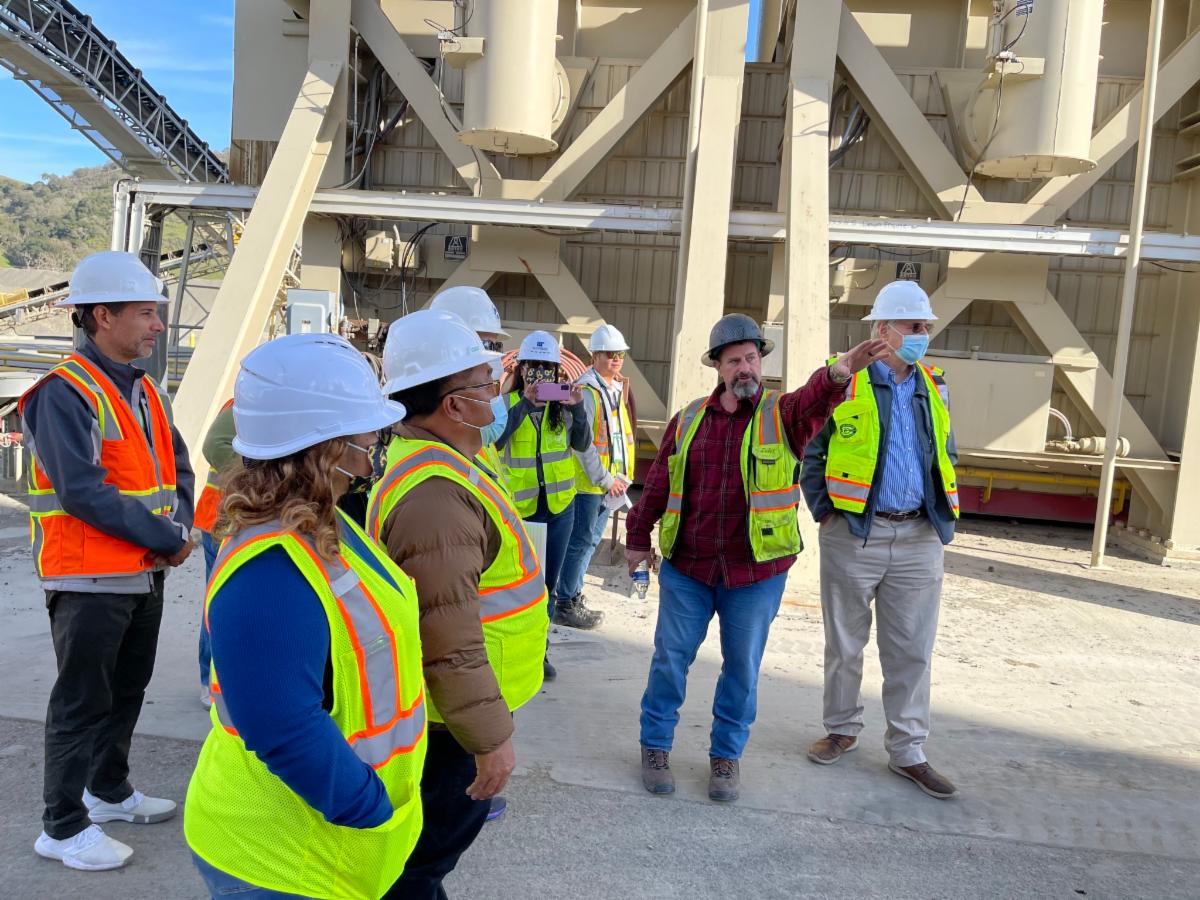
The more than two dozen FHWA officials were broken up into two groups and were shown all aspects of the DeSilva Gates asphalt plant operations, from where aggregates are extracted and conveyed, processed and incorporated with liquid asphalt binder and additives at the asphalt plant that serves the San Francisco Bay area. The materials lab also was incorporated into the tour so officials could see the rigorous testing methods employed to ensure the material produced at the plant meets the exacting specifications by public agencies or other customers.
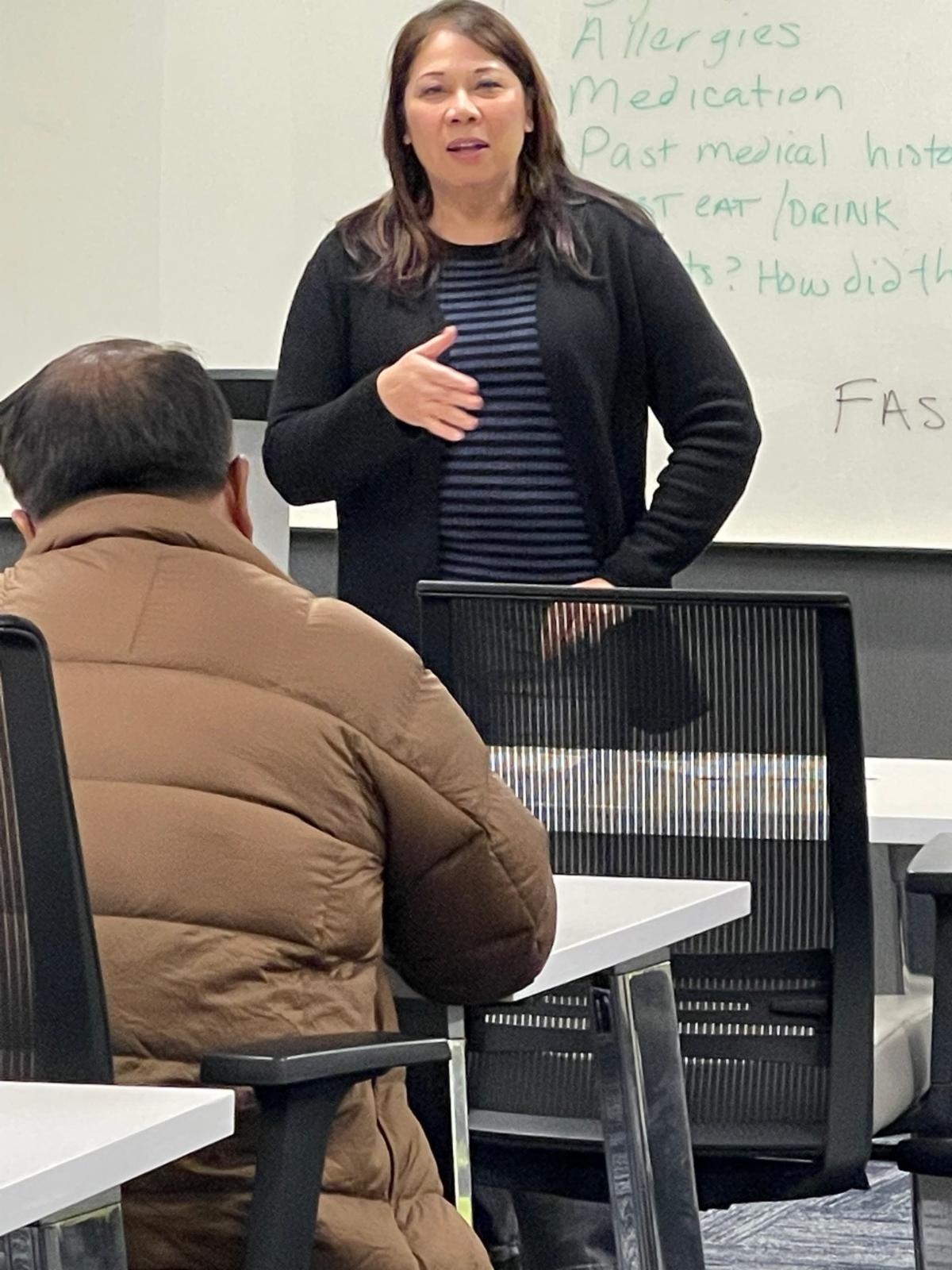
Prior to the tour, the group received a safety briefing and orientation by DeSilva Gates officials, and also listened to brief presentations by Cathrina Barros, chief of the Caltrans Office of Asphalt Pavements, and CalAPA, representing the asphalt pavement industry in California.
“It was an honor for DeSilva Gates Aggregates to host the FHWA among others for a plant tour and question-and-answer session,” said Zubek, Quality Control manager for DeSilva Gates Aggregates and also CalAPA Technical Advisory Committee co-chairman. “We feel that it is important to strengthen the relationships with municipalities while teaching them about how quality HMA and RHMA is produced. The Q and A regarding rubberized HMA and the rubber plant was a great teaching moment.”
The tour was also another demonstration of the asphalt pavement industry’s commitment to transparency and collaboration with public agency partners.
“I really enjoyed seeing that state-of-the-art plant,” Caltrans’ Barros said afterward. “It was quite impressive. I enjoyed being able to see the aggregate portion, and the RAP pile, and the rubber plants. I just thought it was a really good representation of all the things that we do in asphalt and at Caltrans. It was very exciting for me.”
She noted that the many questions by the FHWA officials was indicative of their high level of interest in the plant operations. Many questions were answered by DeSilva Gates representatives, but she also answered several questions from the perspective of a large state agency that has developed detailed specifications and test methods on asphalt developed over many decades and informed by research, industry input and practical field experience.
“I think it’s great to help educate folks,” she said. “I think some of the questions and the issues that were brought up were things we considered in the beginning, so I think it is good to help share the experience and our lessons learned. Even an organization as big as Caltrans can still have lessons to share with other states or other territories, or whomever is interested.”
There were many questions from the group about how DeSilva Gates incorporates Reclaimed Asphalt Pavements (RAP) into pavement mixes, many answered by Zubek standing next to a large RAP pile. He noted that asphalt is the world’s most recycled product, and that state and local specifications include utilizing of RAP into HMA mixes. The group also had several questions about how the company utilizes processed rubber from waste tires in California into asphalt pavement mixes. California’s utilization of Rubberized Hot Mix Asphalt (RHMA) mixes has been in widespread use for decades and has helped divert millions of used vehicle tires from California landfills.
“Because we’ve had so much background in rubber, we could share those experiences,” Barros said. “It’s good to be able to take our lessons learned and put them to good use.”
More photos from the plant tour can be found on the CalAPA Facebook page HERE. An in-depth profile about the DeSilva Gates Sunol plant that appeared in CalAPA's "California Asphalt" magazine can be found HERE.
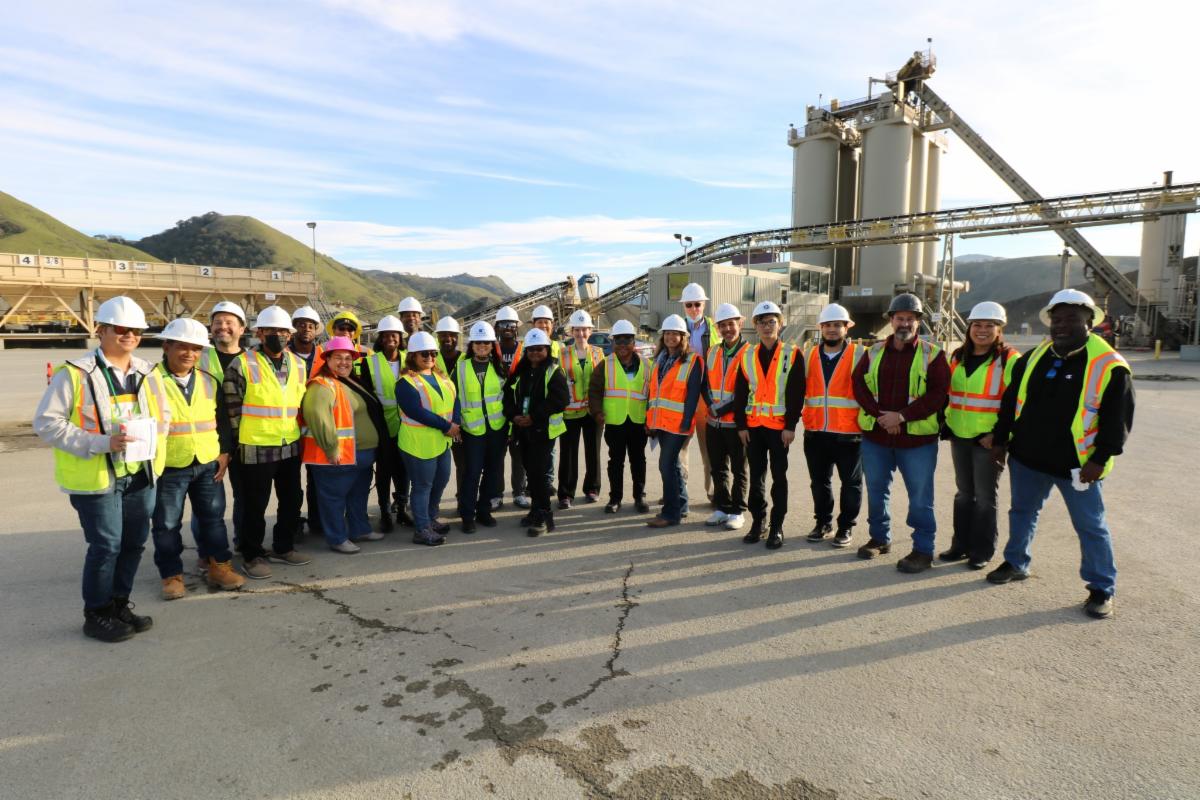
In the group photo below, the following were pictured (left to right): Geza Baka III, CNMI; Manolo Reyes, CNMI; Dennis Eber, Guam; Piotr Gajewski, USVI; Ruben Jennings, USVI; Debra Hazel, USVI; Irmali Franco, LTAP Puerto Rico; Adrienne Williams, USVI; Tanya Marlik, CNMI; Jomo McClean, USVI; Derek A. Gabriel, USVI; Lauren Sanchez, CNMI; Raydell Swanston, USVI; Stacyann Atalig, CNMI; Jerome Savea, CNMI; Gabrielle Gersh, FHWA HI Division; Henry Bautista, CNMI; Lisa Nordine, DeSilva Gates Materials; Michael Avery, FHWA Puerto Rico Division; Juan Carlos Rivera, FHWA Puerto Rico Division; Chu Wei, FHWA California; Omar Elkassed, FHWA HQ; Tracy Zubek, DeSilva Gates Materials; Cathrina Barros, Caltrans Office of Asphalt Pavement; John Paul David, USVI.
|
|
Cathrina Barros, chief of the Caltrans Office of Asphalt Pavement, gives a presentation to a group of FHWA officials Jan. 27 prior to a tour of a DeSilva Gates asphalt plant in Sunol. |
|
Tracy Zubek, Quality Control Manager for DeSilva Gates, points out features of the company's Sunol asphalt plant during a Jan. 27 tour for FHWA officials. Zubek is also co-chair of the CalAPA Technical Advisory Committee. |
|
Participants of a DeSilva Gates asphalt plant tour held Jan. 27 in Sunol. Participants included representatives from Puerto Rico, the U.S. Virgin Islands, Guam and the Commonwealth of the Northern Mariana Islands. |
|
Report continues to show high asphalt recycling nationwide, in California |
The most recent survey on recycling, published by the National Asphalt Pavement Association, a CalAPA partner, continues to show about 95% of Reclaimed Asphalt Pavement (RAP) is reused in new pavement.
The 12th annual industry survey examining the use of recycled materials and Warm-Mix Asphalt (WMA) in paving indicates the average percentage of RAP used in mixtures increased to nearly 22% in 2021, compared with 15.6% in 2009, the first year of the survey.
In California, the report found RAP utilization at 17%, which was slightly higher than the 15% utilization figure the survey found the year prior. The report estimated there were 2.92 million tons of RAP stockpiled in the Golden State ready for use in asphalt mixes, down from the 4.33 million tons found the year prior.
The survey, which also evaluates greenhouse gas (GHG) emissions, found that annual RAP usage saved 2.6 million metric tons of CO2e—the equivalent of removing 570,000 passenger vehicles from the road.
According to the Asphalt Pavement Industry Survey on Recycled Materials and Warm-Mix Asphalt Usage: 2021, producers used 94.6 million tons of RAP in asphalt production in 2021, conserving 26 million barrels of asphalt binder while replacing in excess of 89 million tons of virgin aggregate. When combined with the savings realized through the use of 630,000 tons of reclaimed asphalt shingles (RAS), the study estimates that producers saved more than $3.5 billion while freeing up nearly 62 million cubic yards of landfill space.
Using data from 261 companies, the survey also tracks usage of another 1.3 million tons of other recycled materials incorporated into nearly 9.2 million tons of asphalt pavement mixtures, including recycled tire rubber (RTR), blast furnace slag, steel slag, and cellulose fibers.
In addition to RAP and RAS, the survey documents usage of WMA, a technique used to produce 177.9 million tons of mix, or roughly 41% of the total estimated asphalt mixture market in 2021. While this represents a 5% reduction from the 186.4 million WMA tons reported in 2020, the authors note that WMA tonnage is up almost tenfold from 2009.
“The 2021 survey results show that the asphalt pavement mixture production industry has a strong record of sustainable practices and continues to innovate through the use of recycled materials and WMA,” the authors wrote in the report, noting that stockpiled RAP equating to 137.5 million tons nationwide could mean there are opportunities to increase the amount of RAP used in mixtures.
Survey data used in the report came from 1,388 production plants representing 261 companies in all 50 states and the District of Columbia and was gathered between January and August 2022, including data from 41 plants in California. The final survey report, along with prior annual reports, can be found HERE. An in-depth article on the ups and downs of RAP utilization in California that appeared in CalAPA's "California Asphalt" magazine, can be found HERE.
|
|
CalAPA, Women of Asphalt well-represented at pavement preservation conference in Long Beach |
CalAPA and prominent members of the Women of Asphalt California Branch were well-represented last week at a pavement preservation conference in Long Beach.
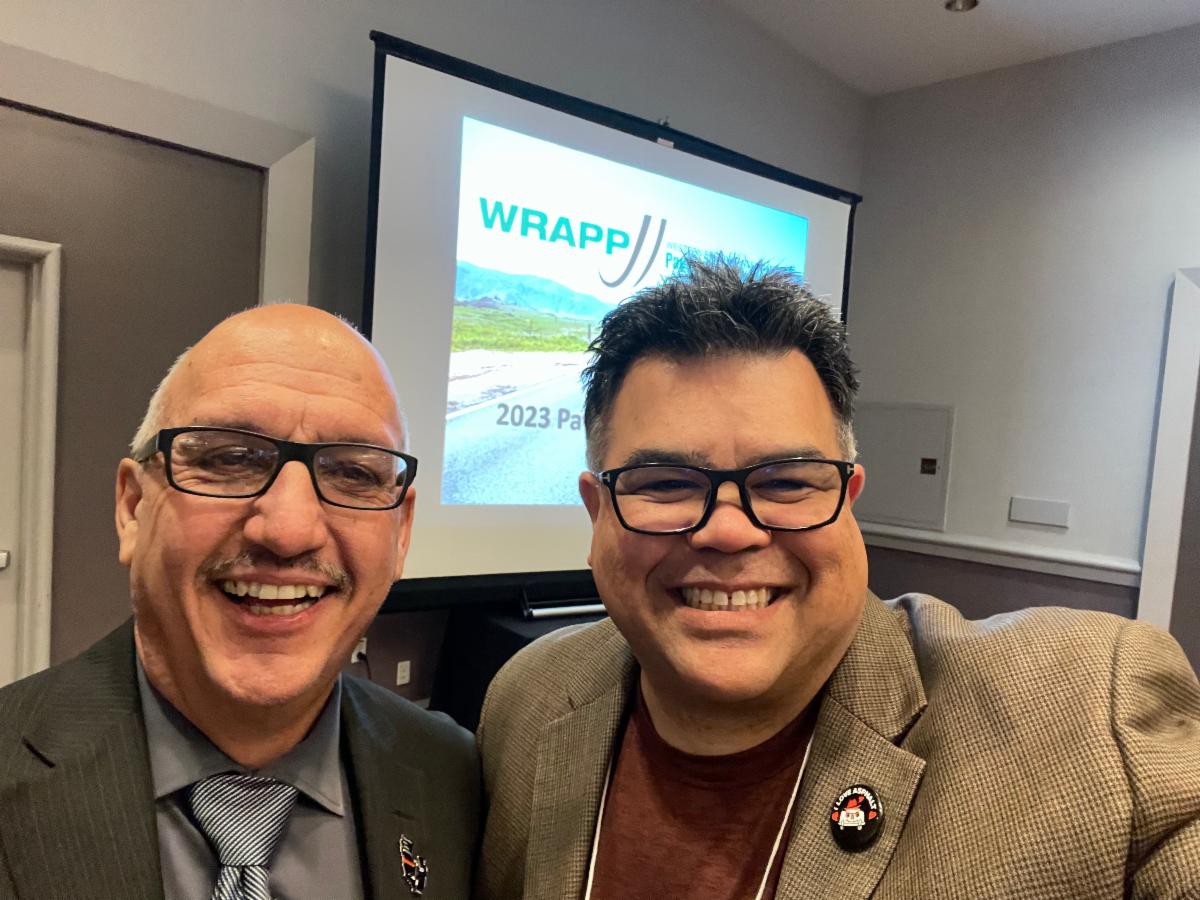
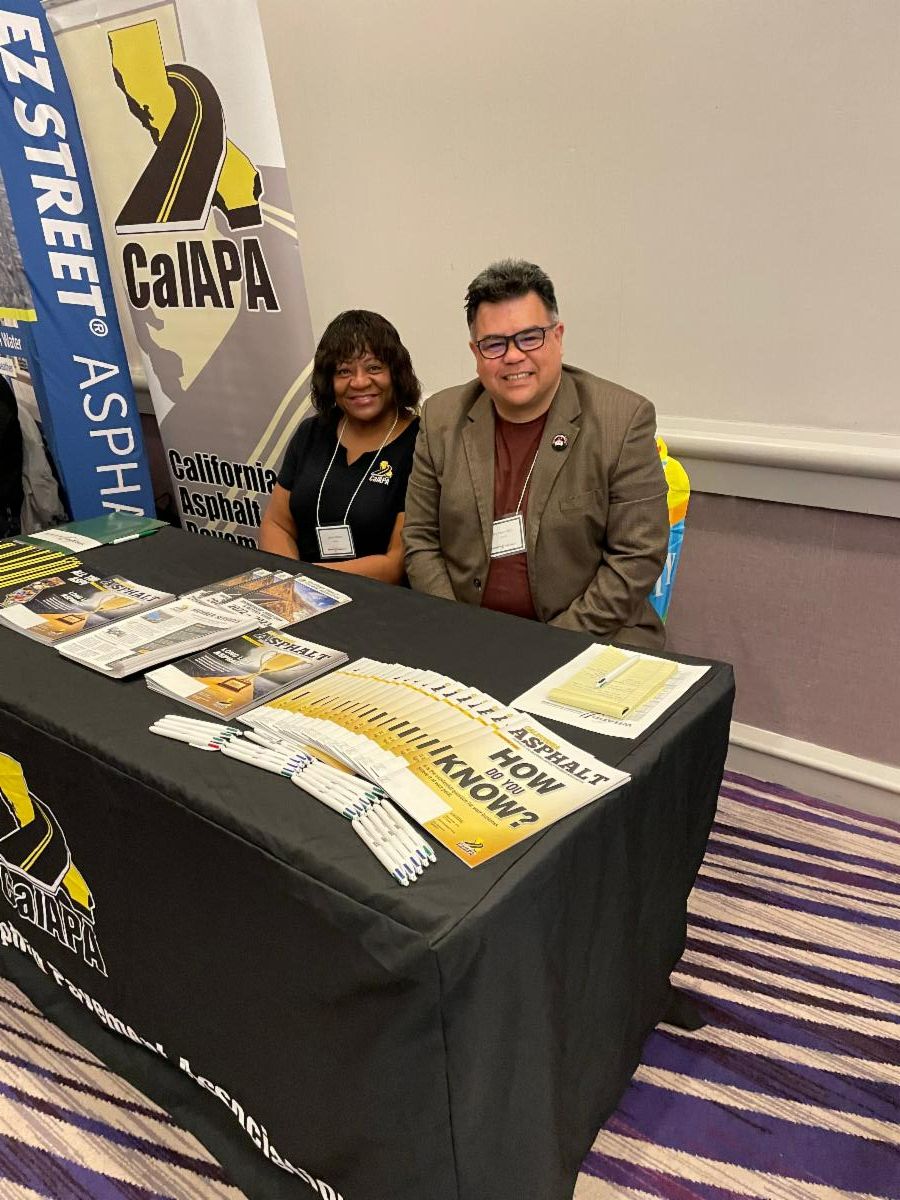
CalAPA Technical Director Brandon Milar and CalAPA Member Service Coordinator Jackie Henry represented the association at the annual educational conference put on by the Western Regional Association for Pavement Preservation (WRAPP), which coordinates with CalAPA on many issues of mutual interest and includes many CalAPA members. The photo features Caltrans Maintenance Chief Sergio Aceves (left) with Milar prior to Aceves' speech to the group.
Many other CalAPA members were in attendance at the conference Feb. 1-2 at the Hilton Long Beach, and also prominent members of the Women of Asphalt California Branch that is supported by CalAPA. CalAPA incorporates many elements of pavement preservation into its various educational offerings, and devotes one issue of its magazine each year to pavement preservation companies, projects and best practices. By mutual arrangement, WRAPP also is a regular participant in CalAPA conferences. More information about WRAPP can be found HERE. More information about the Women of Asphalt California Branch can be found HERE. |
|
CalAPA's Jackie Henry (left) and Brandon Milar at the CalAPA table at last week's pavement preservation educational conference. |
|
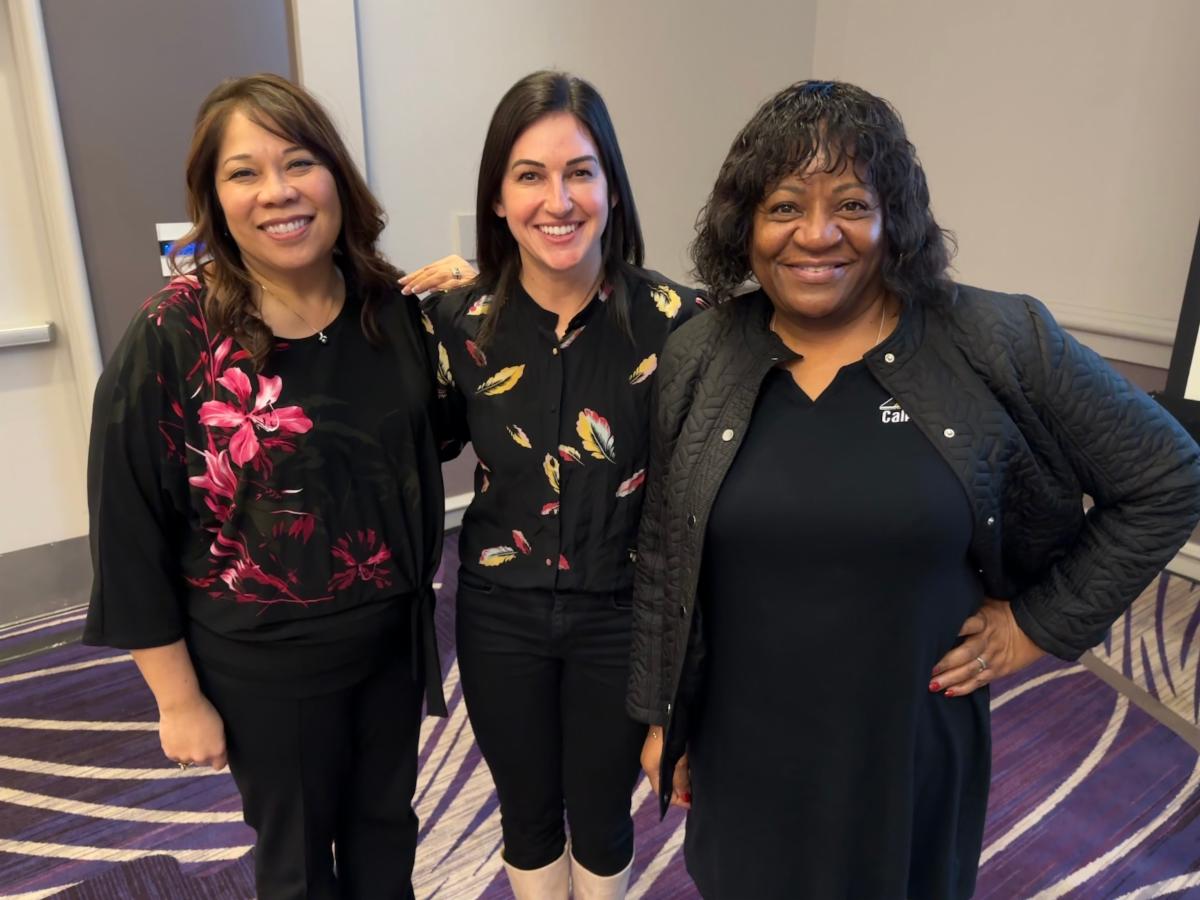
Prominent Women of Asphalt California Branch participants (from left) Cathrina Barros with Caltrans, Sydney Johnson with EarthSystems and Jackie Henry with CalAPA. Barros is co-chair of teh WofA California Branch. CalAPA supports the activities of the Women of Asphalt California Branch. |
|
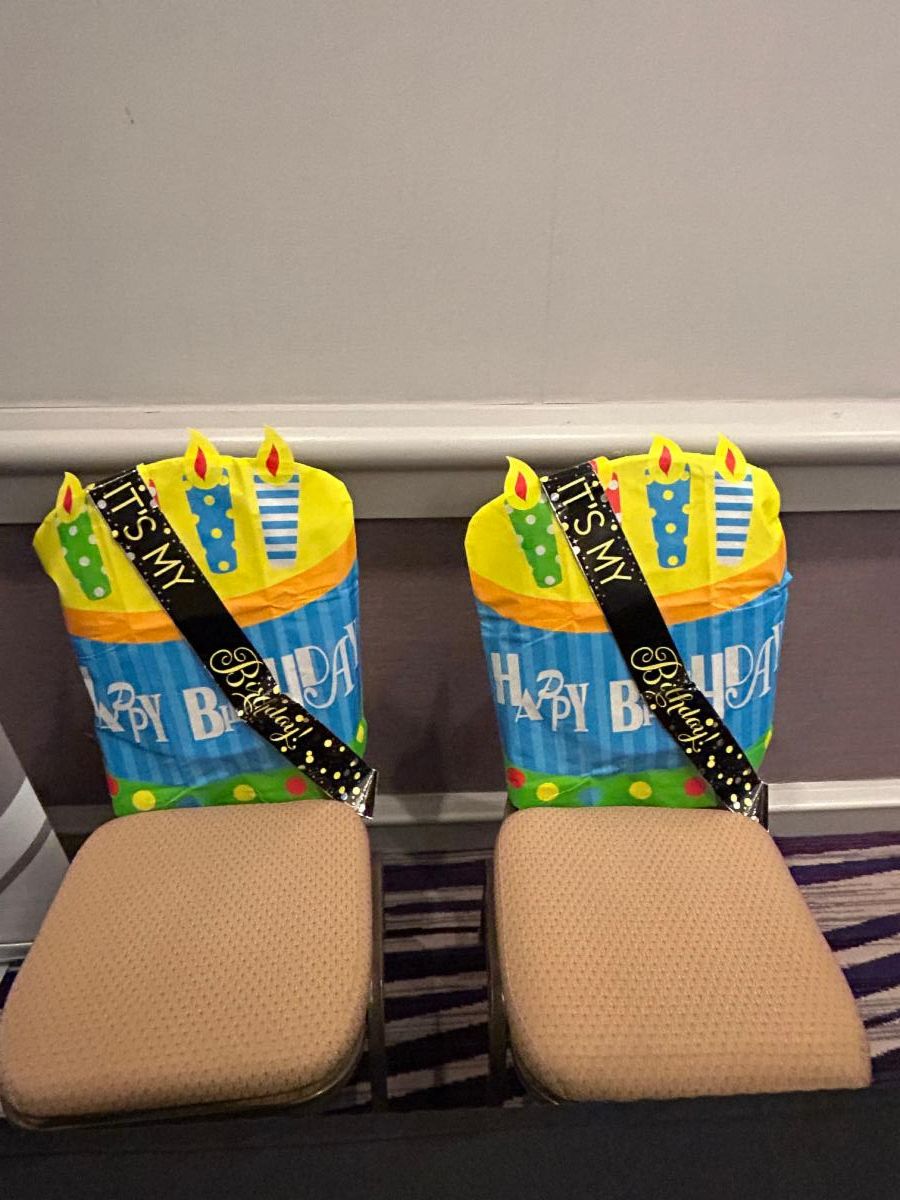
It just so happens that the two people staffing the CalAPA table, Brandon Milar and Jackie Henry, were celebrating birthdays, which explains the chair "bling" |
|
Each week we highlight a word, acronym or other term commonly used in the asphalt pavement industry in California.
PAVEMENT PRESERVATION: The sum of all activities undertaken to provide, maintain and extend the life of roadways. This includes corrective, routine and preventive maintenance to keep the roadway in a safe and usable condition and delay the need for rehabilitation.
|
|
Paving Pointer of the Week |
Each week we highlight a key point or best practice of interest to asphalt paving crews, inspectors and others working in the field. We welcome suggestions. More tips can be found in our "Asphalt Parking Lot Construction Checklist" HERE. Information on the CalAPA "Quality Paving Certificate" program is HERE.
RECORD RETENTION AFTER PROJECT COMPLETION: Take a final photograph of the site for your records and retain all records from the project including: copies of all truck delivery tickets and record of all the temperature recordings and compaction readings you took during the project.
|
|
Each week we highlight a term that is specific to climate-change issues related to the asphalt pavement industry. This feature is intended to raise awareness of the asphalt industry's climate-change initiatives and the specialized terminology that goes with them. More information on "The Road Forward" asphalt industry climate initiative can be found HERE.
THINLAY: Pavement preservation technique that adds 3/4- to 1 1/2 inches of structure.
|
|
"It is not only what we do, but also what we do not do, for which we are accountable."
– Moliere
|
|
CALAPA CALENDAR:
View all CalAPA events HERE.
*
SAVE THE DATE!
Topgolf Networking Event
Wednesday, March 22, 4 p.m. to 7 p.m.
Topgolf Sports & Entertainment Complex, 1050 N. Archibald Ave., Ontario.
Details soon!
*
SIGN UP NOW!
"Asphalt Pavement 101" class, Wednesday, March 22 from 10 a.m. to 3 p.m., DoubleTree Hotel Ontario Airport, 222 N. Vineyard Ave., Ontario.
*
REGISTRATION OPEN!
2023 Spring Asphalt Pavement Conference & Equipment Expo.
Thursday & Friday, March 23-24
Doubletree Hotel Ontario Airport, 222 N. Vineyard Ave., Ontario, CA
Registration opens soon.
For exhibitor and sponsor information, contact Sophie You at (916) 791-5044.
*
|
|
There's never been a better time to join the California Asphalt Pavement Association! Members receive insight and advanced notice on critical issues that impact every company's bottom line. CalAPA members also receive invitations to exclusive member-only events, in-depth "Member Alerts," our comprehensive asphalt market forecast for California, discounts and industry-specific networking opportunities not available anywhere else. CalAPA's new searchable on-line membership directory helps connect potential customers with member companies. Click HERE to download our Member Service brochure. Click HERE to view Vol. 1 of recent testimonials. Not convinced? Click HERE to view Vol. 2 of recent testimonials. With so much changing in the asphalt pavement industry, what you don't know can cost you! Click HERE to send us an e-mail inquiry, or contact Russell Snyder with CalAPA at (916) 791-5044. |
|
We hope you enjoy CalAPA's Asphalt Insider newsletter. We are committed to providing you with the most up-to-date information on technical issues, regulation, news, analysis, events and trends in California that is of interest to the asphalt pavement industry and our various agency partners. Click HERE to contact us with any comments or suggestions.
Sincerely,
Russell W. Snyder, CAE
Executive Director
California Asphalt Pavement Association (CalAPA)®
|
|
The "Asphalt Insider" is an official publication of the California Asphalt Pavement Association. For more information or to inquire about membership, call (916) 791-5044, or click HERE to contact us. Copyright © 2023 California Asphalt Pavement Association -- All Rights Reserved. The CalAPA name (No. 5,621,794) and logo (No. 5,621,795) are registered trademarks with the U.S. Patent & Trademark Office.
|
|
P.O. Box 981300, West Sacramento, CA 95798
1550 Harbor Blvd., Suite 120, West Sacramento, CA 95691
|
|
|
|
|
|
|
|