We ensure quality care through
Interim Management, Skilled Monitoring, and Reinvention
|
|
Greetings!
We return with a three-topic issue. First is breaking news, which we believe will be of interest to our readers with and without children. From the Los Angeles Times we have “California lawmakers pass new social media protections for minors,” which reports, “A pair of bills approved by California legislators would regulate how Facebook, YouTube and other platforms treat minors and seek to influence how they moderate extremist content.”
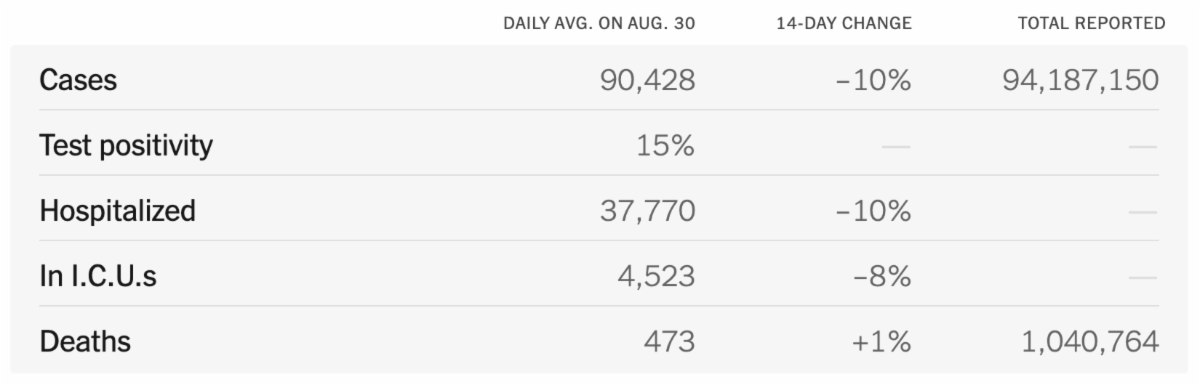
- Coronavirus cases and hospitalizations have both fallen steadily throughout the month of August.
- The average number of cases announced each day is an undercount since many cases go unreported, but it has shown significant progress in recent weeks. The count of known cases now sits just above 90,000 per day, down from more than 130,000 per day in mid-July.
- Cases are falling in all but a few states. And some states, primarily in the West, have seen cases decline by 30 percent or more in the past two weeks.
- Hospitalizations have seen similar improvement. Fewer than 40,000 people are currently in American hospitals with the coronavirus, a decrease of 10 percent since the start of the month.
- The number of virus deaths announced each day has been fairly flat in recent weeks, at less than 500 per day, far lower than at most points in the pandemic.
|
|
Mid-last week, Rebecca's and my mailboxes were hit with friends and family passing along the recently posted New Yorker article “When private equity takes over a nursing home.” If you have not read it, please do so and then return to this issue, which offers you articles and studies by those cited in the New Yorker piece. We also post our April 2022 ABI Journal article on the topic.
Harvard Professor David Grabowski is quoted in the article and his work has appeared in Revitalize. Today we link you to an op ed he posted in StatNews and that publication’s report, "U.S. nursing home care is ineffective, inefficient, inequitable, fragmented, and unsustainable,” which features Grabowski’s research and legal work.
Listen first to the StatNews podcast that asks us to consider if Covid turned the nation's eyes to nursing homes, have we already looked away. "A person doesn't want to stop living just because they need help living," says @JasT_PhD on this week's First Opinion Podcast.
From our offices in Culver City, CA and publications throughout the U.S., this is the summer-ending issue of Revitalize posted on September 1, 2022:
|
|
Revitalize: The week in health-care news you need
|
|
California lawmakers pass new social media protections for minors. A pair of bills approved by California legislators would regulate how Facebook, YouTube and other platforms treat minors and seek to influence how they moderate extremist content.
Back to school special: Kids, tests, and long Covid reassurance.
When private equity takes over a nursing home.
Operating nursing homes: Is the worst behind us?
Charlene Harrington for many years led the research on quality indicators in nursing homes. She has published, with University of Kansas professor David Kingley, the article, which finds based on their extensive research, that "Despite statements suggesting severe financial problems for the nursing home industry, the data on publicly traded companies do not show insolvencies, bankruptcies, and severe losses of overall industry revenues."
|
|
Report: U.S. nursing home care is ineffective, inefficient, inequitable, fragmented, and unsustainable. A report from @theNASEM shows how the pandemic has "lifted the veil" on the sad state of nursing home care in the U.S.
Does private equity investment in healthcare benefit patients? Evidence from nursing homes.
Listen: Covid turned the nation's eyes to nursing homes. Have we already looked away? "A person doesn't want to stop living just because they need help living," says @JasT_PhD on this week's First Opinion Podcast, where she and @DavidCGrabowski discuss inadequate nursing home care.
Unprotected: How some nursing homes - and the state - have failed to care for the most vulnerable.
|
|
Jerry Seelig, CEO
Fax: 310-841-2842
|
|
|
|
|
|
|
|