|
We are excited to announce that together with Partners for Advancing Health Equity (P4HE), we are co-sponsoring a supplemental issue of the American Journal of Public Health (AJPH) dedicated to the Ways of Knowing initiative.
This special supplement is intended as a call to action, particularly to those involved in health equity research. We are interested in submissions that feature concrete steps and practical examples for creating a more inclusive and holistic health science knowledge system that values experiential, cultural, and community Ways of Knowing, and shifts understandings of knowledge creation.
We are particularly interested in papers related to the three Ways of Knowing Symposia focus areas: 1) Indigenous Ways of Knowing; 2) Transforming Community-Led Health Research; and 3) Redefining Rigor in Health Research. We strongly encourage contributions from authors from all backgrounds and areas of expertise.
Abstracts are due April 8, 2026.
| | |
Become a Reviewer
Our success depends on your help! We need both authors and reviewers to ensure featured pieces reflect both the principles and spirit of the Ways of Knowing Initiative. Reviewers do not need to hold an advanced degree or have any prior experience completing peer reviews. Individuals may serve as both authors and reviewers. We expect that each review will take no more than an hour to complete. E4A will, independent of AJPH, gift reviewers not affiliated with an institution of higher education $200 for each completed peer review. Please consider signing up and/or nominating others you think may be interested and well-aligned with this call. Signing up does not guarantee you will be selected to review, nor does it commit you to review if you are invited. We anticipate most invitations to review will be emailed in late July or early August 2026. Reviewers will have 4 weeks to submit their reviews.
Questions? Reach out to us at evidenceforaction@ucsf.edu.
| | Welcoming Our Rapid Response Research Grantees | | We’re excited to welcome 44 new grantees who were awarded approximately $7 million, with each grant receiving up to $200,000 across two rounds of our Rapid Response Research calls to support projects that were impacted by federal funding cuts. | | The Pro-Democracy Narrative Playbook, launched by Metropolitan Group (MG) and Philanthropy for Active Civic Engagement (PACE), was created as a collaborative initiative for a broad coalition of organizations, leaders, and communities working to counter authoritarianism and reduce democratic polarization. Focused on advancing a positive, action-oriented narrative that supports progress on critical social issues, including but not limited to health care access, quality education, and racial equity, the Playbook provides free access to evidence-based research, messaging frameworks, training, and technical assistance. As stated on their website, “the Pro-Democracy Narrative Playbook is for anyone, anywhere, who cares about protecting, promoting, or strengthening the principles, norms, and institutions that advance freedom and democracy.” | | | | | |
Wildfire smoke exposure and school attendance in New York City
The health effects of wildfire smoke are well-documented, but how do they correlate with children attending school? In a study on Wildfire Smoke Exposure and School Attendance in New York City, Chris Lim and team found significant associations between wildfire smoke and school absence rates, with pronounced disparities across geography and subpopulations.
| | |
Prevention Beyond Deterrence
While police deter crime via traditional enforcement actions, alternative emergency response programs (Alternative Responses) prevent harm through various nonpunitive means, notably the provision of life-sustaining resources and connections to needed services. This alternate public safety approach would require near-term reforms and long-term structural changes to expand Alternative Responses’ involvement and to limit the role of police in health crises and nonviolent incidents.
| | | | | |
Black and White older adults' end-of-life experiences: Does hospice use mitigate racial disparities?
Hospice use is associated with increased perceived death quality, particularly for Black decedents, suggesting that expanding equitable access to high-quality hospice services may be a promising pathway for intervention. However, these positive appraisals may reflect lower baseline expectations due to a lifetime of systemic exclusion and unmet needs in health care. Understanding these dynamics is important for interpreting racial patterns in the quality of death, and it is therefore important to assess potential Black–White differences using multiple measures of death quality.
| | | | |
CBPR for Health: Indigenous, Critical and Decolonizing Methodologies
Inviting graduate students, post-docs, community members, practitioners, and faculty to an intensive co-learning institute to explore how Community Based Participatory Research (CBPR) intersects with Indigenous and critical methodologies, including the challenges for academics and community members to co-construct knowledge for improved health equity.
PH 556: 2026 University of New Mexico (UNM) Summer Institute in CBPR for Health will be held online on June 3 from 12 - 5:30pm MT or in-person on June 8-12 from 8am - 5pm.
Contact Arely Unger at arunger@salud.unm.edu to join the class waitlist!
| | |
Reimagining Population Health Science to Build Trust and Influence
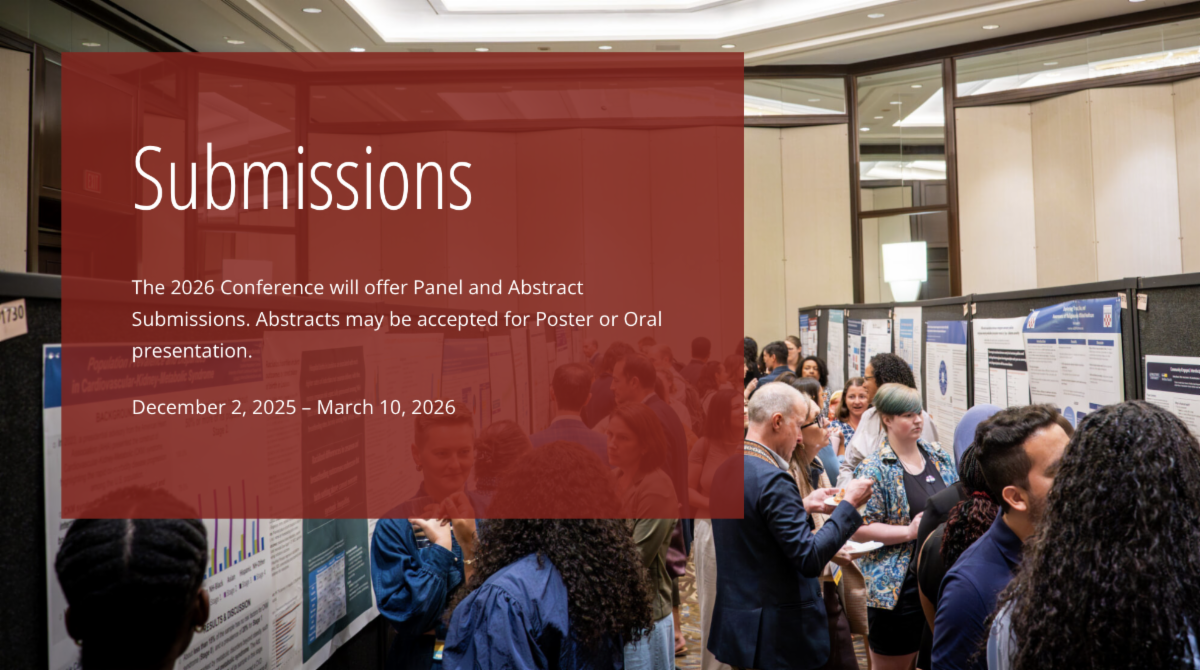
Interdisciplinary Association for Population Health Science (IAPHS) is now seeking abstract proposals for the Health & Social Justice Committee Session at the 2026 IAPHS Annual Meeting, “Reimagining Population Health Science to Build Trust and Influence.”
Abstracts should explore methodological approaches for conducting rigorous, ethical, and trust-building research with hypermarginalized populations. More specifically, IAPHS is interested in liberatory or justice-centered research methods; approaches that intentionally shift traditional power dynamics in population health research by centering community expertise, ensuring meaningful participation, and reducing the risk of harm.
Submission Deadline: March 10, 2026 11:59PM PST
| | |
Opportunity for early-career researchers focusing on health!
Applications are now open for the 2026-2027 Health Equity Fellowship for Trainees (HEFT), a program designed to equip early-career researchers with the tools, mentorship, and scholarly grounding to advance health equity research.
The deadline is March 16, 2026.
| | |
ARCC Seed Grants
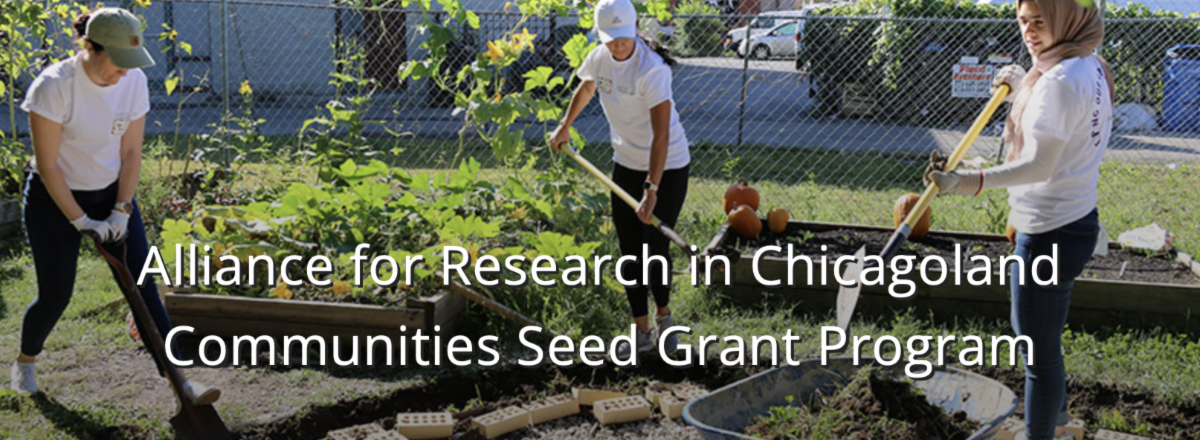
The Alliance for Research with Chicagoland Communities (ARCC) 2026 Seed Grant cycle is now open, offering three types of awards: Community Research Capacity-Building, Partnership Development, and Research Pilot, all with a strong focus on supporting communities and partnerships to address inequities in their proposed projects, partnerships, and practices. The deadline is April 23, 2026.
Visit their website to learn about the three funding types and their individual criteria.
| | |
Food Justice for Kids Prize
We’re excited to spotlight a major opportunity for nonprofits, Tribes, and schools: the Food Justice for Kids Prize, powered by Newman's Own Foundation, Humanitix, Henry P. Kendall Foundation, and Hunger to Health Collaboratory! Grants of up to $100K over two years are available for nonprofits, Tribes, schools, and school districts advancing food justice for kids across the United States and territories. Consider applying if your work supports youth learning about healthy food, expands access to nourishing school meals, or engages with Indigenous foods and food systems.
Apply by April 28, 2026 at foodjusticeforkids.org.
| | |
Have an opportunity you’d like to broadcast?
Email evidenceforaction@ucsf.edu and we’ll be happy to amplify opportunities that align with E4A.
| | | | | |