June 2026 Newsletter

Contents

  1. Meet Our 2026 Summer Interns
  2. Gator Bag Tips and Tricks - How to Best Water Your Trees
  3. Species Highlight: Red horsechestnut (Aesculus x carnea)
  4. Stumped! Urban Forestry Treevia
  5. Become a Cambridge Urban Forest Friend
  6. Sign up for a Tree with Green Cambridge

Meet Our Summer 2026 Interns


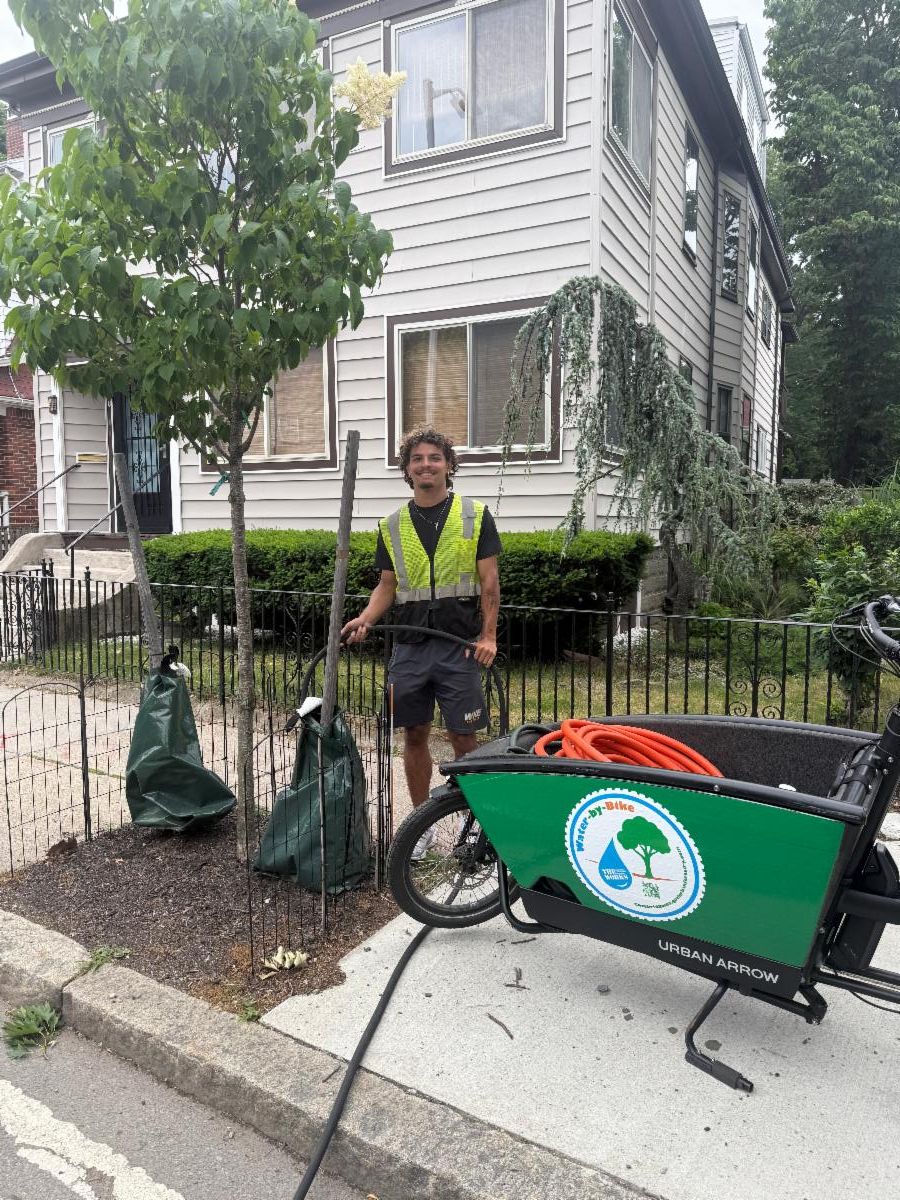
Welcome to our Summer 2026 Urban Forestry Interns! Public Works has 8 Water By Bike (WBB) and 2 Forestry Inventory interns working with us this summer. Water By Bike interns cycle around the city and water new and vulnerable trees. WBB interns are trained on accessing fire hydrants to water trees along their routes. Using the City’s tree asset management system, they track their work on iPads. If a tree needs special attention like weeding, WBB helps with that too. Thanks to Participatory Budget funding, WBB utilizes e-cargo bikes to make their difficult job of biking around the city slightly easier.


The Forestry Inventory interns inspect trees and update their size and condition in our asset management system. The first task for the Inventory interns is to inspect newly planted trees to see how they are doing in their first few years as Cantabrigians. Any trees that are in poor condition or are no longer alive are flagged for review by one of Urban Forestry’s Certified Arborists for further review and if warranted, removal. New trees are under warranty and replacement is covered by the tree planting contractor. Inventory interns also inspect a portion of the City’s tree inventory each summer to update the trees’ DBH (diameter at breast height/4.5ft up the trunk) and condition ratings. Each tree’s crown, trunk, and root flare are inspected. Accurate size and conditions help Urban Forestry better manage the thousands of trees under our care. Data collected by the interns also helps to guide the species we plant and how trees are doing in different neighborhoods.


Thank you to our interns for their hard work!

Water By Bike interns use e-cargo bikes to transport equipment used to water City trees.

Gator Bag Tips and Tricks - How to Best Water Your Trees


Do you ever look at the green bags on new trees and wonder what they are for? You’re not alone! Urban Forestry gets dozens of inquiries from residents about GATOR BAGS. What are they, why do we use them, how do we use them, and whether residents can help fill them.


Gator bags (also called tree irrigation bags) have been used by tree care professionals for decades. Each bag holds about 20 gallons of water when completely full.


Young trees benefit from slow deep watering which encourages deeper root growth. Gator bags have small holes in the bottom of the bags that release water slowly to saturate the soil and reduce run off. A typical bag will empty in 4-24 hours. If you see a bag emptying in less than an hour, it may not have been filled correctly, or it has a large hole and needs replacement. If a bag remains full for more than a day, it may have been filled multiple times (for example, both by a contractor and a helpful resident), or the drainage holes are clogged. A clogged bag can be fixed by poking a few small holes with a thumbtack in the bottom of the bag.


New trees are watered by the City for at least 2 years after planting and most new trees are watered for 5 years by the City. The City’s watering season typically runs from mid-May through mid-November. Trees are watered by our Planting Crew, Water By Bike interns, and the tree planting contractor. Newly planted trees require a significant amount of water, and it is very difficult to overwater a street tree during the summer. If you’re a Forest Friend, filling a nearby tree’s gator bag once a week during dry periods can make a real difference.


Gator bags are designed to go around the tree trunk but in Cambridge we have had the most success installing a gator bag around each of the 2 stakes a new tree is planted with. Leaving a bag around the tree trunk for extended periods can trap moisture and potentially lead to decay or insect issues. Adding a bag to each stake also allows the tree to be watered with double the water! If your tree doesn’t have stakes, you can install the gator bag around the trunk, just be sure to remove it in the fall after the watering season has finished. A single gator bag will fit around a tree with a trunk that is 3 inches or smaller in diameter. 2 bags can be zipped together to accommodate larger trunks.


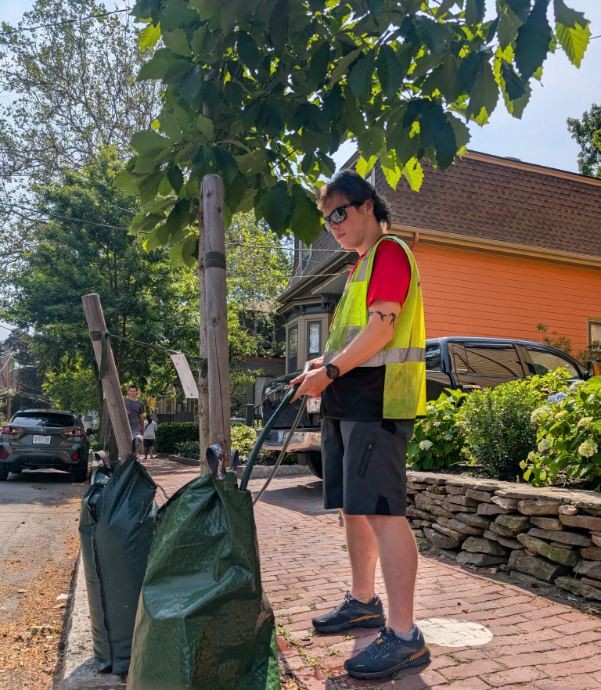
To fill a gator bag, locate the small slit at the top of the bag. Insert a hose into the slit or fill using a watering can or bucket. Fill the bag completely so the water can slowly release into the soil over several hours.


This video shows how to fill a gator bag! https://youtu.be/CmnYuox_xoo?si=Ci3W43qQHfyfuopD

Water By Bike staff filling a gator bag.

Species Highlight: Red horsechestnut (Aesculus x carnea)


The striking Red horsechestnut (Aesculus × carnea) is a medium-sized ornamental tree valued in urban forestry for its seasonal beauty and adaptability. This hybrid between the red buckeye and common horsechestnut produces upright clusters of pink flowers in mid to late spring, adding vibrant color to streets, parks, and open spaces across the city.


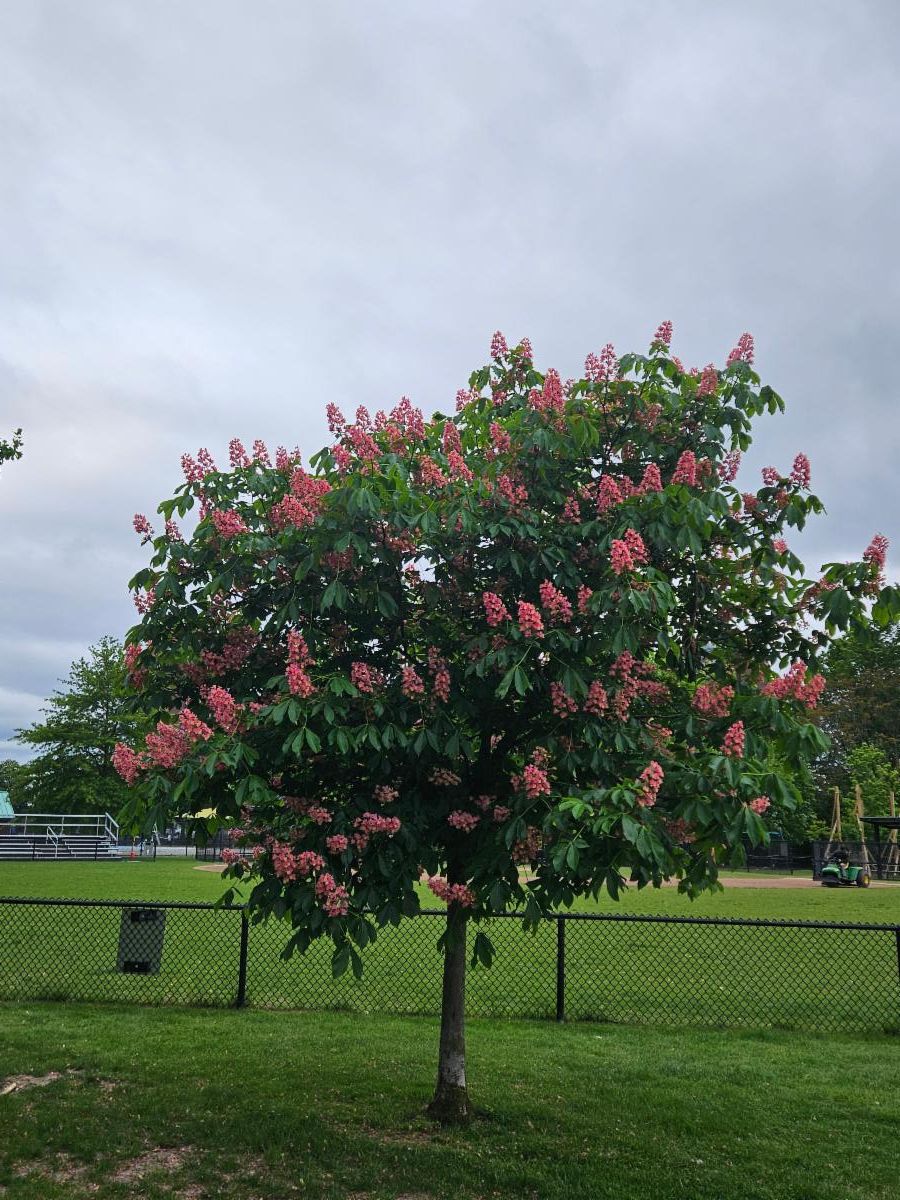
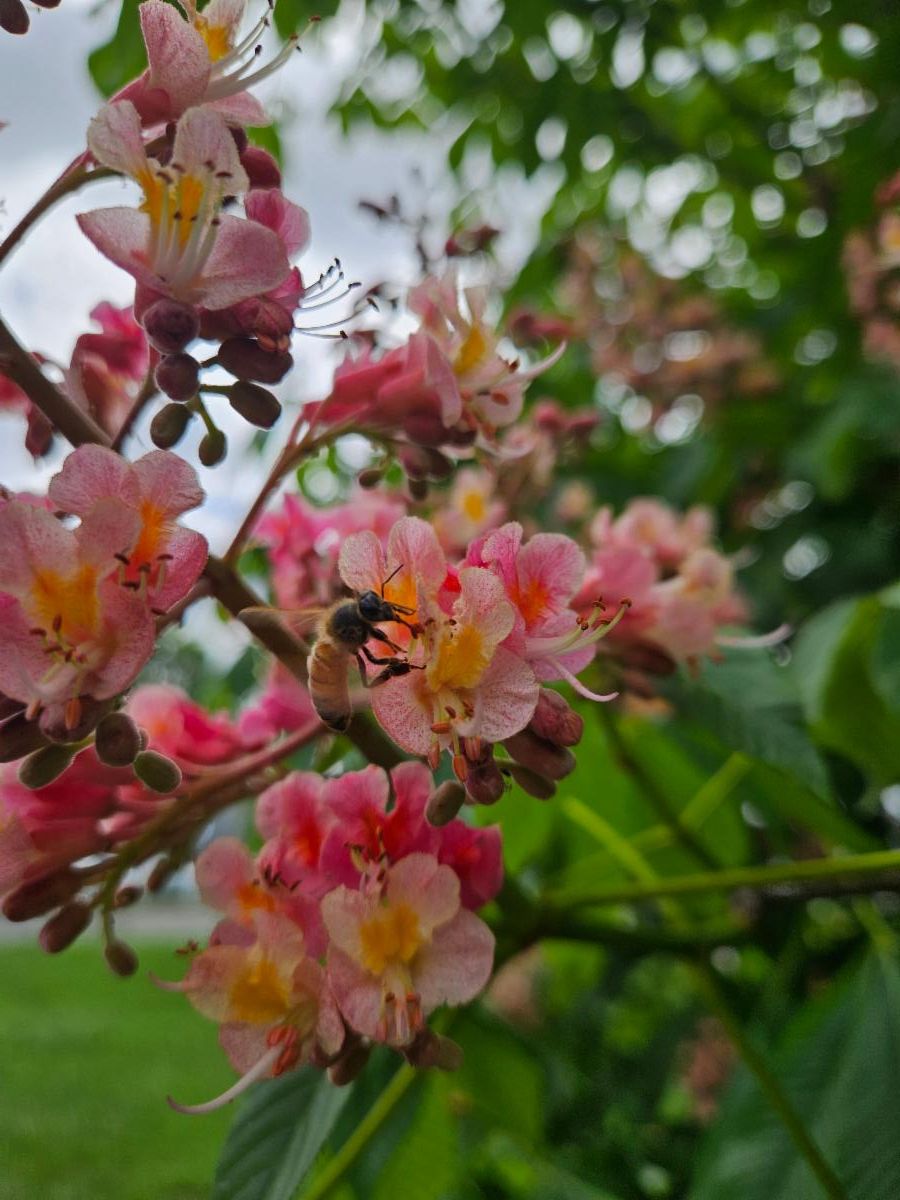
Red horsechestnuts have a rounded crown, growing to 30–40 ft tall. Their showy pink blossoms in upright panicles are unmistakable in May and June. Its flowers are attractive to pollinators like bees and butterflies.


There are only a few Red horsechestnut City trees in Cambridge so if you want to see them you should locate them using our Tree Species Map 


  A red horsechestnut in bloom at Russell Field in North Cambridge. 

A pollinator visiting red horsechestnut flowers on Memorial Drive.  

Stumped! Urban Forestry Treevia


Learn a fun fact about urban forestry in Cambridge! 

Why are gator bags designed to release water slowly?

The trivia answer will be revealed in next month’s newsletter! 


Last month's question was " Why do most new trees have 2 gator bags instead of 1?” and the answer was “A. Both bags are filled at each watering to ensure the tree gets more water.". Did you get it right? 

Become a Cambridge Urban Forest Friend

We need your help to maintain a healthy, vibrant urban forest! Any Cambridge resident willing to regularly water the tree and provide some general care for the tree is welcome to become a Cambridge Urban Forest Friend.


How to Start

Questions?


For questions about the Cambridge Urban Forest Friends, please contact Kristen Kelleher, Community Relations Manager at 617-349-4825 / kkelleher@cambridgema.gov.


**Please let us know if you are no longer caring for your street tree and we will remove you from the database and future emails**


Sign Up for a Tree with Green Cambridge

If you have space for a tree on your property, Green Cambridge can plant a tree to help expand Cambridge’s urban tree canopy! If you own your home in Cambridge, MA and would like Green Cambridge to plant a tree in your yard, visit https://www.greencambridge.org/canopycrew

Thanks for reading! 


If you enjoy the Cambridge Urban Forest Friends newsletter, you can spread the word about it with this sign-up link. With more sign-ups, more Cambridge residents can learn about how to best support our environment and communities.


To receive this newsletter in English, email Cambridgetrees@cambridgema.gov


Para recibir este boletín en español, envíe un correo electrónico a Cambridgetrees@cambridgema.gov


Pou resevwa bilten sa a an kreyòl ayisyen, voye yon imèl bay Cambridgetrees@cambridgema.gov


Facebook