January 2026 Newsletter

Contents

  1. Growing a Greener Cambridge: How We Care for Young Trees 
  2. Keep Salt Out of Tree Wells 
  3. Species Highlight: Kentucky coffeetree 
  4. Stumped! Urban Forestry Treevia 
  5. Become a Cambridge Urban Forest Friend   
  6. Sign Up for a Tree with Green Cambridge   


Growing a Greener Cambridge: How We Care for Young Trees


Did you know that Cambridge prunes around 1,200 young trees every year? It’s all part of our Young Tree Training Program, launched in 2022 to help newly planted trees (typically 2 years after installation) grow strong, healthy, and safe. 


This proactive pruning shapes young trees early, removing weak or crowded branches so they develop sturdy trunks and balanced canopies. It’s a small investment that makes a big difference, helping trees thrive and reducing future maintenance needs. 


The program was developed in line with our Urban Forest Master Plan, a citywide strategy to grow and care for our urban canopy in a way that’s sustainable, climate-resilient, and equitable across all neighborhoods. 


Why it matters: Healthy trees cool our streets, clean our air, and make our city more beautiful for everyone. 


Want to learn more or get involved? 

Visit cambridgema.gov/Services/urbanforestry to explore the Urban Forestry program or request a tree for your neighborhood. 


Let’s grow a greener future—together.


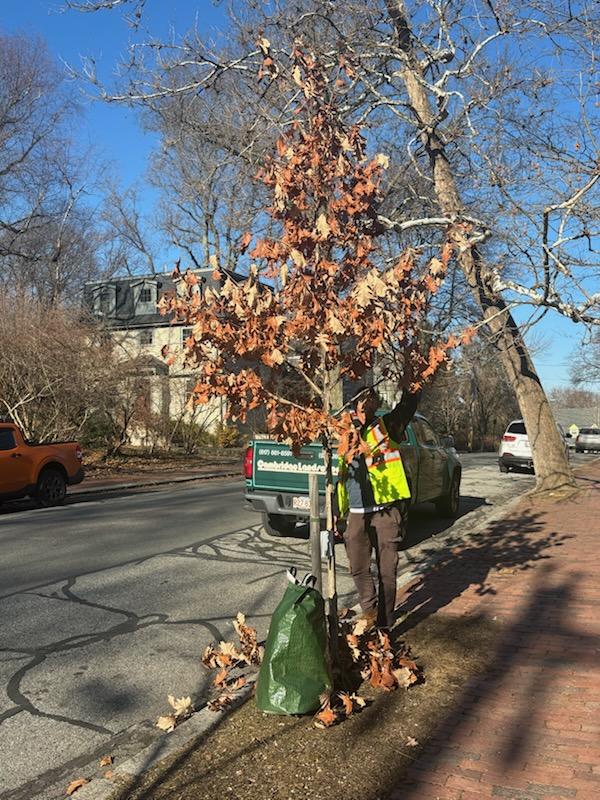
City contractor Cambridge Landscape prunes young trees for health and form.

Keep Salt Out of Tree Wells


When it comes to salt, a little goes a long way! When snow melts, it washes any salt and de-icing chemicals from driveways and sidewalks into storm drains. Too much chloride (salt) in our rivers and streams can harm the environment. While the best way to manage snow and ice is through mechanical methods like shoveling, we recognize that sometimes additional treatment is needed to ensure safety but work to keep it away from your trees.  


Here are some simple ways to keep walkways safe while protecting our waterways: 


  • Avoid rock salt and sand: Traditional rock salt (sodium chloride) is particularly harmful to plants and wildlife and should be avoided. Likewise, avoid sand, which can make ice more slippery and clogs storm drains. 
  • Shovel first: For de-icers to be effective, snow should be shoveled first. De-icers work by preventing ice from forming (and should not be used to melt snow that’s already fallen). 
  • Use sparingly: A light sprinkle of de-icer is enough – piling extra won’t speed up melting and just increases salt concentration in runoff. A good rule of thumb is that a standard size coffee mug is enough to treat 10 sidewalk squares (approximately 100 square feet).  


Salt harms the tree’s ability to absorb water and can block nutrients. These issues can lead to yellowing leaves, stunted tree growth, and death. 


Winter can be gloomy, but don’t make it worse by poisoning our trees! 

Species Highlight: Kentucky coffeetree (Gymnocladus dioicus)


The Kentucky coffeetree is a resilient tree you may notice along Cambridge streets and parks. Known for its large, bi-pinnate leaves and striking winter silhouette, this tree brings year-round interest to the urban landscape. In summer, its coarse-textured foliage casts light, dappled shade that allows understory plants and nearby gardens to thrive. 


Well suited to city conditions, Kentucky coffeetree tolerates compacted soils, air pollution, salt, and periods of drought, making it a great choice for urban environments like Cambridge. It also supports local ecosystems: as a species native to the US, it provides habitat and food for insects and birds, helping strengthen urban biodiversity. 


Fun fact: Early settlers roasted the tree’s large seeds as a coffee substitute, though the raw seeds are toxic and not for consumption. Many cultivars available now are low to no fruiting and are preferred by many arborists due to their upright forms which are better suited for city streets. ‘Espresso’, ‘Decaf’, and ‘Skinny Latte’ are some of the cheeky names of cultivars prized for their ideal form and lack of fruit. Today, Kentucky coffeetree is valued not for caffeine, but for its durability, climate resilience, and distinctive character, an excellent example of the diverse species that help build a healthy and resilient urban forest. 

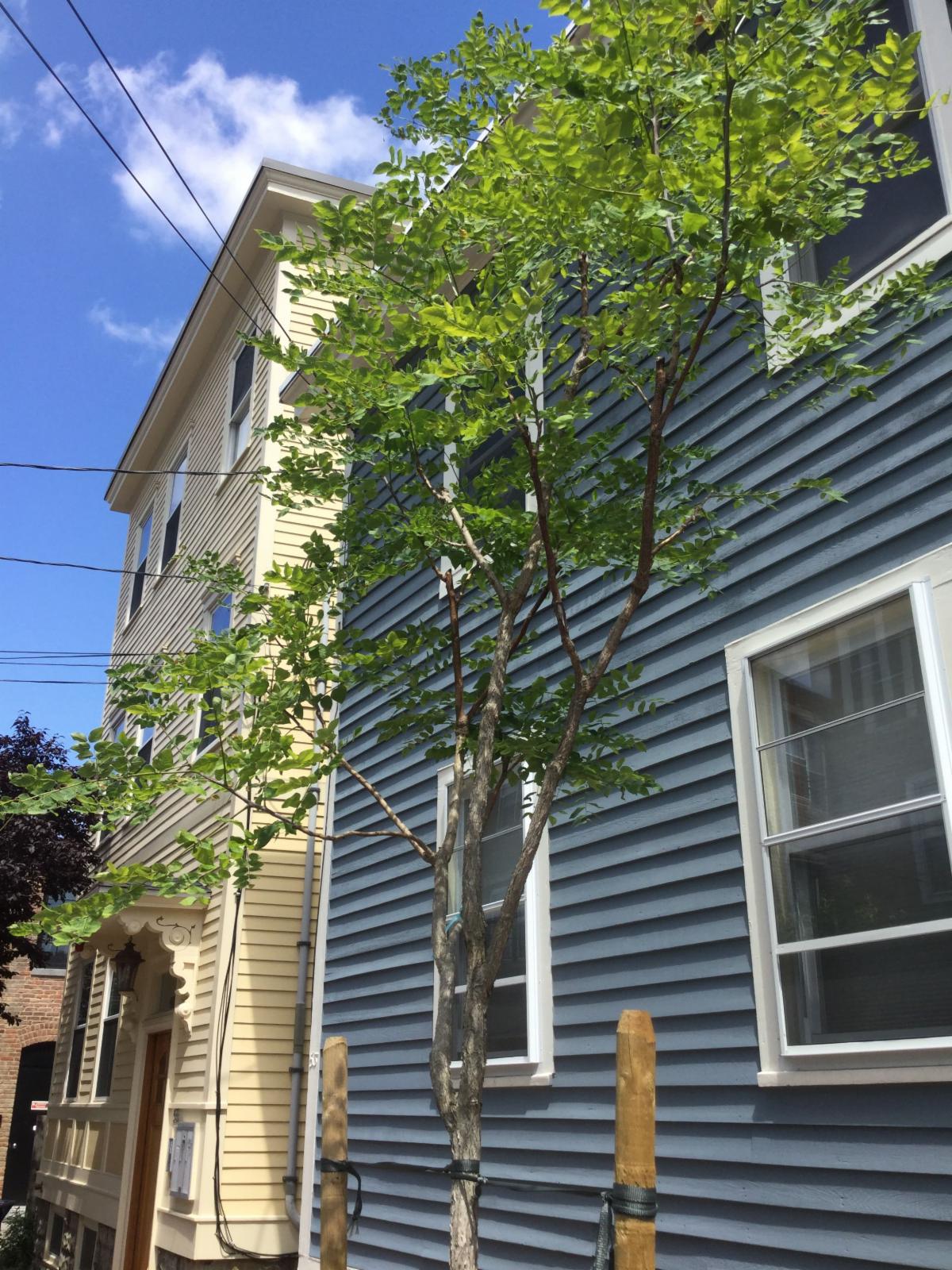
A Kentucky coffeetree on Kelly Road in the summer.

Stumped! Urban Forestry Treevia


Learn a fun fact about urban forestry in Cambridge! 

Why does the City prune young trees?

The trivia answer will be revealed in next month’s newsletter! 


Last month's question was "How does salt affect trees?” and the answer was "A. Applying too much salt can burn, injure, and disfigure trees.” Did you get it right?  

Become a Cambridge Urban Forest Friend

We need your help to maintain a healthy, vibrant urban forest! Any Cambridge resident willing to regularly water the tree and provide some general care for the tree is welcome to become a Cambridge Urban Forest Friend.


How to Start

Questions?


For questions about the Cambridge Urban Forest Friends, please contact Kristen Kelleher, Community Relations Manager at 617-349-4825 / kkelleher@cambridgema.gov.


**Please let us know if you are no longer caring for your street tree and we will remove you from the database and future emails**


Sign Up for a Tree with Green Cambridge

If you have space for a tree on your property, Green Cambridge can plant a tree to help expand Cambridge’s urban tree canopy! If you own your home in Cambridge, MA and would like Green Cambridge to plant a tree in your yard, visit https://www.greencambridge.org/canopycrew

Thanks for reading! 


If you enjoy the Cambridge Urban Forest Friends newsletter, you can spread the word about it with this sign-up link. With more sign-ups, more Cambridge residents can learn about how to best support our environment and communities.


To receive this newsletter in English, email Cambridgetrees@cambridgema.gov


Para recibir este boletín en español, envíe un correo electrónico a Cambridgetrees@cambridgema.gov


Pou resevwa bilten sa a an kreyòl ayisyen, voye yon imèl bay Cambridgetrees@cambridgema.gov


Facebook  X