|
Contents
- Arbor Week 2026 Recap
- Watering Season Has Begun: Please Water Your Trees
- Explore Cambridge in Bloom: Flowering Trees Map
- Yard Waste Tips for Spring Tree Well Cleanup
-
Species Highlight: Crabapple (Malus)
- Forest Foe: Japanese Knotweed
- Upcoming Event: Fresh Pond Day 6/13/26
- Rain Barrel Discount Program
- Stumped! Urban Forestry Treevia
- Become a Cambridge Urban Forest Friend
- Sign Up for a Tree with Green Cambridge
| | |
Arbor Week 2026 Recap!
Thanks to all who participated in our Arbor Week 2026 celebrations! We loved meeting with residents, students, business owners, and visitors who care for the urban forest as much as us! Arbor Week is a time to recognize the value of Cambridge’s trees and the collective effort it takes to protect and grow this critical community resource.
Throughout the week, neighbors joined us for planting events and tree-related activities celebrating the beauty and benefits of our urban canopy. We connected with hundreds of community members, shared information about tree care, and gave away free tree seedlings to help expand the next generation of trees beyond our streets and parks.
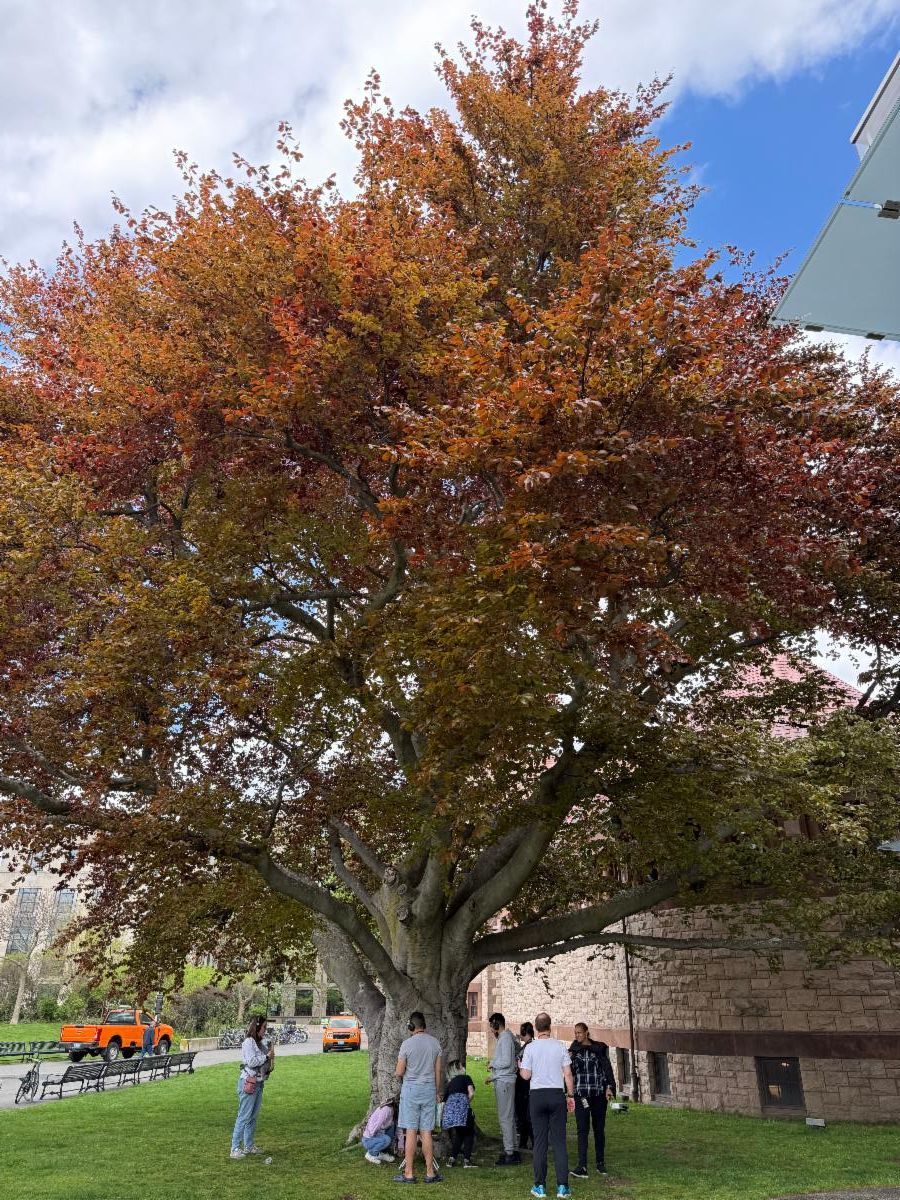
From newly planted bare root trees to the majestic Main Library willow, the week was a reminder that trees bring us together. They provide shade, cleaner air, stormwater management, wildlife food and habitat, and moments of calm in busy Cambridge life.
Thank you for celebrating with us and for supporting Cambridge’s urban forest year-round. We look forward to continuing the work and growing together in the seasons ahead.
| | 'Tree Hugging Studies' was a crowd favorite at the celebration at the Main Library. | | |
Watering Season Has Begun: Please Water Your Trees
As temperatures rise, May marks the beginning of an important season for tree care: watering season. Newly planted trees need consistent watering to establish strong root systems. While mature trees can often withstand short dry spells, young trees are still building the roots they’ll rely on for decades to come.
Water supports every part of a tree’s growth. It helps transport nutrients from the soil to the leaves, keeps cells healthy and strong, and allows trees to produce the energy they need through photosynthesis. In urban environments like Cambridge where pavement, compacted soils, and added heat create extra stress, consistent watering in the spring, summer, and fall can make all the difference.
A well-watered young tree:
- Establishes roots more quickly
- Is more resilient to summer heat
- Is better able to resist pests and disease
- Grows into a stronger, longer-lived canopy tree
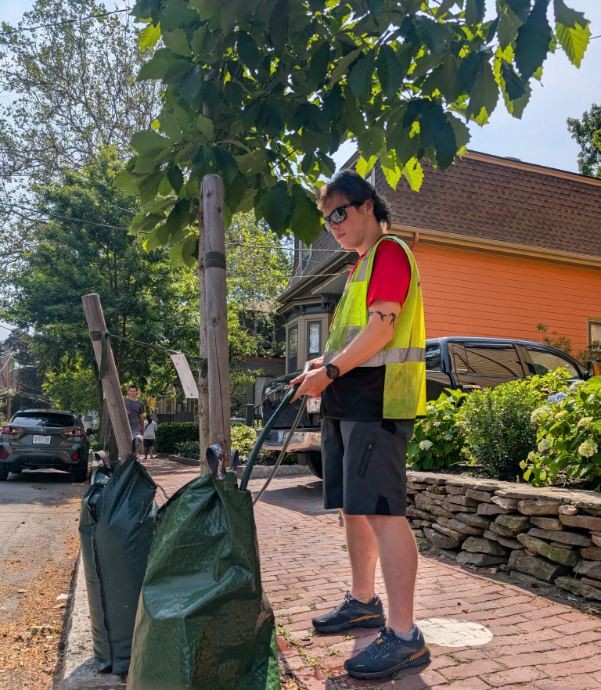
Trees planted along streets and in City open spaces are watered by the City for at least 2 years. But all new trees and even established trees benefit from extra watering during drought or heat waves. If your tree has Gator bags, fill them once a week. If your tree doesn’t have Gator bags, place a hose at the base of the tree and let it run at a trickle for 20–30 minutes. Water should soak into the soil, not run off onto the sidewalk or into the street.
Want more info on filling gator bags? Check out our video on YouTube.
The City maintains thousands of public trees but keeping them healthy takes all of us. When residents water street trees near their homes or businesses, they are directly contributing to a greener, cooler, and more resilient city. Those few extra gallons each week can mean decades of shade, cleaner air, stormwater management, and neighborhood beauty for everyone.
As we head into warmer months, thank you for helping our urban forest grow strong.
| Water By Bike staff worked hard this summer watering many of the Cambridge’s young and more vulnerable trees. | |
Explore Cambridge in Bloom: Flowering Trees Map
Hawthorns, redbuds, crabapples, tuliptrees, and more are currently in bloom across Cambridge, painting our streets and parks in spring colors. To help you enjoy every petal and bloom, the City has an interactive Flowering Trees Story Map that shows where trees are flowering across Cambridge this month.
This digital map lets you see where spring blossoms are popping up in town so you can plan walks, outings, or simply enjoy a moment under a blooming canopy. It’s an easy and fun way to explore Cambridge’s urban forest and learn about the variety of trees that brighten our city in spring. Cambridge’s Urban Forestry team maintains thousands of public trees, and we use tools like this StoryMap to share that living data with the community. Our flowering trees not only add beauty, they support pollinators, cool sidewalks, and create seasonal highlights that draw us outside to meet, walk, and savor spring.
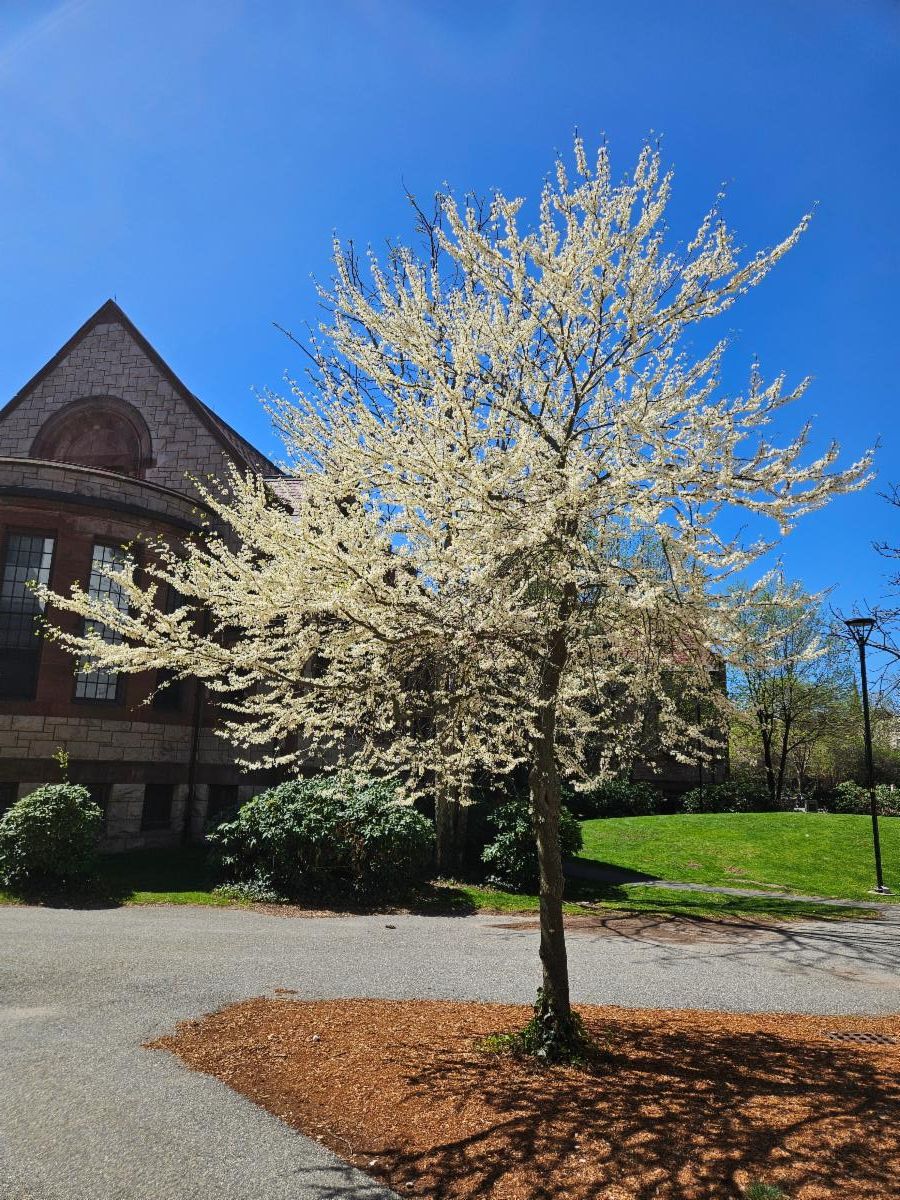
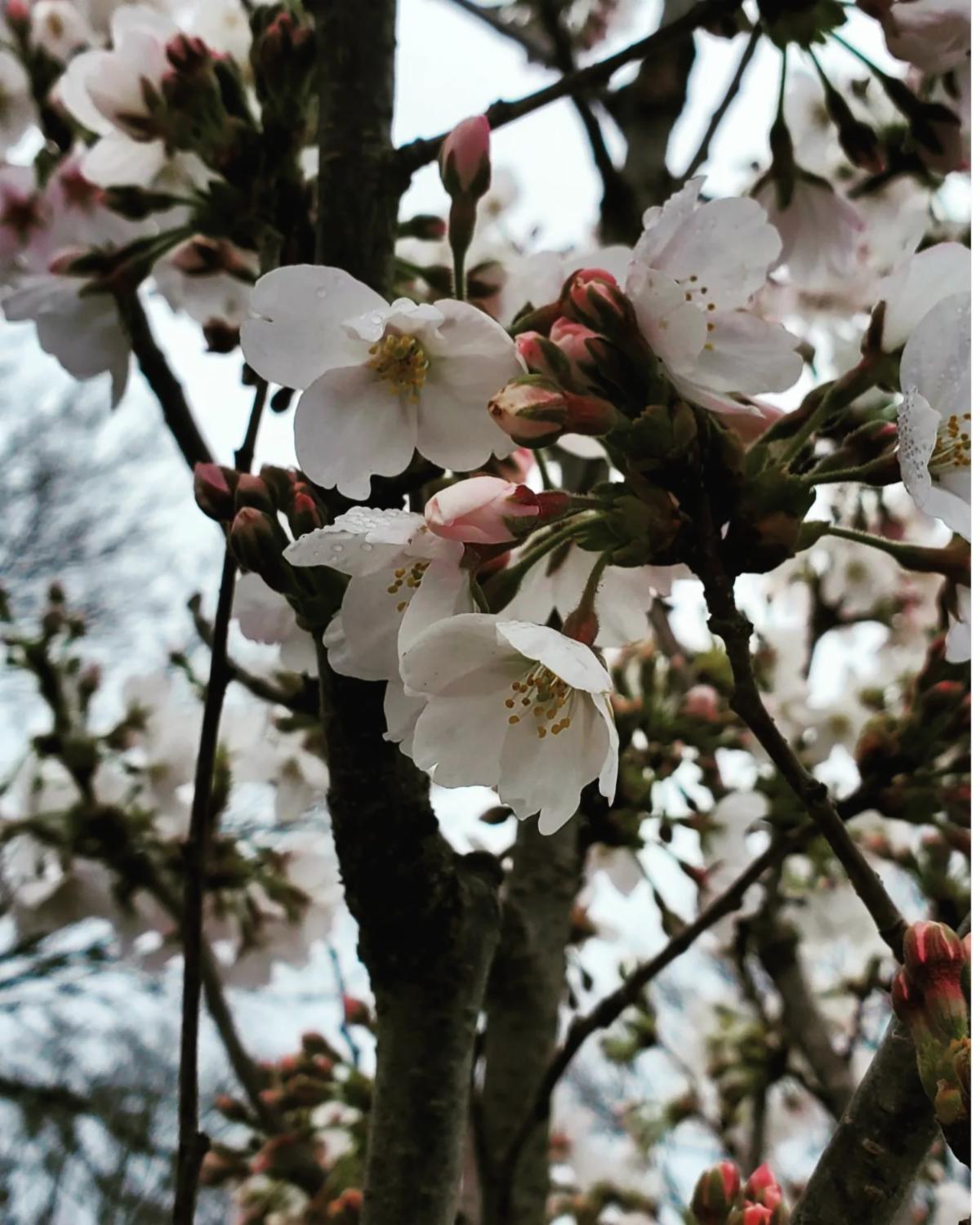
| | This redbud (Cercis canadensis) should be called a whitebud! You can see this uncommon tree flowering April - May between the Main Library and CRLS campus. | | |
Yard Waste Tips for Spring Tree Well Cleanup
One way Forest Friends can help both trees and local rivers is to prevent leaves and weeds from blowing into the street or washing into storm drains. If you notice debris in or around a tree well, it’s best to gather the material before the next storm and set it out with your yard waste.
Taking a few extra minutes to pick up leaves or organic debris sitting in the gutter near a tree well also makes a big difference. These materials can clog storm drains and release nutrients into stormwater as they break down, contributing to algal blooms downstream.
Simple ways to help:
- Collect fallen leaves, weeds, and other yard waste from tree wells, sidewalks, and the curb in front of your property and set them out for yard waste pickup.
- Never sweep or blow yard waste into the street.
-
If there’s a storm drain adjacent to your tree, consider signing up to be a Storm Steward
Thoughtful cleanup keeps tree wells healthy and protects local waterways at the same time!
|
Species Highlight: Crabapple (Malus)
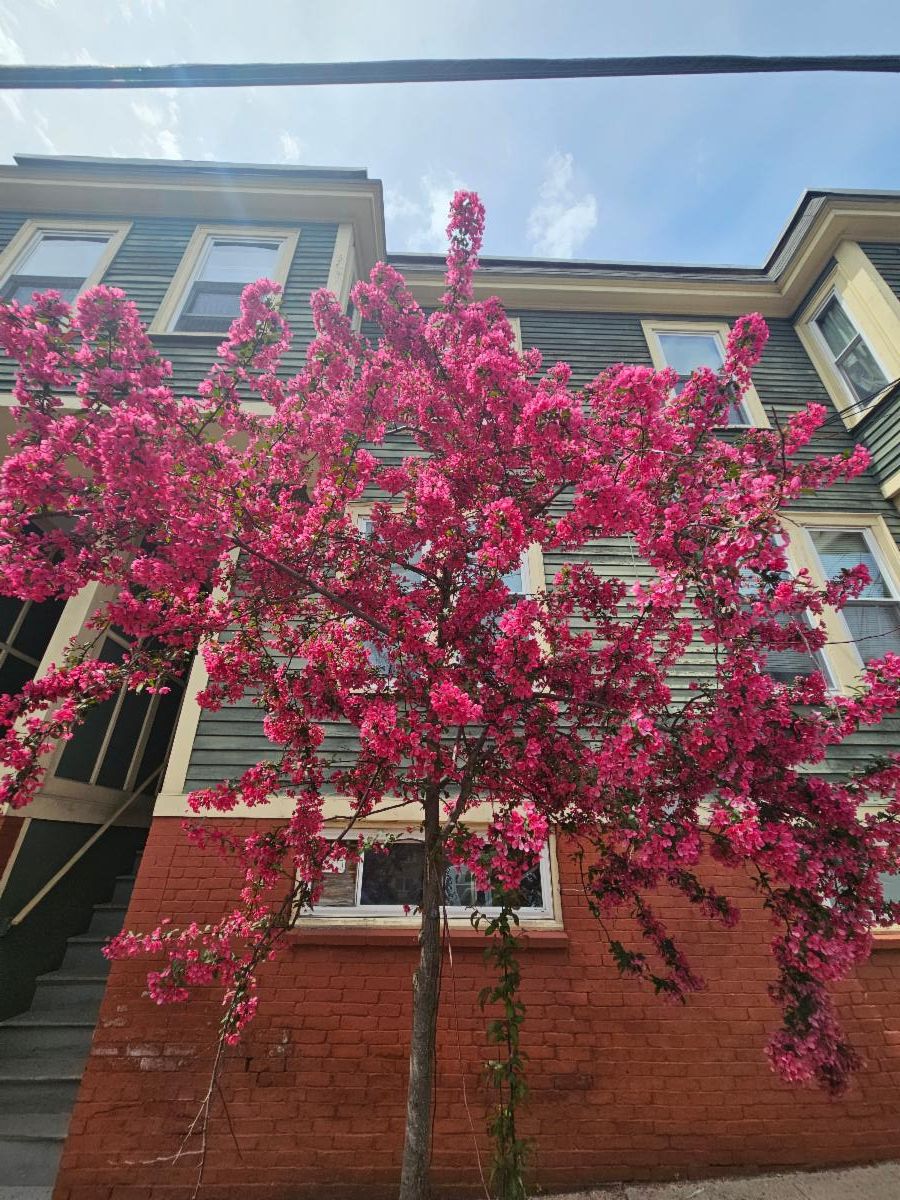
Crabapples are best known for their showy spring blooms. Depending on the variety, flowers can range from deep magenta to pale pink petals to crisp white. While not all crabapple species are native to Massachusetts, many crabapple species that grow here provide an important early-season nectar source for bees and other pollinators emerging after winter. In fall, many crabapples put on a second show with their small, colorful fruits in shades of red, orange, and yellow. Many of the fruits persist into winter, feeding birds and adding seasonal interest long after other trees have dropped their leaves.
Crabapples are especially valuable in urban environments like Cambridge. Most varieties are small to medium in stature, making them ideal for planting under utility lines, in tighter sidewalk spaces, and in neighborhood parks. Their smaller size allows them to coexist with other City infrastructure while still providing shade, cooling, and stormwater interception.
| | A street tree crabapple in full bloom in May. | | Crabapples come in hundreds of cultivars and varieties in a wide array of flower and fruit colors. | | |
Forest Foe: Japanese Knotweed
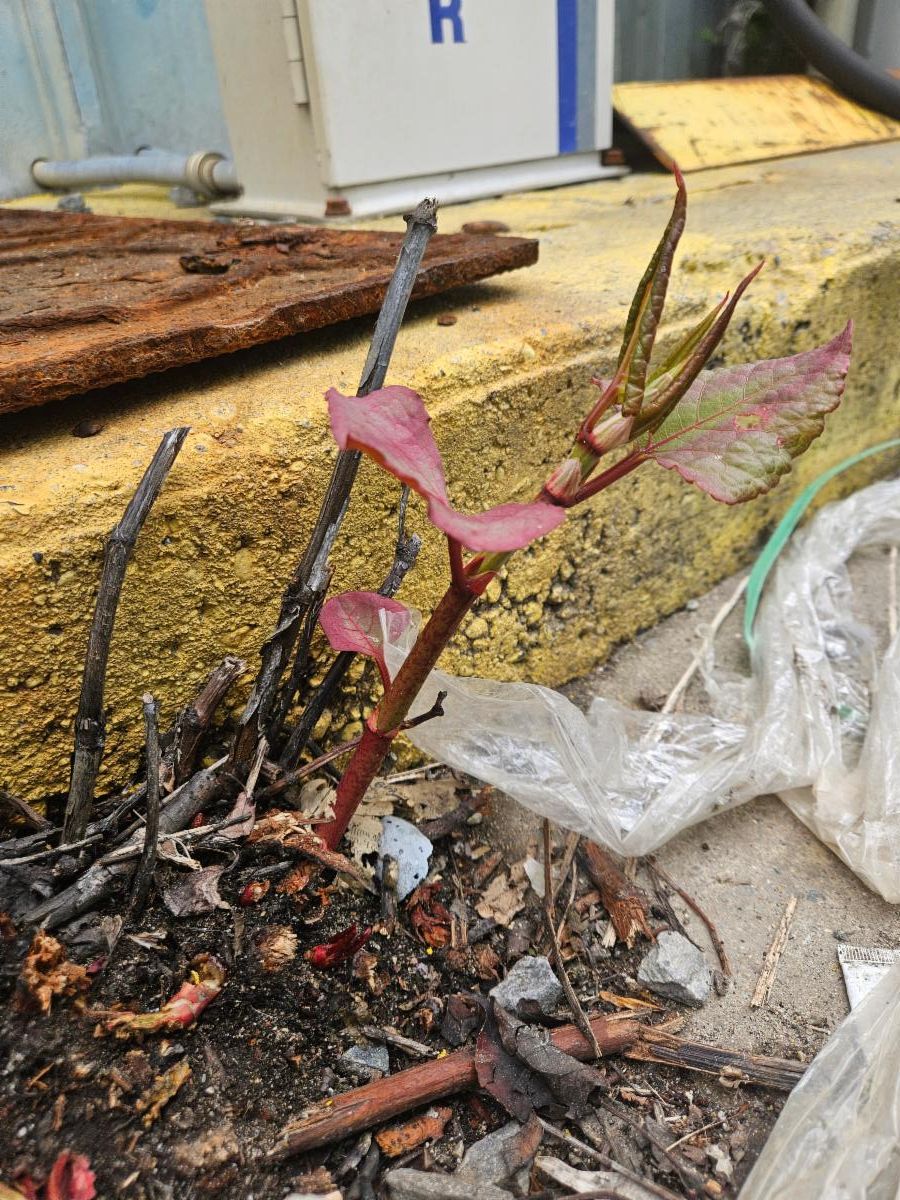
Japanese knotweed (Reynoutria japonica) has started to emerge, have you spotted it? This time of year, look for fleshy, reddish colored shoots. Fast-growing stems are hollow, like bamboo. Leaves emerge as heart-shaped and white/cream colored flowers appear in August. Knotweed is a geophyte, meaning it is a perennial plant with an underground storage system. Knotweed’s rhizomes, or root structures, store large amounts of energy and new plants can sprout from tiny rhizome fragments. This makes the plant very difficult to eradicate once established. Knotweed is an invasive species in Massachusetts. It forms dense colonies and outcompetes native plants. For more information please visit: https://www.mass.gov/doc/nhdot-invasive-plant-fact-sheet-2-bmps-for-knotweed/download
| Knotweed shoots emerging from concrete. This plant can grow pretty much anywhere. Knotweed is an invasive plant that is extremely hardy and difficult to remove once established. |
Upcoming Event: Fresh Pond Day Saturday June 13
Celebrate Cambridge’s water supply with us! Public Works, including Urban Forestry and the Committee on Public Planting, will be tabling with other City departments and the Cambridge Water Department at this annual festival that celebrates water, community, and sustainability. More information can be found on the event webpage here: https://www.cambridgema.gov/water/freshpondreservation/freshpondday
| |
Rain Barrel Discount Program
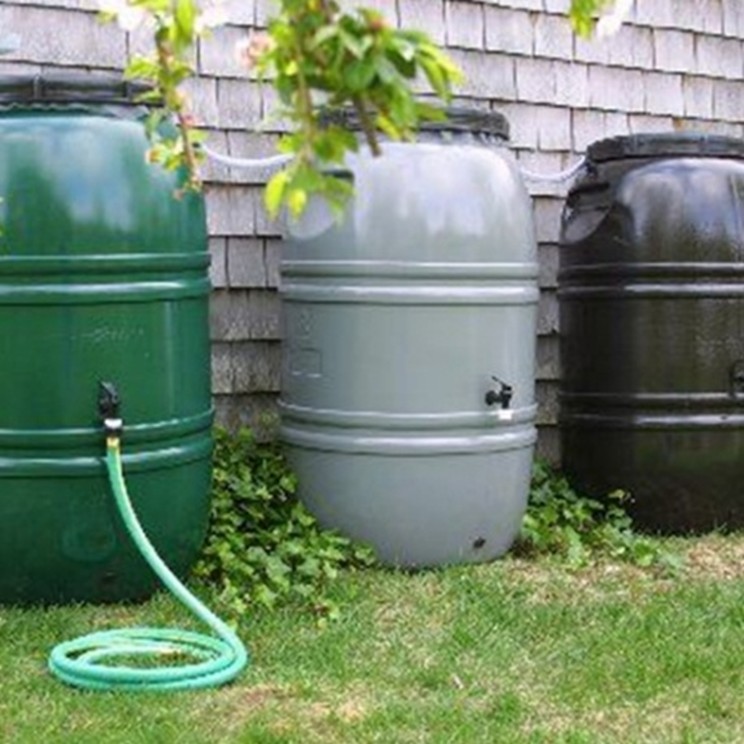
DPW is once again teaming up with the Great American Rain Barrel Program to offer residents reduced‑price rain barrels for $89. These barrels collect rainwater that can be used on gardens, lawns, and trees, helping conserve drinking water and cut down on stormwater runoff. Taking part in the program is an easy way to support local water conservation and strengthen our community’s sustainability efforts.
How to order:
Important Dates:
- The deadline to order your rain barrel has been extended and all orders must be placed by Sunday, June 14, 2026
- Pick-up Date: Barrels will be available for pick-up on Tuesday, June 23, 2026, from 4:00 PM to 7:00 PM. All rain barrels must be picked up in the parking lot across from 63 Mooney Street, Cambridge MA on June 23.
| | Take advantage of the discounted rain barrel program and use the saved water to water trees and support our urban canopy! | | |
Stumped! Urban Forestry Treevia
Learn a fun fact about urban forestry in Cambridge!
| |
| Why do most new trees have 2 gator bags instead of 1? | | | | |
The trivia answer will be revealed in next month’s newsletter!
Last month's question was "What species is not in bloom in April?” and the answer was “A. Northern catalpa”. Did you get it right?
| | Become a Cambridge Urban Forest Friend | |
We need your help to maintain a healthy, vibrant urban forest! Any Cambridge resident willing to regularly water the tree and provide some general care for the tree is welcome to become a Cambridge Urban Forest Friend.
How to Start
| | |
Questions?
For questions about the Cambridge Urban Forest Friends, please contact Kristen Kelleher, Community Relations Manager at 617-349-4825 / kkelleher@cambridgema.gov.
**Please let us know if you are no longer caring for your street tree and we will remove you from the database and future emails**
| | Sign Up for a Tree with Green Cambridge | |
If you have space for a tree on your property, Green Cambridge can plant a tree to help expand Cambridge’s urban tree canopy! If you own your home in Cambridge, MA and would like Green Cambridge to plant a tree in your yard, visit https://www.greencambridge.org/canopycrew
| | | | |