September 2025 Newsletter

Contents

  1. Should I Leave my Leaves? 
  2. Branching out: Cambridge Partners with DCR for New Trees
  3. Thirsty Trees Need a Sip!
  4. Species Highlight: River Birch (Betula nigra)
  5. Forest Foe: Spotted Lantern Fly
  6. Stumped! Urban Forestry Treevia
  7. Upcoming Event: The Port Arts in the Park 9/27
  8. Become a Cambridge Urban Forest Friend   
  9. Sign Up for a Free Tree with Green Cambridge   

Should I leave my leaves?


Leaving fallen leaves in your tree well, garden, and flower beds, can be beneficial to the health of your yard, trees, other plants, and surrounding wildlife. A layer of leaves protects soil from erosion, provides habitat for insects and microbes in the soil, and protects bulbs, perennial plants, and tree roots from extreme temperature fluctuations. As the leaves decompose, they return nutrients to the soil. An insulating layer of leaves can help your lawn’s ecosystem when spring returns and your garden begins to bloom again.  


On the other hand, be sure to clear leaves out of nearby street drains. If unaccounted for, leaves can easily clog drains, increasing the likelihood of floods on streets or your property.  


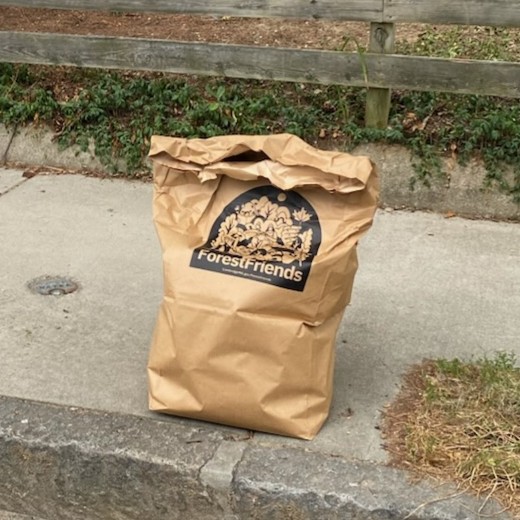
Excess leaves should be bagged in yard waste bags for curbside pick up. Forest Friends can pick up yard waste bags at the Public Works main office at 147 Hampshire St. 

Branching Out: Cambridge Partners with DCR for New Trees


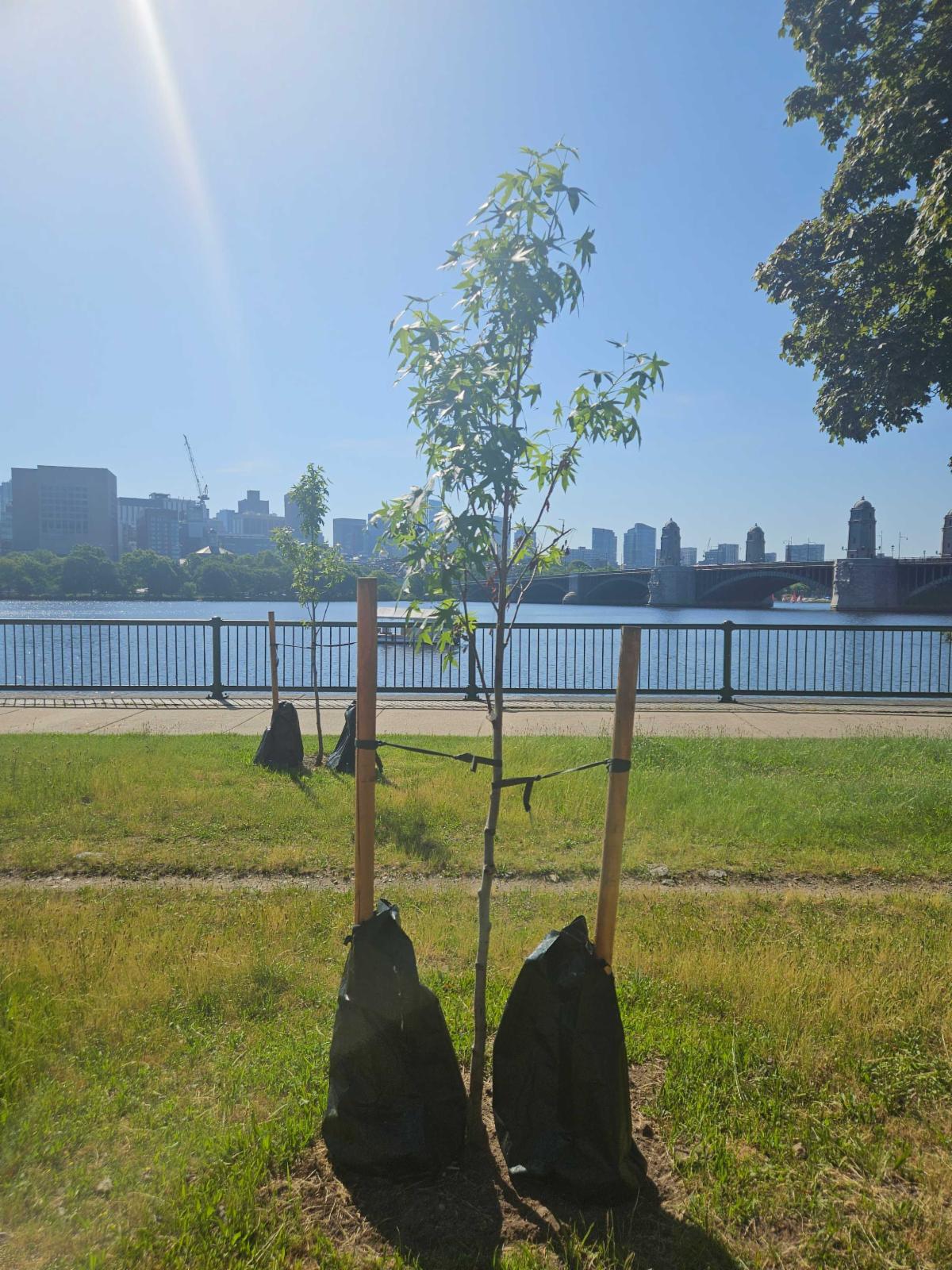
Have you seen some fresh green additions along the Charles during your morning jog? Cambridge Urban Forestry is excited to share news of a recent partnership with Massachusetts Department of Conservation and Recreation (DCR). Through this partnership, Urban Forestry planted 120 trees of over 20 species/cultivars on DCR land along the Charles River (Cambridge Parkway and Memorial Drive) and Alewife Brook Parkway. To give these trees the best start, the City will provide watering and maintenance for the next 5 years. After that, DCR will take over their care, ensuring the trees continue to thrive. These new trees will bring more shade, cleaner air, and beauty to some of our most beloved green and riverfront spaces. 

2 new Sweetgum trees planted by the City on DCR land along the Charles River.

Thirsty Trees Need a Sip!


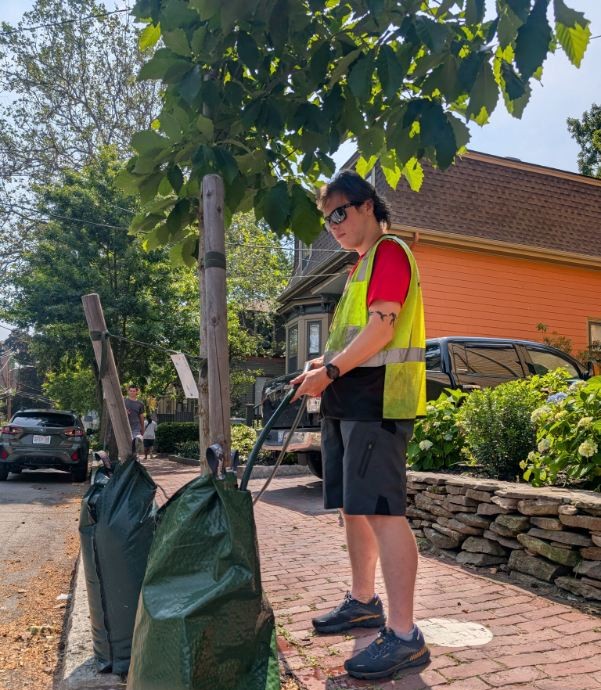
Please help our urban forest thrive by watering your street trees, especially new and younger trees. New trees are watered by Public Works or the tree planting contractor, but new trees need a lot of water. Forest Friends can help by filling each gator bag once a week. As we head into fall and new trees are preparing for the harsh winter months, some extra water from Forest Friends will help reduce their stress and prep them for winter. Thank you for watering your tree and growing the urban forest!  

Species Highlight: River birch (Betula nigra)

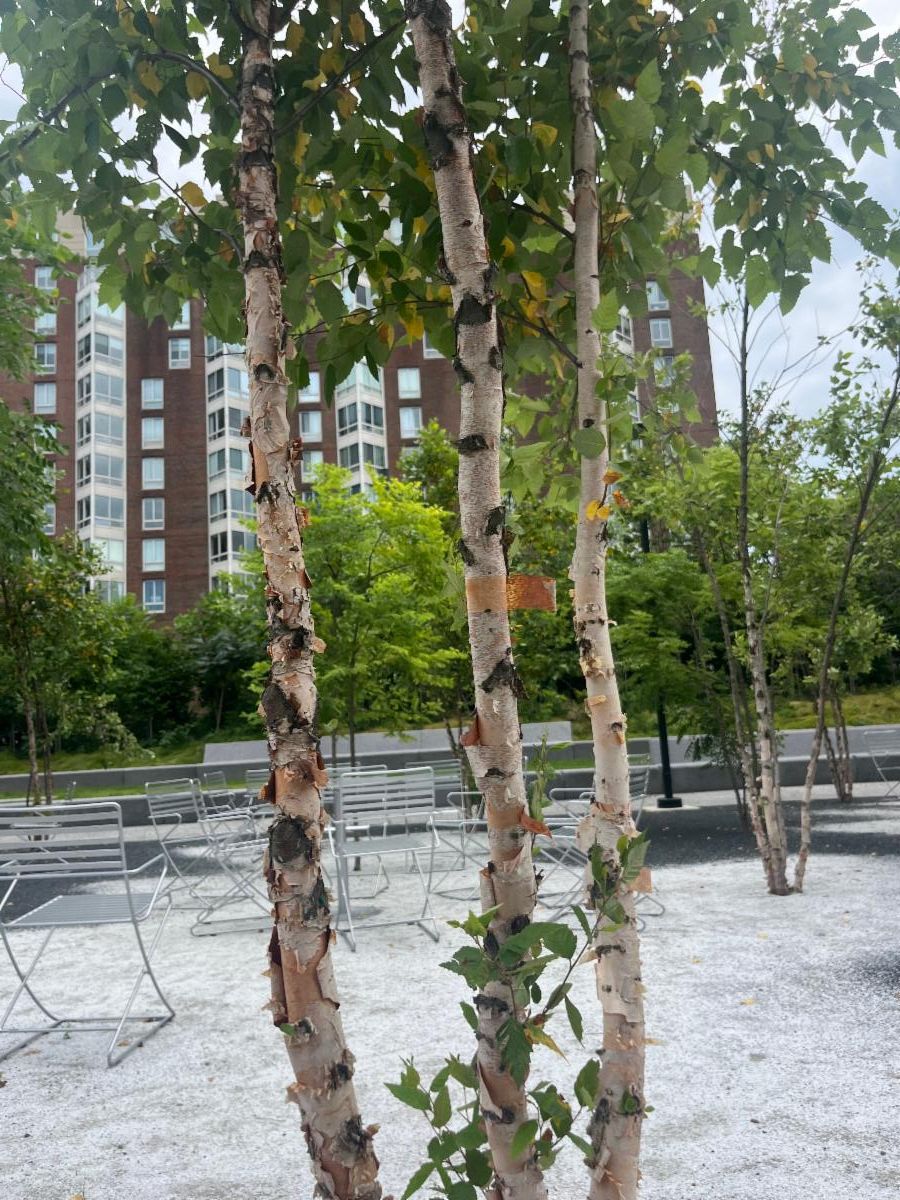
The river birch has unique bark, identified by its ornamental peeling qualities. The outer bark ranges from salmon-pink to golden-brown, while the inner bark revealed underneath is lighter. This time of year, the tree’s dark green leaves begin to turn into their beautiful fall foliage, a buttery yellow. The yellow leaves and characteristic colorful bark make the river birch an exciting tree this time of year, particularly because its leaves tend to drop earlier in the season than other trees’ leaves. In fall sun, the foliage is brighter and more intense.  


Have you seen a river birch near you? They are not hard to find in Cambridge: the river birch is becoming increasingly popular in American cities because of its ability to survive flooding and damp sites. Some cultivars are known for improved heat and drought tolerance, making them a suitable street tree selection.  

Young River birch trees show off their exfoliating colorful bark at the new Triangle Park on Binney St.

Forest Foe: Spotted Lanternfly (SLF)

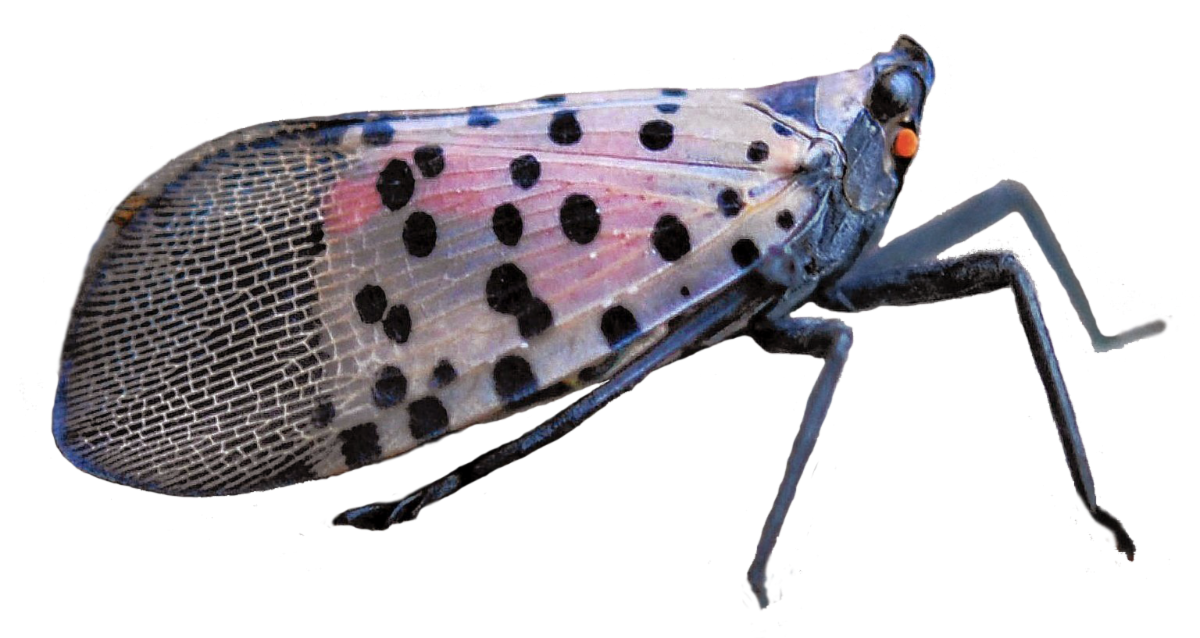
The spotted lanternfly is an invasive insect that damages trees and other woody plants by feeding on their sap. Nymphs are black with white spots, developing red areas as they mature. Look for adult lanternflies now. They can be identified by their brownish-gray and black-spotted front wings when at rest. When they fly or hop, you will notice bright red hindwings. SLF is expected to have the biggest impact on the state’s agricultural sector because they prefer grapevines and nursery plants. 


SLF has not been confirmed in Cambridge at this time, but it is nearby in Boston, Arlington, and Watertown. You can track the SLF infestation here 


If you think you’ve spotted a lanternfly, you can report it to the state of Massachusetts here.

An adult spotted lanternfly, photo courtesy of Mass.gov


Stumped! Urban Forestry Treevia

Learn a fun fact about urban forestry in Cambridge!


The trivia answer will be revealed in next month’s newsletter!


Last month's question was "Dog urine contains high levels of nitrogen and salts. What effects can this have on young urban trees if this happens repeatedly?" and the answer was "A. Burns roots and bark". Did you get it right?  

What happens if you leaves in garden beds?

Upcoming Event: The Port Arts in the Park 9/27

Join us Saturday September 27 from 1-5pm at Clement Morgan Park in The Port for free food, music, and art! Learn about The Port Infrastructure Improvements Project, why the project is important, see final designs, and hear about all the improvements coming to our infrastructure (yes this includes trees!).  

Become a Cambridge Urban Forest Friend

We need your help to maintain a healthy, vibrant urban forest! Any Cambridge resident willing to regularly water the tree and provide some general care for the tree is welcome to become a Cambridge Urban Forest Friend.


How to Start

Questions?


For questions about the Cambridge Urban Forest Friends, please contact Kristen Kelleher, Community Relations Manager at 617-349-4825 / kkelleher@cambridgema.gov.


**Please let us know if you are no longer caring for your street tree and we will remove you from the database and future emails.**

Sign up for a free tree from Green Cambridge

If you have space for a tree on your property, Green Cambridge can plant a free native tree to help expand Cambridge’s urban tree canopy! If you own your home in Cambridge, MA and would like Green Cambridge to plant a tree in your yard for FREE, visit https://www.greencambridge.org/canopycrew

Thanks for reading! 


If you enjoy the Cambridge Urban Forest Friends newsletter, you can spread the word about it with this sign-up link. With more sign-ups, more Cambridge residents can learn about how to best support our environment and communities. 

Facebook  X