|
Contents
- How Cambridge Keeps Track of Its Trees
- Call for Submissions: Cambridge’s Favorite Trees
- We are Hiring! Apply to be a Summer Intern!
- Protect Your Trees From Winter Salt
- Species Highlight and Forest Foe: Callery pear (Pyrus calleryana)
- Upcoming Event: Compost Giveaway Saturday 4/18/26
- Stumped! Urban Forestry Treevia
- Become a Cambridge Urban Forest Friend
- Sign Up for a Tree with Green Cambridge
| |
How Cambridge Keeps Track of Its Trees
Have you ever wondered how we keep track of the tens of thousands of trees growing across Cambridge? Each City tree has a record that includes data on species, size, growth, condition, address, and tasks for inspection, pruning, watering, compost tea application, pest/disease treatment, and when necessary, tree and stump removal, and an inspection for replanting.
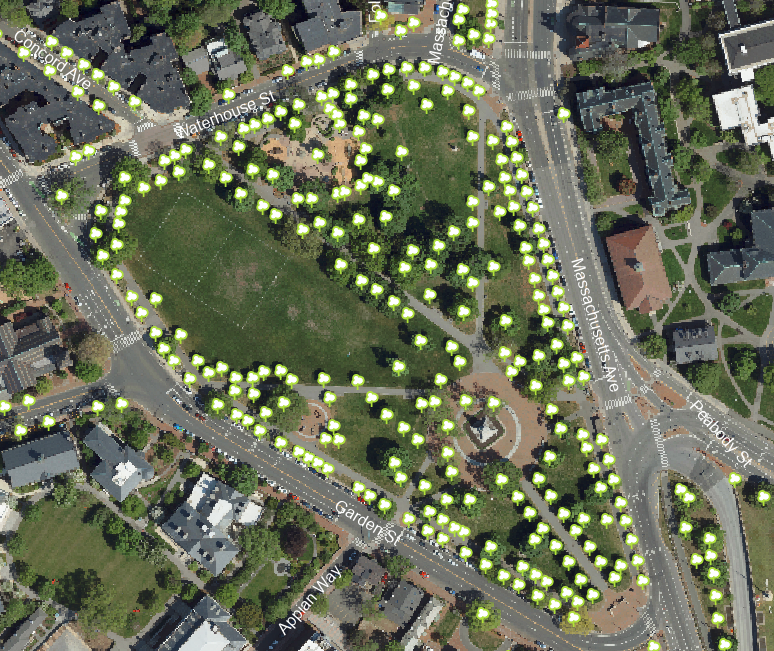
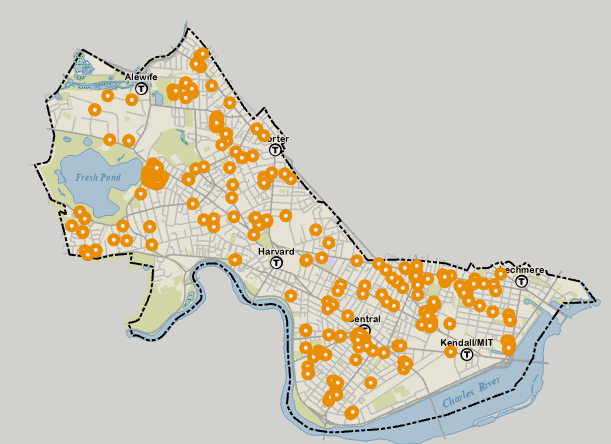
All this data is stored in the City’s asset management system, Cartegraph. Cartegraph is integrated with ArcGIS, which means every tree and task is mapped and geospatially
located in our database. Our Tree Activity Map shows planned and completed tasks for each City tree. Cartegraph also connects with Cambridge’s service request system,
SeeClickFix. When someone submits a tree-related request through SeeClickFix, that request is routed to the appropriate Urban Forestry staff based on the selected request category.
Cartegraph is used by City staff, interns, and authorized contractors. Different views and task types allow work to be assigned to different user types for inspections, cycle pruning, watering, tree planting, and more. Because the system is mobile-friendly, crews can view and complete tasks in the field and update records in real time.
Together, these tools help us monitor tree health, prioritize work, and care for Cambridge’s growing urban forest efficiently.
| A Cartegraph screenshot shows all trees on Cambridge Common. | | A Cartegraph screenshot shows all City trees planted Fall 2025. | | |
Call for Submissions: Cambridge’s Favorite Trees
What is your favorite City tree? Maybe it’s a rare species, a tree of exceptional size, or a familiar neighborhood tree that brings you joy in every season. We want to hear about the trees that Cambridge residents love!
To celebrate Arbor Week 2026 (May 4 – May 8), Public Works is creating a Notable Trees
StoryMap and we invite you to help shape it. Share a description, poem, love letter, or other reflection about your favorite City tree. Please include a photo!
Selected submissions will be featured in an online interactive StoryMap highlighting notable trees across Cambridge, including each tree’s location and photo (if provided).
Looking for inspiration? Check out Public Works’ collection of forestry maps including the Urban Forestry team’s favorite trees!
Submissions are due by Wednesday April 15, 2026 to
cambridgetrees@cambridgema.gov
Keep an eye on the next Forest Friends newsletter for more info on the upcoming Arbor Week 2026! We are looking forward to celebrating our urban forest with you!
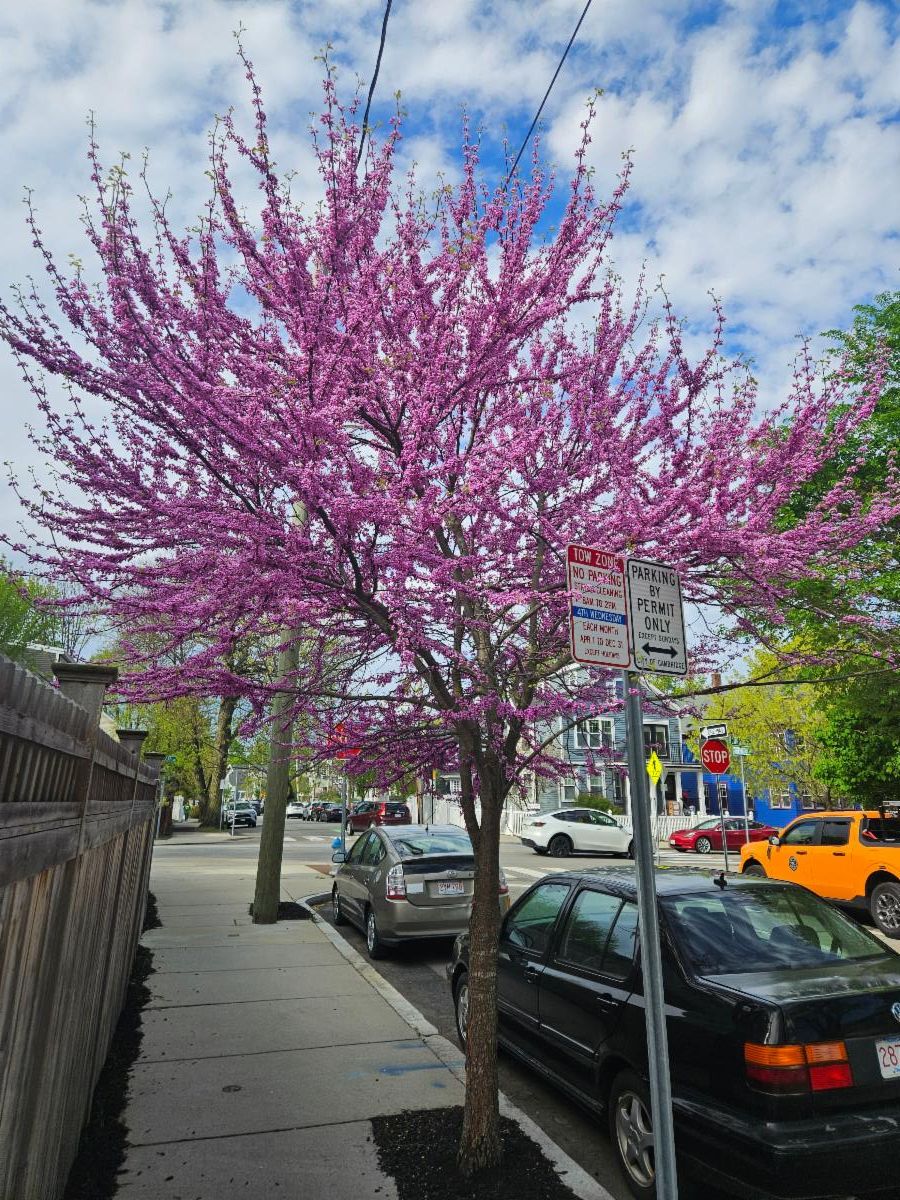
| | This redbud (Cercis canadensis) may not be the largest or rarest tree, but its early spring beauty makes it a favorite tree of one of our Urban Forestry staff members. What is your favorite Cambridge tree? | | |
We are Hiring! Apply to be a Summer Intern!
Looking for a hands-on summer job that gets you outside and helps Cambridge’s trees thrive? The Urban Forestry team is now accepting applications for our summer 2026 internships! We are hiring multiple applicants for two internship roles:
Tree Inventory Interns:
This paid role supports essential Cambridge urban forest management by assisting with field surveys, recording tree data using GIS tools, and helping maintain the City’s asset management system. It is a great opportunity for folks interested in both urban forestry and computer science/GIS. Applicants should be able to identify common Cambridge tree species, have basic GIS skills, the ability to work independently, and comfort in working outdoors in all weather.
Water By Bike Tree Ambassador Interns:
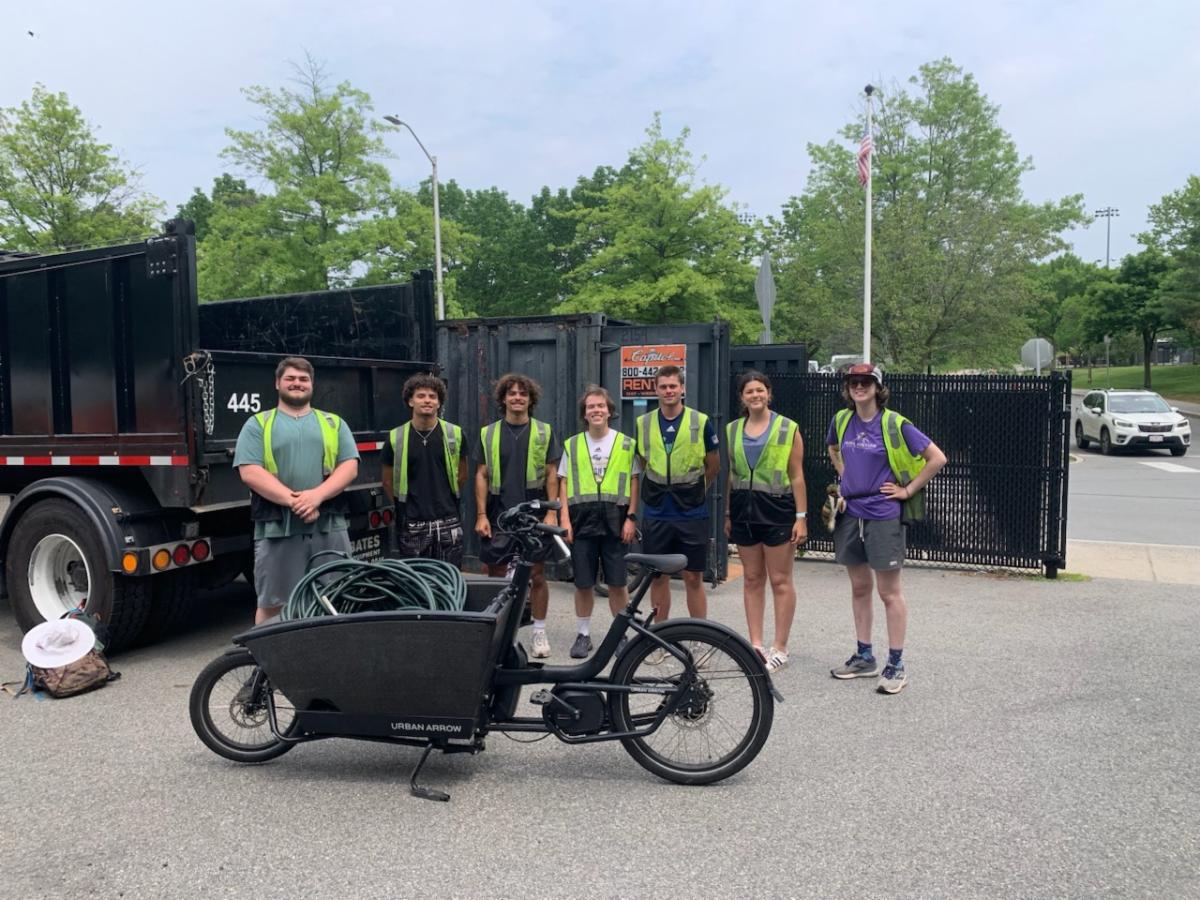
In this active role, interns will work in teams and independently to help care for young City trees by inspecting, watering, and weeding them, all by bicycle! You will use a bike and trailer to access hydrants to fill tree Gator bags, record progress on a tablet, and engage with residents about urban tree care and the benefits of trees. This paid role is a great opportunity for folks interested in urban forestry, community outreach, and environmental stewardship. Interested applicants should be comfortable riding a bike in urban settings and enjoy hands-on work outside supporting Cambridge’s growing urban forest.
For more details and to apply for these roles please visit the City of Cambridge job portal at https://www.cambridgema.gov/careers.
| | Our hardworking 2025 Water By Bike crew! Join us for summer 2026 and help Cambridge’s trees thrive! | | |
Protect Your Trees From Winter Salt
When snow and ice melt, any salt or deicing products used on sidewalks and driveways
can wash into tree wells and storm drains. Elevated chloride levels in rivers and streams can damage ecosystems, and salt that reaches tree roots can harm their longterm health. Salt exposure interferes with a tree’s ability to take up water and nutrients, which can lead to leaf discoloration, slowed growth, and even tree loss.
While the best way to manage snow and ice is through mechanical methods like shoveling, we recognize that sometimes additional treatment is needed to ensure safe pavement but work to keep it away from your trees.
Here are some ways to maintain safe sidewalks while reducing environmental impacts:
-
Skip rock salt— Sodium chloride is especially damaging to vegetation and wildlife.
-
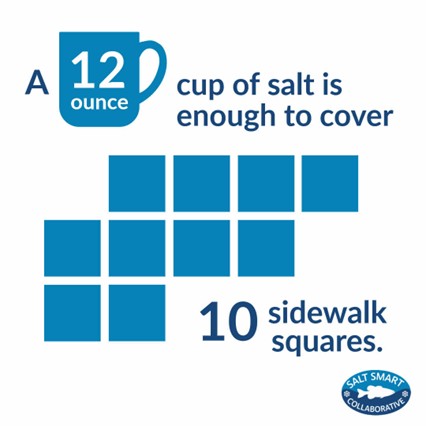
Apply only what you need — A light, even application is enough. Adding more product won’t work faster and only increases the amount of salt entering tree wells and storm drains.
-
Sweep up excess salt for reuse. Any salt that is left after ice has been melted can be reused during the next snow or freeze event.
| | |
Species Highlight and Forest Foe: Callery pear (Pyrus calleryana)
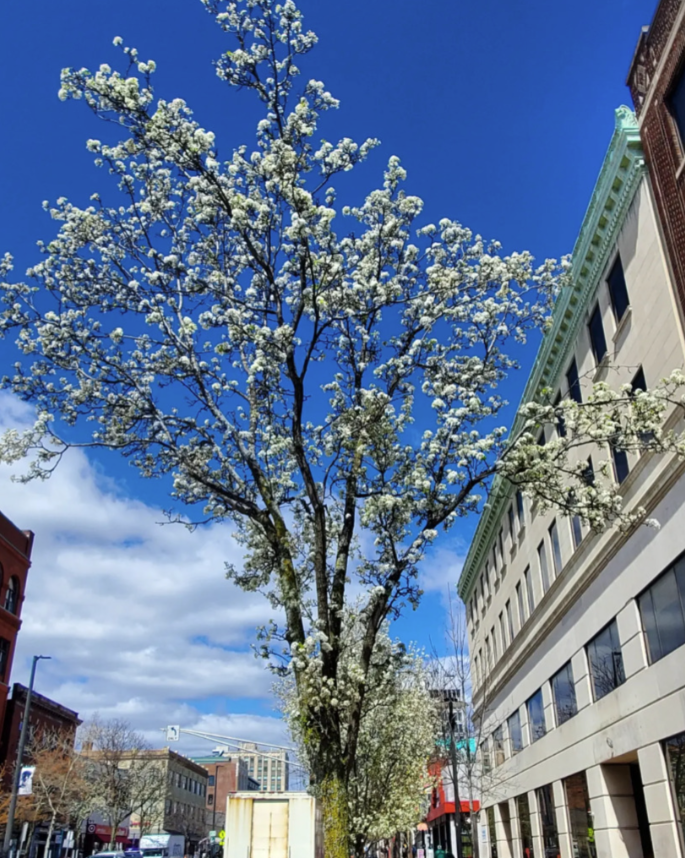
This month’s species highlight is also our Forest Foe. If you’ve noticed streets bursting into bright white blossoms in early spring, you’ve likely spotted some Callery pears. Once one of the most popular ornamental trees in North America, Callery pears were widely planted for their fast growth, ability to withstand tough conditions, showy spring flowers, and beautiful fall foliage.
In the urban canopy, Callery pears have played a role as early-season bloomers and adaptable city trees. They tolerate compacted soils, pollution, and tight planting spaces—qualities that made them attractive choices for sidewalks and small yards in past decades. In spring, their dense white flowers arrive before many other tree species leaf out, making them hard to miss.
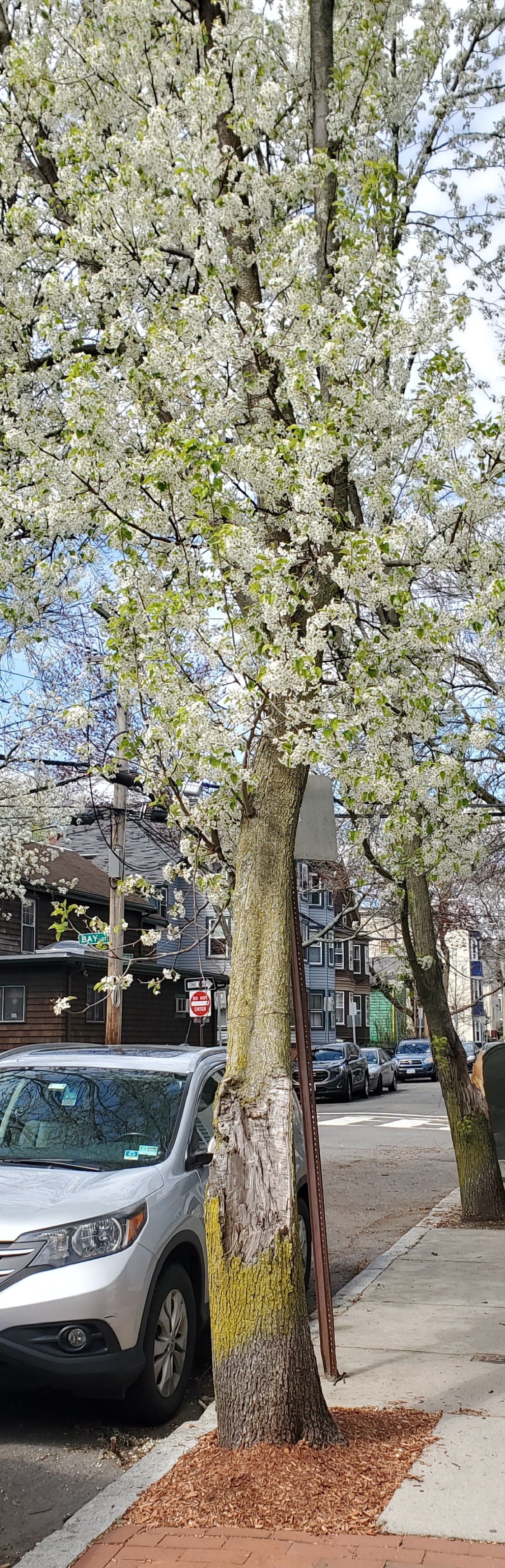
That said, Callery pears have become increasingly problematic over time. Many cultivars are prone to tight branching angles that make them susceptible to storm damage as they mature. Branch failures are common, particularly during heavy snow or wind events, which can create safety and maintenance challenges.
Beyond structural concerns, Callery pear is now considered invasive in Massachusetts and much of the eastern U.S. Introduced in the 50’s, ‘Bradford’ is one of the most common cultivars. ‘Bradford’ and other cultivars cannot cross-pollinate with themselves or other trees of the same cultivar. Once a different cultivar is introduced though, trees may cross-pollinate and produce small pear fruits that are eaten and distributed by birds. Seedlings can spread into natural areas where they can outcompete native plants and reduce biodiversity.
The City of Cambridge and the State of Massachusetts no longer recommend Callery
pears for new plantings. When older street and park pears decline and are removed, they are replaced with diverse, resilient species that provide stronger structure, wildlife benefits, and long-term value to our urban forest.
If you have a Callery pear on your property, there’s no need to panic. Keep an eye on its structure and if you have concerns, contact a Certified Arborist to perform an inspection and determine if any tree work is needed.
Questions about tree removal on private property? Please visit the tree removal permitting webpage: https://www.cambridgema.gov/iwantto/applyforatreeremovalpermit
| | Once a prized species, Callery pears were loved for their showy flowers. | | Callery pears are now known to have potentially problematic structures that may include tight branching angles, included bark, and codominant stems. | | |
Upcoming Event: Compost Giveaway Saturday 4/18/2026
The City of Cambridge will be distributing finished compost free of charge to Cambridge residents on Saturday, April 18, from 9 a.m. - 1 p.m., at Joan Lorentz Park, (in front of Cambridge Public Library), 449 Broadway, Cambridge. The rain date is April 19 at same time and location. Urban Forestry staff will be tabling the event so please stop by!
More information can be found here!
| |
|
Stumped! Urban Forestry Treevia
Learn a fun fact about urban forestry in Cambridge!
| |
| Why is the Callery pear on the Massachusetts Prohibited Plant List? | | | | |
The trivia answer will be revealed in next month’s newsletter!
Last month's question was "Did you know residents can help decide what species of trees we plant? What was the most requested species last year” and the answer was "C. Redbud". Did you get it right?
| | Become a Cambridge Urban Forest Friend | |
We need your help to maintain a healthy, vibrant urban forest! Any Cambridge resident willing to regularly water the tree and provide some general care for the tree is welcome to become a Cambridge Urban Forest Friend.
How to Start
| | |
Questions?
For questions about the Cambridge Urban Forest Friends, please contact Kristen Kelleher, Community Relations Manager at 617-349-4825 / kkelleher@cambridgema.gov.
**Please let us know if you are no longer caring for your street tree and we will remove you from the database and future emails**
| | Sign Up for a Tree with Green Cambridge | |
If you have space for a tree on your property, Green Cambridge can plant a tree to help expand Cambridge’s urban tree canopy! If you own your home in Cambridge, MA and would like Green Cambridge to plant a tree in your yard, visit https://www.greencambridge.org/canopycrew
| | |
Thanks for reading!
If you enjoy the Cambridge Urban Forest Friends newsletter, you can spread the word about it with this sign-up link. With more sign-ups, more Cambridge residents can learn about how to best support our environment and communities.
Para recibir este boletín en español, envíe un correo electrónico a Cambridgetrees@cambridgema.gov
Pou resevwa bilten sa a an kreyòl ayisyen, voye yon imèl bay Cambridgetrees@cambridgema.gov
| | | | |