February 2026 Newsletter

Contents

  1. Growing, Pruning, Protecting: Cambridge’s 2025 Urban Forestry Snapshot  
  2. Pruning with Purpose: A Look at Cycle Pruning 
  3. Species Highlight: London Planetree (Platanus x acerifolia) 
  4. Stumped! Urban Forestry Treevia 
  5. Become a Cambridge Urban Forest Friend   
  6. Sign Up for a Tree with Green Cambridge   

Growing Pruning, Protecting: Cambridge’s 2025 Urban Forestry Snapshot  


2025 was a busy year for the trees! Here’s a look at the numbers and initiatives behind Cambridge’s urban forestry efforts in 2025, from new trees in the ground to ongoing care and maintenance across the city. Thank you to Public Works Urban Forestry staff and interns, contractors, and our Forest Friends who all help keep our urban forest growing! 


City trees planted (Right of Way and Open Spaces): 1,213 

Species planted: 65 

Species native to MA or the US: 39 

Pruning tasks completed: 3,815 

Watering tasks completed: 34,919 

Inspections completed: 8,345 

Forest Friends: 1,057 

New Forest Friends: 89 


Launch of the UFMP 5 Year Update: 


Public Works is excited to share that the City’s 5-year update to the Urban Forest Master Plan (UFMP) is now underway! Released in 2019, the UFMP is a comprehensive study of the past, present, and future of Cambridge’s tree canopy. It established goals and priorities for City staff, residents, businesses, and other stakeholders to maintain and grow a healthy, resilient urban forest. 


The UFMP emphasizes equity, resilience, and shared responsibility, recognizing that everyone plays a role in supporting our trees. The City is once again partnering with the local landscape architecture firm Reed Hilderbrand and their team to lead this important update. 


The 5-year update will assess progress since 2019, evaluate existing strategies, and recommend new or refined approaches to achieve our canopy goals. The process includes three phases—Analysis and Evaluation, Recommendations, and Documentation—and is expected to conclude in Spring 2026. 


3rd Miyawaki Forest Planting at the Peabody School: 


The 3rd Miyawaki Forest planted on City property was planted May 2025 at the Peabody School at 70 Rindge Ave! This Miyawaki Forest is 2,000 square feet and features 40 different native tree and shrub species with a total of 800 plants. The City’s first Miyawaki Forest is at Danehy Park, planted 2021, and the second is at Greene-Rose Heritage Park, planted 2022.  

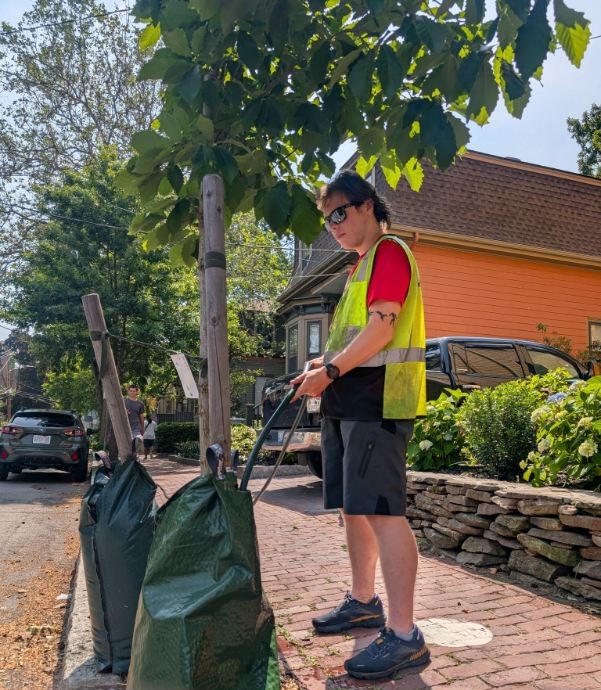
Water By Bike staff worked hard this summer watering many of the Cambridge’s young and more vulnerable trees. 

Pruning with Purpose: A Look at Cycle Pruning


The City of Cambridge maintains over 23,000 trees. Almost 15,000 of these trees are found along streets. A critical aspect of tree maintenance is pruning. Regular pruning keeps our trees in tip top shape by: 


  • removing dead, diseased, and damaged branches 
  • providing clearance for buildings, traffic (pedestrian, bicycle, and vehicle), street lights, electrical wires, traffic signs and signals, other trees, and other City infrastructure 
  • pruning to improve tree structure and reduce risk of failure  
  • reduction cuts when appropriate 


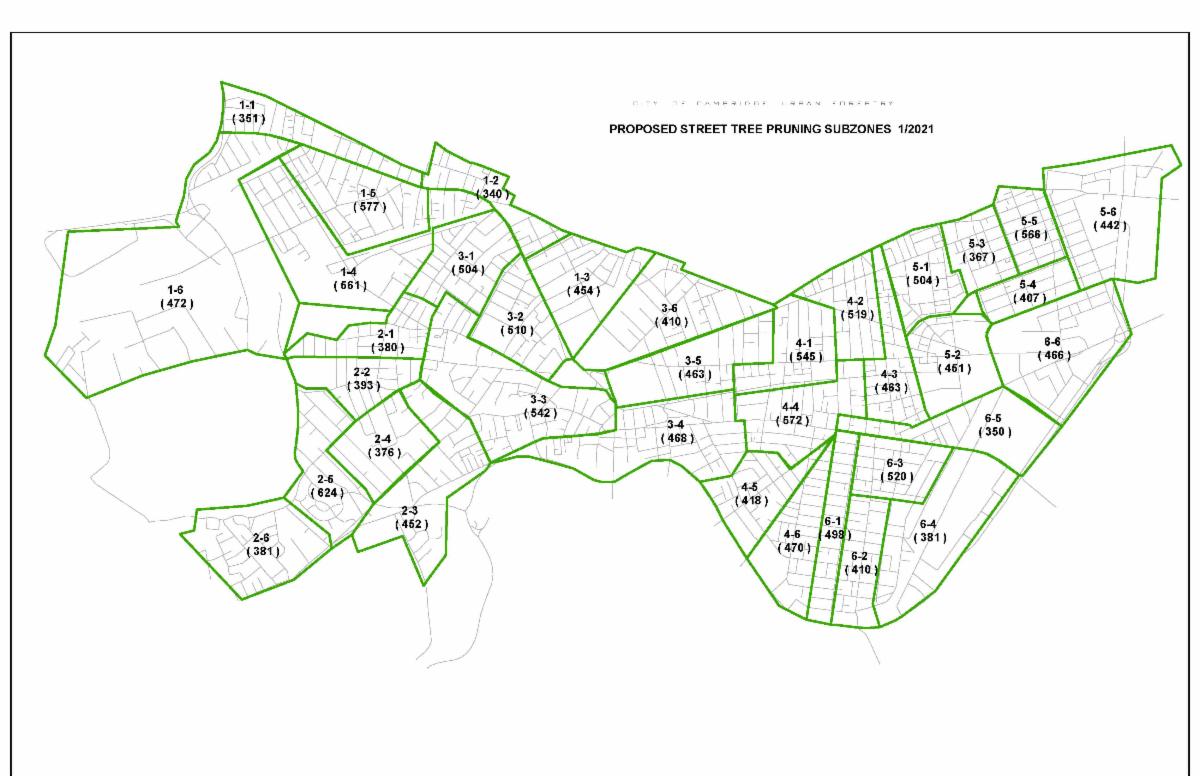
Street trees are pruned on a cycle; each tree is pruned at least once every 6 years. This consistent cycle keeps up with tree growth and is a proactive approach to tree maintenance. Trees are pruned to current arboricultural standards, including limiting the pruning to not more than 25% of live foliage.  


The Urban Forestry Division oversees the implementation of the Street Tree Pruning Contract.  


If you see a City tree that needs pruning outside of the normal cycle pruning, please submit a Tree Pruning Request through SeeClickFix:  https://www.cambridgema.gov/SeeClickFix  


Map of Cambridge's cycle pruning zones.

Species Highlight: London Planetree (Platanus x Acerifolia)


The London planetree is one of Cambridge’s most iconic and resilient urban trees, known for its adaptability, striking appearance, and ability to thrive where many other species struggle. 


This tree is a cross between the native American sycamore (Platanus occidentalis) and the Oriental plane (Platanus orientalis). The result is a tree with strong disease resistance and adaptability to a wide range of conditions. 


London planetrees are seasoned city-dwellers. They tolerate compacted soils, pollution, road salt, drought, and heat, all common stressors in urban environments like Cambridge. 


Their broad leaves help capture airborne particulates and pollution. Their large, spreading crowns provide excellent shade, cooling sidewalks and streets during hot New England summers. London planetrees tolerate road salt and compacted, low-nutrient soils typical near busy streets and sidewalks, reasons they’re often chosen for street tree plantings. 


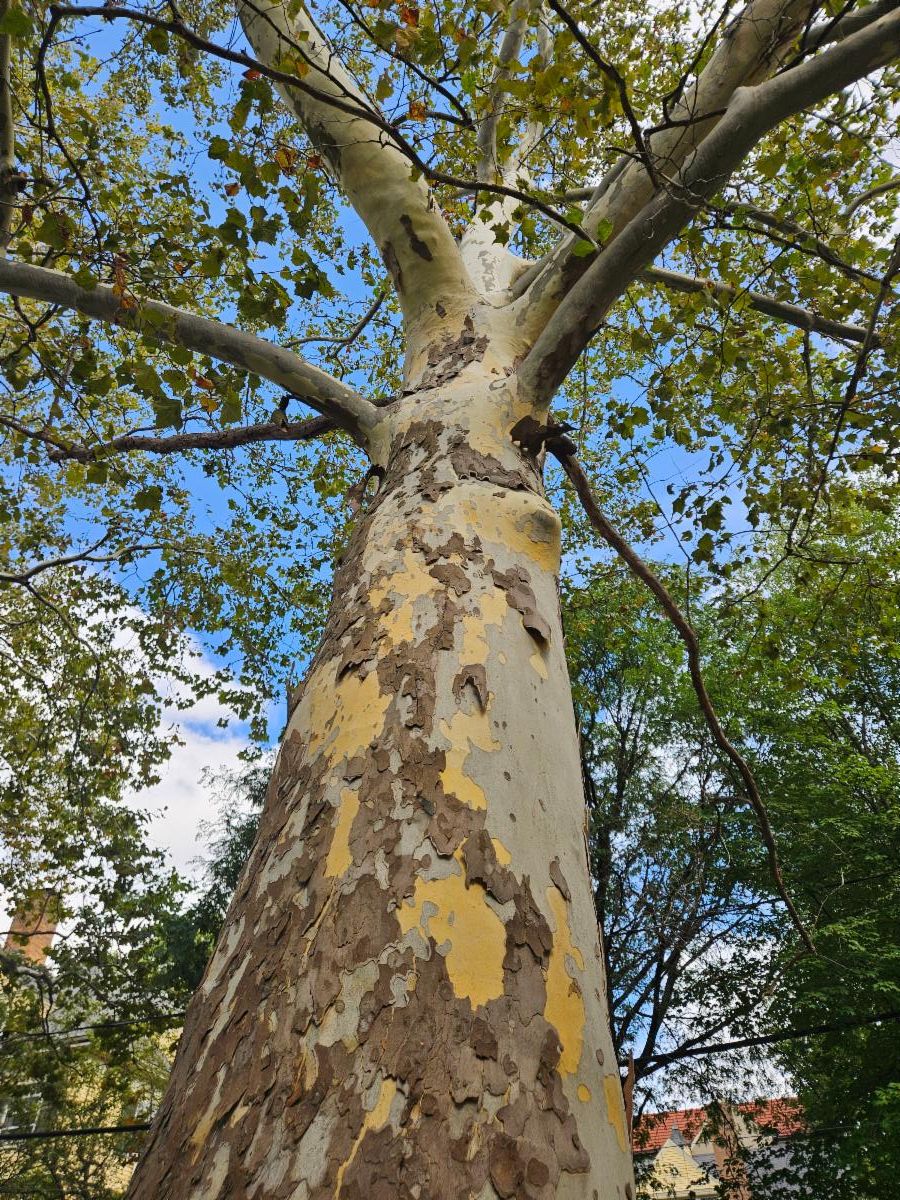
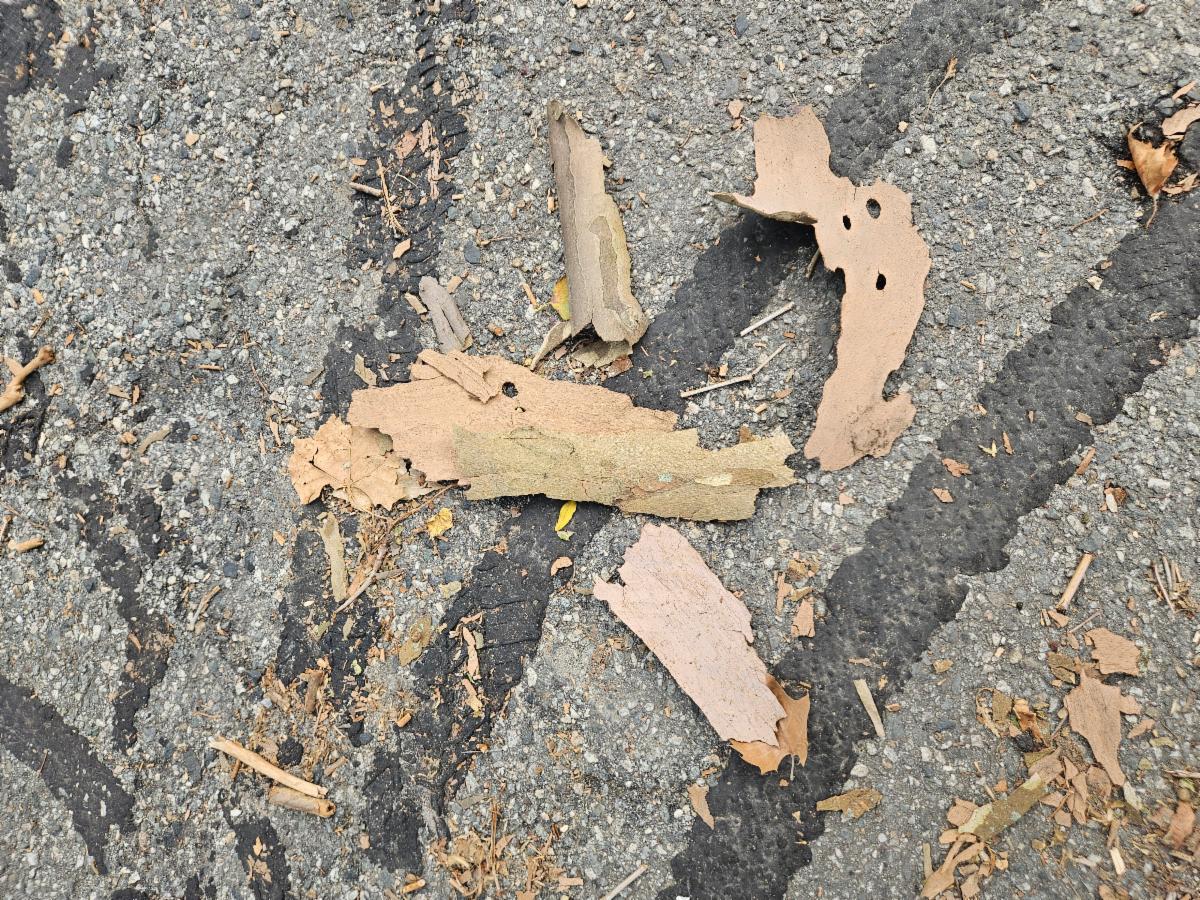
As the tree grows, its outer bark flakes away in patches, revealing a camouflage pattern of creamy white, gray, green, and brown. Have you ever seen a London planetree shedding its bark? Most often occurring in the summer, bark exfoliation on this species is not a cause for concern. It means the tree is growing.  


Sycamore anthracnose is a fungal disease that primarily affects American sycamores and some London planetrees. Sycamore anthracnose can cause premature leaf drop, usually in the summer. This early leaf drop can be alarming, and the Urban Forestry division receives many calls from concerned residents about London planetree early leaf drop and bark shedding, though neither issue is usually a major threat to tree health.  Wet spring weather can spread anthracnose spores to new and developing leaves. While the leaf drop can be dramatic, sycamore anthracnose is a common native pathogen. Most trees can produce a second flush of leaves by mid-summer. This second leaf out can stress the tree but it usually is more of an aesthetic issue. To reduce the impacts of sycamore anthracnose, the City plants anthracnose-resistant cultivars of London planetrees such as ‘Bloodgood’ and ‘Exclamation!’. 

A mature London planetree on Washington Ave showing off the camouflage patterned bark.

It is not uncommon and typically not a cause for concern to see large pieces of exfoliated bark under a London planetree.

Stumped! Urban Forestry Treevia


Learn a fun fact about urban forestry in Cambridge! 


Did you know residents can help decide what species of trees we plant?

What was the most requested species last year?

The trivia answer will be revealed in next month’s newsletter! 


Last month's question was "why does the City prune young trees?” and the answer was " B. Trees are pruned 2 years after planting to ensure good structure and reduce future storm damage.". Did you get it right?    

Become a Cambridge Urban Forest Friend

We need your help to maintain a healthy, vibrant urban forest! Any Cambridge resident willing to regularly water the tree and provide some general care for the tree is welcome to become a Cambridge Urban Forest Friend.


How to Start

Questions?


For questions about the Cambridge Urban Forest Friends, please contact Kristen Kelleher, Community Relations Manager at 617-349-4825 / kkelleher@cambridgema.gov.


**Please let us know if you are no longer caring for your street tree and we will remove you from the database and future emails**


Sign Up for a Tree with Green Cambridge

If you have space for a tree on your property, Green Cambridge can plant a tree to help expand Cambridge’s urban tree canopy! If you own your home in Cambridge, MA and would like Green Cambridge to plant a tree in your yard, visit https://www.greencambridge.org/canopycrew

Thanks for reading! 


If you enjoy the Cambridge Urban Forest Friends newsletter, you can spread the word about it with this sign-up link. With more sign-ups, more Cambridge residents can learn about how to best support our environment and communities.


To receive this newsletter in English, email Cambridgetrees@cambridgema.gov


Para recibir este boletín en español, envíe un correo electrónico a Cambridgetrees@cambridgema.gov


Pou resevwa bilten sa a an kreyòl ayisyen, voye yon imèl bay Cambridgetrees@cambridgema.gov


Facebook  X