|
Contents
- Watering and Tree Planting Update
- Spotted Lanternfly PSA
- Get to Know the Committee on Public Planting (CPP)
- Map Highlight: Fall Foliage
- Species Highlight: Pawpaw (Asimina triloba)
- Forest Foe: Oriental Bittersweet
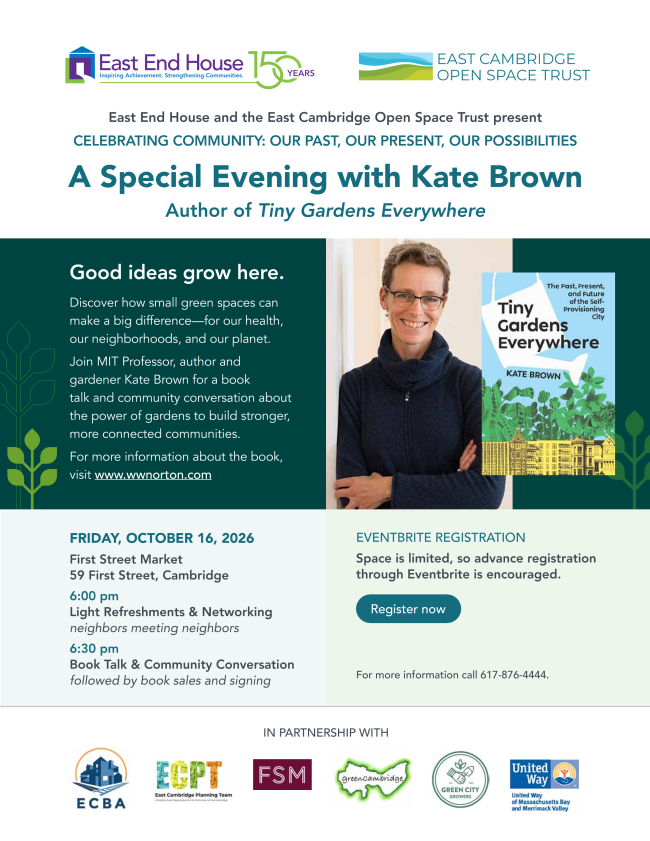
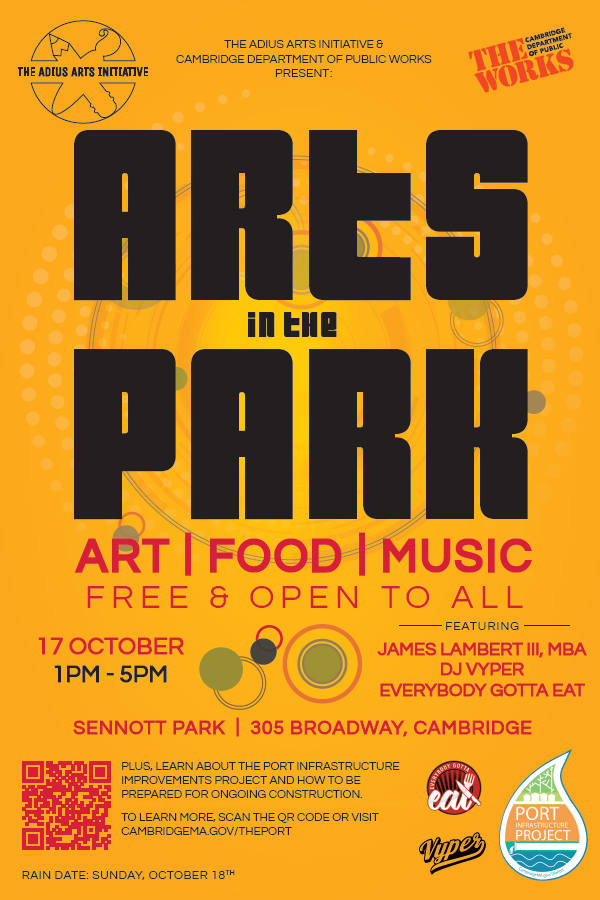
- Upcoming Event: A Special Evening with Kate Brown (10/16) and Arts in the Park (10/17)
- Stumped! Urban Forestry Treevia
- Become a Cambridge Urban Forest Friend
- Sign Up for a Tree with Green Cambridge
| | |
Watering and Planting Update
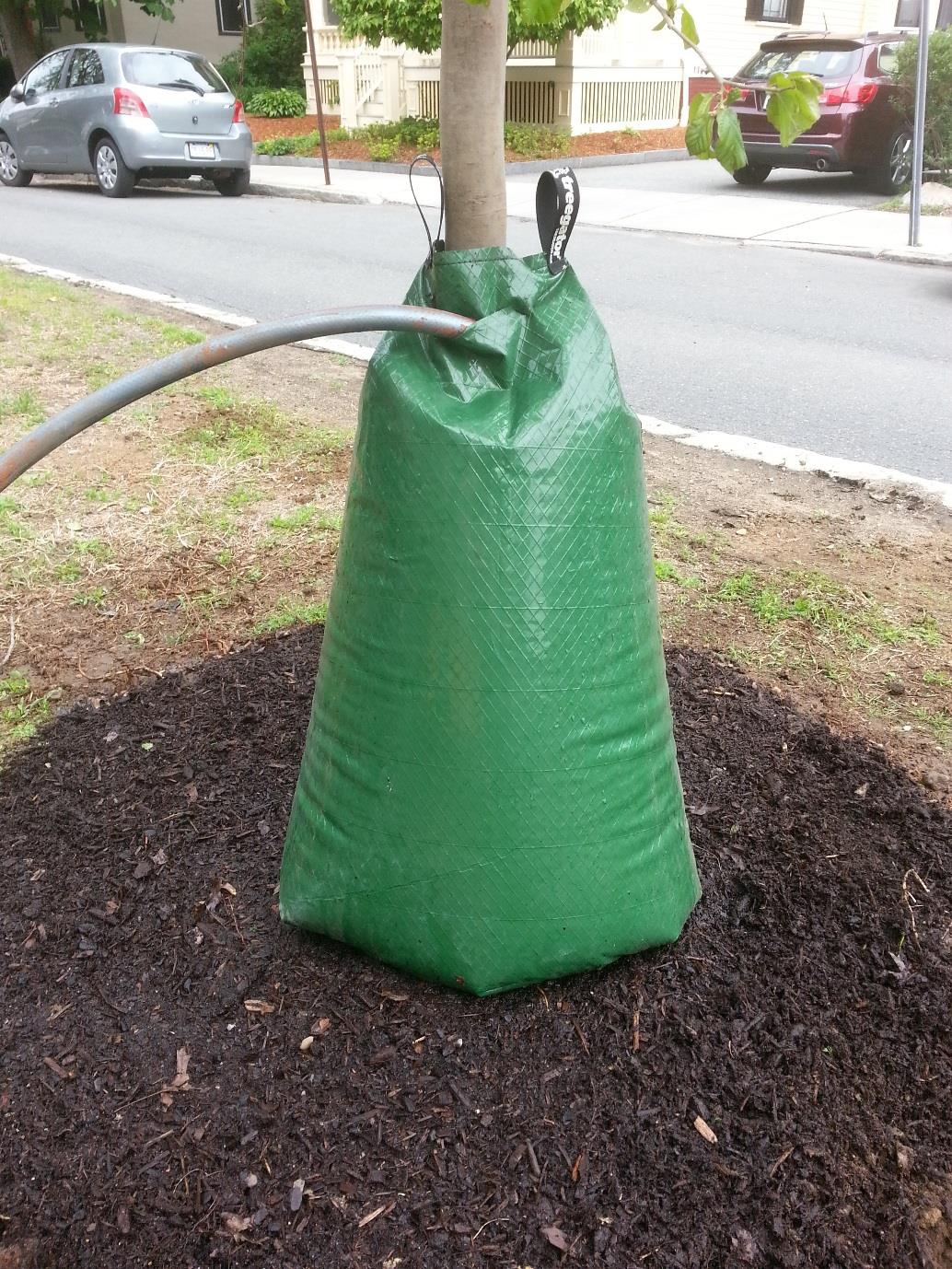
As we move into our fall planting season, the City is planning on planting many new trees around Cambridge. Keep your eyes peeled for these new residents! They are looking for Urban Forest Friends that can help water, mulch, and weed them. While Forestry and our tree planting contractor will be watering them regularly, these young trees need a lot of watering so additional help is always appreciated. If you want to see where the City is planning to plant trees, you can check out the planned tree plantings map.
| | City Arborist David Lefcourt Watering a Tree | | |
Spotted Lanternfly PSA
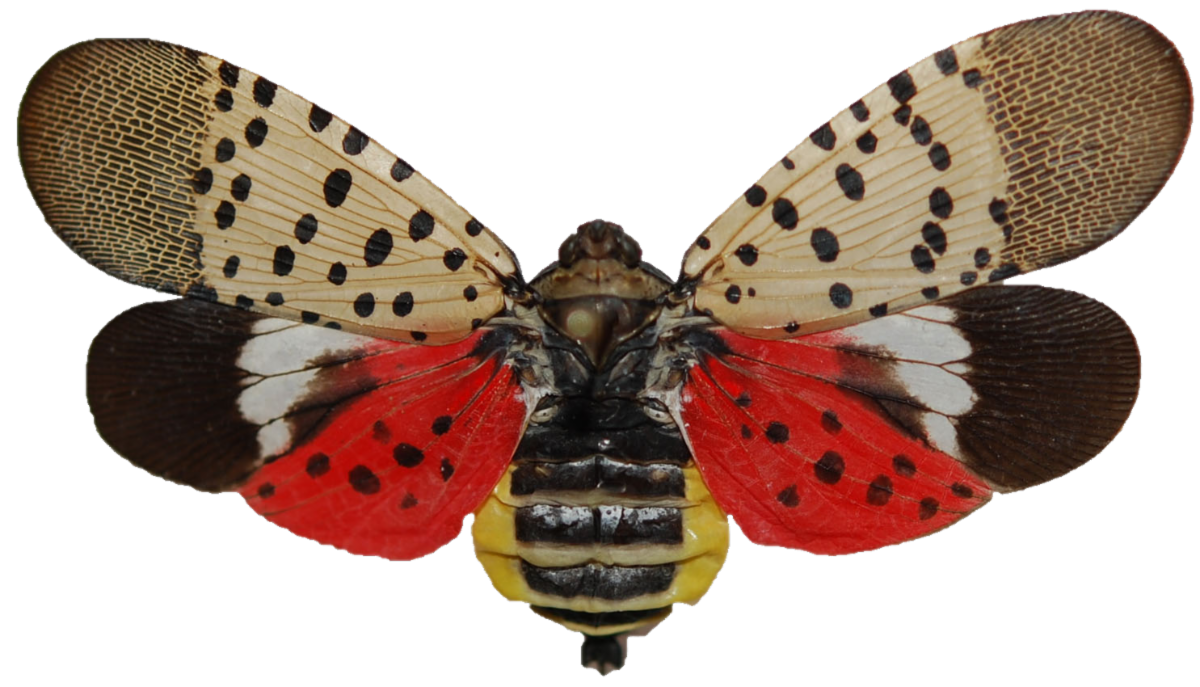
We’ve received several recent inquiries about spotted lanternfly (Lycorma delicatula, or SLF) sightings around Cambridge. Spotted lanternfly is an invasive insect that feeds on the sap of trees and other woody plants. It is particularly associated with tree-of-heaven, grapevines, hops, and a variety of fruit trees.
Adult spotted lanternflies are approximately one inch long and have distinctive red and gray spotted wings. Adults typically become more visible in late summer and fall, which likely explains the recent increase in sightings and reports.
At this time, the City is not conducting large-scale treatment or removal efforts for spotted lanternfly. Residents who spot SLF are encouraged to report sightings to the Massachusetts Department of Agricultural Resources.
Report a spotted lanternfly sighting:
Massachusetts Spotted Lanternfly Reporting Form
Learn more about spotted lanternfly:
Mass.gov Spotted Lanternfly Information
| | |
Get to know the Committee on Public Planting (CPP)
By Cindy Carpenter, CPP Chair
How long has the CPP of Cambridge been around?
- The Committee on Public Planting was established by ordinance in 1998, 28 years ago!
Who is currently on the committee and how often are new members rotated in? What sort of expertise do you look for in members?
- The Committee has a mix of members with professional expertise in landscape architecture and design and community members who are deeply committed to the City’s urban forest. When bringing in new members we look for relevant knowledge and the ability to collaborate effectively with a wide range of stakeholders, including committee members, City employees, City Councilors and community organizations. We also look for members from different areas of Cambridge, so that the perspectives and needs of different areas are represented, and to act as neighborhood liaisons.
What are some of the biggest challenges you’ve dealt with recently?
- The biggest challenges come from balancing conflicting needs and goals of different constituents. Cambridge is an old and densely populated city, and it’s not easy to care for our oldest trees, nor find room for new shade trees and pollinator gardens -- especially as climate change brings increasing storms and drought. As the City continues to grow, the demand for development and new housing affect existing City and private trees, and create challenges for expanding and maintaining our urban forest.
What are some accomplishments of the CPP that you are the proudest of?
- The CPP played a key role in the development of the City’s first Urban Forest Master Plan in 2019 (before I joined), which has guided all of our urban forest work. While many cities are seeing steep declines in their tree canopy, Cambridge has grown our tree canopy! More recently the committee helped with an agreement with the DCR that enabled our Urban Forestry team to plant 120 trees on state-owned roads in Cambridge, such as Alewife Brook Parkway.
What are you excited for in the future? / Can we hear about any future improvements you’re working on now?
- I’m excited about finding new ways to engage more residents in caring for the City’s shade trees and parks and to encourage more trees and plants in business and residential property throughout our community. We’re also working with City employees and Councilors to find ways to minimize the new zoning’s impact to trees. As the Urban Forest Master Plan notes “the urban forest is essential infrastructure, critical to improving the livability, resiliency and well-being of Cambridge and our residents” – and we’re committed to its care and growth.
| | |
Fall Foliage Highlight
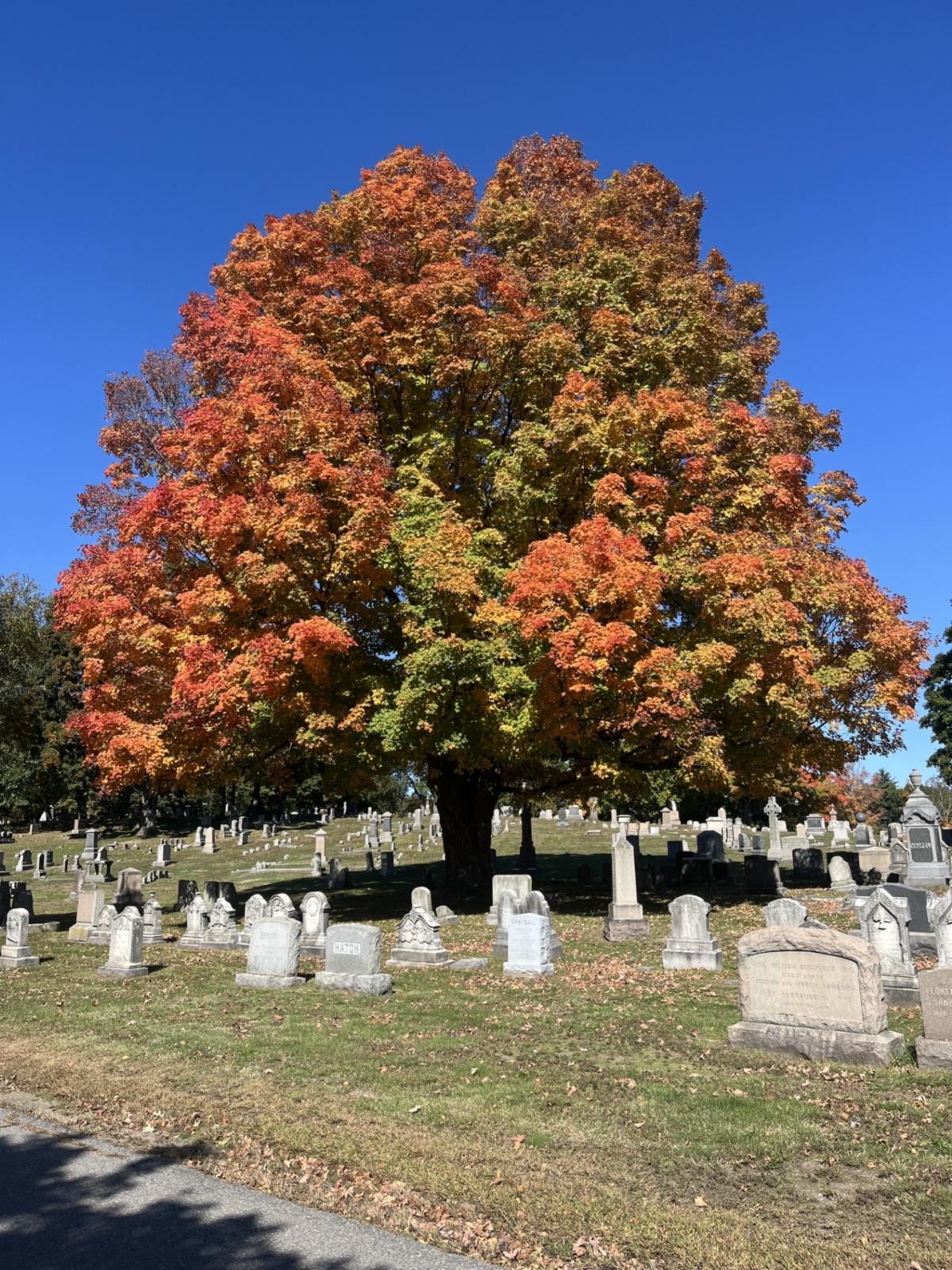
Fall is upon us! New England fall colors are renowned for their variety and beauty. If you want to know where to find the brightest leaves in Cambridge, look no further than the fall foliage map. Trees are sorted by size and color. Check it out!
Once the vibrant leaves have fallen, it’s important to help keep them out of the street and curb, where they can clog storm drains and become a source of pollution to our rivers as they break down. Here are some ways you can help the City keep our streets clean and minimize pollution this season:
- Pick-up leaves along your sidewalk and curb in front of your home and set out as yard waste.
- Move your vehicle on street cleaning days. Street sweepers need access to the curb to most efficiently clean and remove leaves.
-
Sign up to be a Storm Steward. Storm Stewards help keep a specific storm drain clear of leaves and other debris. Sign up online to give your drain a fun name!
| | A red maple at Cambridge Cemetery shows off its October colors | | Species Highlight: Pawpaw (Asimina triloba) | | |
Pawpaw trees (Asimina triloba) are an incredibly unique tree that produces the largest edible fruit native to North America. These trees have adapted to humid climates, and are highly frost tolerant, which makes them perfect growers in the eastern United States. In addition, their flowers in bloom release a scent of rotting meat, which attracts flies and beetles to pollinate it.
In the wild, pawpaws are a small, understory tree that grows to a height of 15-25 feet and often grow in genetically identical clusters. Growers at the Arnold Arboretum noticed after the death of one Pawpaw tree, a number of saplings shot up around the original tree. In some North American forests, pawpaws are very common. Part of this success can be attributed to their unpleasant tasting leaves and unfavorableness amongst deer, which allows the pawpaws to outcompete more heavily browsed neighbors.
Pawpaws make for an excellent edible landscaping staple, perfect for urban yards and community gardens, and are fairly self-sufficient due to their natural pest and disease resistance. Like other fruit trees, however, they make poor street trees; road pollutants can absorb into fruit, and that fruit can also make a mess on roads and sidewalks. There are only a few pawpaw trees planted throughout Cambridge. Do you know of any pawpaws in your neighborhood?
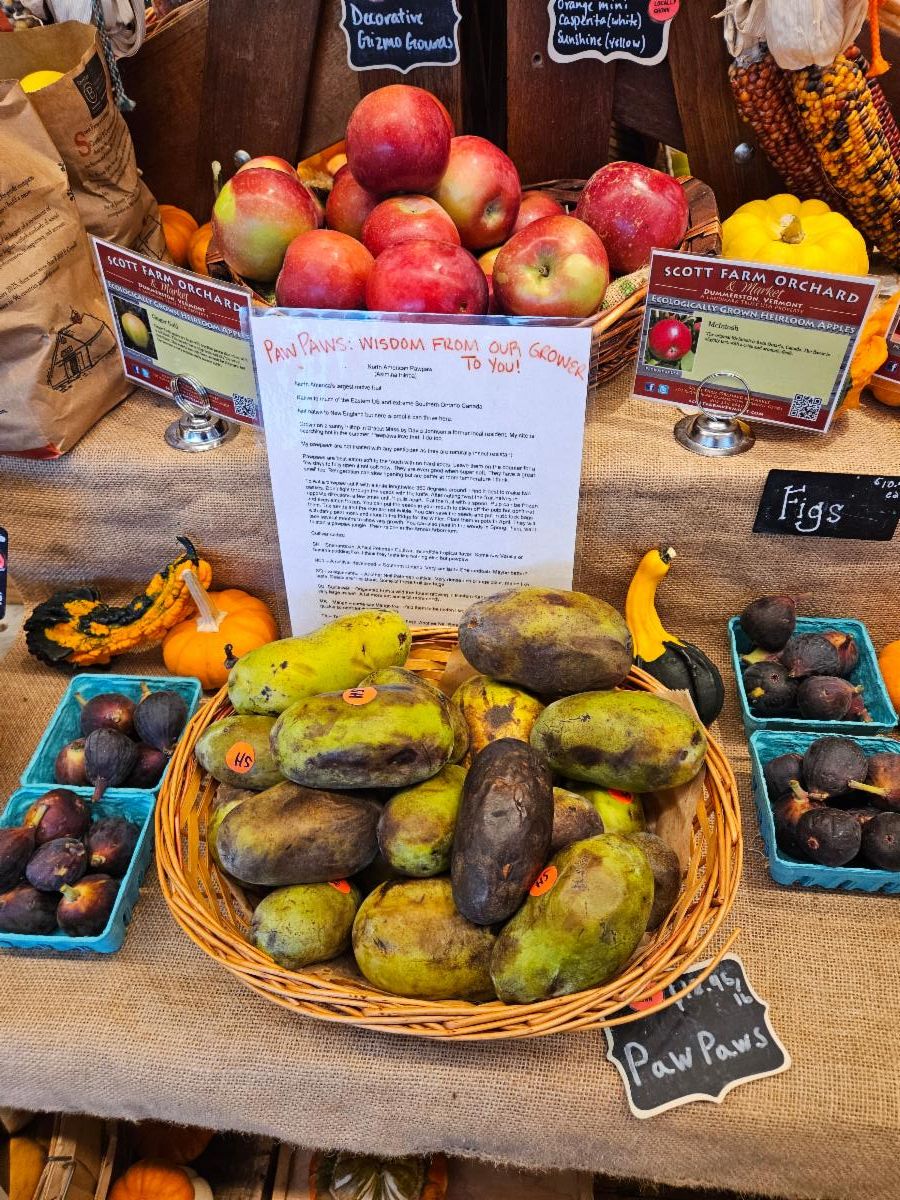
Pawpaw fruit is described as tasting most similar to banana, with hints of mango. They bruise easily and have a very short shelf life however, so transporting them can prove a challenge. If you’re looking to get your hands on this unique fruit, shop locally!
| | Pawpaws for sale from a local grower | | |
Forest Foe: Oriental Bittersweet (Celastrus orbiculatus)
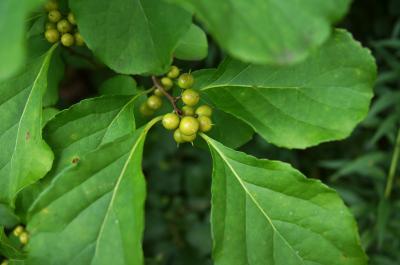
Oriental bittersweet (Celastrus orbiculatus) is an aggressive woody vine, native to East Asia but now spread throughout Cambridge, and are especially common along property lines. This invasive is fast growing and does best in bright sunlight but can tolerate shade, which allows it to invade fields and forests in dense meshes that choke out natives.
Oriental bittersweet outcompetes natives by girdling around trees and other plants, choking off the flow of nutrients. This can also cause mechanical damage due to the excessive weight on branches and can ultimately shade out the plant’s own leaves. It also displaces native American bittersweet, another climbing plant that provides food and habitat for wildlife.
The plant primarily spreads through dispersal of its berries by birds but can also reproduce via root suckering. This can make removal challenging. The typical recommendation is to cut sections of the vine without removing its grip from the tree, as this can cause more damage. Herbicides can be carefully applied to the severed portions, as cutting alone can allow the vine to regrow and recover. Remember to read all herbicide regulations carefully before application. The vines should rot and release its grip on the affected plant over time.
| | |
Upcoming Event: A Special Evening with Kate Brown
Kate Brown, MIT professor, gardener, and author of new book Tiny Gardens Everywhere: The Past, Present, and Future of the Self-Provisioning City, invites you to join her on Friday, October 16th for a book talk and conversation on the power of gardens to connect communities. The event will take place at First Street Market, 59 First Street and starts at 6pm. Space is limited, so advance registration is encouraged. Join Kate Brown, East End House, and the East Cambridge Open Space Trust to explore how small green spaces can make a big difference in ourselves and our neighborhoods!
| | |
Upcoming Event: Arts in the Park
Join us on October 17th, from 1pm-5pm, at Sennott Park (305 Broadway) for a day of art, food, and music, free and open to all. Acts will include live music by DJ Vyper, food by Everybody Gotta Eat’s curated chefs, and guest speaker James Lambert III, MBA.
Enjoy a variety of live painting exhibits by active local artists and information about local art institutions, artist booths, interactive activities, children's activities and much more! There will also be a sneak peek at the Port infrastructure improvement project and information on how to prepare for ongoing construction.
Don’t miss this amazing opportunity to experience local arts and culture in Cambridge! Rain date October 18th.
| | |
Stumped! Urban Forestry Treevia
Learn a fun fact about urban forestry in Cambridge!
| |
| Is fall a good time to plant trees? | | | | |
The trivia answer will be revealed in next month’s newsletter!
Last month's question was "Which of these processes do many trees undergo in the fall?” and the answer was "B. Halting the production of chlorophyll to accommodate less sunlight". Did you get it right?
| | Become a Cambridge Urban Forest Friend | |
We need your help to maintain a healthy, vibrant urban forest! Any Cambridge resident willing to regularly water the tree and provide some general care for the tree is welcome to become a Cambridge Urban Forest Friend.
How to Start
| | |
Questions?
For questions about the Cambridge Urban Forest Friends, please contact Kristen Kelleher, Director for Communicatons at 617-349-4825 / kkelleher@cambridgema.gov.
**Please let us know if you are no longer caring for your street tree and we will remove you from the database and future emails**
| | Sign Up for a Tree with Green Cambridge | |
If you have space for a tree on your property, Green Cambridge can plant a tree to help expand Cambridge’s urban tree canopy! If you own your home in Cambridge, MA and would like Green Cambridge to plant a tree in your yard, visit https://www.greencambridge.org/canopycrew
| | | | |